For Ayatollah Khamenei, Death Came In Form Of A Blue Sparrow From Space
The 86-year-old supreme leader, who had spent much of the previous weeks sheltering deep underground amid fears of Israeli strikes, had surfaced to attend a high-level meeting. Within hours, he would be dead.
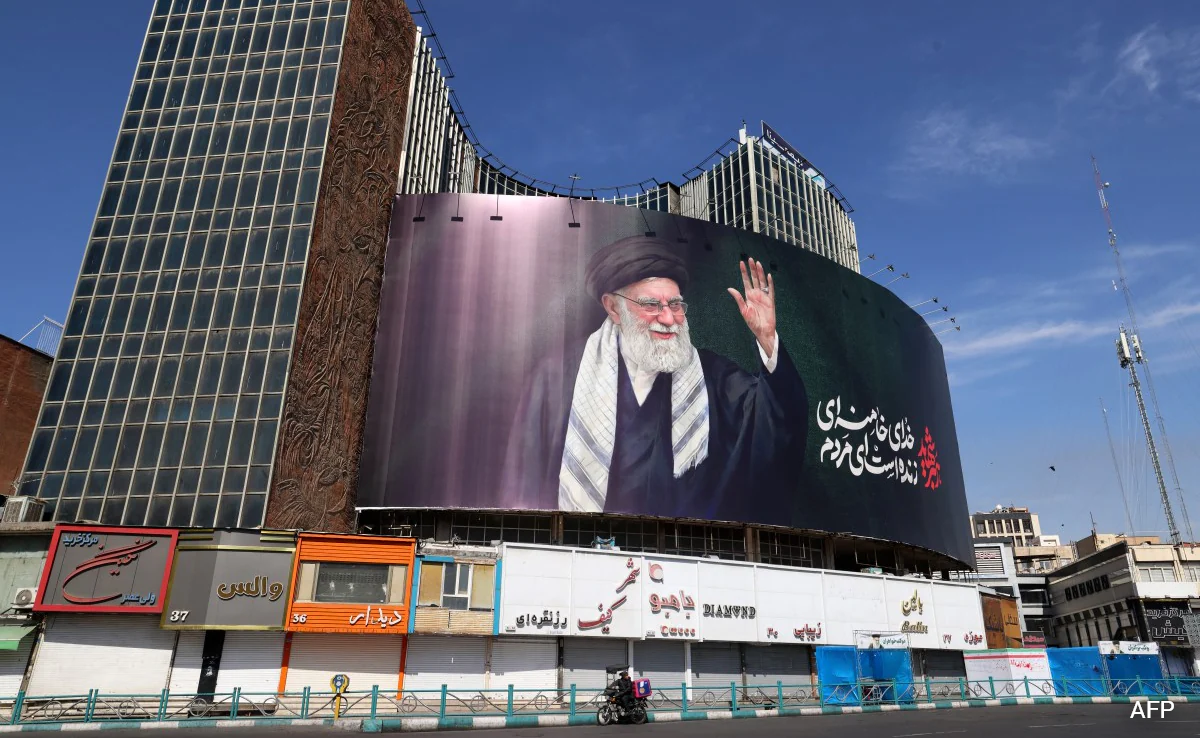
In the early hours of February 28, as Tehran stirred awake, Ayatollah Ali Khamenei arrived at a leadership compound on Pasteur Street in the heart of the Iranian capital. The 86-year-old supreme leader, who had spent much of the previous weeks sheltering deep underground amid fears of Israeli strikes, had surfaced to attend a high-level meeting.
Within hours, he would be dead.
The weapon that killed him did not approach slowly, nor did it come from a nearby battlefield. It came from far above. A missile launched from an Israeli fighter aircraft climbed rapidly through the sky, arcing toward the edge of space before plunging back toward Earth. When it struck the compound where Iran's political and military leadership had gathered, the impact killed the country's most powerful man along with dozens of senior officials.
The missile was known as the Blue Sparrow.
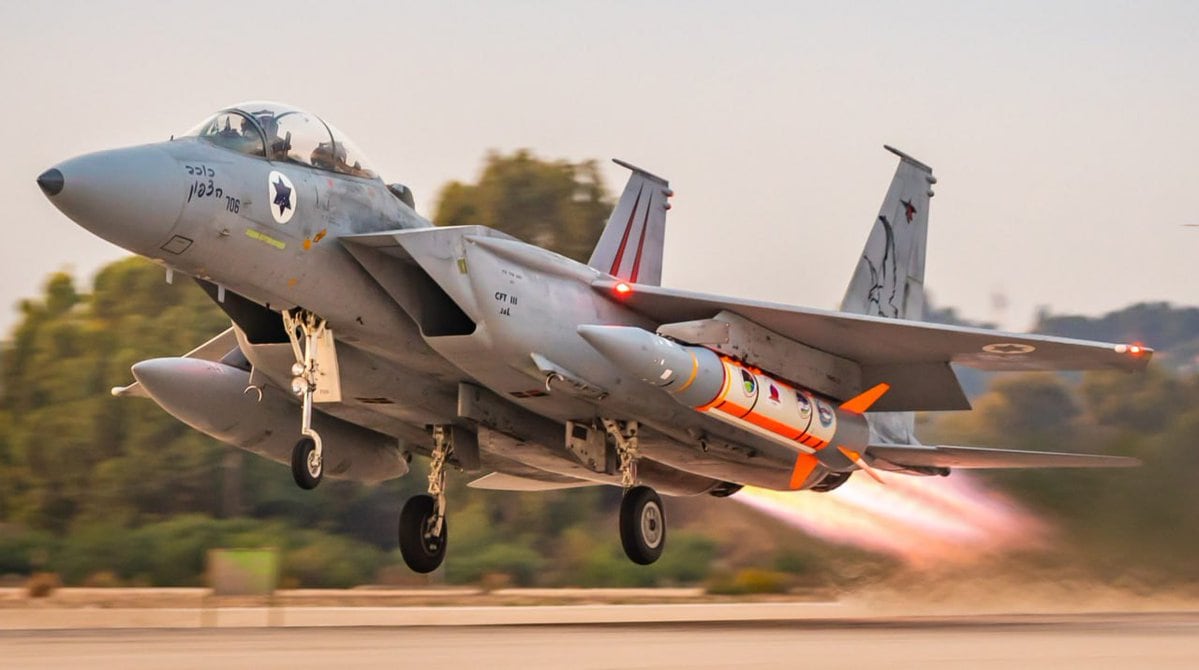
Photo Credit: Israeli Air Force
According to Israeli officials and people briefed on the operation, the strike formed part of Operation Epic Fury, a joint Israeli-American assault designed to eliminate senior Iranian leaders and cripple the command structure of the Islamic Republic. The attack combined months of intelligence gathering, years of surveillance, and a last-minute adjustment triggered by new information about Khamenei's location.
The Weapon That Reached Space
The Blue Sparrow missile played a decisive role in one of the most consequential targeted killings in modern Middle Eastern history.
The missile, produced in Israel, has a range of roughly 1,240 miles or 1,995 km. Unlike many conventional munitions, it follows a quasi-ballistic trajectory. After launch, the missile ascends rapidly, leaving the Earth's atmosphere before re-entering and descending toward its target.
This ability to exit and re-enter the atmosphere complicates interception by air-defence systems. The steep trajectory also reduces the reaction time available to those on the ground.
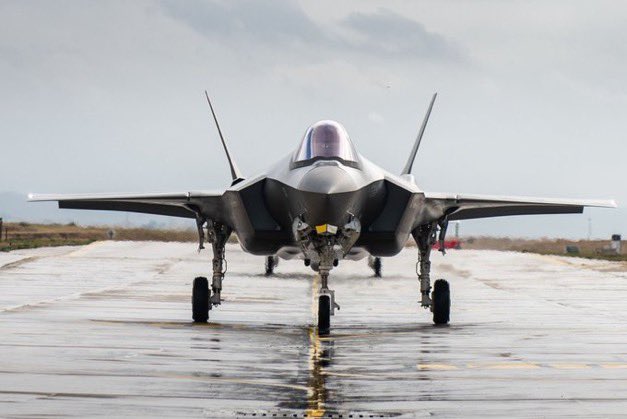
An missile was launched from an ISraeli F-35 fighter jet, reports stated.
Photo Credit: @IsraelenFR
Debris believed to belong to the missile has been discovered in western Iraq. Witnesses reported finding long, grey, cylindrical fragments scattered across desert terrain, according to a report by the Telegraph.
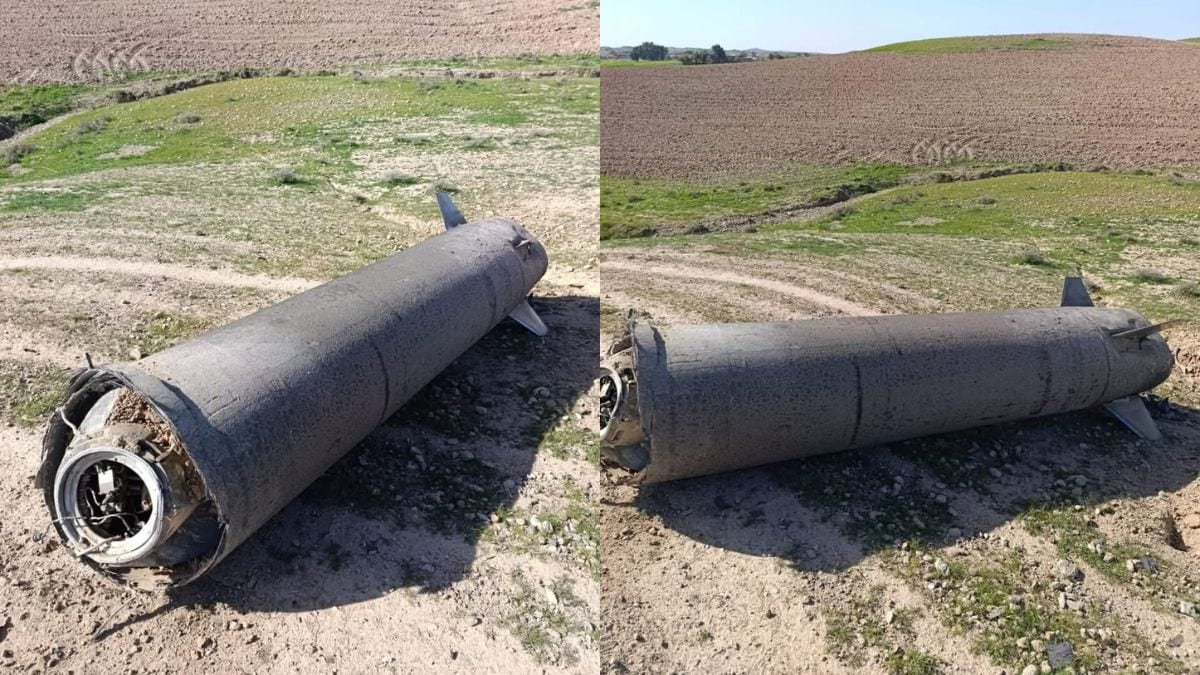
Debris believed to belong to the missile has been discovered in western Iraq.
The Blue Sparrow is part of an Israeli missile family that includes the Black Sparrow and Silver Sparrow. These missiles were originally designed to simulate Scud-type ballistic missiles, similar to those fired at Israel by Iraq during the 1991 Persian Gulf War.
The system was initially created as a target missile for testing air-defence systems. Over time, however, the Blue Sparrow was adapted into an offensive air-to-surface weapon.
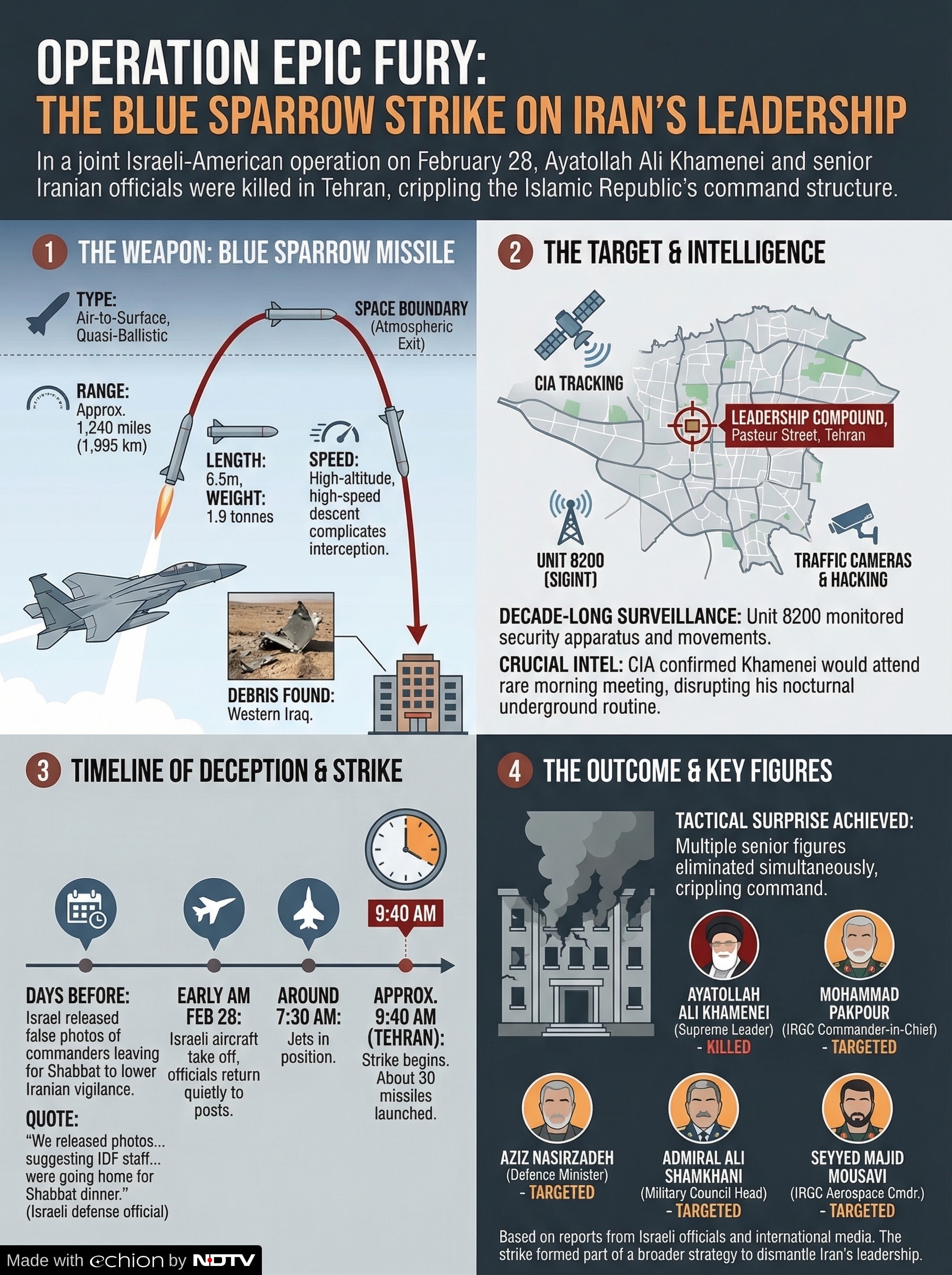
The missile measures 6.5 metres in length and weighs about 1.9 tonnes. It is typically launched from fighter aircraft, including Israeli F-15 jets, whose booster rockets propel the missile to high altitude before it begins its descent.
Because of their speed and trajectory, such weapons are suited to striking high-value, time-sensitive targets in heavily defended environments without exposing pilots to significant risk.
Target Tracked For Years
For more than two decades, Israel's signals intelligence unit, Unit 8200, had monitored the movements of Ayatollah Khamenei's security apparatus. According to reports, the unit tracked the schedules of bodyguards, intercepted communications, and gained access to surveillance cameras near his compound.
Traffic cameras around the compound on Pasteur Street proved particularly useful.
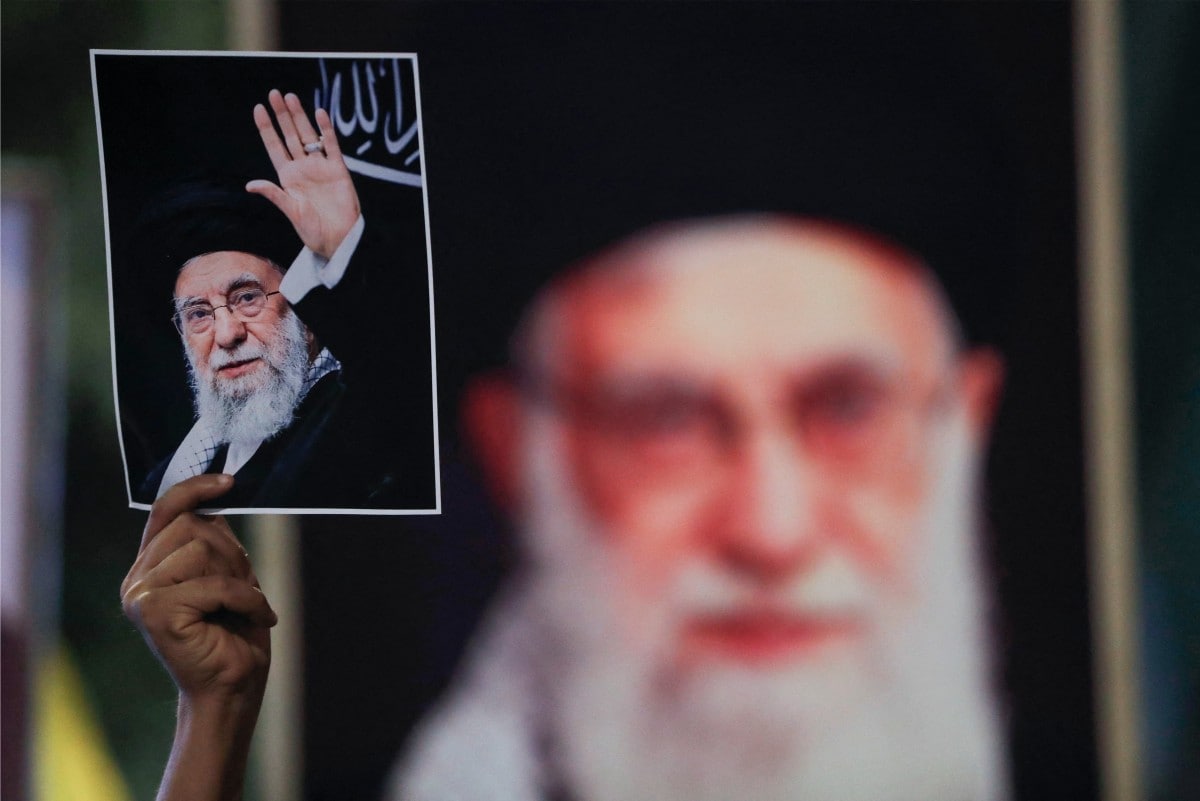
The Blue Sparrow missile played a decisive role in one of the most consequential targeted killings in modern Middle Eastern history.
Photo Credit: AFP
Through hacking operations and persistent monitoring, Israeli intelligence agencies were able to follow the arrival patterns of security personnel and the movements of senior Iranian officials visiting the compound.
The information was transmitted to command centres in Tel Aviv, allowing Israeli officials to build a detailed picture of the compound's activity.
At least one camera positioned near the compound played a key role in confirming when the security details arrived and when senior officials entered the facility.
According to Israeli defence officials, the intelligence operation formed part of a years-long campaign aimed at eliminating Khamenei.
A Moment Of Exposure
For weeks before the attack, Khamenei had reportedly spent most evenings in a deep underground bunker. The shelter was so deep, according to reports, that descending to it required approximately five minutes.
Iranian officials believed Israel would most likely conduct strikes at night. The assumption shaped Khamenei's security routines, keeping him underground during evening hours.
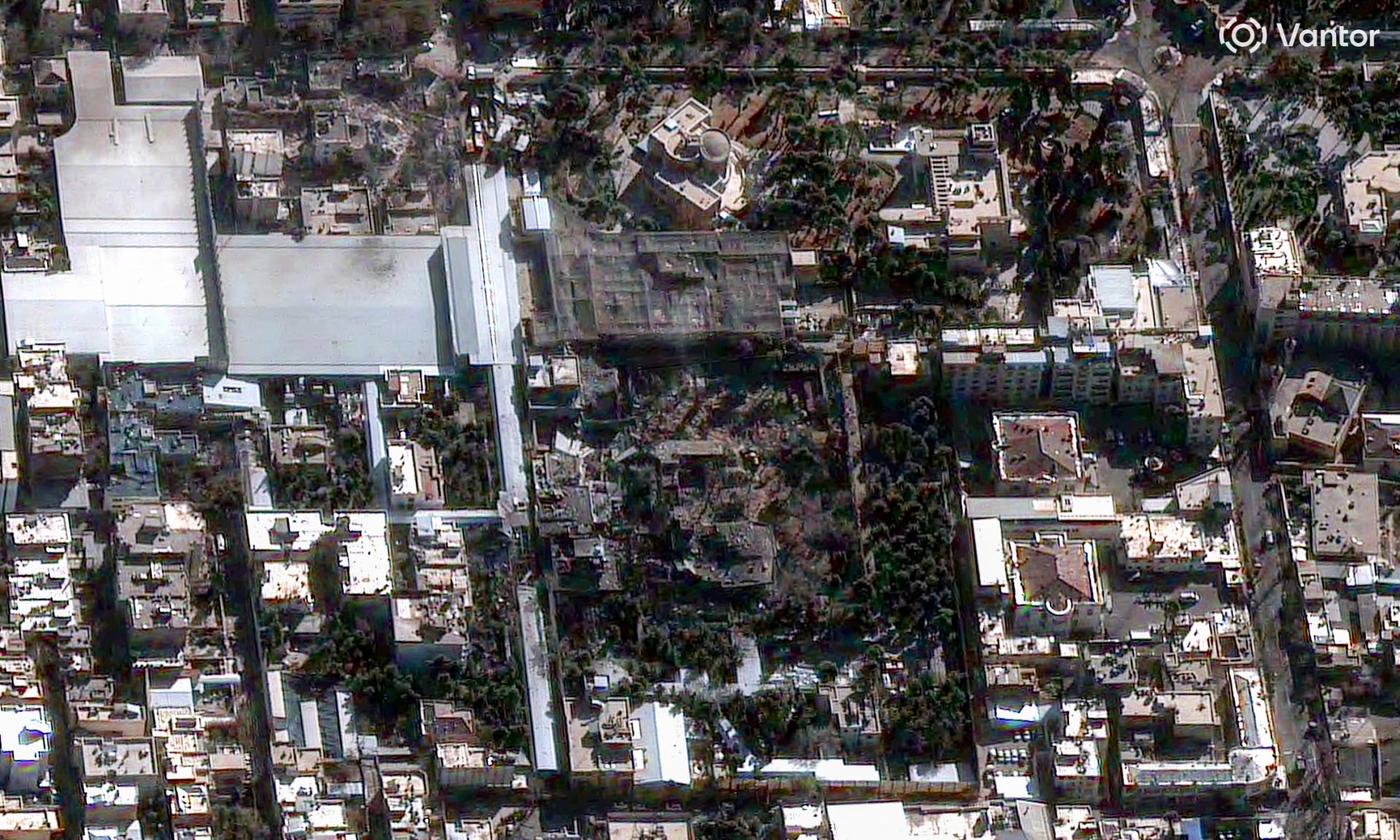
Satellite imagery shows the impact of the missile on the compound.
Photo Credit: AFP
Intelligence obtained by the CIA revealed that a gathering of Iran's senior leadership would take place that morning at the compound housing offices of the Iranian presidency, the supreme leader, and Iran's National Security Council.
According to the New York Times, the CIA learned that Khamenei himself would attend the meeting in person. The agency reportedly had been tracking Khamenei's movements for months and had gradually developed a clearer understanding of his travel patterns and security arrangements.
When the CIA confirmed the planned meeting, the information was passed to Israel.
Decision To Strike
The United States and Israel had originally intended to conduct the strike at night, under cover of darkness but the intelligence about the Saturday meeting forced a change in plans.
Officials in both governments concluded that the gathering offered an opportunity to eliminate multiple senior figures simultaneously. Adjusting the timing would increase the chances of killing Iran's most powerful political and military leaders in a single operation.
Among those expected to attend were several senior defence officials, including Mohammad Pakpour, commander in chief of the Islamic Revolutionary Guard Corps (IRGC), Aziz Nasirzadeh, Iran's defence minister, Admiral Ali Shamkhani, head of the Military Council, and Seyyed Majid Mousavi, commander of the IRGC Aerospace Force among other leaders.
Deception Before Attack
In the days before the strike, Israeli officials carried out a deception campaign intended to lower Iranian vigilance.
According to an Israeli defence official who spoke to reporters, the IDF deliberately released photographs and information suggesting that senior commanders were leaving headquarters to begin their weekend.
The images indicated that staff members were returning home for Shabbat dinner.
"We released photos and information suggesting that IDF staff and senior command were going home for Shabbat dinner," an official said, as quoted by the BBC.
The officials involved in the operation quietly returned to their posts after leaving the building, sometimes in disguise. Inside Israeli command centres, preparations for the strike accelerated.
The Attack Begins
The operation began shortly after 6 am in Israel. Israeli fighter aircraft took off from their bases carrying long-range precision weapons, including Blue Sparrow missiles. The mission required relatively few aircraft, but they carried highly accurate munitions designed for deep strikes.
Around 7:30 am Iran time, Israeli F-15 jets and other aircraft were in position.
Two hours and five minutes after the jets departed, at approximately 9:40 am in Tehran, the missiles struck.
About 30 missiles were launched in total.
Some struck the building where senior Iranian national security officials were meeting. Others hit nearby structures, including a building where Khamenei himself was located.
The official said Israel had achieved "tactical surprise."
-
Blog | Why You Should Care Whether Schrodinger's Cat Is Dead Or Alive

Imagine going on a romantic Alpine getaway and returning with the equation that runs the modern world. The only snag: nobody can quite agree on what it says about reality.
-
Promote, Punish, Repeat: Decoding Mayawati's Akash Anand Puzzle
The development in the BSP is unprecedented. Never before has any Indian party elevated a family member and dumped him or her unceremoniously thrice within a span of three years.
-
Opinion | Nepal Needs $5 Billion To Rebuild. World's Climate Fund Doesn't Have Even 10% Of It
The fund caps support at USD 20 million per project; Nepal needs two hundred times that. And the board is not scheduled to sit until December.
-
Mayawati's Tough Love: Nephew Akash Anand Benched Again. What It Means For BSP
Akash Anand, the 31-year-old foreign-educated nephew of BSP boss Mayawati, finds himself out of favour, for at least the third time in three years, with the latest turn coming in Lucknow on September 3.
-
Opinion | The Rise Of Indians In US Is Making Some Americans Very, Very Angry
A new report released yesterday shows how Indians are now among the biggest targets of racist attacks in America.
-
Opinion | China, Pak, A Stalled India Visit: How Signals From Bangladesh Are Getting Louder
A fighter jet deal with China, interest in Pakistan's military bloc, and a 'stalled' visit to India - all in a month. Bangladesh's drift is getting harder to ignore.
-
Opinion | Indus Treaty, Hague, And Pakistan's Endless Search For Leverage Over India
If the IWT survived all the trials in the past, it is because India's threshold of tolerance had been unusually high. But Pakistan must know that it can't arm-twist India through international pressure.
-
Opinion | Nepal's 'Climate Compensation' Pitch Is Valid, But Its Demand From India Isn't
Nepal's vulnerability gives it a claim on multilateral climate finance. It does not follow that India bears responsibility for this.
-
Opinion | India Wants A 6th-Generation Fighter. But A Lot Could Go Wrong
India might just be building too many fighter jets to focus on any one of them well. A recalculcation is needed.
-
Reporter's Diary | Worse Than War: An Aerial View Of Nepal's Trishuli River Valley Tragedy
In many ways, reporting on natural disasters is far more harrowing than covering modern war