Opinion | Indus Treaty, Hague, And Pakistan's Endless Search For Leverage Over India
If the IWT survived all the trials in the past, it is because India's threshold of tolerance had been unusually high. But Pakistan must know that it can't arm-twist India through international pressure.
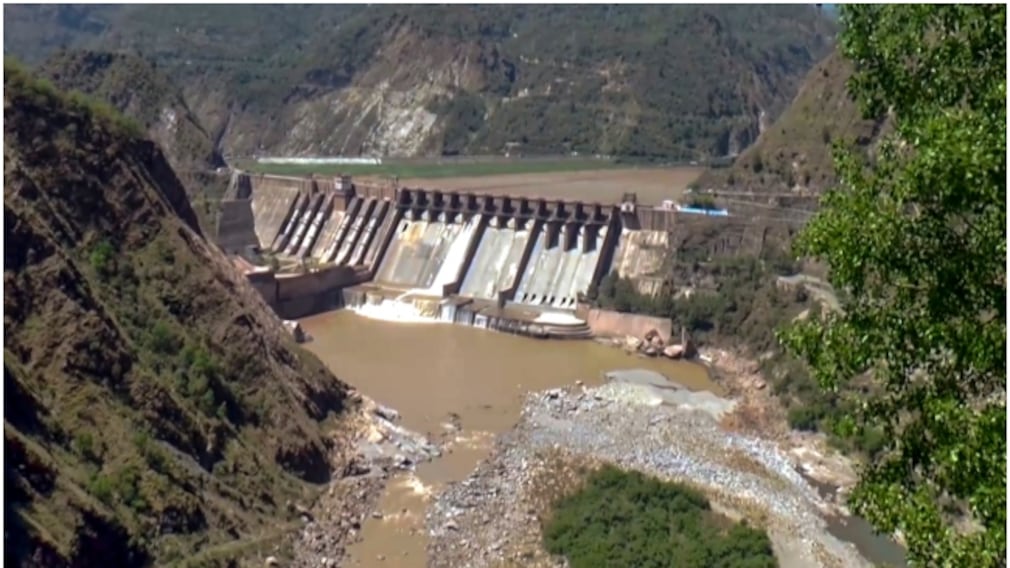
India is entirely justified in strongly rejecting the ruling of the Hague-based Court of Arbitration against India's decision to hold the Indus Waters Treaty (IWT) in abeyance. India has affirmed that it had never recognised the Court's authority, did not participate in the proceedings, and would not be bound by its rulings. It has called the Court's decisions legally invalid, stating that it has no jurisdiction over India's sovereign decisions concerning the Treaty.
India had opposed the World Bank's decision to set up the Court of Arbitration even though the issues in contention with Pakistan were being addressed by 'Neutral Experts', as provided for in the treaty. India's position is that the mechanisms for resolving differences and disputes under the Treaty between the two parties have to be invoked sequentially and not simultaneously. India has, therefore, not participated in any way in the proceedings of the Court.
The Court has rejected India's contention, stating that it has jurisdiction and competence to proceed regardless of India's boycott, that the Treaty does not prohibit parallel proceedings if different aspects (technical vs legal) of a project are being contested simultaneously. It has ruled that the Treaty remains fully active and in force, ordering India to uphold its binding provisions and rejecting India's step to hold it in abeyance. The Court has passed an ex parte order against India.
What The World Bank Had Said
In May 2025, following India's suspension of the IWT, the World Bank President had stated that the Bank had no role in the IWT beyond acting as a limited procedural facilitator. According to its Fact Sheet, the Bank does not arbitrate sovereign decisions or take sides in bilateral disputes between India and Pakistan. Nevertheless, the World Bank went ahead to constitute the Court of Arbitration. India, in its statement, criticised the World Bank for constituting the Court in patent breach of the terms of the IWT.
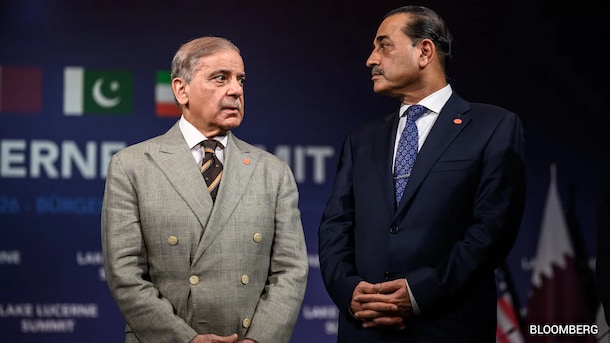
Pakistan has launched a major campaign at the international level against India's decision. It organised a major conclave in Islamabad in June 2026 to rally global support to that end. Pakistan, in the words of its Deputy Prime Minister and Foreign Minister, Ishaq Dar, is projecting the IWT as a vital instrument of regional stability rather than a simple water- sharing accord. It is calling it a binding international commitment rather than a concession to Pakistan. Bilawal Bhutto has gone as far as to insinuate that Pakistan may be compelled to give a nuclear response if India keeps denying it water.
Pak's Moment In The Sun
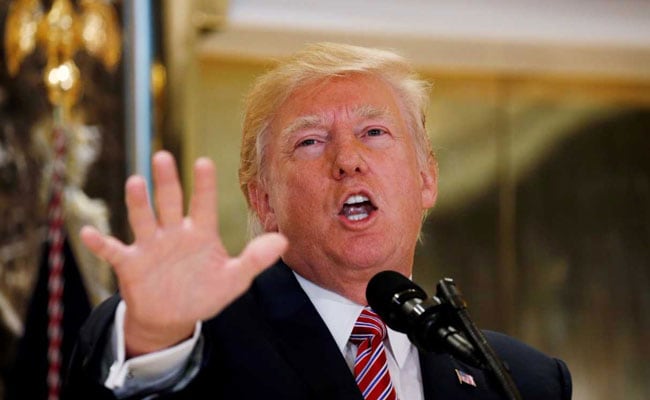
Pakistan no doubt feels that after the boost it has received from President Trump on India-Pakistan issues - be it on mediating on the Kashmir issue, his version of forcing a ceasefire following India's Operation Sindoor, the lionising of Asim Munir, his favourite Field Marshal, quoting approvingly Pakistan PM Shehbaz Sharif's concocted claim that Trump had saved 50 million lives by preventing a nuclear war in the sub-continent, or business and investment deals crafted with Pakistan by those associated with Trump, etc. - that it could raise the IWT issue internationally to advantage.
Pakistan now believes, especially after its efforts to mediate between the US and Iran, the defence pact with Saudi Arabia, and the tripartite defence pact between Saudi Arabia, Pakistan, and Turkey, that its international credentials have greatly improved and that it is no longer seen as a terrorist state. It feels, therefore, that its campaign against India on an issue as sensitive as water would echo favourably internationally. It will, of course, exploit the ruling of the Court of Arbitration to boost its propaganda.
The IWT was signed in 1960 at the initiative of the World Bank, which then and now is controlled by the US. The US had an obvious interest in stabilising Pakistan's future as an ally by promoting a treaty on sharing the resources of the Indus basin between India and Pakistan through a binding pact. The World Bank was in a position to help accomplish this, given India's reliance on it for soft development loans, which made the Indian leadership more amenable.
India's perspective was no doubt also that addressing an issue as sensitive and complex as water-sharing would contribute to longer-term friendly and stable ties with its neighbour. The Kashmir issue, on which the US and Britain had a pro-Pakistan approach, was already bedevilling ties between the two countries, and had put India on the defensive. India had a weak hand then, and, therefore, had agreed to the allocation of 80% of the water of the Indus basin to Pakistan, which by any measure was exceedingly generous. As the preamble of the IWT says, the spirit behind the treaty was one of goodwill and friendship.
Taken For Granted
The IWT has generated neither goodwill nor friendship. On the contrary, Pakistan has, over the years, become increasingly hostile. The IWT was signed in 1960. In 1965, Pakistan attacked India in a bid to physically grab Kashmir. The 1971 conflict followed. With military failures against India, Pakistan began resorting to state-sponsored terrorism. The list of Pakistani terrorist attacks against India is long, and its includes the mayhem in Mumbai in 2008.
If the IWT survived all these trials, it is because India's threshold of tolerance has been unusually high. India has been warning that blood and water cannot go together, without Pakistan heeding the admonition. It is only after the terrorist attack in Pahalgam that India decided to declare that it was holding the treaty in abeyance. India has not yet repudiated the treaty. In fact, it has been seeking a revision of the IWT. It formally notified Pakistan in January 2023 and then again in August 2024 about the need to review the treaty under Article X11(3), which allows for modification through a duly ratified intergovernmental agreement.
India has cited fundamental and unforeseen changes in circumstances, including demographics and environmental challenges, the need to accelerate clean energy development, concerns about cross-border terrorism, and longstanding disputes over the implementation and design constraints of run-of-the-river projects like Kishanganga and Ratle, for seeking a review. These two projects have been delayed by seven to ten years, thanks to Pakistan raising design objections and invoking dispute settlement mechanisms.
Tactical Delays
Pakistan has been systematically causing delays in the implementation of permitted Indian projects. India began the construction of the Baglihar project in 1999, and disputes raised by Pakistan were finally resolved only in 2010. India could not proceed with the Tulbul Navigation project in Kashmir because of Pakistan's objections. After the IWT has been held in abeyance, India intends to implement the project.
Pakistan wrongly claims that the IWT is an international agreement, perhaps in order to seek international support. It has not succeeded in this so far. It is a bilateral India-Pakistan agreement, which came into force after ratification by the two governments. The IWT has not been ratified by the UN Security Council.
Finally, the Treaty's colonial aspects are reflected in the Appendix to Annexure G pertaining to the composition of the Court of Arbitration. The selection of the Engineer member is to be done by the President of the Massachusetts Institute of Technology and the Rector of the Imperial College of Science and Technology in London. The legal member of the Court is to be selected by the Chief Justice of the United States and the Lord Chief Justice of England.
(Kanwal Sibal was Foreign Secretary and Ambassador to Turkey, Egypt, France, and Russia, and Deputy Chief Of Mission in Washington)
Disclaimer: These are the personal opinions of the author
-
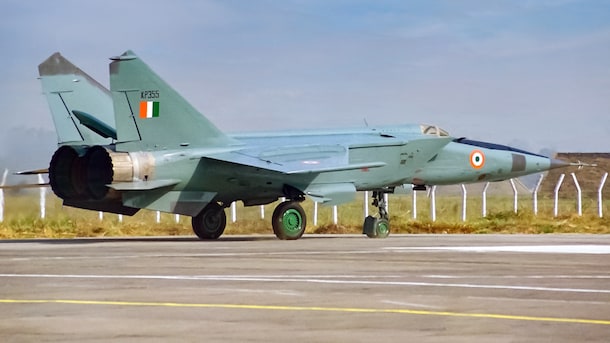
Edge Of Space, Mach 2.4: Flying India's Most Secret Jet Over Pakistan

The MiG-25 wasn't just any jet. Alongside the American SR-71 Blackbird, it was one of only two jet aircraft to fly operationally at close to Mach 3, three times the speed of sound.
-
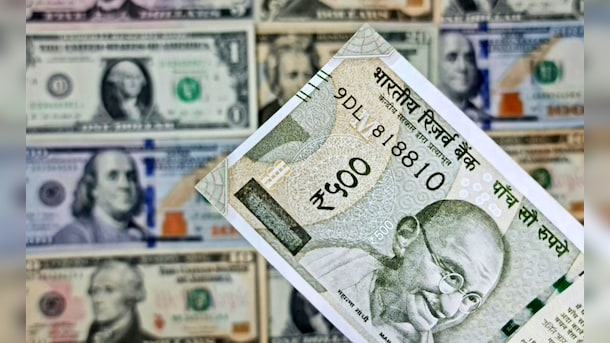
Opinion | India's $18.3 Billion Forex Reserve Shock Is A Warning, Not Just A Number
The reported USD 18.34 billion decline in India's foreign exchange reserves in a single week has attracted attention for more than its size
-
Congress Falls Back On A Fullback: Where Pargat Singh Fits In The Punjab Poll Play
Vijay Inder Singla, a Hindu face, was reportedly the frontrunner before the Congress replaced one Jat Sikh with another as its Punjab unit chief. How far does such arithmetic work in the state's politics? Pargat's appointment holds some of the answers.
-
Why Doesn't Congress Boycott If Polls Are "Fixed"? Answer Lies Beyond Rahul Gandhi's "Distraction" Quip
The starkest demand for a boycott has come from outside the political Opposition, from the Cockroach Janta Party. But does a boycott help? Here's what research, examples, and expert analysis tell us.
-
'Sully' To Gimli, Sioux To Patna: When Pilots Got It Unbelievably Right
Captain Smit Machchhar fought off his co-pilot after being stabbed and opened the cockpit door, saving 174 people.
-
Opinion | Are Saudi Arabia And UAE Reuniting Again After 10 Years?
On Tuesday, the UAE's Vice President, Deputy Prime Minister and Chairman of the Presidential Court, Mansour bin Zayed, met Saudi Crown Prince Mohammed bin Salman.
-
Opinion | 'Lies, Damned Lies, Statistics': On The Controversy Around India's GDP Growth Figures
The debate is less about a single figure than about a decade-long erosion of trust in official statistics.
-
Opinion | Why India Cannot Keep 'Overestimating' Its Value To Washington
Some of India's value to Washington came from the tension between the US and China. That is changing now.