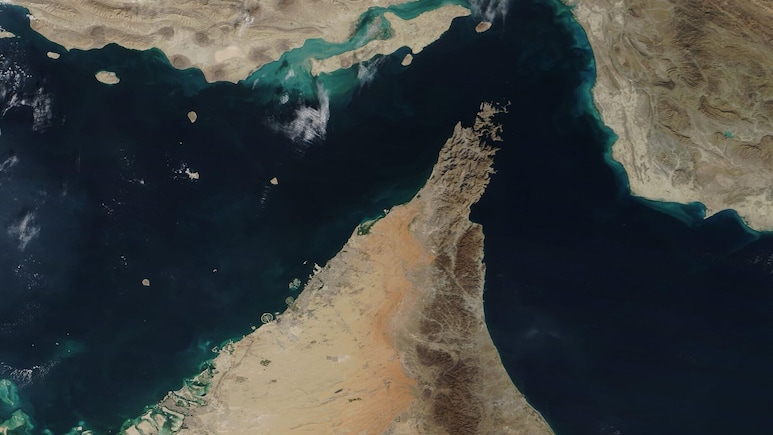
Wall Street research firm Citrini Research has taken an unconventional approach to assessing tensions in the Strait of Hormuz. The firm sent an analyst directly to Oman's Musandam Peninsula to observe shipping activity.
The firm's report, published on Substack, suggests that contrary to widespread belief, the Strait is not completely shut. The analyst, whose name was withheld due to the sensitive nature of the assignment, reportedly found that vessels are continuing to pass through, with traffic recently rising to around 15 ships per day. Though this is still well below usual volumes, the activity indicates that the disruption is partial and evolving, rather than complete.
“Tankers passing through four or five a day, completely dark on AIS. The volume, they said, is higher than what the data suggests, and it's been accelerating in the past couple days through the Qeshm channel,” Citrini stated in its report, as cited by CNBC.
AIS, or Automatic Identification System, is a tracking system that broadcasts a vessel's location, speed, identity and route. Citrini states that many ships switch off their transponders, which means actual traffic could be higher than what official data indicates.
The analyst also spoke to local fishermen, smugglers and regional officials. These interviews suggest that Iran is allowing vessels to pass selectively. Tankers must obtain approval to navigate near Iranian territory, creating what the firm described as a “functional checkpoint” instead of a blockade.
“This should drive home that what we've described as our view of the conflict is nuanced, it doesn't fit neatly into ‘strait open crude down' or ‘strait closed crude parabolic,'” the report said.
Citrini acknowledged that the findings are based on just one field trip and rely on accounts that are hard to verify, especially because information from the region is limited. The firm expects the disruption to last longer, keeping oil prices higher for an extended period.
“We think the disruption is longer and the new normal involves a permanent risk premium, but that we'll likely see as high as 50% of pre-conflict traffic within the next 4-6 weeks,” the firm said.
Because of this, it prefers longer-term crude contracts, favouring December 2026 WTI over the nearer-term ones.
Track Latest News Live on NDTV.com and get news updates from India and around the world


