Cheap Drones, Claude AI, Cyberattacks: Behind US-Israel's 'New' War On Iran
Cyber warfare, Claude, cheap drones - as the US and Israel jointly pound Iran, and Tehran hits back by dragging West Asia into a regional war, are these the backbone of a new kind of military conflict?
A fifth-generation F-22 stealth fighter jet can cost as much as US$300 million. A F-35 costs over US$82 million. A single Tomahawk missile costs US$ 2 million and dozens, 30 to 60 estimated, have been fired in joint US-Israel military strikes on Iran that began Saturday.
Factor in the use of THAAD missile interceptors at US$13 million each and air-launched cruise missiles like the AGM-158 JASSM at around US$1 million each, and the vast array of other missiles and military aircraft deployed and the bill already runs to several billion dollars.
Fighter jets and missiles are the traditional 'big guns' - the backbone of the 'shock and awe' strategy the US has used to overwhelm enemy combatants since the Gulf War
And it has been a tactic that has served Washington well over the years, allowing it to exert and maintain military dominance over large areas while keeping casualties to a minimum.
Long-range missiles suppress or eliminate enemy air defences and C2, or Command and Control, nodes, while fighter jets enforce air superiority and keep enemy air assets off-balance.
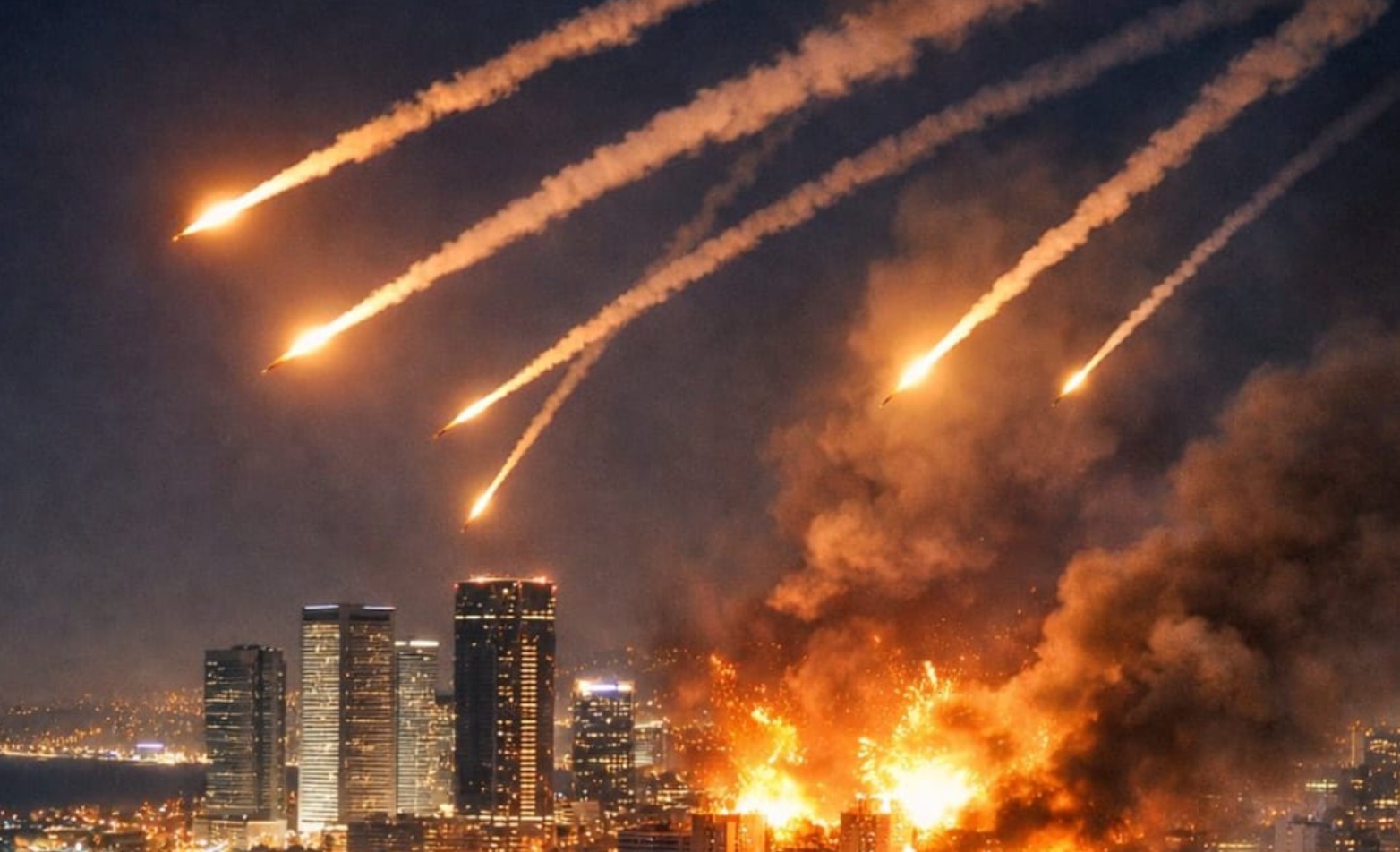
Missiles launched by the US and Israel target areas in central Tehran
But it is all very expensive, in terms of money and resupply time; it takes two-three years to deliver a F-22 and the US is believed to be firing Tomahawks faster than it can replace them.
In strikes on Iran, however, the US seems to have opened a new chapter in its military strategy, underscoring the shift to Artificial Intelligence and copying Iranian and Ukrainian playbooks in pivoting to inexpensive drones as part of a tactic called "affordable mass"; i.e., having plenty of relatively cheap weapons at the ready.
'Developed in Iran, made in US'
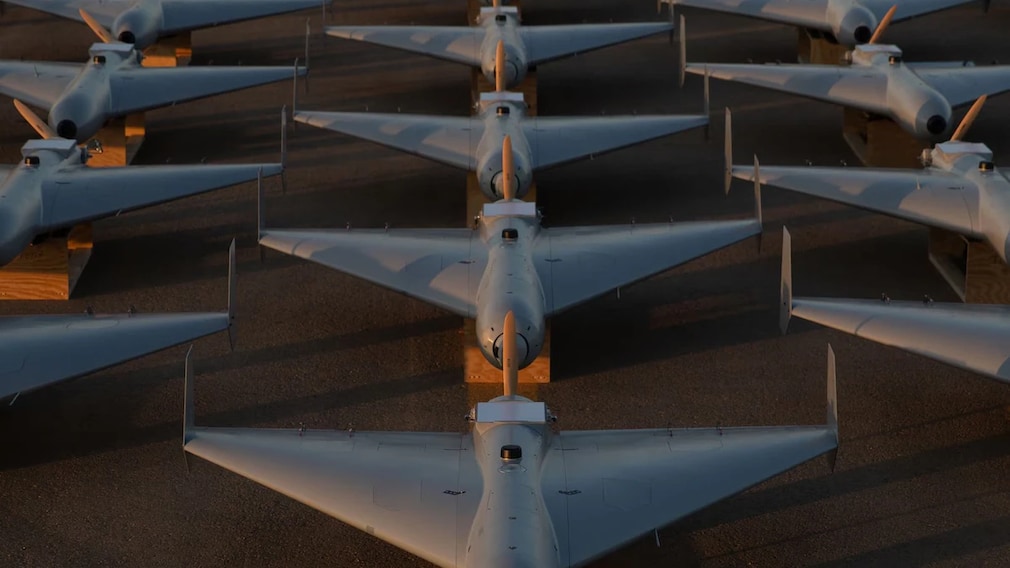
The US military has confirmed use of these suicide drones in Iran.
CENTCOM, the US C2 node directing strikes, said it was using "one-way attack drones... modelled after Iran's Shahed drones". Reuters found photos of these to be similar to the LUCAS (Low-Cost Unmanned Combat Attack System) drone by Arizona-based Spektreworks.
CENTCOM's Task Force Scorpion Strike - for the first time in history - is using one-way attack drones in combat during Operation Epic Fury. These low-cost drones, modeled after Iran's Shahed drones, are now delivering American-made retribution. 🇺🇸 pic.twitter.com/VYdjiECKDT
— U.S. Central Command (@CENTCOM) February 28, 2026
Each LUCAS drone costs US$35,000 only and they are designed as loitering munitions, i.e., precision missiles that can hover over an area, identify its target, and dive-bomb them.
This means for the price of one Tomahawk the US gets more than 50 attack drones that slot into a mission-critical weapons slot between cruise missiles and armed (but larger) drones.
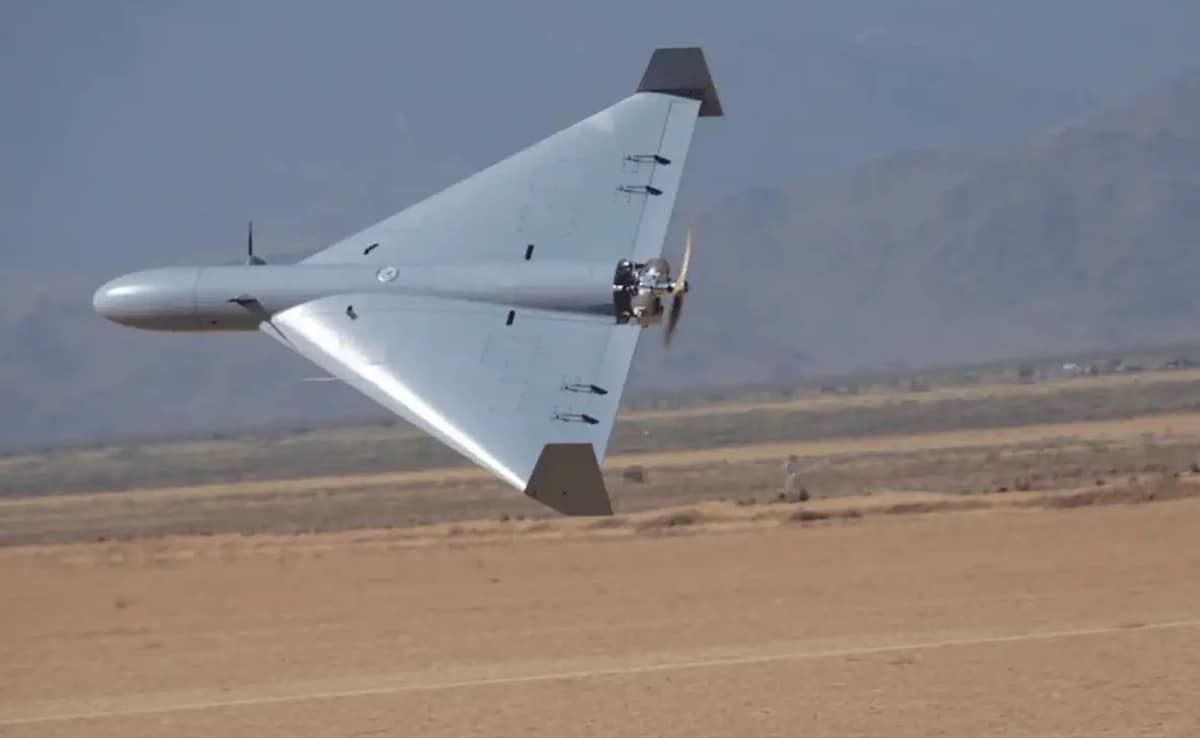
A LUCAS drone in flight. Image posted on X by @shanaka86
And in December last year the US activated Task Force Scorpion Strike, its first 'one-way attack drone squadron' based in West Asia.
But this is not an overnight development.
The evolution became apparent in the Russia-Ukraine theatre after exhaustion over a war in its fifth year, forced a transition from artillery to FPV, or first-person view, drones that operate in offensive and defensive capacities, expanding front lines and converting them into 'kill zones'.
NDTV Exclusive | The Hunters Of Lyman - Inside Ukraine's Deadliest Drone Unit
Starting with battlefield conversion of cheap commercial devices - by the simple process of strapping a bomb to it - to the United State's LUCAS, Iran's Shahed, and Turkey's Bayraktar (technically an armed UAV), platforms, modern warfare is now widely seen as 'impossible' without the use of drones.
Cyber chaos during attack
Cyber warfare has been a feature of military conflict for some time now.
Modern fighter jets, particularly the fifth-generation stealth platforms like the F-35, and missile launch systems, which rely heavily on computers for avionics and targeting, and can be hacked carry advanced anti-cyber warfare and anti-hacking capabilities and counter-measures.
In the US' 'Operation Epic Fury', however, there are signs cyber warfare has also evolved, transitioning from targeting only military assets and installations to civilian infrastructure.
Early Saturday, as the first wave of American and Israeli missiles pounded Iran, they were backed by a rush of cyber-enabled ops, cybersecurity experts and observers told Reuters.
This included the hacking of BadeSaba, a popular religious calendar app, to display messages telling its over five million users 'it's time for reckoning' and urging Iranians to lay down arms.
READ | Israel Hacked Iranian Prayer App, Urged IRGC To Betray The Regime
Cue flashback of propaganda leaflets dropped by Allied and Axis forces during WW II.
Also, internet connectivity in Iran was mysteriously disabled, twice, while cyber ops also struck several Iranian government services and military targets to limit Tehran's armed response.
The goal is simple - to add to the overall confusion after a missile or drone attack - and the result, in a world entirely reliant on technology can often be spectacular, simultaneously heaping civilian-led pressure on the State to surrender and limit retaliation coordination.
Claude AI, the 'intelligence' edge
AI, or Artificial Intelligence, was always going to have military applications. There is enough evidence of that in the dozens of sci-fi movies Hollywood has churned out over the years.
The US military used Anthropic's Claude AI, relying on it for battlefield intelligence assessments, target identification, and even simulations, the Wall Street Journal reported.
The big headline was that Claude was used hours after Trump - miffed after the Pentagon was refused unrestricted access to the tech - directed the federal government to stop using the AI.

Claude on X
As with the drones, there is precedence.
Israel used its Habsora AI to generate targets in Gaza, while Ukraine and Russia have incorporated AI into its drones for real-time target identification, which is particularly important as drone counter-measures evolve to include jamming and signal disruption.
Using AI to enhance real-time, battlefield decision-making, whether in drones, fighter jets, or land-based platforms, will be the newest chapter in the symbiosis of LLMs and military tech.
What does this all mean?
A new kind of synergised warfare.
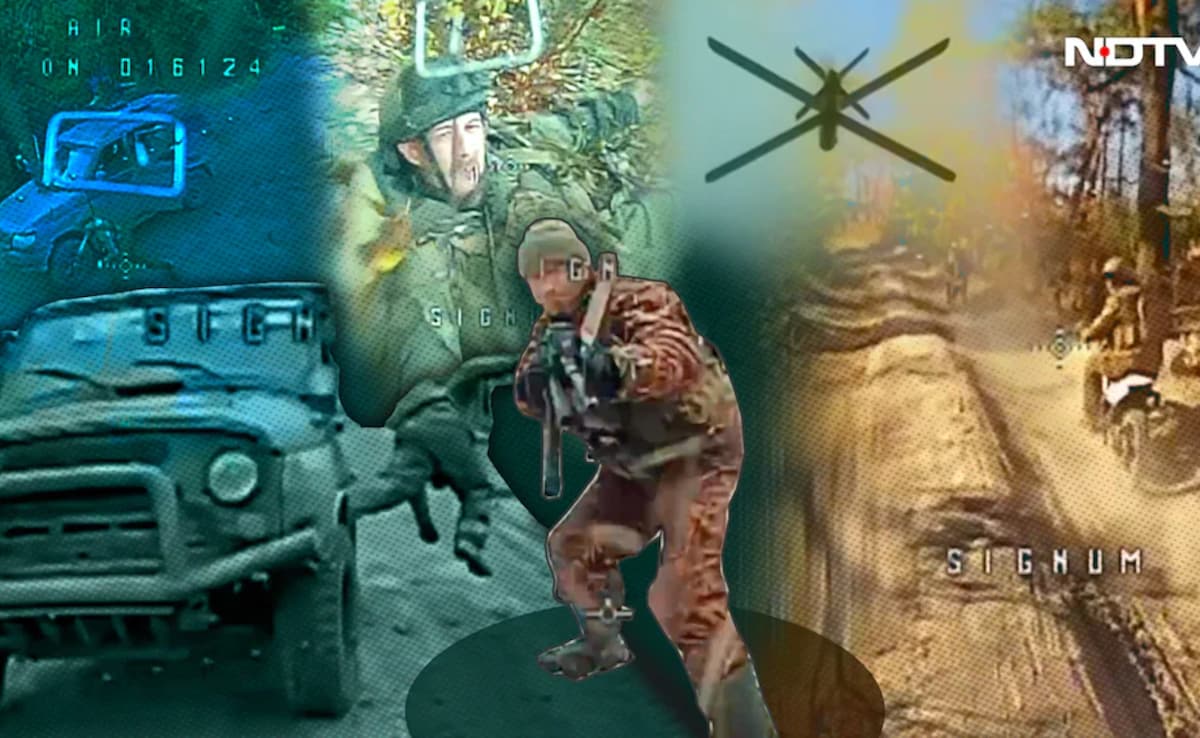
The Ukraine-Russia war charted the course for a whole new kind of warfare
'Attack' drones powered by AI-driven combat zone management oversaturate enemy air and ground defences. These are backed by cyber ops sowing confusion among military and civilian populations and providing cover for stealth aircraft like B-2 bombers or F-35s.
In one line, cheap technology appears set to democratise high-impact warfare.
-
Opinion | China's Quiet Power Grab Is Hiding In Plain Sight

China's greatest advantage may be neither its military nor its markets, but a world too distracted to see what it is building.
-
Reporter's Diary | Worse Than War: An Aerial View Of Nepal's Trishuli River Valley Tragedy
In many ways, reporting on natural disasters is far more harrowing than covering modern war
-
Opinion | The Indian Investor Has A New Problem: An SIP That Does Nothing
You keep doing everything right. So why aren't your stocks paying off, even as your investments rise?
-
The River Took It All: Aerial Visuals From Nepal Show Scale Of Catastrophe | NDTV Exclusive
Visuals from a helicopter showed narrow gorges now flattened and widened into valley-like spreads, with rocks, debris, mud, and bodies strewn across them.
-
Before The Nepal Flood, A Glacial Fall: Tracing The Trigger, And A 100-km Killer Surge
A glacier came off a ridge on the Nepal-China border and travelled 100 km down multiple rivers, the longest part of the run being in the Trishuli.
-
Opinion | How A 'Friendship' Pact With Russia Came To India's Rescue 55 Years Ago
With PM Modi set to meet Putin in Kyrgyzstan, a throwback to a historic treaty that helped India fend off Pakistan - and America's 7th Fleet - over 50 years ago.
-
Opinion | The OBC Fault Line That Could Shake Up Uttar Pradesh - And BJP
For years, the BJP was propelled by support from the OBCs. Now, cracks have begun to appear in that base
-
Census Asks 40 Questions. Why Number 10 Is A Battleground | NDTV Explains
The caste question is a fill-in-the-blank for everyone other than SCs and STs. But there's a case for making it a dropdown with set options. Let's decode the history and math behind the politics.