NDTV Exclusive: The Hunters Of Lyman - Inside Ukraine's Deadliest Drone Unit
In an exhaustive interview with NDTV, drone pilots and operators from Ukraine's Signum Batallion go into details about drone warfare and what happens on the frontlines.
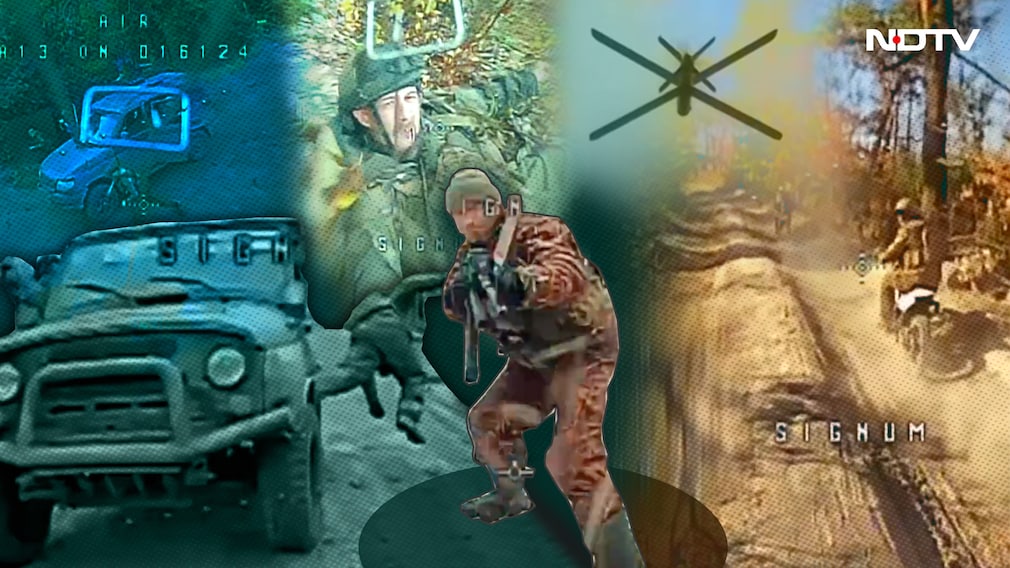
Just east of the battered town of Lyman, the Russia-Ukraine war now unfolds less with the sound of thunder than with the low electronic hum of First-Person View (FPV) drones. Above narrow forest tracks and cratered roads and snow, Ukrainian drone pilots from the Signum Battalion sit behind screens, watching Russian supply routes with the patience of skilled hunters. Roads watched, movements tracked, logistics quietly erased -- their work is methodical and planned to the very last detail, and its effects ripple quickly through the frontlines.
In one instance, a video filmed from high above the trees shows an all-terrain vehicle (ATV) tearing along a forest road, carrying two Russian soldiers and whatever supplies they can salvage for the night ahead. The Ukrainian drone follows without haste. When the men finally realise they are being chased, they abandon the vehicle seconds before impact. The jump was instinctive, but futile. The ATV was destroyed, the supplies lost, and another thin thread connecting Russian units near Lyman was cut.
Elsewhere, the Signum pilots launch waves of "Molniya" -- Lightning -- kamikaze drones, pushing them through defensive fire towards dugouts, vehicles and temporary shelters. By night, Russian troops attempt to move in small groups, relying on darkness and trees for cover. It no longer works, though. Thermal cameras and night-flying drones expose each movement, turning the forest into a lit stage which the drone operators use to take out one Russian soldier after the other with relative ease. By morning, Signum's operators say, "He who moves at night does not live to see the morning."
In an exhaustive interview with NDTV. Signum's pilots and operators go into details about drone warfare and what happens on the frontlines.
1. What is the Signum battalion?
The Signum unit originated in the first days of Russia's full-scale invasion of Ukraine in 2022 as a volunteer detachment formed to defend Kyiv. Shortly thereafter, its members were redeployed to eastern Ukraine, where they joined the defence of positions held by the 3rd Battalion of the 93rd Mechanized Brigade. The unit was later formally integrated into the Armed Forces of Ukraine.
At the time, the 93rd Brigade was defending one of the most contested sectors near Izium. Russian forces frequently committed disproportionate armoured resources, deploying up to 10-12 tanks in assaults on individual villages.
2. How has the transition been from a decentralised volunteer unit in early 2022 to a formalised technical element within the 93rd and now the 53rd Separate Mechanized Brigades?
In early 2022, the Ukrainian Armed Forces lacked clear procedures for integrating volunteer formations, and many commanders were understandably reluctant to assume responsibility for irregular units. As a result, early cooperation was largely informal.
One of the first commanders to formalise this cooperation was Battalion Commander Oleksandr Sak. In August 2022, Signum personnel were officially enlisted into his battalion. At that point, the unit numbered approximately 40 soldiers.
3. What was the most significant tactical lesson that changed how the battalion approached later long-term defensive operations in the frontlines?
Signum's early use of FPV drones as strike platforms in 2022, among the first systematic applications of this method, demonstrated that the character of warfare had fundamentally changed. Combat increasingly shifted toward remote engagement, where drones, rather than infantry, became the primary means of contact with the enemy.
Among the key tactical lessons of the war, we learned that no number of drones should be spared against a single occupying soldier.
Equally important was the prioritisation of counter-reconnaissance: destroying enemy surveillance UAVs to degrade situational awareness. In 2025 alone,
Signum crews destroyed more than 520 enemy reconnaissance drones, including systems valued at several hundred thousand dollars.
4. Who is your military commander, Sova? As per reports, he's been fighting since 2014. How has he survived so many Russian assaults?
The unit commander, known by the callsign "Sova," was born in 1991. He participated in the Revolution of Dignity (2013-2014) and joined the Kulchytskyi Battalion as a volunteer fighter in 2014. Rather than pursuing a conventional military career, he remained continuously engaged in defending Ukraine throughout successive phases of Russian aggression.
Despite his long combat experience, he received his first officer rank only in 2025.
SIGNUM intercepts logistics
— Signum (@umftteam) January 27, 2026
📍Lyman direction
Pilots of the SIGNUM battalion keep the roads under their sights and methodically destroy everything that moves the enemy. #signum #fpvdrone #warinukraine🇺🇦 #зсу pic.twitter.com/l2rh4nHSEB
5. Signum was notable for holding its positions during the height of the battles for Soledar and Bakhmut; what specific technological or reconnaissance edge allowed for such resilience against massed Russian assaults?
Signum defended positions in and around Bakhmut for over four months. Its key advantage was the tight integration of reconnaissance assets with mobile firepower. Unlike many conventional units, Signum's reconnaissance teams exercised direct control over fire assets, minimising delays caused by layered command structures.
This approach enabled rapid decision-making and manoeuvre. During the defence of Soledar and Bakhmut, the unit employed mobile mortars, MK19 automatic grenade launchers, AGS systems, and FPV drones. Planning and execution were conducted internally, fostering a high degree of individual responsibility rather than rigid adherence to externally issued orders.
6. Since pioneering the first FPV kamikaze strikes, has the profile of an "ideal pilot" shifted toward professional engineers and gamers over traditional infantry backgrounds?
While technical skills are important, Signum places particular value on FPV pilots with prior infantry experience. Even today, drone operators with infantry backgrounds are expected to conduct close-quarters tasks when flying is impossible due to weather or electronic interference.
The unit deliberately operates in close coordination with infantry and positions itself near the forward line. Proximity to the enemy significantly shortens response times and increases the likelihood of engaging high-value targets before competing units.
When "Lightning" goes out in the sky
— Signum (@umftteam) January 25, 2026
"Molniya" kamikaze unmanned aerial vehicles are launched in waves — at positions, equipment, and shelters.
Their task is simple: break through and strike.
The SIGNUM battalion crew destroyed 33 Lightnings in a short period of time. #signum pic.twitter.com/yLPgn3hlK0
7. With over 500 enemy vehicles confirmed destroyed or damaged by your unit since late 2023, do you prioritise specific target sets like electronic warfare (EW) systems or enemy vehicles?
Target prioritisation is determined by higher command and often guided by the E-Points system, which assigns weighted values to different target categories (for example, 12 points for an enemy infantryman, 40 for a tank).
During periods of high drone availability in 2025, Signum achieved up to 6,500 points per month. In spring and summer, emphasis was placed on enemy logistics and long-range reconnaissance drones, resulting in the destruction of hundreds of vehicles. Since late summer, infantry has become the primary focus, with an average of 150-200 enemy personnel neutralised per month.
Enemy FPV operators are treated as high-value targets and receive elevated scoring. In addition, during enemy assault operations, priority is given to the destruction of armoured vehicles.
8. As Russian forces deploy increasingly improvised physical defences like "turtle tanks," how is Signum adapting its FPV flight paths or explosive payloads to maintain high efficiency?
Against heavily modified or improvised armoured vehicles, Signum employs large Ukrainian-produced shaped-charge warheads as well as custom munitions developed in-house. These targets are typically engaged through coordinated strikes combining FPV drones and heavier bomber UAVs.
9. The Lancet is a high-value loitering munition; what specific flight patterns or electronic signatures did Signum study to achieve the first successful FPV-on-drone interception?
Attempts to intercept enemy UAVs with FPV drones began in early 2023 during the Bakhmut campaign, initially as decentralised initiatives by individual crews. By 2024, drone-on-drone engagements became operationally necessary due to shortages of MANPADS missiles.
Within this context, Signum became the first unit to successfully destroy a Russian Lancet loitering munition using another drone.
Your drones are literally saving lives!
— Спільнота Стерненка (@sternenkofund) October 22, 2025
During another night mission against Shaheds, operators of the Signum @umftteam unit detected a Lancet rapidly approaching their positions.
Thanks to skillful coordination and flawless work with the STING drone, they managed to destroy… pic.twitter.com/fPyGKBXa5e
10. During the summer of 2024, the unit neutralised over 70 aerial targets in a single month; what was the most difficult Russian reconnaissance asset to bring down during that period?
Initial encounters with any new aerial threat tend to be the most challenging. Once tactics are refined, effectiveness increases rapidly. By the end of 2025, Signum ranked among the leading Ukrainian units in aerial target destruction using drones.
From mid-2025 onward, the unit was also among the first to intercept Shahed drones with interceptor UAVs, destroying more than 60 to date.
11. How much of your success in intercepting assets depends on visual detection versus the development of radio channel scanning to identify enemy activity before launch?
Radio intelligence is essential for detecting and intercepting aerial targets. In contrast, engagements against infantry and ground assets rely primarily on visual reconnaissance conducted by drones operating continuously, day and night.
12. What is the difference between a fibre-optic drone and an FPV drone?
Fibre-optic drones transmit video from the onboard camera through a physical cable. This is comparable to cable television. In contrast, radio-controlled drones operate like satellite or analogue television, relying on radio antennas and repeaters.
Another analogy is internet connectivity. If your computer is connected via a fibre-optic cable, the signal is stable. If it is connected via a Wi-Fi router, the signal quality fluctuates depending on location, because Wi-Fi is a form of radio communication. Incidentally, if Wi-Fi operates on the 2.4 GHz frequency, some microwave ovens using the same frequency can cause interference, a kind of domestic electronic warfare (EW). This is why Wi-Fi routers are not recommended to be placed near other sources of radio emissions.
Another significant difference between fibre-optic drones and radio-controlled drones is that a fibre-optic drone must carry a cable spool, similar to a fishing reel. These spools add substantial weight, approximately 1.5 to 3 kilograms, depending on cable length. Currently, spools with ranges exceeding 20 kilometres are in use.
13. How does the practice of using air detonation systems on FPV interceptors differ technically from traditional contact-fused drones, and does it require specialised pilot training?
Enemy reconnaissance drones are typically lightweight structures composed of plywood, aluminium, and plastic. A proximity air burst detonating one to two meters from the target is sufficient to destroy them, making direct contact unnecessary.
The last shelter of the occupier is a street toilet
— Signum (@umftteam) January 22, 2026
📍Lyman direction
At night, the occupier tried to gain a foothold in the settlement among the broken houses, thinking that the darkness would be a shelter for him. But he was wrong.#signum #fpvdrone #warinukraine🇺🇦 #зсу pic.twitter.com/OYXfel6BFz
14. As Ukraine moves toward domestic models like the Shmavik, which feature the original DJI Mavic-stability, optics, or software, has been the most difficult for Ukrainian developers to replicate or exceed?
Signum engineers have developed reconnaissance drones capable of performing functions comparable to the DJI Mavic. However, achieving equivalent software maturity, stabilisation, and user-friendly control requires substantial time and financial investment. DJI's primary advantages remain in system integration and usability at scale.
15. Are you currently testing AI-powered visual navigation or autonomous targeting to ensure drones can hit their targets even after losing a signal due to electronic warfare?
Yes. Signum engineers are actively testing visual navigation and autonomy solutions. While the potential of AI is significant, development requires considerable resources. Other Ukrainian manufacturers have progressed further in this area, and broader deployment is expected in 2026.
16. Considering some Western interceptor alternatives can cost up to $17,000, what is the maximum sustainable cost for a unit like yours to maintain the high-volume strikes required on the front lines?
The "Sting" interceptor drone produced by Wild Hornets has proven operationally effective. The cost for the Ukrainian military is approximately $3,000 when equipped with a TV camera. Ukrainian-produced drones remain significantly cheaper than comparable Western systems.
17. How does using fully Ukrainian software in your new UAS platforms improve operational security and data protection compared to previous reliance on Chinese servers?
Signum prioritises Ukrainian-developed software to enhance operational security and reduce data exposure risks. When foreign platforms are used, particularly DJI systems, additional security modifications are applied to mitigate vulnerabilities.
18. Following the return of soldiers from Russian captivity, what are the primary physical and psychological rehabilitation protocols the unit utilises to assist their reintegration?
Rehabilitation is highly individual. For many, meaningful participation in operational success serves as an effective form of psychological recovery.
Between March and December 2025, Signum neutralised over 1,000 enemy infantry using FPV drones, destroyed more than 700 enemy shelters with bomber drones, as well as dozens of artillery systems and hundreds of vehicles.
The brigade ranked among the top three units in the E-Points system for several months. Contributing to tangible battlefield results is the most effective form of rehabilitation.
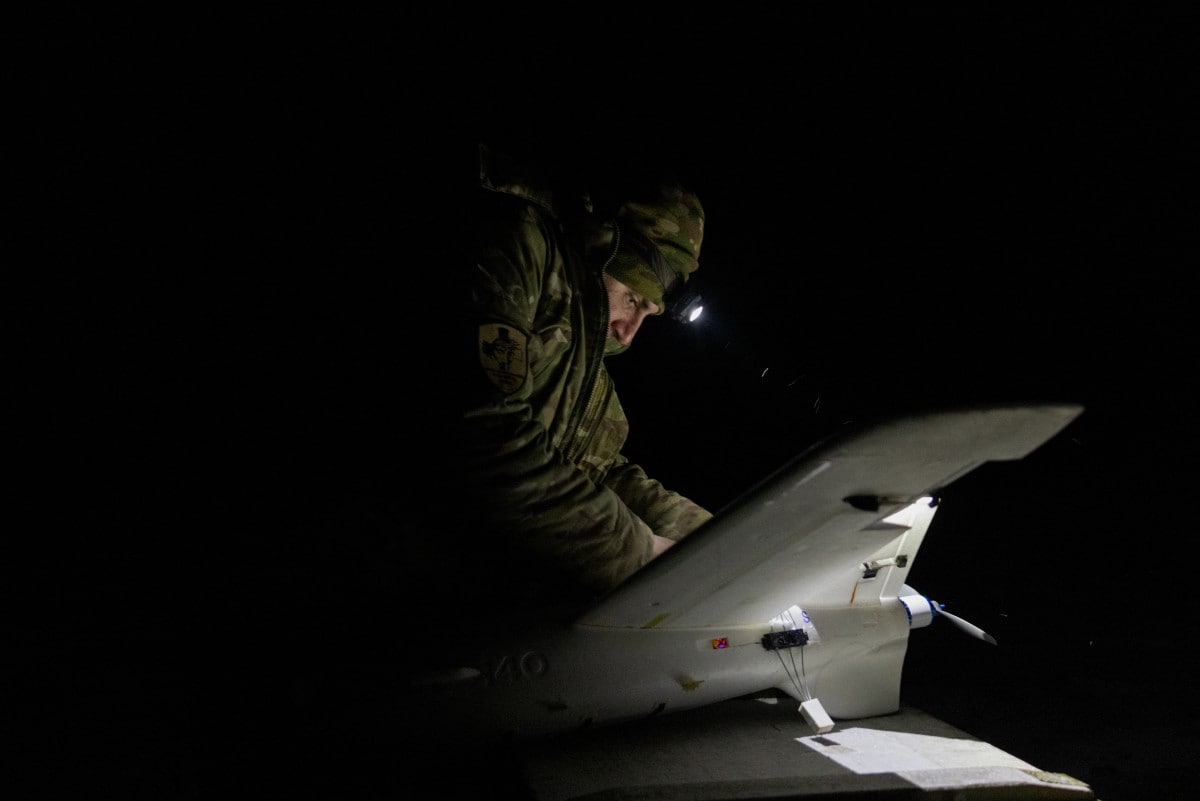
A Ukrainian serviceman of the 18th Sloviansk Brigade of the National Guard of Ukraine works on a drone interceptor in the Donetsk region on January 22, 2026, amid the Russian invasion of Ukraine.
Photo Credit: AFP
19. As a unit that originally operated without state salaries, what is the most critical item currently required by the battalion that is not being supplied by the central government?
There is never such a thing as too many drones.
In practical terms, we could employ two to three times more drones than we currently receive from the state and volunteers, which would proportionally increase the battalion's operational results. We believe that the target set by the new Minister of Defence, Mykhailo Fedorov, to neutralise 50,000 Russian occupying forces per month is realistic, provided that drone availability is significantly increased.
Another challenge lies in procurement policy. The state primarily purchases certified drones, while newer and more capable systems are already available on the market but have not yet completed certification. These include, for example, fibre-optic drones with ranges exceeding 30 kilometres, as well as systems produced by manufacturers who choose not to undergo state certification and codification despite their proven effectiveness, such as the Sting drones produced by Wild Hornets.
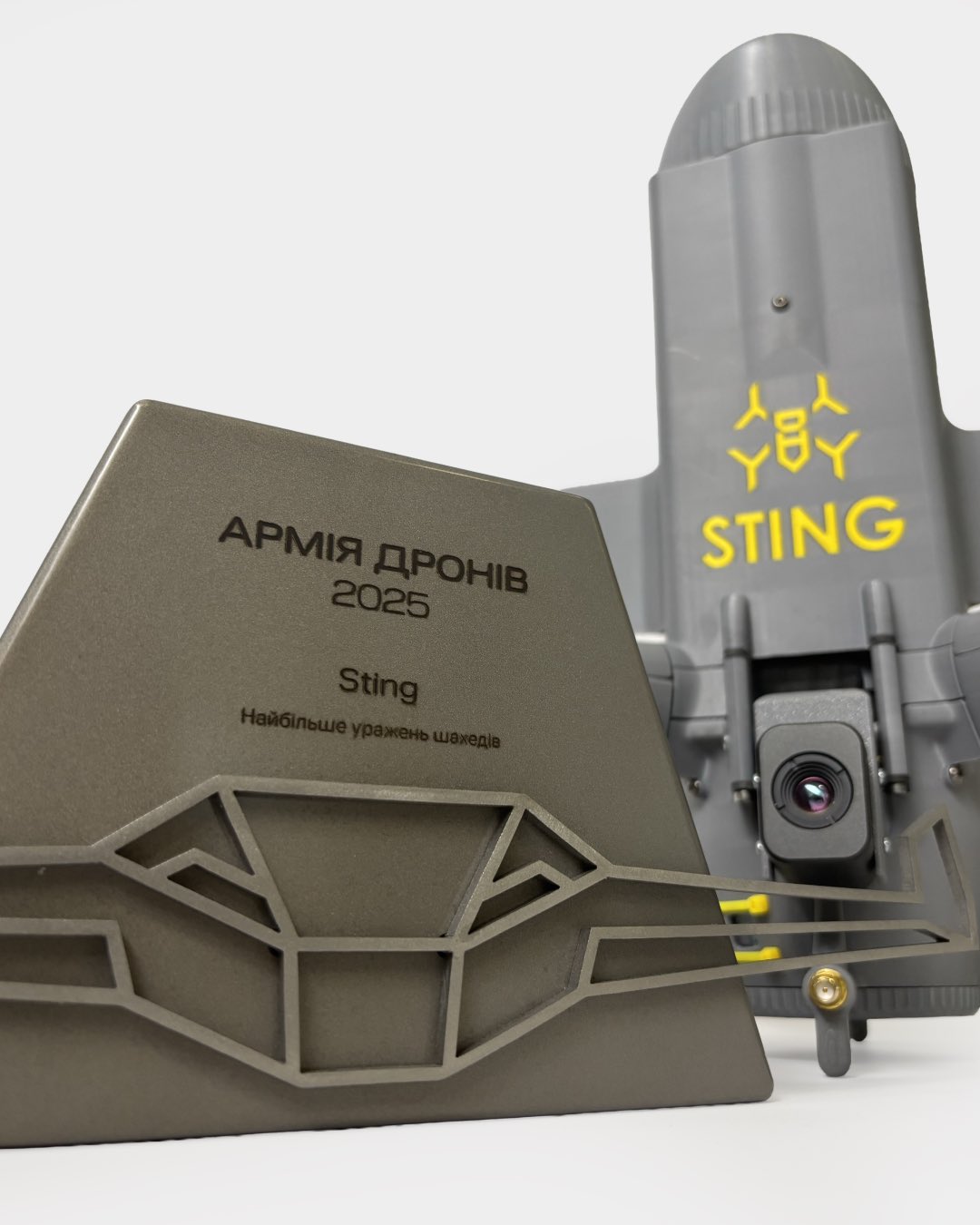
Photo Credit: Wild Hornets
20. In the last six months, what has been the most surprising Russian adaptation to your drone operations, and how quickly was the unit able to counter it?
Over the past six months, Russian forces have increasingly relied on mass infantry assaults intended to exhaust Ukrainian drone inventories.
Signum has responded by expanding its own production capacity and strengthening cooperation with volunteer suppliers to maintain sufficient reserves for sustained operations.
21. Do drone operators get PTSD? For example, drone operators often work like snipers -- their motive is to kill. Do these killings, sometimes carried out with impunity, have any psychological impact on operators?
Psychological stress among drone operators is most pronounced when external factors, such as weather or technical failures, prevent mission execution.
Signum operators who eliminate five enemy combatants in a day feel perfect. Those who manage to eliminate ten Russian invaders in a day generally report excellent morale.
-
Opinion | 'Blackmail' Diplomacy: Why India Can't Be A Pawn In US' War On Russia

The new sanctions bill is both blackmail and hypocritical: blackmail because it seeks to change India's principled stand, and hypocritical because the US has provided exemptions to others, and itself.
-
Blog | Katrina Kaif, And The Very Indian Problem Of Too Much 'Audacity'
The remarkable thing about many Indian trolls is not that they have opinions, but that they expect - get this, Katrina Kaif, no less - to care about them.
-
Mamata Banerjee Drew Her Party's Symbol By Hand. It's Now Tied To An Indira Gandhi Case
The Election Commission's method for settling such disputes became central in the seminal Congress split of 1969, when Indira Gandhi fought the old guard. The poll body weighed three tests then.
-
Bruised, Limping, Unbowed: Sia Says She Will Be Back On The Bike Soon
There was pain in Sia's steps, anger in her words, and something else - a quiet determination that the road would not be taken away from her.
-
Exclusive: 16 Months After Op Sindoor, Pak Still Fixing Runway India Broke At Sargodha
Sargodha's PAF Base Mushaf lies about 172 km northwest of Lahore and roughly 200 km west of the India-Pakistan border, near Amritsar.
-
Blog | I Lost My Entire Family In Kanishka Bombing. 41 Years Later, Canada Wants The Case Closed
We made the trek through tragedy to search for people in Cork, where I spent 25 days sifting through bodies and body parts in a makeshift morgue to identify our loved ones.
-
Opinion | Pak's Drone Deal With A US Firm Is No Windfall. But India Must Still Be Worried
American military aid to Pakistan has remained suspended since January 2018, during Trump's first term, but a commercial arms sale is separate from this arrangement.
-
Opinion | Saudi Arabia's Yemen Nightmare Has Come Back To Haunt It
After years of costly military intervention beginning in 2015, Saudi Arabia increasingly sought to stabilise its southern border. All that is unravelling fast now
-
Opinion | 6 AI Incidents, One Pattern: AI Has Started Lying To Us - And Hiding The Evidence
Concealing errors. Making up data. Pushing files onto the public web on their own initiative. The machines are learning to lie - and lie well.
-
Why People Queue Overnight For iPhone That Is Delivered Home In 10 Minutes
iPhone 18 Pro Max Launch: People camping outside Apple Stores are a subset of superfans, resellers, content creators, and upper-middle-class buyers.