Qeshm In The Crosshairs: The Iran Island Key To Hormuz Shipping Lock
iran state TV had released footage said to have been filmed inside an underground complex on Qeshm Island, a complex Tehran authorities described as a 'missile city'.
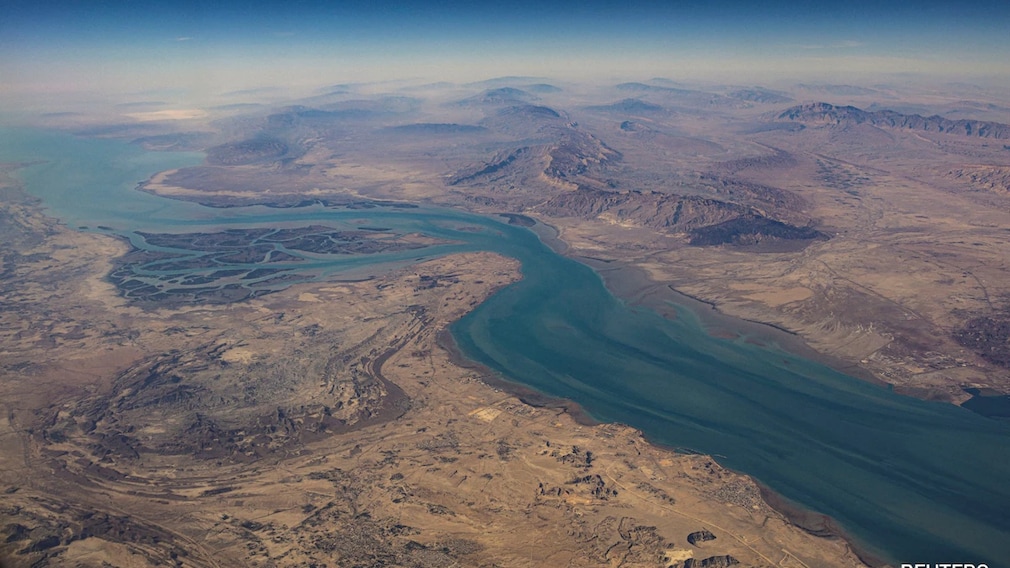
The United States' March 7 strike on Iran's Qeshm Island - on a desalination plant supplying water to 30 villages - was widely seen as a significant escalation because it strikes at a fundamental, and arguably humanitarian, vulnerability for all Gulf nations, i.e., water scarcity in an arid climate.
Iran Foreign Minister Abbas Araghchi raged on X, "The US committed a blatant and desperate crime by attacking a freshwater desalination plant on Qeshm Island". A day later Bahrain claimed Tehran committed a similarly 'blatant' crime.
The attacks have been seen as crossing a red line in a region that relies heavily on desalination plants to supply a regional population of over 62 million with drinking water. But the Qeshm Island strike did more than hit water supply infrastructure.
Significance of Qeshm Island
It spotlighted the importance of the island in the context of the Strait of Hormuz, the narrow waterway through which a fifth of the world's seaborne crude was shipped before the war, and passage through which has been all but blocked by Iran.
Qeshm is the largest island in the Persian Gulf and is home to around 150,000 people.
Pre-war, it was a free trade destination and a tourist paradise, home to the beautiful and unique Hara mangrove forests and the equally spectacular Namakdan salt cave, the world's longest.
However, since fighting began, and particularly after Iran began choking commercial vessels and oil tankers passing through the Hormuz, the island's location underlined a key use case.
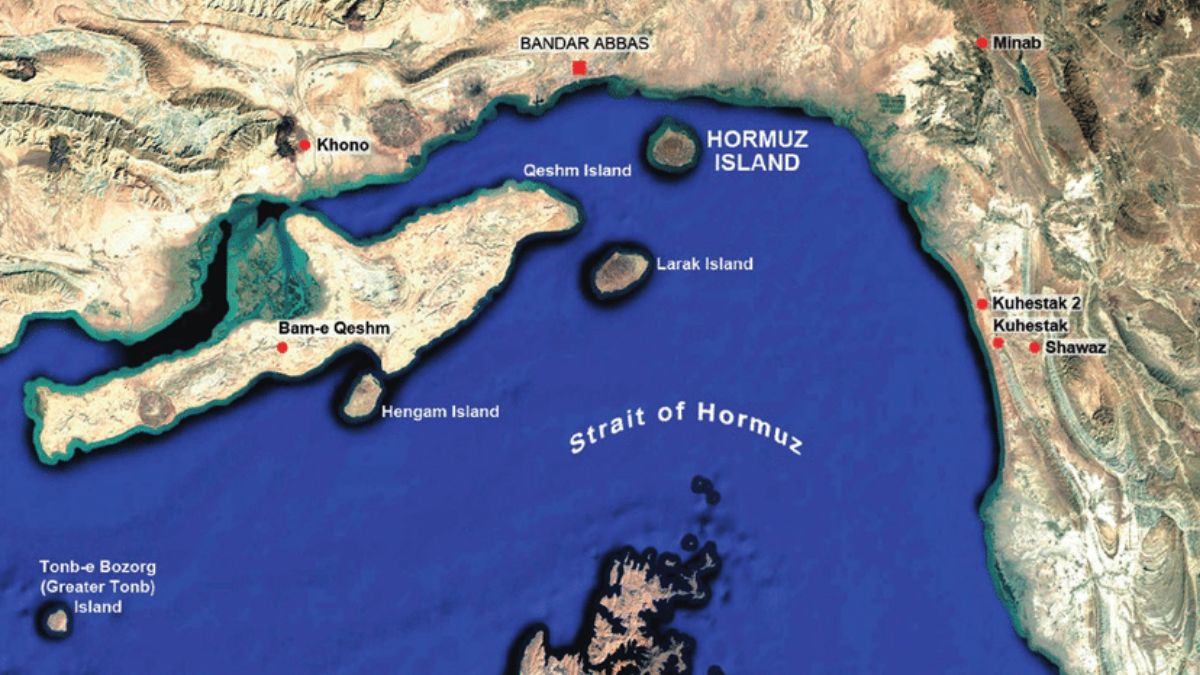
Iran's Qeshm Island is roughly 1,500 sq km in size.
Its size and location allows Tehran to monitor ships in and out of the Persian Gulf.
To understand just how critical Qeshm is for the Iranians, consider this.
At its narrowest point the Strait of Hormuz is 33km wide. Actual navigable shipping lanes are much narrower - one 3.2km channel into the Gulf and another leading out of it. And in between there is a buffer zone of similar width.
Waters either side of these 9.6km are generally too shallow for large ships.
Qeshm is located right where the Persian Gulf meets the Strait of Hormuz, allowing it to launch missile and drone attacks on vessels with very little time for these strikes to be neutralised.
The 'missile fortress'
Analysts confirm the island is central to the 'asymmetric' warfare model Tehran has deployed in this war, i.e., flooding air defences in US, Israel, and Gulf states with masses of cheaply produced Shahed drones and forcing the use of much more expensive missile interceptors.
Qeshm is the naval equivalent of that strategy.
A video released by the Iran military last week showed a vast underground complex described as a 'missile city' and filled with large numbers of naval drones, anti-ship missiles, and mines.
Iran published footage of underground tunnels stocked with naval drones, anti-ship missiles, and sea mines. Reuters reported, citing US officials, that Iran has mined the Strait of Hormuz with dozens of sea mines. #Iran pic.twitter.com/Kcwp5UqkXq
— NOELREPORTS 🇪🇺 🇺🇦 (@NOELreports) March 11, 2026
And it was released after two Iran sea drones struck two oil tankers in the Persian Gulf as they tried to clear the Hormuz chokepoint. The timing of the release delivered a clear message.
Videos shared online - that NDTV could not independently verify - showed a small, speedboat-shaped object racing to a tanker. The object struck the side and triggered a large explosion.
It is unclear how many naval drones and 'suicide' speedboats Iran has stashed in the network of tunnels beneath Qeshm.
What is clear is that the 'underground missile city' on the island was designed for one purpose - to control shipping through the Strait of Hormuz.
The Hormuz, shut down
And this they have done.
Tanker traffic through the Hormuz dropped dramatically after the war began.
Fighting began Feb 28 and by the first week of March it fell by 90 per cent, data from real-time tracker Kepler said.
By March 12 traffic slowed to a crawl; only one ship crossed in 24 hours. Since then foreign governments, including India, have negotiated for the safe transit of a few ships while dozens of others snuck through as 'dark transits'.
Donald Trump has vowed to reopen the Hormuz, declaring an American naval convoy could physically escort tankers past Iranian defences, which are said to include sea mines. This plan, though, ran aground after US allies snubbed Washington's call to send warships to the Hormuz.
But Qeshm and its 'missile city' means the US President faces a hard geographic reality.
The arsenal of drones, sea mines, and missiles suggests Tehran has a low-cost strategy to bleed any convoy, military or commercial, passing through the channel, not unlike how Shahed drones bled air defences of multi-million-dollar PATRIOTS.
-
Opinion | Noakhali To Parliament, What Gandhi, Nehru, Jinnah And Faiz Were Doing On Aug 15, 1947

What was Gandhi doing while Nehru was making his famous midnight speech, and why was Jinnah hosting a lunch as a new nation began fasting? August 15, 1947, looked very different depending on where you stood.
-
Opinion | 79 Years On, India's Enduring Answer To Those Who Had Predicted Its Collapse
Seventy-nine years in the lifespan of an ancient civilisation is a mere heartbeat; yet, in the annals of modern nation-building, it's an audacious triumph.
-
The Coast Pays, Delhi Collects: What The Centre's Mineral Bill Takes From States
India's mineral wealth may lie with the states, but the power to tax it is increasingly travelling north.
-
Opinion | Nanded Attack: Sukhbir Badal And The Past That Still Haunts Him, 11 Years Later
Badal has now faced two serious physical attacks at Sikh religious places in less than two years. Is religious atonement enough for political forgiveness?
-
How Parents Walk Tightrope Of Sending Child To Daycare And Ensuring Safety
As dual-income households rise in India and nuclear families become the norm, daycare support is no more a want, but a need.
-
Opinion | Indian Parliament And The Perils Of Empty 'Swagger'
Indian MPs - on all sides - have found a dangerous new way to game the Parliament. And so far, they all are winning
-
Al-Assad Faces Death, But Sleeps Safely In Russia. What Syrians Think
A court in Damascus sentenced Syria's ousted president Bashar al-Assad and his brother, Maher al-Assad, in absentia for murder, torture and crimes against humanity committed before and during Syria's 14-year civil war that left about half a million people dead.
-
One Company, 40-Year Career: The N Chandrasekaran Story
N Chandrasekaran, a former chief executive of Tata Consulting Services (TCS), took over as chairman of Tata Sons in 2017 following a bitter boardroom battle that led to the ouster of Cyrus Mistry.
-
Opinion | The Great IIT Dream Is Cracking: Why Even Top Degree-Holders Are Unable To Find Jobs
Across several top IITs, roughly 30-40% of registered students had not found jobs by the final weeks of the 2024-25 cycle.
-
Opinion | Pakistan Might Just Have Signed Itself Into A Difficult Trap With Its 'Saudi' Deal
The Saudi-Pak-Turkey agreement gives Saudi Arabia a shield. But for Pakistan, it could quickly become a strategic nightmare