Exclusive: How War In A Narrow Sea Could Reshape Global Economy Overnight
NDTV speaks to industry experts to gauge the impact of a major international conflict on the global shipping industry.
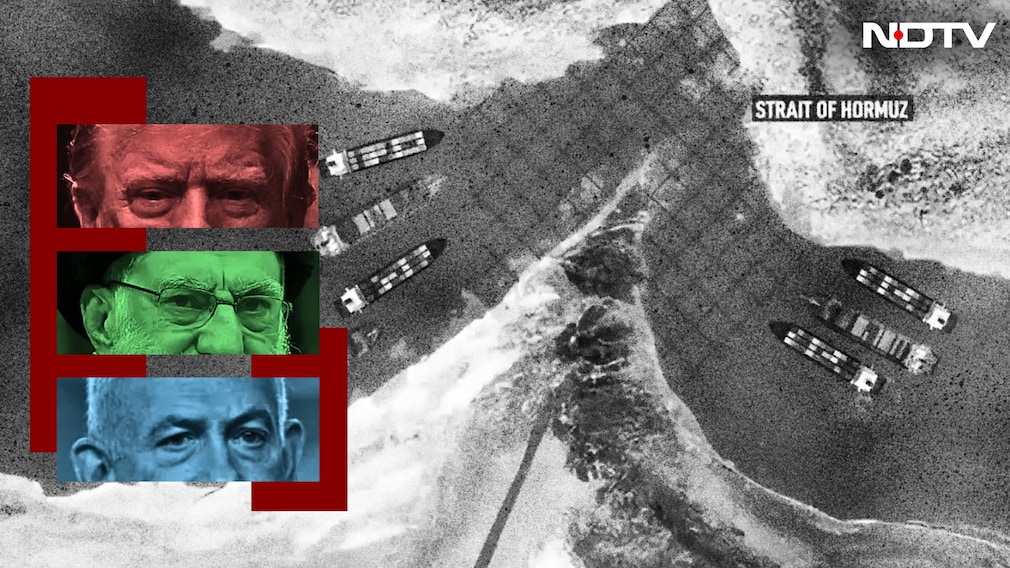
A radio in the Gulf crackled with a warning that sent shivers through one of the world's most critical arteries of commerce. According to a Reuters report citing an unnamed official from the European Union's naval mission Aspides, merchant vessels transiting the Strait of Hormuz had begun receiving Very High Frequency (VHF) transmissions from Iran's Revolutionary Guards declaring that "no ship is allowed to pass the Strait of Hormuz."
The message, delivered without formal confirmation from Tehran, immediately heightened concern among shipping companies, insurers, governments and energy markets already on edge.
The warning did not emerge in isolation but against the backdrop of escalating confrontation after US President Donald Trump followed through on threats to attack Iran when negotiations failed to curb Tehran's nuclear programme. Iran has long stated that one of its retaliatory options in such circumstances would be to attempt to block the Strait of Hormuz.
READ | The Hormuz Threat: Iran's Most Powerful Card Against The US
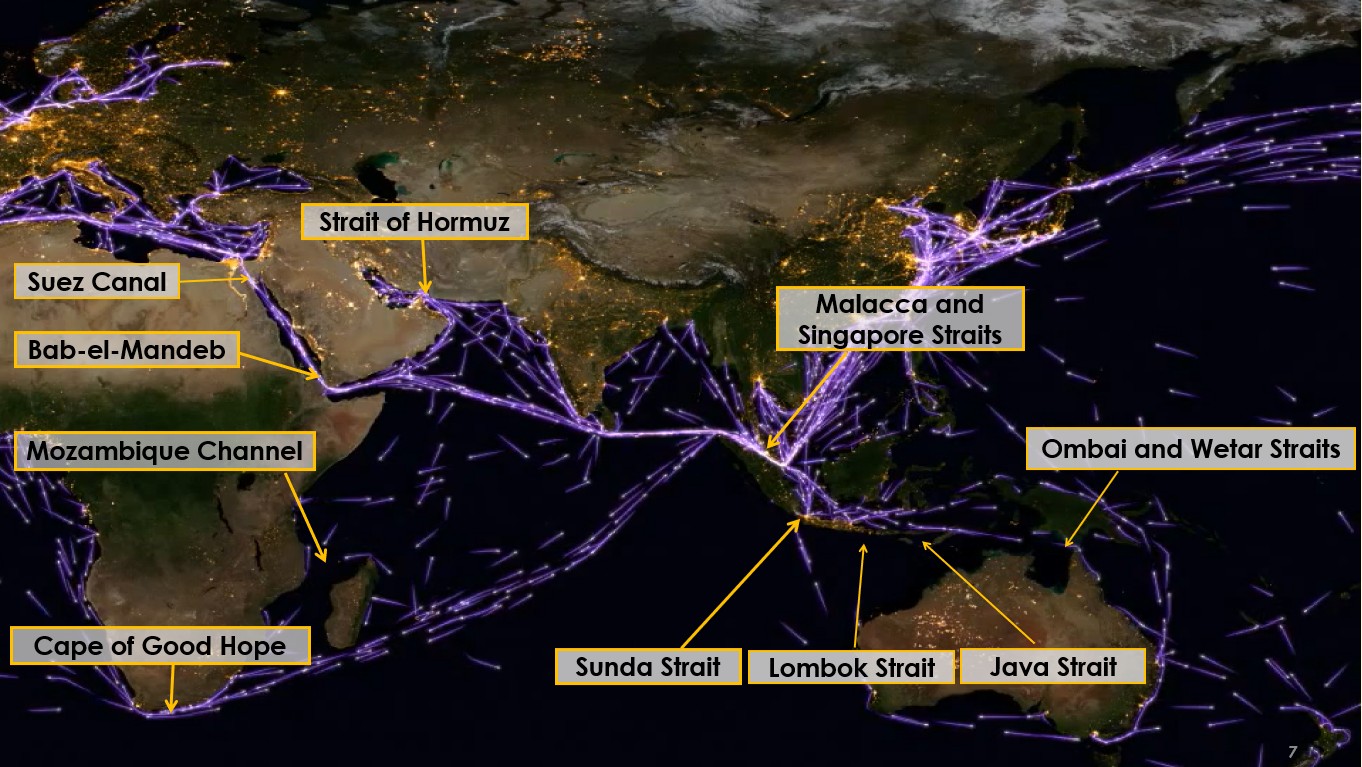
Global shipping routes.
Photo Credit: Indian Navy
For decades, the Strait has been described as the world's most sensitive maritime chokepoint. But the current moment, industry executives and analysts say, represents the most serious military concentration in the Gulf since the early 2000s.
Since early 2026, the United States has reinforced its regional presence with carrier strike groups, aircraft deployments, missile defence systems and surveillance assets. At the same time, nuclear diplomacy has stalled, proxy tensions across the Middle East are rising, and maritime incidents, including drone attacks, tanker seizures and close naval encounters, have already occurred near the Strait.
Commercial shipping has entered what industry figures describe as a "risk pricing phase."
This report examines how the Strait of Hormuz functions, why it matters, what disruption could look like, and how the current Israel-Iran confrontation could reshape global shipping, energy markets and economies far beyond the Gulf.
Significance Of The Strait of Hormuz
Geographically, the Strait of Hormuz is a narrow maritime corridor connecting the Persian Gulf to the Gulf of Oman and the Arabian Sea, and ultimately the Indian Ocean. Iran lies to the north, while Oman and the United Arab Emirates lie to the south.
At its tightest navigable point, the Strait is just 33 kilometres wide. The shipping lanes themselves are far narrower -- roughly 3.2 km wide in each direction. The waterway stretches nearly 100 miles (161 kilometres) in length.
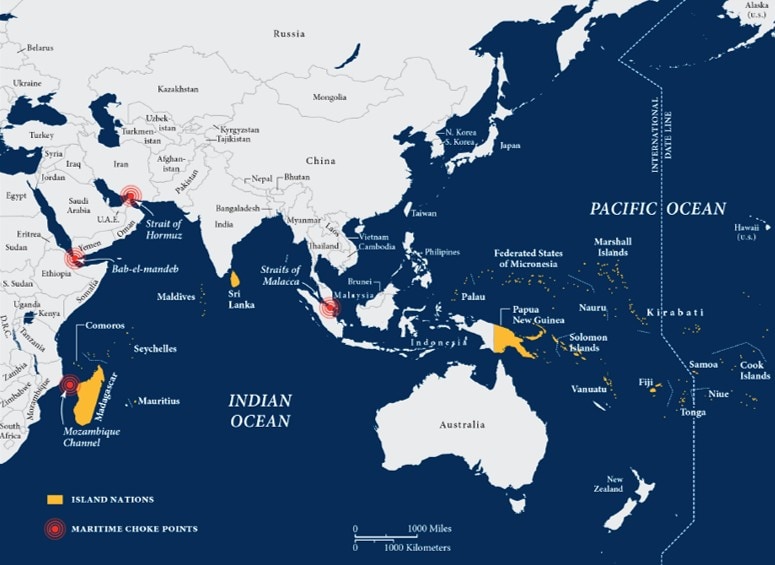
Strait Of Hormuz and other major chokepoints
Photo Credit: Indian Navy
Despite its modest physical scale, the Strait carries enormous strategic weight.
Around 20 million barrels of oil per day transit the corridor, representing roughly one-fifth of global petroleum consumption and approximately one-quarter of the world's seaborne oil trade, according to data from the US Energy Information Administration (EIA). The annual value of this energy trade is estimated at around $500 billion or Rs 4,55,39,92,50,00,000.
Liquefied natural gas is equally significant. About 20 per cent of global LNG trade, primarily exports from Qatar, passes through the Strait.
The traffic density is substantial. Approximately 3,000 vessels per month, more than 30,000 annually, transit the passage, according to UNCTAD maritime transport data. These include crude tankers, product tankers, LNG carriers, bulk carriers and container ships serving Gulf ports.
Most Gulf oil producers -- Saudi Arabia, Iraq, Kuwait, the UAE, Qatar and Iran itself -- depend heavily on the Strait. For many of them, there is no alternative maritime route for exports.
This structural dependency is what makes Hormuz unique among global chokepoints.
The Military Context
Iran has conducted naval exercises and intermittently restricted areas of the Strait. In parallel, Iran, Russia and China have carried out joint naval drills in nearby waters, increasing operational complexity for commercial vessels.
The United States and allied navies maintain significant patrol and surveillance operations across the Gulf, Gulf of Oman and the North Arabian Sea. According to a Bloomberg report, the tanker association INTERTANKO has said the US Navy warned that it could not guarantee the safety of neutral or merchant shipping across the region's operational area.
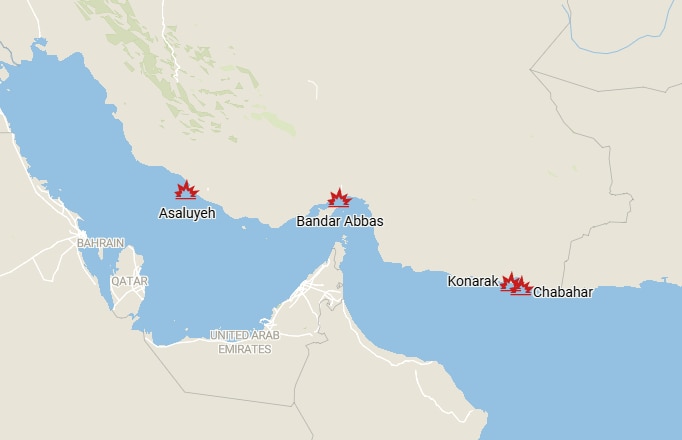
Iranian naval bases
Photo Credit: @Osinttechnical
Some oil majors and major trading houses have already suspended shipments of crude oil, fuel and LNG through the Strait, according to multiple reports.
What Industry Experts Say
Kiran Thorat, a trader at GMS, the world's largest cash buyer of ships, describes the current phase as driven by perception as much as reality.
"The military concentration we are seeing in the Gulf today is the most serious since the early 2000s. For shipping markets, that immediately translates into higher perceived risk, even before any physical disruption takes place," Thorat told NDTV.
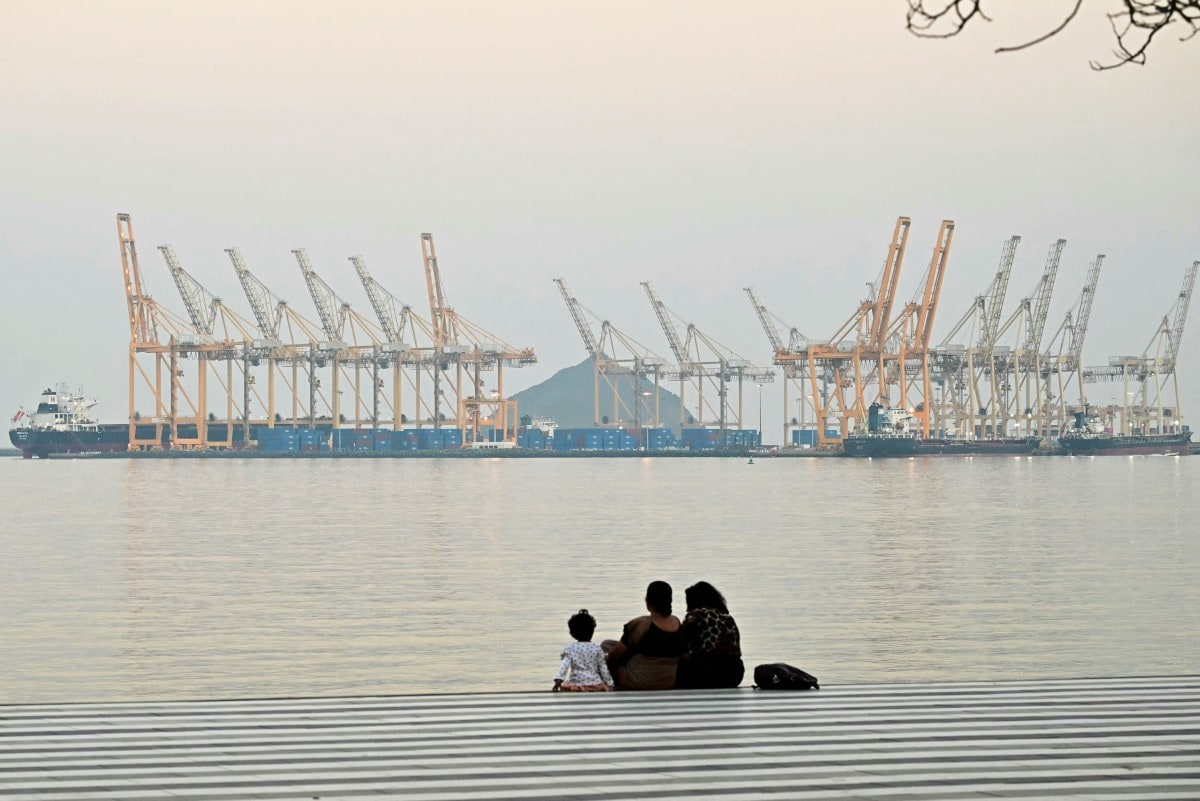
A family sits against the backdrop of a dockyard off coast city of Fujairah, in the Strait of Hormuz in the northern Emirate on February 25, 2026.
Photo Credit: AFP
GMS, the world's largest cash buyer of ships, has completed more than 5,000 transactions across global markets over three decades. The company operates across 13 maritime hubs and works with shipowners, shipyards and financial institutions to support vessel recycling. Through its Sustainable Ship and Offshore Recycling Program, it has helped modernise Indian recycling yards in line with the Hong Kong International Convention.
"The Strait of Hormuz may be only about 33 kilometres wide at its narrowest navigable point, but it carries close to 20 million barrels of oil per day. When you are dealing with nearly one-fifth of global petroleum consumption moving through a single corridor, even limited interference has global consequences," Thorat told NDTV.
GMS's shipowning arm, Lila Global, operates a diversified fleet of 38 vessels across dry bulk, tanker, container and multipurpose segments. The company moves more than 25 million tonnes of cargo annually, conducts over 300 voyages and 600 port calls each year, and serves more than 200 clients worldwide.
"The market has moved into a risk pricing environment," Thorat said.
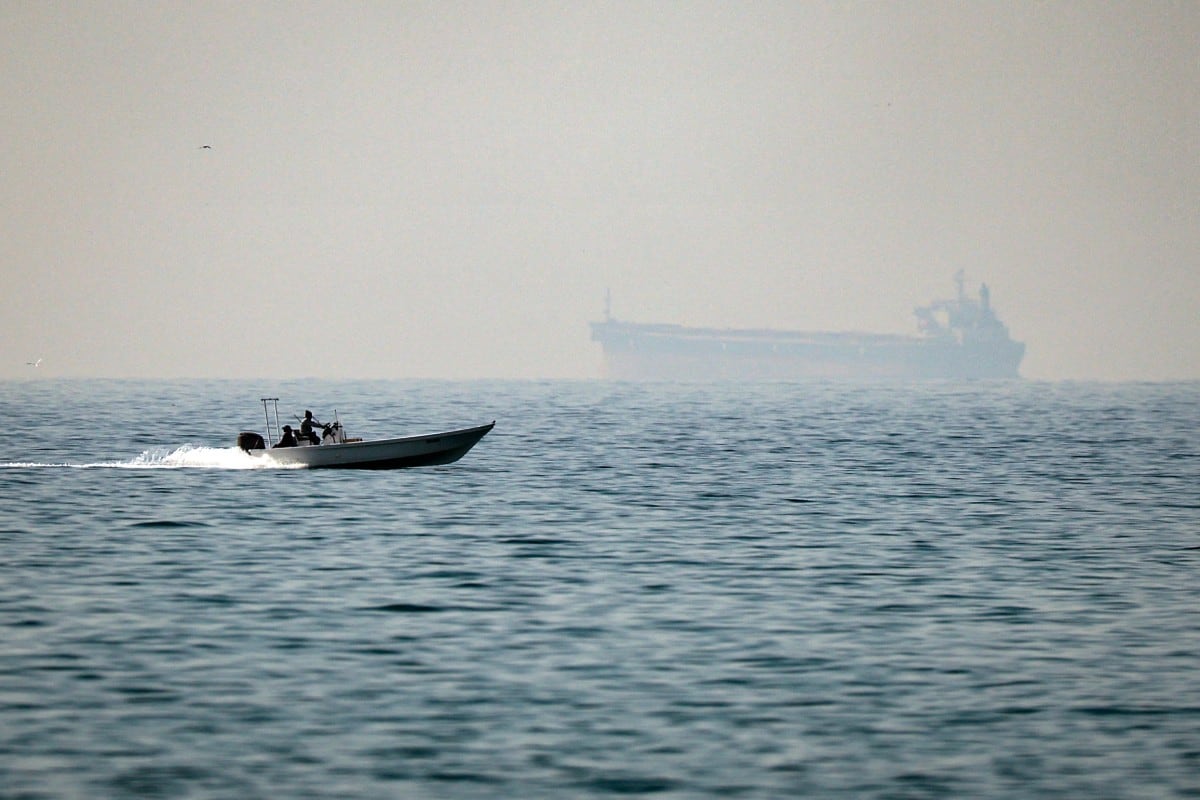
A motorboat cruises along the shore off the town of Al Jeer on the Strait of Hormuz in the northern emirate of Ras Al Khaimah, with a tanker seen in the background, on February 25, 2026.
Photo Credit: AFP
This means costs rise even if ships continue sailing normally.
"Even in a large-scale US-Iran confrontation, a complete and sustained shutdown of Hormuz is unlikely. Iran's own exports depend on the same route. However, temporary disruption, selective seizures, GPS jamming or the use of mines and exclusion zones are realistic escalation scenarios. In a corridor this critical, even short interruptions can move oil prices sharply," Thorat told NDTV.
Nayeem Noor, Vice President for Business Development at GMS, said the industry is currently in a volatility phase rather than a disruption phase.
"What we are observing is not a disruption phase yet, but a volatility phase," he said. "Charterers are factoring geopolitical clauses more carefully, and shipowners are reassessing voyage risk exposure on a case by case basis."
How A Hormuz Blockade Affects India
Asia is the primary destination for Hormuz energy flows.
Approximately 80 per cent of oil and LNG passing through the Strait goes to Asian markets. China, India, Japan and South Korea together account for roughly three-quarters of that demand, according to International Energy Agency data.
India remains heavily reliant on Gulf crude despite diversification efforts.
China has diversified supply sources and maintains large strategic reserves, providing some buffer.
Japan and South Korea are structurally dependent on imported energy, making them particularly vulnerable to disruption.
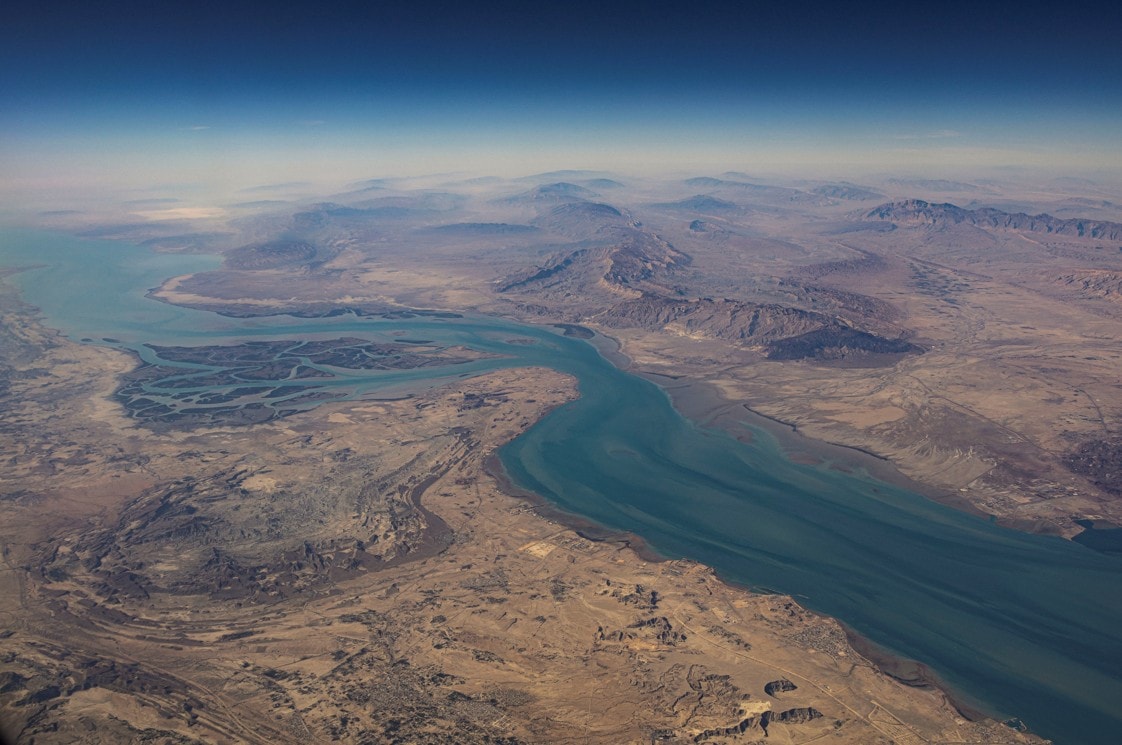
An aerial view of the Iranian shores and the island of Qeshm in the strait of Hormuz, December 10, 2023.
Photo Credit: Reuters
"Asia is the principal destination for Hormuz energy flows. Roughly 80 percent of oil and LNG transiting the Strait goes to Asian markets. For India, China, Japan and South Korea, this is not a distant geopolitical issue. It is directly linked to fuel prices, inflation and currency stability," Thorat told NDTV.
"From a commercial standpoint, the impact shows up in higher insurance premiums, potential demurrage, refinery feedstock uncertainty and volatility in freight derivatives. Even without ships being physically blocked, the financial ripple effect spreads quickly across the supply chain," said Noor.
Could Iran Actually Block The Strait?
Iran has repeatedly threatened to close the Strait during past geopolitical crises but has never carried out a sustained blockade.
Under the United Nations Convention on the Law of the Sea (UNCLOS), countries control waters up to 12 nautical miles from their coastline. The Strait is narrower than that, meaning overlapping territorial waters exist. but international law also guarantees transit passage through international straits. Iran signed UNCLOS in 1982 but has not ratified it domestically.
But Iran does not need a formal blockade to cause disruption.
Because of its coastline along the Strait, Iran possesses several asymmetric tools:
Fast patrol boats
Coastal missile batteries
Naval mines
Submarines
Drone and missile attacks on vessels
Helicopter interception
GPS and navigation signal jamming
Thousands of ships experienced navigation disruption in and around the Strait during an earlier Iran-Israel confrontation in June, illustrating the vulnerability of modern vessels to electronic interference.
Iran could also declare exclusion zones or conduct selective seizures.
A complete and prolonged shutdown is considered unlikely for one major reason -- Iran's own exports rely on the same waterway. But temporary disruption is seen as realistic.
As of February 28, crude oil prices were at $67.29 per barrel. Experts note that an Iranian blockade of the Hormuz risks crude oil price to shoot up to as much as $80 a barrel.
"If we see partial disruption affecting up to 20 per cent of global oil flows, crude prices could rise by around 20 per cent in a short period. The cost to shipping begins immediately through insurance, freight adjustments and operational delays. It does not require a full blockade to create financial stress," Thorat told NDTV.
Tankers vs Container Shipping
Not all shipping sectors face equal risk.
Tankers are structurally more exposed because Gulf crude and petroleum products depend heavily on Hormuz transit. Around 18-19 million barrels per day of crude and refined products from Saudi Arabia, Iraq, Kuwait, the UAE and Qatar rely on the passage.
These flows are difficult to reroute.
"There is no alternative sea route that can replace the Strait of Hormuz for Gulf energy exports. As long as Asia depends on Gulf hydrocarbons, the shipping industry will carry that structural exposure," Noor told NDTV.
Container shipping has greater flexibility. Alternative routes via the Red Sea and Suez Canal exist, though they come with separate security risks.
Container trade would likely experience indirect effects like higher fuel costs, scheduling disruption and insurance adjustments, rather than total dependency on the Strait.
-
Census Asks 40 Questions. Why Number 10 Is A Battleground | NDTV Explains

The caste question is a fill-in-the-blank for everyone other than SCs and STs. But there's a case for making it a dropdown with set options. Let's decode the history and math behind the politics.
-
Opinion | Why India's Bureaucrats Have Learnt That Doing 'Nothing' Is Safer
India's bureaucracy has perfected a peculiar survival strategy: make a decision, you may be punished; make none, and you are usually safe.
-
Opinion | 482 Dead, And Counting: How A Glacier Collapse Became A Himalayan Disaster
What looks like a sudden flood is actually the final link in a chain of events unfolding across an increasingly unstable Himalayas
-
Opinion | Rahul Gandhi Is Cleaning House - But At The Cost Of The Congress
In his search for a new organisation, Rahul Gandhi is making the big mistake of treating the Congress he inherited as dead weight.
-
One-Day Disaster, Multi-Season Economic Shock: Nepal's Sisyphean Curse
Nepal Flash Floods: Nepal cannot prevent every earthquake, landslide or glacial collapse. But it can reduce how much each disaster costs.
-
Meta Pays Billions Over Teen Harms In US. In India, Algo Runs Unchecked
The US Surgeon General has separately warned that heavy social media use roughly doubles adolescents' risk of depression and anxiety, and that nearly half of teens surveyed said it made them feel worse about their bodies.
-
Blog | 'No Calls, People Scanning Banks For Bodies': Nepal Journalist Describes Flood Aftermath
As of Thursday evening, it was still impossible to get through to mobile phones in Dhunche, the district headquarters, or the flood-ravaged towns of Syabru Bensi or Timure.
-
Opinion | Toxic Knows Exactly What It Is Doing To Its Hero. And You May Have Missed It
Toxic's bait-and-switch goes beyond its plot. Geetu Mohandas is almost making a subtle point - for those who can see it.
-
Why Nepal Is So Vulnerable: Glacial Lakes, And A Himalaya That Moves Constantly
The August 26 inland tsunami was not an accident of weather. It sat at the intersection of processes that make Nepal one of the most hazard-exposed countries.