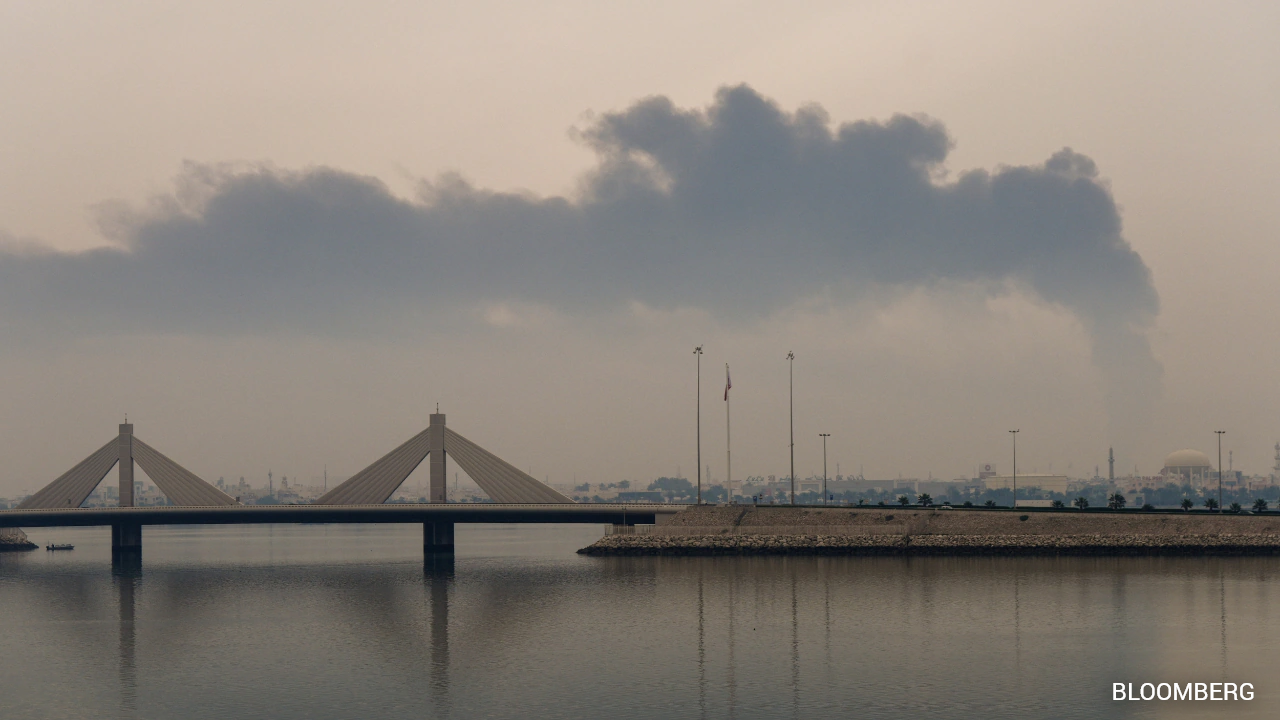
Gulf Arab states fear another US-Israeli attack on a better-prepared Iran could unleash an even more destructive war across the region, leaving them to pick up the pieces.
"We find ourselves drawn within a crisis that we worked diplomatically very hard to try to avert," Anwar Gargash, diplomatic adviser to the president of the United Arab Emirates, told the IISS Manama Dialogue in Bahrain on Sunday. "We are clearly seeking a political off-ramp."
President Donald Trump has repeatedly said the US and Israel will "finish the job" in Iran. Trump has ruled out fresh strikes before Tuesday's US midterm elections, but has left open the possibility of renewed attacks while peace talks remain deadlocked.
"Either they'll make a deal, or we'll just end it," he said to the Right Side Broadcasting Network on Sunday.
Oil prices fell around 3% in early trading on Monday, with Brent crude dropping below $110 a barrel, after Axios reported that Trump told Israeli Prime Minister Benjamin Netanyahu he wanted to give diplomacy more time before potentially restarting strikes on Iran. The global benchmark is still up around 80% this year.
Fresh fighting would inflict further damage on the Gulf after more than eight months of war, with energy prices rising even more if Iran steps up attacks on ships in the Strait of Hormuz.
Tehran has fired thousands of missiles and drones at countries including the UAE, Saudi Arabia and Qatar this year, striking sites such as oil facilities, airports and power plants. The attacks have killed or injured dozens of civilians and roiled regional economies.
The International Monetary Fund forecasts that Gulf Arab states, including Iraq, will be among the world's worst-performing economies this year. Saudi Arabia - already trying to fend off daily attacks from the Houthis, an Iran-backed group based in Yemen - will see its gross domestic product shrink 3.3%, while Qatar and Kuwait can expect even steeper contractions, the fund says.
"I have not heard a single Gulf official or civilian support renewed US-Israeli strikes on Iran, but the majority sense a new round is imminent," said Mohammed al-Basha, an associate fellow for international security at the Royal United Services Institute. "They sense Iran this round will be more aggressive and will not respect the rules of engagement that were previously observed."
Across the region, officials fear another round of fighting similar to that from Feb. 28 - when the US and Israel began bombing Iran - until a truce in early April could prove highly destructive.
Egyptian Foreign Minister Badr Abdelatty told the forum in Bahrain he was "extremely worried" about fresh hostilities. "The second round will be more dangerous, more destructive, and it will lead to nowhere," he said. "We have to draw lessons from the past."
Iran has elevated those fears with fresh threats of a devastating retaliation. Supreme Leader Mojtaba Khamenei on Saturday ordered commanders to prepare for immediate counterstrikes and to expand their list of potential US and Israeli targets. Iran's army warned that another US-Israeli attack would spread the war across a larger area.
"If the enemies resume military or terrorist attacks, it is the Islamic Republic's armed forces and the Iranian nation who will determine the time and conditions for its end," Khamenei said in a statement on Telegram.
Iranian media on Sunday highlighted Khamenei's order that the military respond to any new attacks "without geographic limitations."
Heavy US airstrikes, including several after the April truce broke down, have failed to wipe out Iran's ability to manufacture missiles and drones. Tehran has preserved enough production capacity to replenish its arsenal, Western officials told Bloomberg in October. One said Iran remained well stocked with ballistic missiles and some anti-ship weapons, and that Russia was also supplying missiles.
By early October, Iran had fired more than 4,000 Shahed drones and at least 2,000 ballistic missiles since the war began on Feb. 28, according to Bloomberg Economics. Western intelligence assessments in June indicated Tehran still held about three-quarters of its prewar munitions, although its current stockpile is unclear.
"Iran is much better prepared for another round of fighting," said Emile Hokayem, senior fellow for Middle East security at the International Institute for Strategic Studies.
Tehran's response throughout this war has shown it's learned from previous failures and developed a more sophisticated military strategy, Hokayem said. "It wasn't a victory for Iran, but it showed that the Iranians could match their adversaries and that their military institutions are capable of learning and adapting."
Gulf states, meanwhile, are looking to replenish stocks of air-defense interceptors at a time of global shortages and as the US and Israel prioritize their own supplies, according to a report published by IISS on Friday.
The war has also exposed the enormous cost of using sophisticated missiles to shoot down cheap Iranian drones. Gulf forces have increasingly deployed attack helicopters, fighter jets, anti-aircraft guns and electronic jammers instead.
The attacks have also fueled anger among Gulf states as they bear the costs of a conflict they didn't initiate.
"The GCC states were not a party to the war and did not seek it," Jasem AlBudaiwi, secretary-general of the Gulf Cooperation Council, a six-nation bloc including the UAE and Saudi Arabia, told the forum on Saturday.
Regional officials in Manama largely praised the US in public, while privately expressing frustration with Washington's military and diplomatic conduct.
"There is widespread disappointment across the region with the United States over the folly of the war, the erratic nature of Washington's military and diplomatic conduct, and its decision to prioritize Israel's defense over that of its Gulf partners," said Hasan Alhasan, a senior fellow for Middle East policy at the International Institute for Strategic Studies.
"If the US liberation of Kuwait in 1991 was the moment that established America's role in the region, the 2026 war may be remembered as the moment that undid it."
Gulf states are stepping up diplomacy to head off another US-Israeli attack on Iran. Senior officials from Saudi Arabia, Turkey and Pakistan traveled to Tehran last week, while Qatari mediators held talks with Iran in Tehran and Doha.
Major differences remain between the warring sides. Iran wants a US naval blockade lifted, sanctions eased and frozen assets released before reopening the Strait of Hormuz, while Washington demands nuclear concessions.
Iranian Foreign Minister Abbas Araghchi, on Sunday, said mediators were discussing a plan to reopen the waterway within two days if the US met Tehran's conditions, but that a deal "depends on the answers the other side provides to our questions."
Gargash, the UAE adviser, warned of the consequences if diplomacy fails. "If these positions are not bridged, then we have to worry about the worst," he said.
(Except for the headline, this story has not been edited by NDTV staff and is published from a syndicated feed.)
Track Latest News Live on NDTV.com and get news updates from India and around the world


