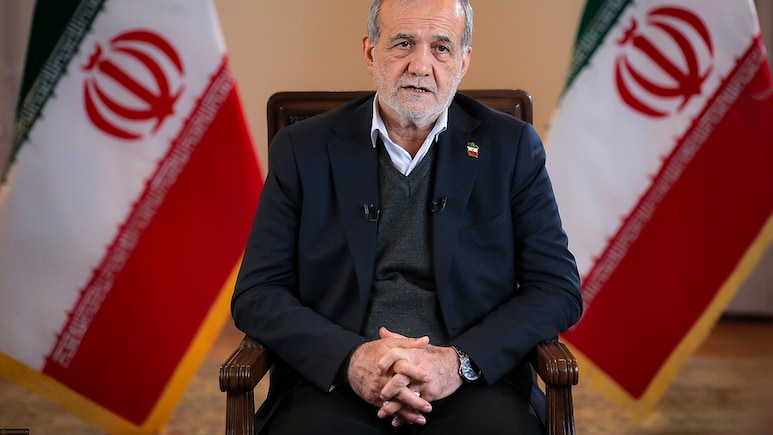
Iranian President Masoud Pezeshkian on Wednesday (local time) said 'hostile powers' had sought to destabilise and topple the Islamic Republic, but the country's new Supreme Leader Mojtaba Khamenei had ensured that Iran remained united and resilient in the face of external pressure.
In a televised address to the nation, Pezeshkian credited the unity of the Iranian people for thwarting what he described as attempts to weaken the country through war, sanctions and political pressure.
"Enemies tried to topple the Islamic Republic, but the country's new Leader kept Iran united and strong...Enemies sought to replicate Syria's fate for Iran through wars and sanctions," Pezeshkian said, adding that the resilience and determination of the Iranian people had foiled those plans.
The President asserted that national unity remained the country's greatest strength against external threats.
"Unity among Iranians remains the primary factor in standing firm against enemies," he said, alleging that Iran's adversaries opposed "any sign of independence or progress" achieved by the Iranian people.
Pezeshkian also paid tribute to the late Leader of the Islamic Revolution, saying the "martyred Leader of the Islamic Revolution always supported the government," while expressing confidence that the country's new leadership would continue safeguarding Iran's sovereignty and stability.
His remarks come amid heightened regional tensions and diplomatic activity involving Iran and the United States.
Earlier on Wednesday, Reuters reported, citing a senior Iranian source and two regional officials, that a proposed agreement involving Iran and Oman could grant Tehran control over vessels entering the Gulf through the Strait of Hormuz. However, the report noted that key details of the arrangement were still under discussion despite US President Donald Trump's assertion that an agreement to reopen the strategic waterway was close.
Separately, Trump said "a lot of progress" had been made in contacts with Iran and claimed Tehran had reached out seeking talks, adding that developments would become clearer within 48 hours.
The remarks come against the backdrop of months of heightened tensions in West Asia following the conflict involving Iran, Israel, and the United States. The conflict intensified after a series of strikes on Iranian nuclear and military facilities and retaliatory attacks across the region. The crisis was further compounded by the death of Iran's Supreme Leader, Ayatollah Ali Khamenei, an event that led to the appointment of a new Supreme Leader, Mojtaba Khamenei.
(Except for the headline, this story has not been edited by NDTV staff and is published from a syndicated feed.)
Track Latest News Live on NDTV.com and get news updates from India and around the world


