How El Mencho, El Chapo's Sons Forged A Drug Empire That Shook 2 Continents
Mexican authorities confirmed that Nemesio Oseguera Cervantes or 'El Mencho', 59, was killed during an army operation in southern Jalisco intended to capture him.
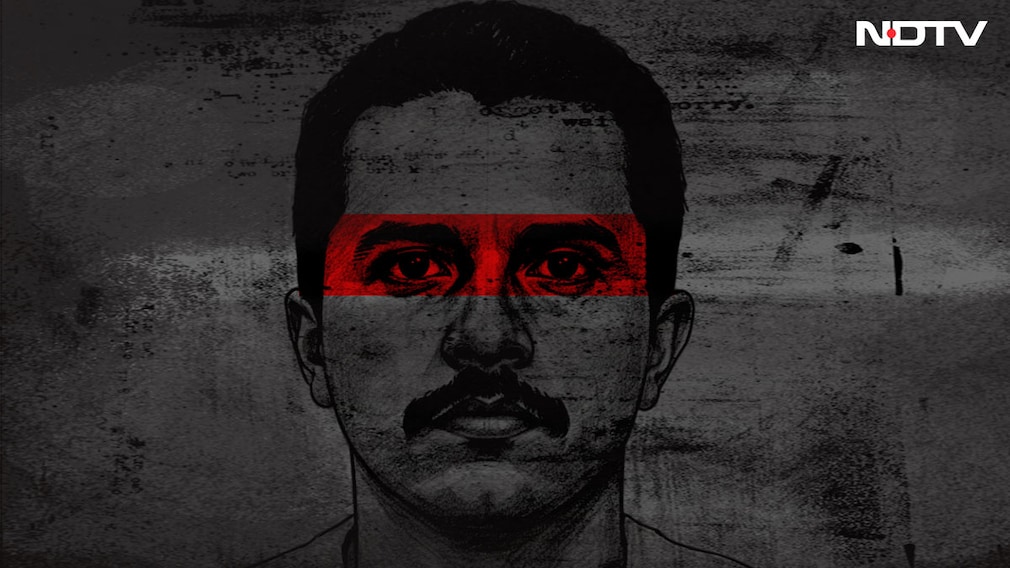
The helicopters came low over the tree line at first light, rotors beating the humid air above the mountains of southern Jalisco, a region long whispered about in Mexican intelligence briefings as the nerve centre of a deadly cartel.
On the ground, soldiers advanced through scrubland scarred by makeshift trenches and concealed positions, moving toward a compound believed to house one of the most elusive men in the Western Hemisphere.
For decades, Nemesio Oseguera Cervantes, known across Mexico and US law enforcement files as "El Mencho", had existed somewhere between myth and reality. He rarely appeared in photographs, who travelled through territories seeded with land mines, and who commanded an army equipped with military-grade weapons capable of downing aircraft.
By the time the confrontation ended, Mexico's most powerful cartel leader lay wounded, later dying during an air transfer to Mexico City.
Within hours, roads across large parts of Mexico were ablaze, vehicles torched to block highways, cities paralysed, schools closed, and security forces placed on nationwide alert. It was the violent punctuation mark at the end of a criminal career that had reshaped the economics of the global cocaine trade, and, in the process, built a "cocaine corridor" stretching from laboratories in Colombian jungles to American cities 4,000 km away.
The Killshot
Mexican authorities confirmed that Oseguera Cervantes, 59, was killed during an army operation in southern Jalisco intended to capture him. The mission involved Mexican Air Force assets and special forces units, with help from American intelligence
According to Mexico's Defence Department, cartel gunmen attempted to repel the assault. Federal forces killed four cartel members and wounded three others, including Oseguera himself, who later died during air evacuation. Three soldiers were injured, two suspects were detained, and authorities seized rocket launchers capable of destroying armoured vehicles or aircraft.
The death represented the most significant blow to organised crime leadership since the recapture of Sinaloa cartel leader Joaquin "El Chapo" Guzman roughly a decade earlier.
Cartel members launched coordinated attacks across at least 20 Mexican states, burning vehicles to block highways. Residents in Guadalajara, Mexico's second-largest city and the capital of Jalisco, locked themselves indoors as smoke rose across urban neighbourhoods.
Washington had been pressing Mexico to show stronger results against cartels, with the Trump administration threatening tariffs or even unilateral military action. Intelligence cooperation between the two countries reportedly contributed to locating Oseguera.
Yet officials privately acknowledged that removing a cartel leader does not necessarily dismantle the organisation because long-term security impact remains uncertain.
The Strategic Opening
El Mencho's rise to global prominence was not driven solely by violence as it was fundamentally tied to dynamics of the cocaine industry in the United States.
After years dominated by synthetic opioids, cocaine consumption began rising again. According to a Wall Street Journal report from 2024, data from drug-testing company Millennium Health indicated cocaine use in the western United States increased by 154 per cent since 2019, with a 19 per cent rise in the eastern US. At the same time, fentanyl consumption began declining from mid-2023, according to the US Centers for Disease Control and Prevention.
Several factors drove this shift such as record cocaine production in Colombia, prices falling down by $60-$75 per gram compared with five years earlier and also the perception among new users that cocaine is a "better drug" than fentanyl.
For CJNG, this was an opportunity to capitalise.
The Trump administration prioritised fentanyl eradication, placing heavy pressure on Mexico to target cartels associated with synthetic opioid production, particularly the Sinaloa cartel. Washington also designated major cartels, including CJNG, as foreign terrorist organisations.
And the CJNG capitalised on this moment.
While Sinaloa became the primary focus of enforcement pressure, El Mencho pivoted aggressively into cocaine trafficking by moving multi-ton shipments north through maritime routes, including speedboats and semi-submersible "narco-subs" from Colombia via Ecuador to Mexico's Pacific coast.
The Collapse Of Sinaloa Unity
At the same time, CJNG's main rival was fracturing internally.
The capture and extradition of El Chapo in 2017 destabilised Sinaloa leadership. His sons, known collectively as Los Chapitos, shifted cartel production toward fentanyl, which was cheaper to manufacture and easier to smuggle than heroin.
Then came a rupture.
Ismael "El Mayo" Zambada, Sinaloa's long-time co-founder, was allegedly forced onto a private plane bound for the United States by one of El Chapo's sons seeking prosecutorial leniency. Both men were arrested upon landing near El Paso. Zambada later pleaded guilty and faces possible life imprisonment.
His capture triggered violent conflict between factions loyal to his son, Ismael "Mayito Flaco" Zambada, and the Chapitos. An estimated 5,000 people were killed or disappeared in the resulting violence, with Mexico deploying 10,000 troops to Sinaloa state.
For Oseguera, this turmoil created yet another opportunity.
'El Pacto'
In late 2024, Oseguera met with a senior lieutenant of Ivan Archivaldo Guzman, leader of the Chapitos faction, in Mexico's Nayarit state.
CJNG offered weapons, cash, fighters and in return, Sinaloa opened its smuggling routes and cross-border tunnels into the US. Previously, CJNG had paid substantial fees to use those tunnels. Now it gained direct access.
The deal also divided the US drug market: Chapitos would focus on fentanyl while CJNG would dominate cocaine and methamphetamine.
Mexico's attorney general later described the alliance as an unprecedented shift in organised crime balance.
This partnership enabled the emergence of the "cocaine corridor" - a logistics chain linking Colombian production zones, Pacific maritime routes, Mexican transport networks, and US distribution hubs.
With increased supply driving prices down, CJNG could move higher volumes while maintaining profit margins. Shipments flowed from Colombia to Ecuador, then by sea to Mexico's Pacific coast. From there, they moved through cartel-controlled territories and tunnels into the United States.
Now, after his death, the compound where he once commanded operations now stands silent in the hills of Jalisco. But across highways, ports, tunnels, and distribution networks spanning two continents, the logistical architecture of his empire continues to function.
And those systems, once created, rarely die with their architects.
-
Blog | The Dantewada Massacre, And What India Needs To Do To Stay Maoist-Free

In 2010, I was Assistant Chief of the Air Staff controlling transport aircraft and helicopters, and on April 6 that year had to arrange An-32 aircraft to carry coffins of 75 CRPF jawans.
-
Opinion | How Iran Has Pierced The One 'Shield' That Protected America For 30 Years
In the past, US campaigns in Iraq, Afghanistan and Libya were conducted against relatively weak air defences. That has not turned out to be the case with Iran, puncturing the long-held myth of America's 'indomitable' air power.
-
Opinion | The Quiet 'Upheaval' Within US Military Over The Iran War
General Randy George's ouster carries echoes of a similar episode in 2003, in the run-up to the Iraq war. But much more is happening within the US military, courtesy Hegseth.
-
How Iran Sucker-Punched Trump Into 'Escalation Trap' 'Hellhole'
Trump is now under pressure, not just from allies but also within; the President's approval rating is the lowest it has ever been with mid-term elections in November.
-
Eagle Down: How US Carried Out Precision Search And Rescue Op In Hostile Iran
How the United States transformed a tactical failure into a narrative of national resolve.
-
Opinion | 450 Missile, 2,000 Drone Attacks Later, Why Is UAE Still Not Fighting Iran?
The UAE is Iran's second-largest trading partner and also home to roughly half a million Iranians. Why, then, has it absorbed more fire than any other Gulf state?
-
In Numbers: How Has India Kept Fuel Prices Low Even As Europe Sees 70% Spikes?
India imports 88% of its crude. Why then is it not seeing massive price hikes for fuel and LPG? Inside the unique strategy it's following...
-
Opinion | India Just Decided To Let Chinese Capital In Again. But There's A Catch
In March 2026, India eased regulations that had restricted Chinese capital in local companies, in a development that marks New Delhi's cautious approach towards capital flows from Beijing.
-
Trump's Iran 'Knocked Out' Claim Blown Up By US Intel On Missiles, Drones
Donald Trump claimed this week the war would end in two to three weeks as he threatened to send Iran back to the Dark Ages. But based on these reports the fighting is far from over, even if US President wants to push a contrary narrative.
-
Opinion | Rs 30 Petrol Hike To Currency Crisis, What Oil At $150 Can Really Do To The World
At $125 per barrel, petrol and diesel retail prices will need to rise by Rs 8-14 per litre. At $150 - which experts think is now likely - these figures could touch Rs 26-30 per litre.