Donald Trump Snubs India, Signs Oil Deal With Pak. What Does This Mean?
The US helping Pak is saying to India - 'toe the line or risk your enemy being strengthened upsetting a key ally (i.e., Washington) while you negotiate a trade deal'.
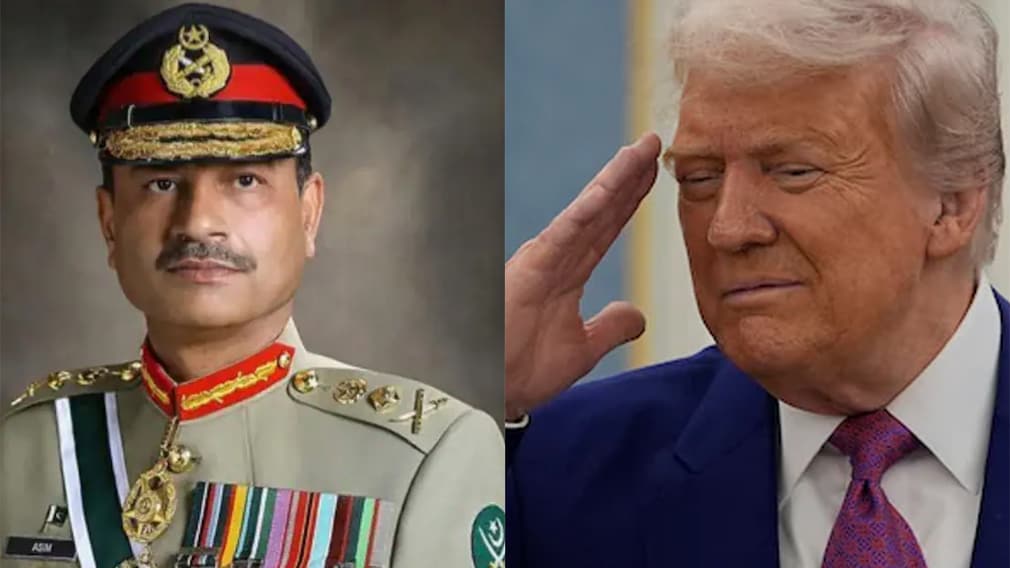
After announcing a 25 per cent 'reciprocal tariff' on his "friend" India, plus a penalty for buying Russian weapons and oil, Donald Trump said Thursday the US had struck a trade deal with Pakistan, including plans to develop its "massive" oil reserves.
A disgruntled Trump also took a shot at India - "maybe they (Pak) will sell oil to India" - over the continued purchase of Russian oil despite sanctions on Moscow for its war on Ukraine.
In a Truth Social post last night, Trump appeared to blame India (and China) for funding - by buying Russian crude - a conflict he once boasted he could end within 24 hours of being taking oath.
A disgruntled American President also slammed the Indian economy - the fourth largest in the world - as "dead" after failing to persuade Delhi to open its dairy and agriculture markets.
READ | "India, Russia Can Take Dead Economies...": Trump
Meanwhile, Pak this morning said its deal will "result in a reduction of reciprocal tariffs, especially on exports to the US" but did not give details of what the lower rates would be.
The neighbouring country faced a 29 per cent tariff under rates announced in April. That rate was subsequently suspended for 90 days so the two sides could negotiate a new deal.
What Is the US-Pak Oil Deal?
The US will help develop Pakistan's "massive" oil reserves.
What that means is still unclear. Most likely, and this is what Trump's Truth Social post suggests, it will involve an American company being granted drilling rights to extract Pak's crude oil.
What Does This Mean For India?
Unclear.
India's oil reserves are far greater - around 4.8 billion barrels proven as of 2016 - and it has the capacity to extract and refine crude from deep sea reserves, something Pak does not.
And India produces, on its own, more crude per day than Pakistan; in February 2025, for example, India produced over 600,000 barrels per day, or BPD, and Pak produced only 68,000.
But both rely heavily on imports, India more so because it is a larger and thirstier market.

India is among the world's largest consumer of crude oil (File).
By some estimates, in FY24/25 India imported nearly five million BPD. And, by comparison, in 2024 Pak imported only 140,000 - slightly lower than its historical average of 163,000 - BPD.
India has more reserves and produces more crude per day than Pak. But it also needs more, much more. The International Energy Agency predicts an increase of 330,000 BPD this year.
For Pak that figure is set to cross 300,000 BPD in this calendar year.
The difference is stark and suggests the US helping Pak drill for (unproven) oil reserves shouldn't really affect India, especially since it has larger proven stores and established import lines.
Is The US Trying To Bully India?
The US developing Pak's oil reserves will boost the latter's supply and maybe save it some money. But it isn't really about the money, at least not for the US.
As far as Washington is concerned, an oil deal with Pak is more about putting pressure on India to a) stop buying Russian crude and b) buy from the United States instead.
Earlier this year, when Prime Minister Narendra Modi met Trump in the US, India committed to buy more oil and gas from the US, possibly in hopes it would lead to a tariff reduction.
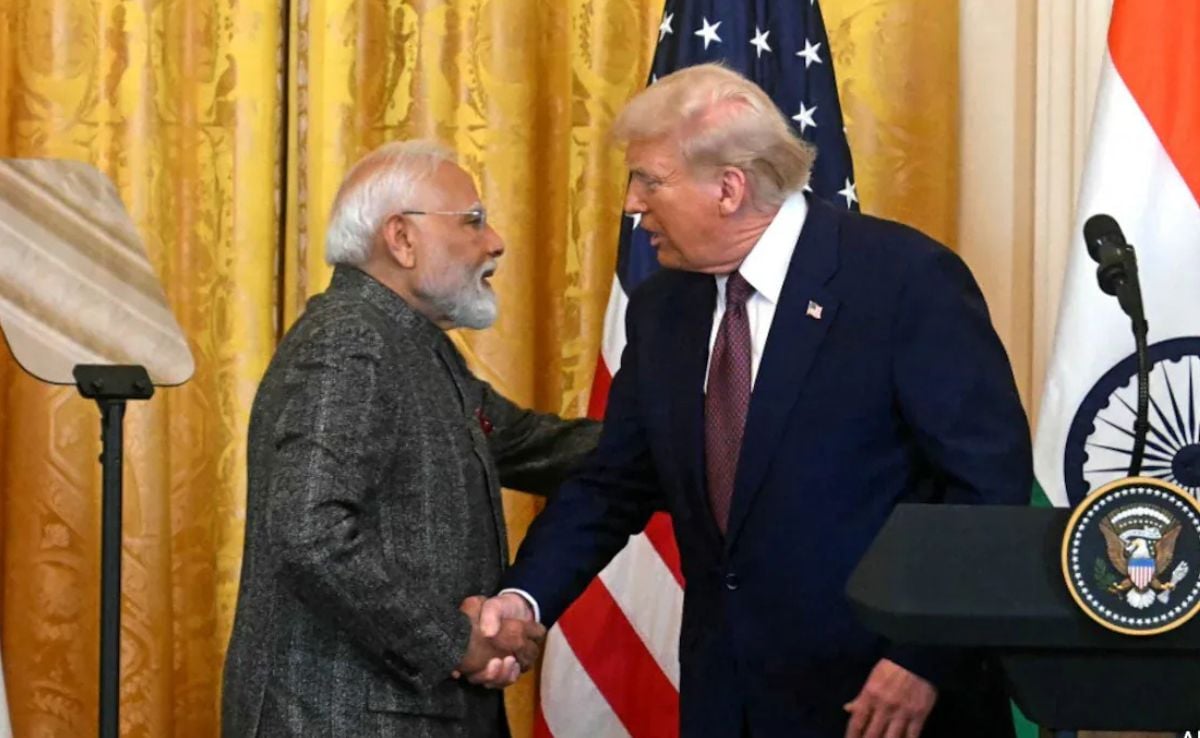
PM Modi and Donald Trump met in Washington on February 14 (File).
The deal made sense for India - it allowed Delhi to diversify from Russian or Iranian oil, both of which face sanctions (and payments difficulties) and showed the US it is willing to negotiate.
But Russia continues to be a major supplier, in the top three. And that has angered Trump.
The US helping Pak is saying to India - 'toe the line or risk your enemy being strengthened upsetting a key ally (i.e., Washington) while you negotiate a trade deal'.
Trump's jibe about Pak selling oil to India doesn't really ring true. One, because Pakistan does not have proven reserves large enough to interest India. Two, because even if that were the case, the volatile political and military India-Pak relation absolutely rules out any purchases.
But what it could do in the long term, if US-Pak energy trade picks up, is reduce India's chances of buying oil from America, at least at a favourable rate, which makes diversification a problem.
How Much Oil Does Pak Really Have?
Again, unclear.
In 2016 it had 353.5 million barrels of proven reserves, less than 10 per cent of India's known reserves in the same year. Over the past 12 months there have been new discoveries.
In June state-owned Oil & Gas Development Company Limited said it found oil and gas in the Sindh province and, in September last year, more reserves were reportedly located offshore.
The extent was never made public but initial tests from some of the fields yielded between 20 barrels and 74 barrels of crude oil per day, which does not suggest very deep reserves.
It does, however, suggest that Pak has untapped reserves.
And the bulk of those reserves might be in its waters.
In April Turkey - seen as forming a new 'nexus' with Pak and Azerbaijan - signed a deal to bid for and develop 40 offshore blocks from the "world's fourth largest oil and gas reservoir".
That no major oil-producing country or company has rushed to profit has been seen as a red flag.
Experts believe geopolitical instability - the 'risk vs reward' factor - is one reason, particularly after five Chinese engineers died in a rebel suicide attack in March 2024.
But the US agreeing to develop Pak oil reserves - necessary also because Islamabad lacks deep-sea mining technology - is a big step for the latter, particularly amid enduring economic hardships.
With input from agencies
NDTV is now available on WhatsApp channels. Click on the link to get all the latest updates from NDTV on your chat.
-
Opinion | Iran To Saudi, Pakistan Is Now Fast Running Out Of Sides To Play

Pakistan's long history of playing all parties to its own benefit may have reached the end of its road.
-
Gyanesh Kumar Has An Immunity Pin. Why A Petition Says He Can't Use It
The Opposition wants the Chief Election Commissioner prosecuted for alleged manipulation of voter rolls, but a 2023 law stands in the way. A petition in the Supreme Court now says the law has a gap.
-
Opinion | Is The World Staring At A Big Stock Market Crash - And Recession? 5 Uneasy Signs
On Wednesday, the US bond market recorded its worst day since Trump's "Liberation Day" tariffs rattled markets in April 2025. The 30-year US Treasury yield topped 5.43%, putting it on track for its highest close since 2004.
-
Form 6 For New Voters: When A Small Change Triggered A Big Row
In July 2026, the online version of Form 6 on the ECI's ECINet portal was modified to include a new declaration.
-
Opinion | Saudi Arabia's China Turn Has Begun - After Learning Much The Hard Way
Leaning on China just makes sense for the Saudis right now. The question is, can its other great 'ally' stomach it?
-
Opinion | Bihar Assault, Hisar Marriage Ban: Who'll Stop The Guardians Of Indian 'Culture'?
Why exactly does the sight of a young couple seeking a bit of alone time somewhere tend to particularly provoke a certain kind of Indian men?
-
Opinion | The Trump-Xi Summit, And India's Many Worries Of Its Own
Washington and Beijing may have chosen coexistence over confrontation. For India, that could be both a relief and a warning.
-
Opinion | China Claims It Has Cut Troops At The Indian Border. But The Math Doesn't Add Up
The reduction likely has more to do with the deployment along the LAC than the total strength active in the region
-
Opinion | China Is No Longer Waiting For Trump To Set The Rules. And He Knows It
America's old diplomatic tricks with China won't work any longer. Because China has changed, and so has its ambitions.