Liberhan report on Babri demolition
The Justice Liberhan Commission report, probing the Babri Masjid demolition, has described it as one of the "worst abhorrent acts in the history of the nation", indicting former prime minister Atal Bihari Vajpayee along with Leader of Opposition L K Advani and former BJP president Murli Manohar Joshi.
The Liberhan report says the entire build-up to the demolition was meticulously planned and there was nothing to show that these leaders were either unaware of what was going on or innocent of any wrongdoing.
-
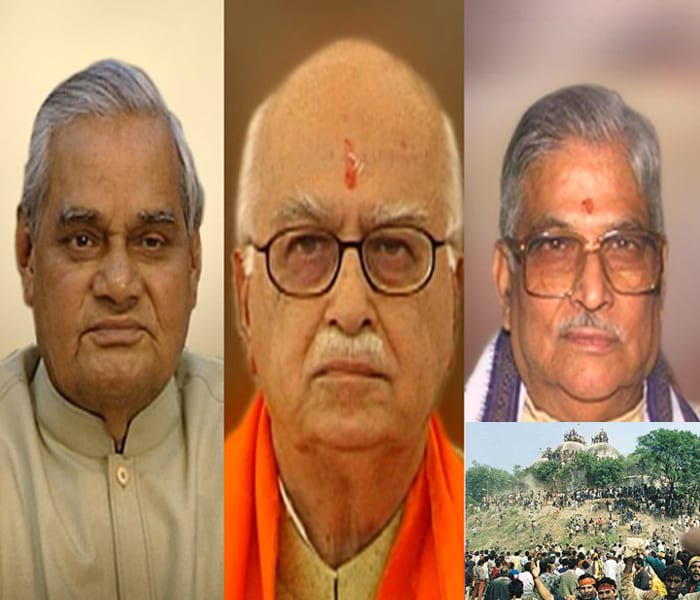 The Liberhan Commission report has been generating heat in Rajya Sabha with Congress and SP squarely blaming the BJP for the demolition of the historic structure while the main opposition has been debunking the report.
After enough of bad blood between the UPA and the BJP following acrimonious debate in the Lok Sabha, the Upper House took up for the discussion the report of the Commission, which took 17 years to complete the task.
The Justice Liberhan Commission report, probing the Babri Masjid demolition, has described it as one of the "worst abhorrent acts in the history of the nation", indicting former prime minister Atal Bihari Vajpayee along with Leader of Opposition L K Advani and former BJP president Murli Manohar Joshi.
The Liberhan report says the entire build-up to the demolition was meticulously planned and there was nothing to show that these leaders were either unaware of what was going on or innocent of any wrongdoing. (NDTV Photo) -
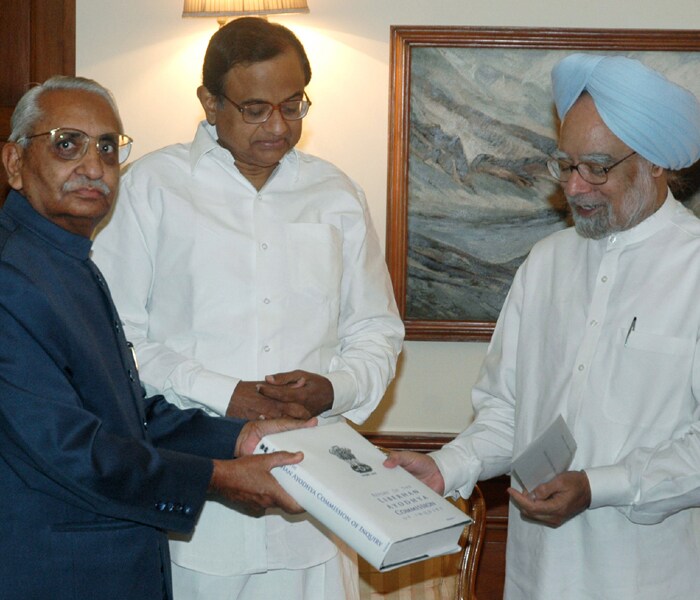 Headed by retired judge M S liberhan, Liberhan Commission was constituted on December 16, 1992, just 10 days after the demolition of the Babri Masjid in Ayodhya which resulted in nation wide riots between Hindus and Muslims, leaving more than 2,000 people dead.
The commission was expected to submit its report within 6 months, but after a delay of 17 years and 48 extensions, it was finally submitted on June 30, 2009 and was tabled in Parliament in December. (AFP Photo) -
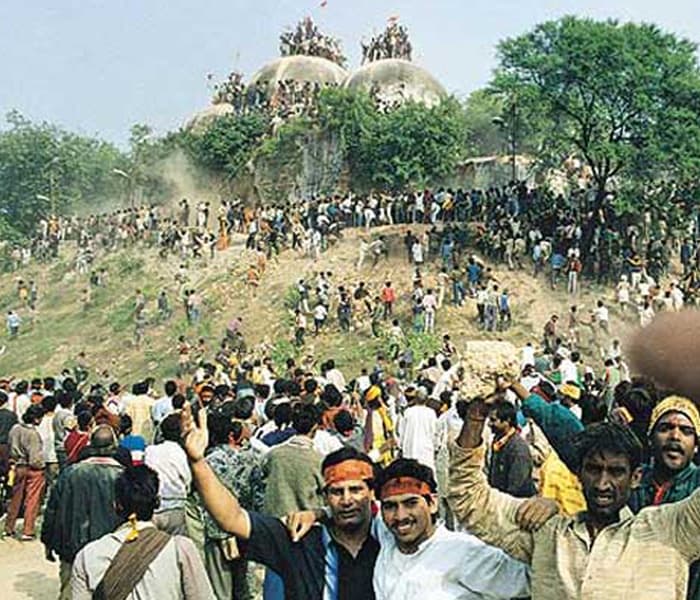 The Babri masjid was constructed in the 16th century, by Babur, the first Mughal emperor of India. One of the largest mosques in Uttar Pradesh, it was destroyed by Hindu nationalists, during a planned ceremony on December 6, 1992 by a mob of atleast 1,50,000, despite a commitment to the Supreme Court that the mosque would not be harmed.
 -
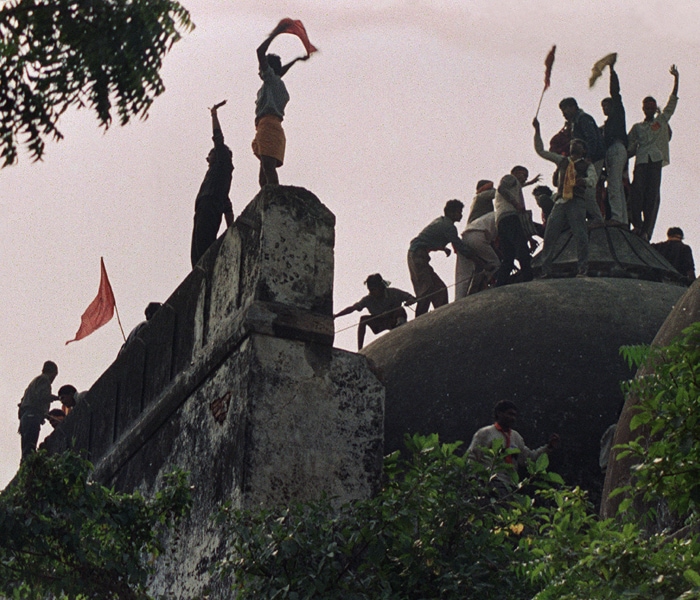 Fundamentalists intent on erecting a temple at the site reduced the mosque to rubble. Hindu nationalists believe that Babur's commander-in-chief Mir Baki destroyed an existing temple at the site, which was the temple built to commemorate the birthplace of Rama, an incarnation of Lord Vishnu and ruler of Ayodhya. (AFP Photo)
 -
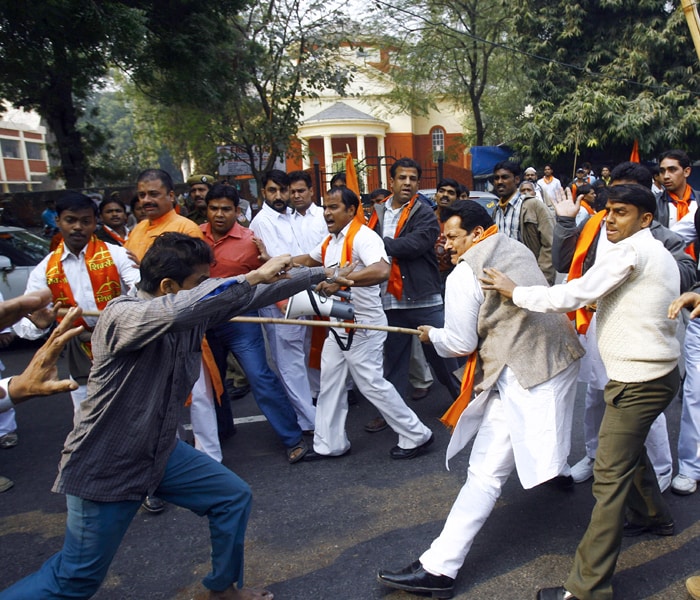 Following the demolition, nationwide riots between Hindu and the Muslim communities ensued which left more than 2,000 people dead. Riots had also broken out in major Indian cities like Mumbai and New Delhi as well. (AFP Photo)
 -
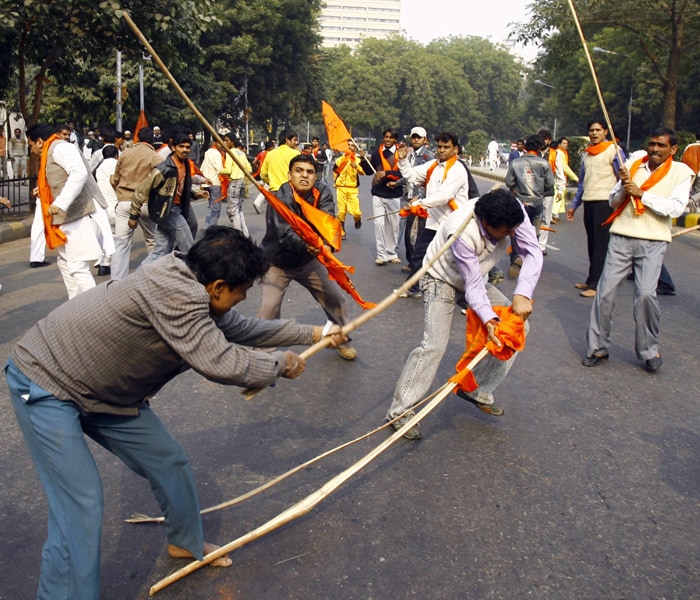 Angered by the demolition, Indian Muslims came out on the streets and started protesting. In Mumbai, to control such riots, the police openend fire and shot dead many people. What was an utter chaos, the reactions resulted in many lost lives, burning roads, damage to public property, furthur demolition of temples by angry Muslims and attacks on other mosques by retaliating Hindus. (AFP Photo)
 -
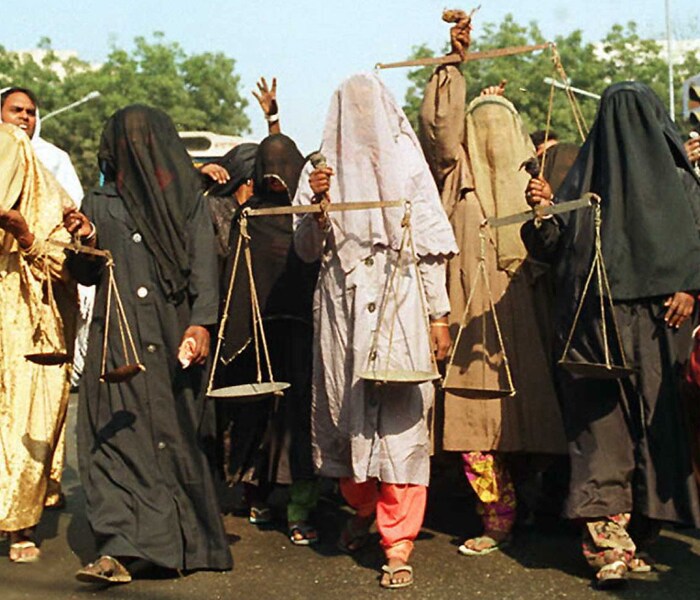 Veiled Muslim women seen carrying the scales of justice during a march, demanding compensation for the families of the people who were killed during these riots.
After the riots, the muslims demanded Babri Masjid to be reconstructed at the same spot whereas the Hindu community wanted to construct a temple there. (AFP Photo)
Advertisement
Advertisement
Advertisement


