Opinion | 3 Reasons India Shouldn't Sign A Deal With A Court-Defeated Trump
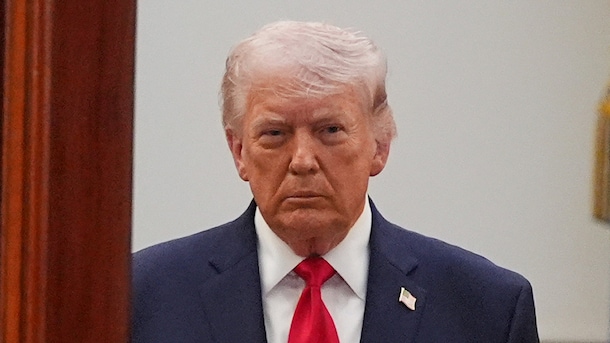
Post the US Supreme Court's order striking down Trump's tariffs, the legal and economic baseline for an India-US deal has shifted sharply.
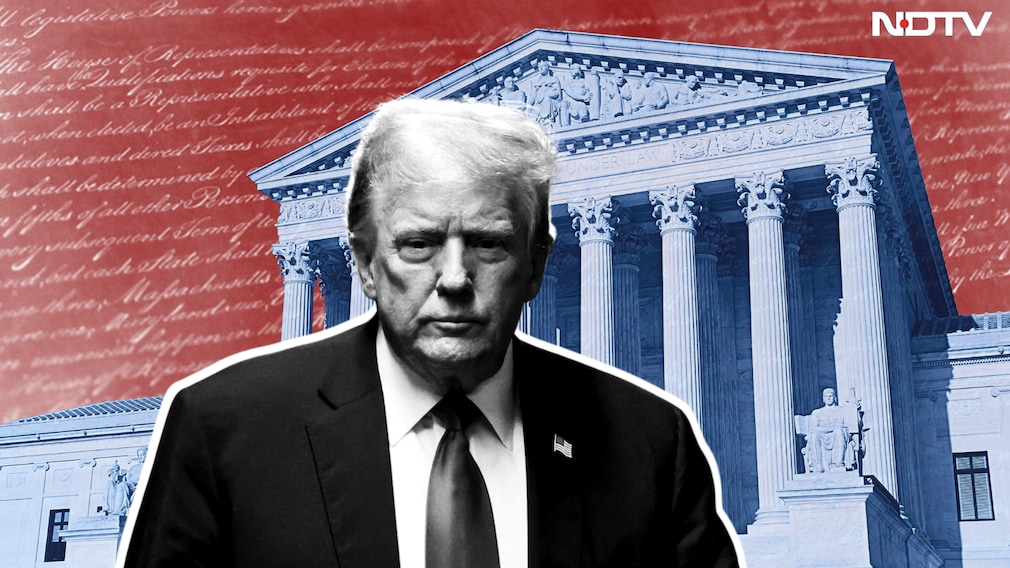
The United States Supreme Court has removed the legal foundation on which Washington's sweeping reciprocal tariffs were constructed. In Learning Resources, Inc. v. Trump, Chief Justice John Roberts wrote that the President claimed the power to impose tariffs "on imports from any country, of any product, at any rate, for any amount of time". The Court held that such authority does not exist under the International Emergency Economic Powers Act. Congress alone retains the taxing power. Emergency tariffism, as practised over the past year, is unconstitutional.
Against this background, India should pause. It has rightly postponed its meeting on the proposed interim trade pact.
Figures That Keep Changing
The interim trade framework finalised by India and the US in early February was negotiated under the shadow of a 50% tariff regime, including a 25% penalty linked to Russian oil purchases. The deal reduced India's exposure to 18% under a reciprocal tariff structure. Within days of the Court's ruling, that 18% fell to 10% under Section 122 of the Trade Act of 1974, a temporary surcharge capped at 150 days. The legal and economic baseline has shifted materially.
To sign a binding agreement while the tariff instrument set of the United States is in flux would be strategically imprudent. That interim framework included significant Indian concessions, with India agreeing to either completely eliminate or reduce tariffs on all US industrial goods and a wide range of agricultural products. The deal commits to addressing long-standing non-tariff barriers, including in medical devices and ICT (information and communication technology) goods, and to determine within six months whether US or international standards are acceptable in identified sectors. It signals intent to purchase $500 billion of US energy, aircraft, technology products, and other goods over five years, and also accepts monitoring and reimposition clauses linked to Russian oil imports.
In return, the United States applies an 18% reciprocal tariff rate and promises conditional removals under annexed procedures. That rate was already substantially above the pre-2025 average US tariff of roughly 2.5% on Indian goods. Trump had announced that temporarily, this would be 10% for all countries. Within a day, he said it would be 15% globally. The asymmetry has narrowed, but the structure remains unsettled.
There Are Three Technical Reasons to Wait
First, authority risk. The Supreme Court has made clear that sweeping tariff action requires clear congressional authorisation. The administration has pivoted to Section 122 for temporary surcharges and signalled reliance on Section 301 and Section 232 investigations for sector-specific action. These are slower, procedurally constrained and litigable. The United States still retains leverage, but the mode of leverage has changed. Any agreement signed today prices in a tariff authority that no longer exists in the form previously exercised.
Second, durability risk. The interim agreement includes a clause allowing either party to modify commitments if tariffs change. If the US reconfigures its tariffs through statutory pathways after the 150-day window, India may find itself in serial renegotiations. Waiting until the US settles into a post-ruling tariff framework would allow India to negotiate against a clearer, steady state rather than a transitional regime.
Third, strategic conditionality. The framework links trade concessions to energy sourcing, defence cooperation and broader economic security alignment. Trade is not being negotiated in isolation. The US President has publicly framed tariffs as instruments of geopolitical leverage. Even if some of this rhetoric is political theatre, the structure of the agreement embeds monitoring and reimposition mechanisms. Signing under temporary tariff relief may lock India into durable external oversight in domains that extend beyond trade.
Testing The Waters
The counterargument is serious. The trade agreement was good for us because tariffs on India were better than those on its competitors. Now that the flat rate of 15% applies across the board, committing ourselves to something that might end up being higher than our competitors doesn't make any sense.
Further, if Section 122 expires without congressional extension, the tariff structure will change again. If Section 301 investigations are launched, sectoral tariffs could rise in politically sensitive areas. If Congress asserts itself more strongly post the Supreme Court ruling, the trade landscape could shift toward legislated constraints. Signing a deal now would convert provisional leverage into irreversible concessions.
Waiting does not mean walking away. It means sequencing. India can maintain the interim framework, continue negotiations toward the broader Bilateral Trade Agreement, and insist that final commitments be aligned with the post-litigation US tariff architecture. It can use the Supreme Court ruling to seek stronger rebalancing clauses, clearer trigger mechanisms and explicit insulation against temporary surcharge phases. It can ensure that agricultural protections, standards policy and industrial strategy are not reshaped by a tariff regime that may not survive its own legal cycle.
The Supreme Court has restored constitutional boundaries in Washington, not predictability to US trade policy. That transition is underway. India should not lock itself into long-term obligations while the other side is still redefining the legal basis of its leverage.
(Aditya Sinha writes on macroeconomics and geopolitics and is a former OSD, Economic Advisory Council to the Prime Minister.)
Disclaimer: These are the personal opinions of the author
-
Blog | The Dantewada Massacre, And What India Needs To Do To Stay Maoist-Free

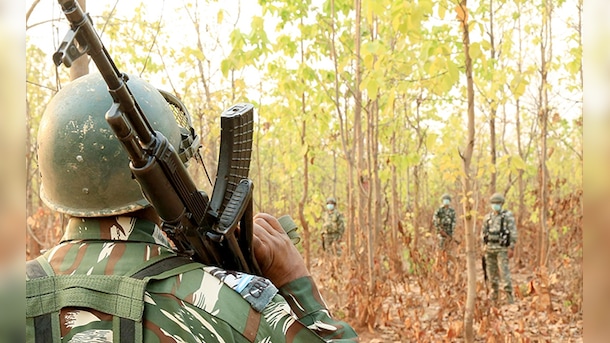
In 2010, I was Assistant Chief of the Air Staff controlling transport aircraft and helicopters, and on April 6 that year had to arrange An-32 aircraft to carry coffins of 75 CRPF jawans.
-
Opinion | How Iran Has Pierced The One 'Shield' That Protected America For 30 Years
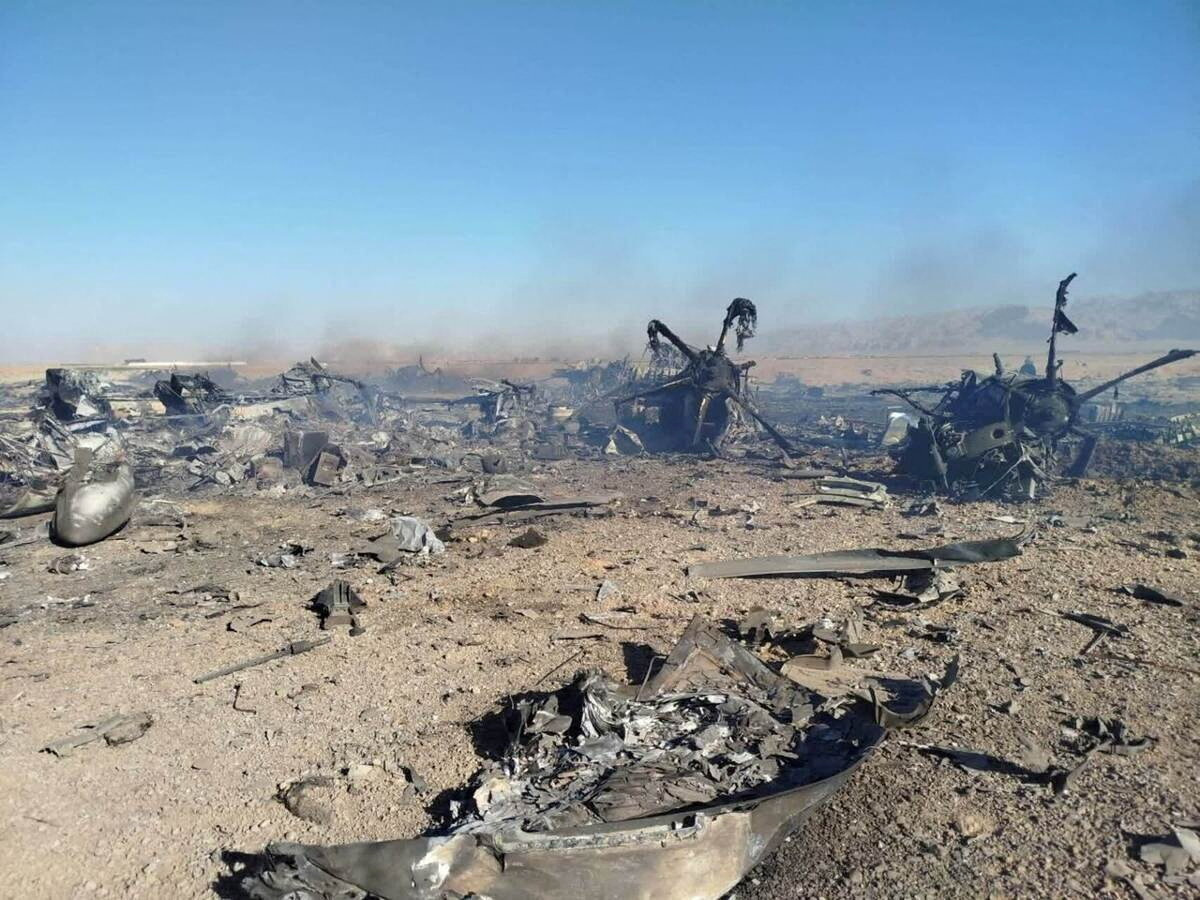
In the past, US campaigns in Iraq, Afghanistan and Libya were conducted against relatively weak air defences. That has not turned out to be the case with Iran, puncturing the long-held myth of America's 'indomitable' air power.
-
Opinion | The Quiet 'Upheaval' Within US Military Over The Iran War
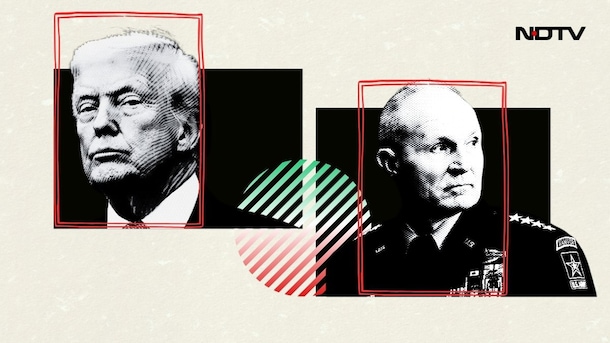
General Randy George's ouster carries echoes of a similar episode in 2003, in the run-up to the Iraq war. But much more is happening within the US military, courtesy Hegseth.
-
How Iran Sucker-Punched Trump Into 'Escalation Trap' 'Hellhole'
Trump is now under pressure, not just from allies but also within; the President's approval rating is the lowest it has ever been with mid-term elections in November.
-
Eagle Down: How US Carried Out Precision Search And Rescue Op In Hostile Iran
How the United States transformed a tactical failure into a narrative of national resolve.
-
Opinion | 450 Missile, 2,000 Drone Attacks Later, Why Is UAE Still Not Fighting Iran?
The UAE is Iran's second-largest trading partner and also home to roughly half a million Iranians. Why, then, has it absorbed more fire than any other Gulf state?
-
In Numbers: How Has India Kept Fuel Prices Low Even As Europe Sees 70% Spikes?
India imports 88% of its crude. Why then is it not seeing massive price hikes for fuel and LPG? Inside the unique strategy it's following...
-
Opinion | India Just Decided To Let Chinese Capital In Again. But There's A Catch
In March 2026, India eased regulations that had restricted Chinese capital in local companies, in a development that marks New Delhi's cautious approach towards capital flows from Beijing.
-
Trump's Iran 'Knocked Out' Claim Blown Up By US Intel On Missiles, Drones
Donald Trump claimed this week the war would end in two to three weeks as he threatened to send Iran back to the Dark Ages. But based on these reports the fighting is far from over, even if US President wants to push a contrary narrative.
-
Opinion | Rs 30 Petrol Hike To Currency Crisis, What Oil At $150 Can Really Do To The World
At $125 per barrel, petrol and diesel retail prices will need to rise by Rs 8-14 per litre. At $150 - which experts think is now likely - these figures could touch Rs 26-30 per litre.