Opinion | Will The Congress Learn The 'Mamdani' Lesson?
Like Mamdani's Democrats, Rahul Gandhi has inherited a Congress that resists change - comfortable in its proximity to power, even when out of office.
"The working people of New York have been told by the wealthy and the well-connected that power does not belong in their hands... And yet, over the last 12 months, you have dared to reach for something greater. Tonight, against all odds, we have grasped it. The future is in our hands. My friends, we have toppled a political dynasty."
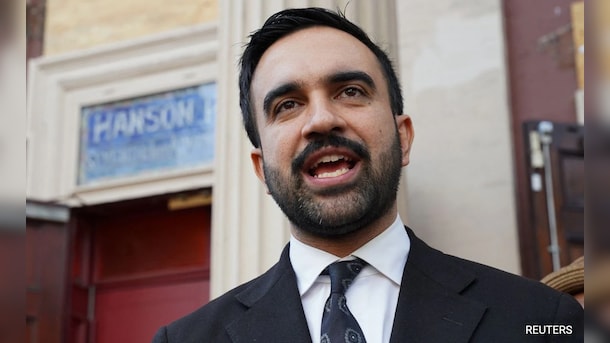
These words, by now, have been heard by millions across the globe. They have leapt out of newspapers, televisions, and, perhaps most potently, Instagram. All this has happened because Zohran Mamdani, a 34-year-old migrant Muslim, a self-declared democratic socialist of mixed parentage - a man who might easily have been consigned to the margins of contemporary political economy - has become the new mayor of New York City.
Mamdani's success has signalled a system reset: a toppling of a political dynasty that sought legitimacy from the common people even as it worked to de-power them. Who was Mamdani fighting? On the road to New York's City Hall, he met with intense opposition from the business and financial community. Mamdani's progressive platform - freezing rent prices, taxing the city's wealthiest one per cent, and demanding corporate accountability - alarmed traditional Democratic donors and real estate magnates.
Over 20 billionaires spent millions to back his opponents, including former Governor Andrew Cuomo. Figures like Michael Bloomberg, Bill Ackman, and Ronald Lauder funded an unprecedented campaign against him, terrified that his economic agenda would drive away corporations and destabilise the real estate market.
And yet, he won.
A 2019 meeting of right-wing donors - from Peter Thiel to J.D. Vance and Tucker Carlson - had sought to make the MAGA movement an enduring political machine. Mamdani confronted a similar corporate-political nexus in New York and beat it. He re-centred democracy around people rather than profit. The lesson from Mamdani is simple: dismantling this usurpation of people's power must be done by returning to the people.
If 104,000 volunteers could make 4.4 million calls for Mamdani, what can the Congress under Rahul Gandhi conjure in India? But, like Mamdani's Democrats, Rahul Gandhi has inherited a Congress that resists change - comfortable in its proximity to power, even when out of office.
Perpetual Inaction
For decades, Congress's reflex after every electoral defeat has been to form a committee. The Committee Raj has become its comfort zone - a bureaucratic ritual that replaces action with analysis.
In May 2022, Sonia Gandhi, who was then the party's interim president, established a high-profile Empowered Action Group (EAG) to address Congress's political challenges ahead of the 2024 elections. However, there is no record of the EAG holding deliberations between 2022 and 2024. Nor is there any proof of it formulating a strategy for the 18th Lok Sabha polls.
After the losses in Rajasthan and Chhattisgarh in 2023, internal reports were filed, but not discussed. At 24 Akbar Road, volumes of introspection gather dust: Ram Niwas Mirdha's report on organisational polls, Manmohan Singh's on party funds, Sam Pitroda's on modernisation, Pranab Mukherjee's on structural reforms, and three of A.K. Antony's on electoral debacles.
All of them recommended bold change. None were acted upon.
Mamdani, by contrast, didn't form committees. He built a movement.
Movement Over Machinery
Mamdani's campaign spoke in the language of the streets, not the boardroom. His visual identity - a hand-lettered logo inspired by vintage Bollywood posters, painted in MetroCard yellow and New York Mets blue - made a Muslim-South Asian face feel inseparable from New York's political imagination.
Every choice was deliberate. His videos appeared in English, Urdu, Spanish, Hindi, Bangla, and Arabic. He interviewed halal-cart vendors about "halal-flation", canvassed subway riders, and turned daily posts into collective storytelling.
It worked because it felt real.
Congress's branding, in contrast, remains sterile. When was the last time a Congress campaign stopped anyone mid-scroll?
Rahul Gandhi tried to infuse freshness through the Bharat Jodo Yatra, an ambitious cross-country walk blending activism and outreach. He met farmers, artisans, and workers. He filmed conversations, livestreamed encounters, and opened the party to empathy. But what Mamdani achieved through participation, Congress tried to simulate through performance.
The result? Motion without movement.
The Authenticity Deficit
Mamdani's strength was not charisma alone - it was also his credibility. His volunteers spent days and nights knocking on doors, having real conversations with everyday people. That human infrastructure made Mamdani and the promise he symbolised believable.
Congress, meanwhile, suffers from a chronic authenticity deficit. The party's funding networks remain intertwined with the very business interests it critiques. The average voter hears the rhetoric but sees the contradiction.
Mamdani won despite opposition from the Democratic establishment. Rahul Gandhi, in contrast, is surrounded by his own establishment - one that muffles every reform instinct in procedural layers.
When Gandhi speaks of empowering the poor, the message is often lost behind the family name and the party's inertia. Voters hear conviction but see privilege.
Nehru's Spirit, Reclaimed in New York
The most poignant moment of Mamdani's victory came when he quoted Jawaharlal Nehru's Tryst with Destiny: "A moment comes but rarely in history when we step out from the old to the new..."
An Indian-origin politician in New York has kept Nehru's democratic soul alive more vividly than the Congress in India. Mamdani's agenda - rent freezes, free public transport, universal childcare, taxing the rich - is Nehruvian in spirit: economic justice as the foundation of political freedom.
The Congress of today invokes Nehru, but no longer imagines like him. His legacy is defended, not advanced.
The Road Not Taken
Mamdani mobilised a generation dismissed as disenchanted. His campaign saw New York's highest voter turnout since 1969, driven by those under 45.
Rahul Gandhi has attempted to speak to India's young, often with sincerity and intellectual depth. Yet, such interventions, however well-crafted, remain isolated performances. They do not convert into a participatory movement because the Congress ecosystem still centralises power.
India's principal opposition needs what Mamdani offered New Yorkers - a rupture with business-as-usual politics.
The Congress must stop narrating nostalgia and start reclaiming moral imagination. Because in the end, as Mamdani reminded the world, democracy survives only when people, not corporations, hold power in their hands.
(Rasheed Kidwai is an author, columnist and a conversation curator)
Disclaimer: These are the personal opinions of the author
-
J&K Doctor With Ammonium Nitrate Arrested Near Delhi: How Dangerous Is It?

In simple terms ammonium nitrate is a salt consisting of one ion each of ammonium and nitrate that is formed by the reaction of ammonia (NH3) and nitric acid (HNO3).
-
The 'Vande Mataram' Row: What Stanzas Did Congress Drop, And Why
Prime Minister Modi recited the full hymn at an event Friday morning, on the 150th anniversary of its composition, and said the Congress had "severed torn apart" the poem.
-
Elon Musk Is The First Trillion-Dollar Man. What It Means For The World
In 2021 the United Nations World Food Programme said it would need around $US 40 billion annually to end world hunger by 2030, which is less than Elon Musk's entire net worth
-
Opinion | Why Do NRIs Hate Mamdani? Because He Threatens Their 'American' Dream
Mamdani's unapologetic leftism, his advocacy for tenants' rights, and his support for Palestine challenge the sanitised image of "model minority". Mamdani is more West Village than Wall Street, and this is what scares a section of NRIs in America.
-
Zohran Mamdani And Record-High 'Samosa Caucus': Indian-Americans In US Politics
At 34, Zohran Mamdani becomes the youngest mayor of New York - and the newest face of an Indian-American community that has seen a five-fold rise in elected officeholders in just 12 years.
-
"Governance Se Power Milta Hai Kya?" The 1992 Lalu Yadav-Nitish Kumar Split
Both Lalu Prasad Yadav and Nitish Kumar started political journey with the anti-Emergency protests, but their trajectories would be very different
-
Opinion | Trump Has Well And Truly Shot Himself In The Foot With China
So, China has been able to use its rare earth policy to extract concessions on US high-tech exports. In other words, Trump has shot himself in the foot, something inconceivable before the trade war.
-
Opinion | Inside Pakistan's Twisted 'Empowerment' Project: The 'Lady Killers' Of Jaish
Why does Masood Azhar want to build an army of women suicide bombers? For both personal and political reasons, apparently.
-
Opinion | "Just Delhi By The Sea": How Goa Drove Its Tourists Away
Goa's sleepy and leisurely environment, once its greatest asset, is now its weakness.You can get WiFi on a surfboard in Bali, but still struggle to find a clean loo in Baga.