Opinion | Why The Jauhar Scene In Padmaavat Needs To Be Seen For What It Does
The practice of 'jauhar' was certainly abolished long ago. But that does not mean that it should be romanticised or glorified in mass culture.
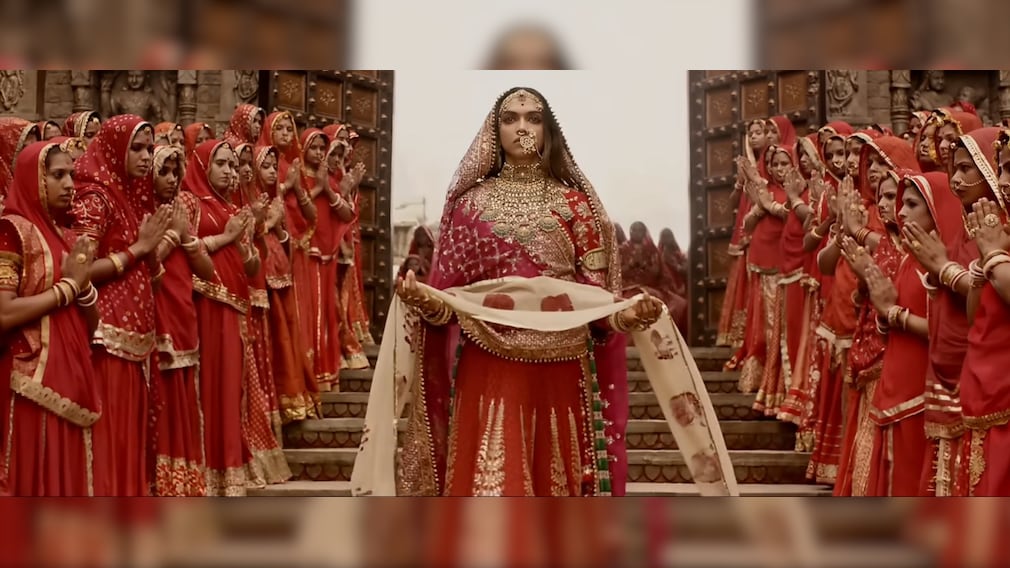
Actor Swara Bhasker has rekindled an old controversy that had been sparked by her open letter to filmmaker Sanjay Leela Bhansali back in 2018. At an event in Delhi last week, Bhasker referred to the letter where she had written about her discomfort with the scene in Bhansali's film Padmaavat, where Rani Padmini and hundreds of other women of Chittor commit 'jauhar' (self-immolation) after the kingdom falls to Delhi Sultan Alauddin Khilji's forces.
“I was watching it, and I thought that if, God forbid, I was a rape survivor, what is this film telling me?” Bhasker said. “I would feel like a coward that I didn't commit suicide to save my honour. Is that what you want to tell in a society like ours where I feel like anyway there is a rape epidemic. Is this what we want to tell our survivors that they don't deserve to live? … Are we saying that rape is (the) end of a woman's life? This scene was so problematic.”
Hordes of internet trolls and other worthies immediately twisted Bhasker's comment and claimed that she had called the women of Chittor who had jumped into the fire “cowards”. A torrent of foul insults and abuse followed. The essence of this deranged, self-fulfilling outrage was that Bhasker had belittled the bravery and honour of Hindu women while trying to whitewash the misdeeds of a Muslim invading army.
Products Of Their Time
Even those who did not stoop to distort Bhasker's words and knew her contention was that a scene such as this could make a rape survivor feel like a coward because she had not taken her own life, criticised her for questioning the depiction of the practice of jauhar in the film. That was then, that was a “choice” the women of Chittor made, they said, so why was Swara Bhasker getting exercised over it?
But here's the thing. The choices women make are often spurred by patriarchal conditioning. This was as true in the Middle Ages as it is now. No matter how much you glorify and mythologise practices such as jauhar and sati - the latter is one where a widow would walk into her husband's funeral pyre - the fact is that they were products of a culture where a woman's existence was thought to be inseparable from the fate of her husband or whoever her male protector was. If he died, her life was deemed defenceless, meaningless, purposeless, and, therefore, perhaps best ended. And if it ended with a fiery halo of courage and sacrifice, this belief system was buoyed further and encouraged more women to “choose” a similar path. It was, in effect, the ultimate form of control of women's bodies - the continuance or otherwise of their very existence.
The women of Chittor who committed jauhar in early 14th century embraced death rather than a life in which they would be raped and enslaved by a marauding army that had slaughtered their men and were now eyeing them as spoils of war. No doubt it took phenomenal courage to do what they did. But when we look at their act from today's perspective, it sets up a narrative about the stigmatisation of rape survivors down the ages.
Question The Romanticisation
Sexual violence is an assault on the bodily dignity and the human right of women. It is an abomination, a horrific act that can psychologically impair survivors forever. Even so, is death preferable to life as a person who has survived sexual violence? Is it better to give up one's life - the one precious chance to spend some time on this earth - than be subjected to the unspeakable trauma of rape? Unfortunately, the ferocious defence of the glamourisation of jauhar by patriarchy's shills on social media seem to suggest that it is. The inescapable subtext here is that a sexually assaulted woman is so defiled, so irrevocably ruined, that her life is not worth living.
The only exception? Why, marital rape, of course - since that brand of sexual violence is committed, and doubtless sanctified, by a husband, one who has been anointed by society as the sole and absolute owner of his wife's vagina. Which is perhaps why there are rape cases in India where judges encourage the rapist to marry the survivor. Get married to the survivor, and hey presto, your crime of rape will become a non-crime!
Remember, though, that acts of rape are not always committed by a known person or a random stranger. Women caught in the midst of wars between men are often subjected to horrendous acts of sexual violence. According to the United Nations, worldwide, there were nearly 10,000 reported incidents of conflict-related sexual violence in 2025. The actual figure could be higher. And the effort of all agencies everywhere is to help survivors overcome their trauma - not to treat them to pernicious narratives that what happened to them was a fate worse than death.
Much of the outrage against Swara Bhasker's comments is probably reflexive. It is part of the unthinking instinct amongst sections of Indian society today to tear into any criticism of an ancient custom, no matter how egregious it may have been. The practice of jauhar was certainly abolished long ago. But that does not mean that it should be romanticised in mass culture. For who knows what murderously regressive impulse that might reignite? Let us not forget that 18-year-old Roop Kanwar was burnt alive in her husband's pyre in 1987, more than 150 years after sati was outlawed. Indeed, jauhar, sati, agni pariksha… they are all variations on the same theme. They are all embedded in the same toxic expectation from women - that they should be willing to annihilate themselves in the interest of protecting, declaring, or proving their “virtue”.
Bhasker is right to flag the problematic nature of the jauhar scene in Padmaavat, which was filmed with such sumptuous fanfare. We do not want this medievalism, this advertisement for better-death-than-rape to be dressed up as something to be inspired by. The experience of sexual violence, no matter how damaging, does not define a survivor. Any suggestion that it does, or that it should prompt her to take her own life, perpetuates the social stigma that survivors face, and must, therefore, be strenuously opposed.
(Shuma Raha writes on gender and culture and is the author most recently of the novel ‘The Sea Has the Answers')
Disclaimer: These are the personal opinions of the author
-
"We Don't Have 5 Years": Celebrated American General Sounds Alarm On War

Former CIA Director David Petraeus says the drone war in Ukraine has made traditional manoeuvre warfare obsolete, and that armies which do not overhaul themselves within a year risk being left behind
-
Can't Save Enough For A Home Down Payment? 3 Ways To Build Your Fund
Down payment is only part of the money a buyer needs. Stamp duty, registration, moving expenses and furnishing can add to the upfront cost.
-
Opinion | Jamnagar, Rubio, And Why The US Wants India To 'Obey', Not Negotiate
Marco Rubio's dash to Jamnagar was driven by Trump's hope that India could do something about the shortage of diesel that the world is experiencing and thereby help his mid-term performance. But why the punishing policies then?
-
Opinion | Why China Is Producing More, Selling Cheaper - And Still Not Getting Anywhere
More capital, more capacity, more elaborate technology, and steadily less profit to show for any of it. That's what's happening to China now.
-
Opinion | A Jolt For Trump? How The US May Be Staring At A 'Blue' Wave
Evidence now points firmly to a Democratic majority in the House. The only real surprise is the Senate
-
Opinion | Why The Saudi-Pak-Turkey Defence Pact May Actually Be An 'Intel' Network
Rather than a NATO-like construct, the Mecca pact may evolve to become something like the West's Five Eyes alliance.
-
The Real Story Of France's Unrest Is Getting Lost In A Storm Of Online Lies
A man cosplaying Napoleon on the streets, looting at luxury fashion stores like Dior, France is currently confronting one of its most serious episodes of civil unrest in years.
-
Opinion | The Last Bet? What Trump's 'Mother Of All Bombs' Could Actually Do To Iran
Can an MOAB deliver a decisive blow to Iran that may force it to surrender immediately, as Japan did after Hiroshima and Nagasaki in World War 2?
-
Hit Songs, Empty Pockets: The Hidden Math Behind India's Viral Music Boom
Over 80,000 brands and five lakh creators in India make branded content. The opportunity is worth around Rs 1,500 crore.