Opinion | Why The Anti-India Rage In Bangladesh Makes Little Political Sense
Election time among most of our neighbours inevitably has an anti-India component these days. Such narratives are useful for the politically ambitious.
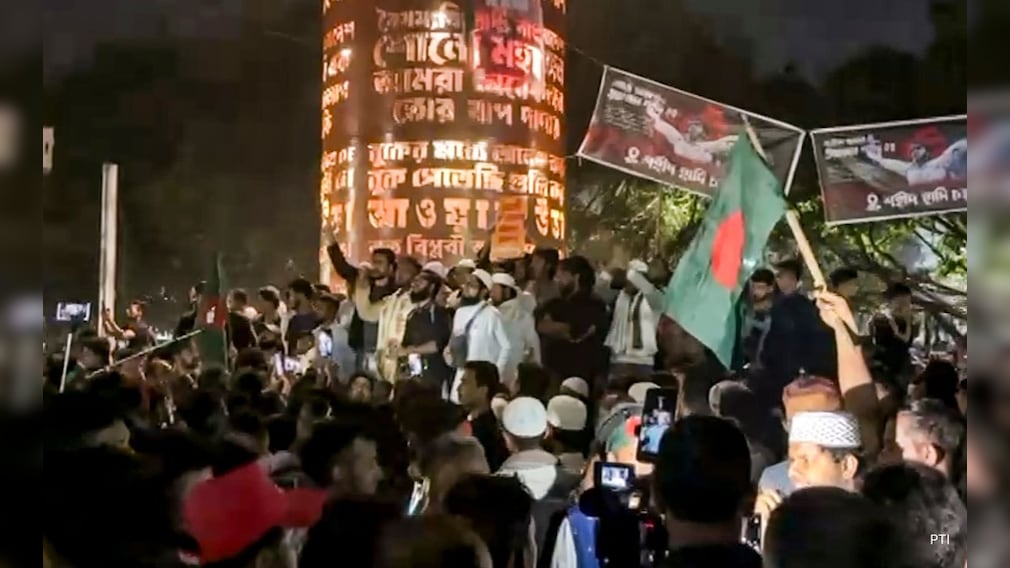
The rage is palpable, though its reason is illogical. Bangladesh, almost constantly on the boil since the ousting of Sheikh Hasina last year, has descended into a fresh bout of bloodletting. The reason for this rage, at one level, is the killing of a strident student leader, Sharif Osman Hadi, who was somewhat of an icon among the youth. At another level, it is a tirade against India, with accusations against it of killing him. That is what is entirely illogical. But then, rage and frustration always need an outlet, and someone to blame, especially when a 'revolution' that was supposed to bring back rights and national respect turns into a social and economic downslide.
The Thing About Neighbours
It is true that election time among most of our neighbours inevitably has an anti-India component. Such narratives are useful for the politically ambitious, and most of the time, they do no particular harm domestically. This time, however, it led to a dangerous attack on the Indian High Commission. Hadi was one of the leaders of the July unrest, and in terms of fulminations against Sheikh Hasina, he was part of a larger crowd including such extreme figures as Mahfuz Alam, Nahid Islam, and the fiery Hasnat Abdullah. All were anti-India in the beginning, initially bound by the fact that Sheikh Hasina was in India. Then, as the novelty of that factor waned, they went on to vie with each other in attacking India.
Hadi was hardly receiving much public coverage until last year, when he teamed up with Mahmodoor Rehman, someone who returned from years of exile in Turkey to start his own newspaper, Amar Desh. Much of Hadi's anti-India vitriol was on the same lines as the others; once, he even shared a map on Facebook depicting a "Greater Bangladesh" to include India's seven northeastern states, West Bengal, and parts of eastern India. That was just before his death. But the reality is that this narrative was set in motion by none other than the country's Chief Adviser, Mohammed Yunus, when he invited China to use Bangladesh to trade with the "landlocked" Northeast. Even Hasnat Abdullah had had a go at India's 'seven sisters'.
In other words, Hadi was hardly unique enough or formidable in his leadership of the 'Inquilab Mancha' to earn India's ire. Though it's true that his party was preparing to give other student groups, such as the National Citizen Party (NCP), a run for their money.
Blaming India Is Just 'Preemptive'
After the attack, the Dhaka Metropolitan Police identified two suspects on the basis of CCTV footage as the killers of Hadi, who was shot in the head on December 12 by two motorcycle-borne assailants. Both are helmeted, which does make the identification of the two rather difficult. There are also unverified allegations that the main killer has fled to India.
Thereafter, what should have happened would be Dhaka asking the Indian embassy for help in tracing them. Authorities would have responded in such a case, since such channels are fairly routine. Instead, what transpired was astonishing. The Ministry of Foreign Affairs summoned the Indian ambassador and not only demanded that Sheikh Hasina be extradited immediately, but also said that "fugitive" Awami League members staying in India were "planning, organising, and helping to carry out terrorist activities within Bangladesh to hinder the upcoming elections". It then proceeded to ask India to cooperate in preventing the assailants from entering India. When all this was made public, it provided the immediate match to the fire.
The Mob Was Not Random
Entirely predictably, this let loose a mob that then marched upon the Indian High Commission (December 17). Then followed the unprecedented attack on the national newspapers Daily Star and Prothom Alo, which has puzzled most spectators. One reason for the former could have been the now standard publication of its 'Liberation Day' edition, while others opine that this was instigated by foreign content creators and also the Amar Desh owner. The mob declared both media houses as pushing India and Sheikh Hasina's agenda.
All this is entirely untrue, given that both have been known to be extremely critical of New Delhi. Meanwhile, the alleged killer, Faisal Karim Mehsu, is said to be a former leader of the banned Chattra League, once known as the core of the Liberation War, while the others arrested include individuals linked to human trafficking networks in the Haluaghat area. One was also a nephew of an Awami League MP. Earlier, Hadi's colleague Rafe Salman Rifat had accused Bangladesh's "deep establishment" of being behind the murder, while Hadi himself had said he had been receiving death threats earlier. It's a chicken soup of no mean order.
Given the raging anti-India hate, it is easy enough to blame Pakistan, whose 'Chief of Defence Forces', General Asim Munir, has publicly threatened to attack India 'from the east'. True also that a host of Pakistani intelligence and other delegations have descended on Bangladesh to a fulsome welcome. Most recently, Bangladesh's Director General of Forces Intelligence (DGFI) was in Islamabad for a secret meeting, while a Pakistani Navy ship docked at Chattogram port for the first time in 50 years. There is also a persistent Turkish thread running through the whole story, apart from the new publishing house, including at least one NGO that is allegedly linked to another militant group that is claiming even parts of mainland India, the whole thing being again linked to Turkish President Recep Tayyip Erdoğan's party.
In sum, however, nothing is clear, and the original 'revolution' as well as the current violence is all being perpetuated with a bucketful of information and disinformation, broadcast on WhatsApp messaging platforms by the dozen.
Ask Papa Poirot
A Hercule Poirot murder-mystery-style question comes to mind: 'Who benefits?'
That points to another neighbour. Pakistan naturally would be pleased if India is seen unfavourably in Bangladesh. What it promised is also what's happening: 'hitting the east' and seriously roiling India-Bangladesh ties. Consider the horrific burning alive of a Hindu man in a case of deliberate barbarism and the less-noticed ramming of an Indian fishing boat on December 15, reportedly by a Bangladesh naval boat, killing at least five.
In Bangladesh, the BNP has been against reversing the legacy of the Liberation War, for which so many Bangladeshis died. That has led them to be quickly castigated as being "pro-India". Most cynics will also point to the fact that delayed elections would mean that Yunus stays on for what might well be another year. But that would be a mistake of huge proportions. He might well wind up being pushed out by those Bangladeshis who are tired of violence and divisions, and a spiralling economy. Many of those people are in the Army. That's not good either.
Amidst all this, Indian diplomacy has its task cut out to separate the Hasina-India linkage. Hasina is here on the request of the Bangladesh Army - it wasn't Delhi that brought her here. That needs to be reiterated publicly, even as she herself is asked to rein in her public comments. International law gives her the right to shelter. But, shelter only. Is it time to retire from politics?
As for the media, calling this a "Gen Z" revolution is laughable. This is warfare of a different kind altogether.
(Dr Tara Kartha is a former Director, National Security Council Secretariat)
Disclaimer: These are the personal opinions of the author
-
Opinion | What Trump May Be Getting Dangerously Wrong About Iran

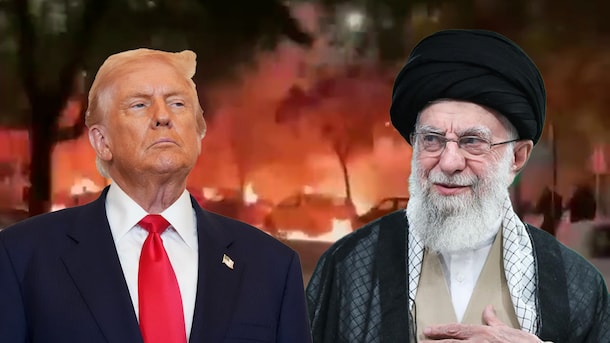
Trump has reasons to be careful. Iran is not Venezuela. It is nearly as big as Western Europe and remains a military power, despite being degraded by the Israeli and the US military action last year.
-
Blog | Madhav Gadgil: The 'Durable Optimist' Who Believed Science, Too, Has Obligations
Gadgil, despite decades of frustration and bureaucratic sidelining, believed that people could organise, that knowledge could travel, and that democracy, however delayed, could still correct its course.
-
Blog | What's Stopping Vijay's Film? 6 'Conspiracy Theories' About Jana Nayagan
In Tamil Nadu, it turns out you don't need a release date for the promise of a blockbuster. Sometimes, just a missing censor certificate is enough.
-
Opinion | The $700-Billion-Big China Problem Behind Trump's Venezuela Blitz
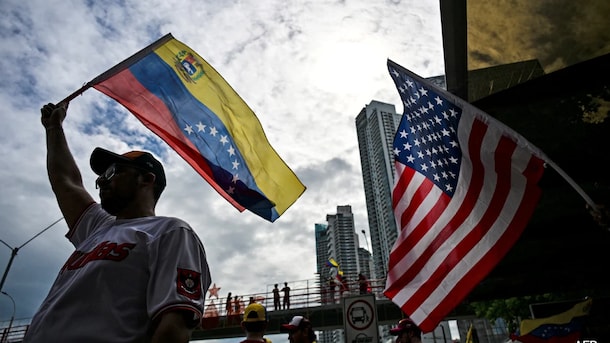
Venezuela is only part of the story. China has assembled a formidable economic footprint across Latin America. Trade between China and the region crossed $518 billion in 2024, making Beijing the largest trading partner for much of South America.
-
From Trump And AI To Russia And Water: The 'Top Risks' Of 2026
Ian Bremmer's Eurasia Group, one of the world's top risk research and consulting firms, has released its 'Top Risks 2026' report.
-
Opinion | Suresh Kalmadi: The Man Behind The Legendary 5-Star Dinner That Unnerved Even Sonia Gandhi
Kalmadi proved that in Indian politics, the man who controls the guest list often has more power than those whose names appear on it.
-
Europe's Different Yardsticks To Judge Events In Venezuela And Ukraine
Russia has called the US strike on Venezuela and the subsequent capture of Nicolas Maduro an act of armed aggression
-
Opinion | How Venezuela's China-Made Weapons Failed To Keep The US Away
Unlike post-Operation Sindoor, when Beijing hailed Pakistan's air-defence operations against India as a success of Islamabad's "Made in China" military force, there is an eerie silence within Beijing this time.
-
Opinion | Donald Trump Has A New Project: 'Make Venezuela Great Again'
Trump's presidency, much like of those before him, reveals the structural constraints that limit any US leader's ability to disengage from global conflicts.
-
A History Of US-Led Regime Changes And Their Disastrous Consequences
There is a familiar theme to American power when it decides to reorder the world. It is against that historical backdrop that Donald Trump's latest foreign intervention must be understood.