Opinion | What Trump May Be Getting Dangerously Wrong About Iran
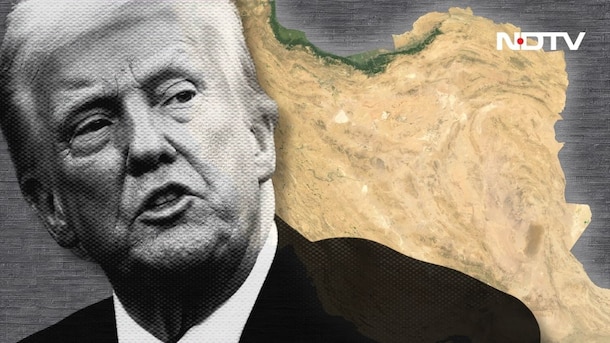
Trump has reasons to be careful. Iran is not Venezuela. It is nearly as big as Western Europe and remains a military power, despite being degraded by the Israeli and the US military action last year.
The comment by India's Foreign Secretary, Vikram Misri, on Monday, that the government is watching the developments in Iran closely, appears to be an understatement. As the unrest threatens the 47-year-old Islamic regime's survival, it also has the potential of creating a regional crisis, one that could seriously harm India's economic and strategic interests.
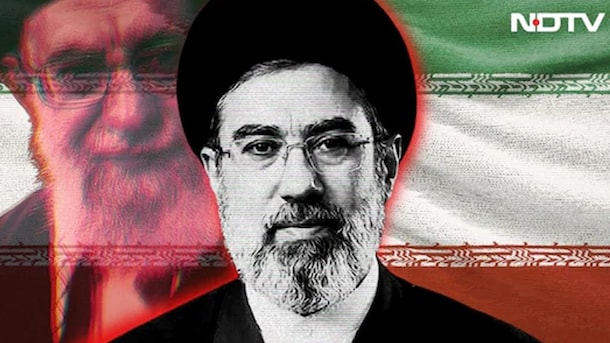
The protests, which began two weeks ago in Tehran, have already spread to more than 100 cities in all of Iran's 31 provinces. Iran's regime, led by the Supreme Leader, Ayatollah Ali Khamenei, has done what it has done in the past, trying to crush the unrest with brutal force. More than 600 demonstrators have already been killed, according to human rights groups, which have warned that the actual death toll could be far higher because of a nationwide internet blackout.
Iran has seen many anti-government protests since the 1979 Islamic Revolution, which deposed Mohammad Reza Shah Pahlavi. But the latest protests appear to be the most significant challenge to the regime. They have already taken more lives than the last one in 2022, which followed the death in custody of 22-year-old Mahsa Amini over hijab enforcement, killing 550 people across the country. That was a feminist-centred protest. The latest one, which has spread more quickly nationwide, has attracted young men, women and even the elderly.
Is This An Uprising?
This protest is also significant due to the participation of traders, their first such involvement since the 1979 revolution. In fact, they started these demonstrations in Tehran on December 28, when the Iranian currency, the rial, collapsed against the dollar, and later attracted other sections of society. But it's still early to call it a mass uprising as there are no signs yet of a regime collapse, despite some reports of defections from the security forces.
After years of Western sanctions, ordinary Iranians' lives had already become miserable. Things worsened after the conflict last summer with Israel, when the US also joined and bombed Iran. Last month, the country's inflation exceeded 50%. So, there was enough ground for sparking unrest.
Ayatollah Khamenei has accused foreign powers of orchestrating the unrest, primarily the United States and Israel, but the scale of unrest suggests the protesters' anger is directed against the government. Slogans have been heard against the Islamic regime, which is rare in Iran. The country's former crown prince, Reza Pahlavi, who is in exile in the United States, has been encouraging street protests for some time, but one can't dispute his Iranian heritage.
US Military Action May Not Help
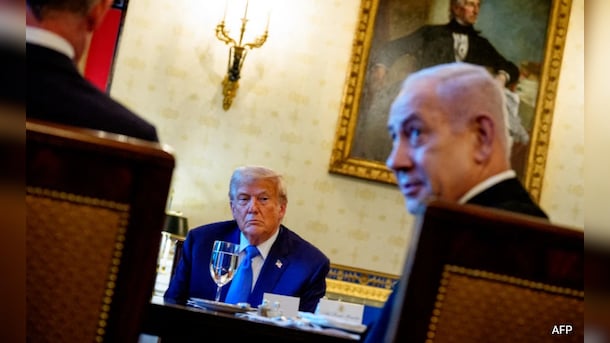
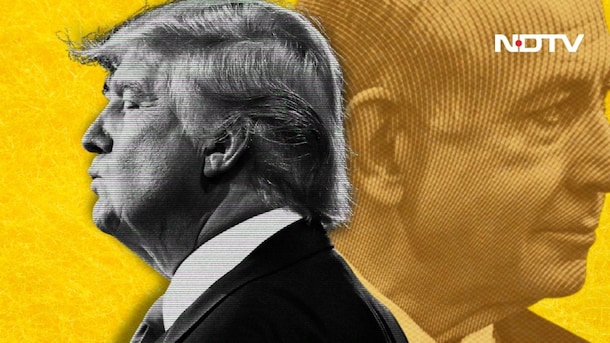
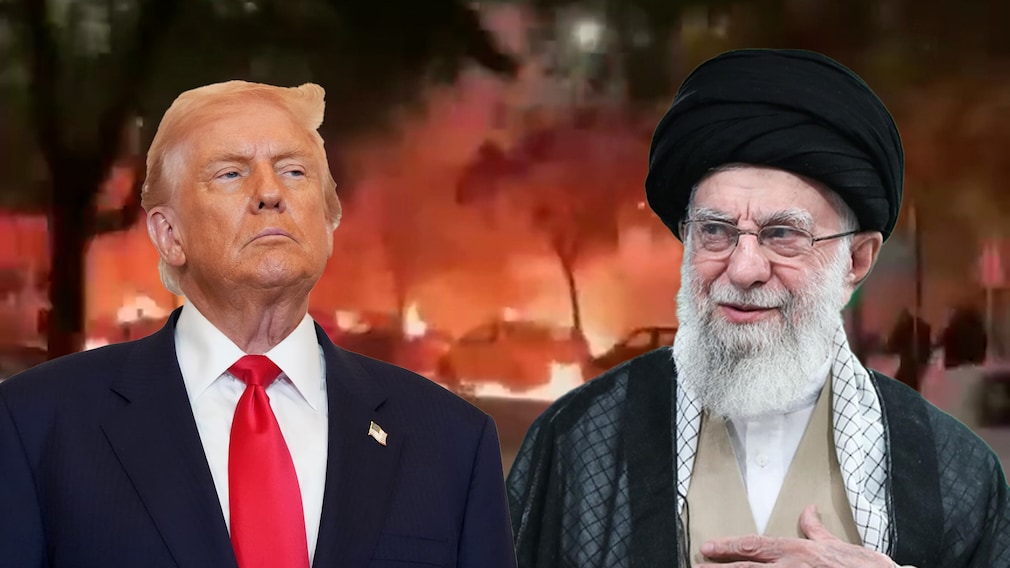
Donald Trump is weighing his military options. Soon after the protests began, he warned Iranian authorities that he would take military action if they started killing demonstrators. He has repeated his threat several times in the past few days, but has yet to order any military strikes despite the deaths of hundreds of Iranians. For a leader who is known to opt for military solutions without hesitation and, only 10 days ago, raided Venezuela and seized its leader, Nicolas Madurai, this may look surprising.
Even so, Trump has reasons to be careful. Iran is not Venezuela. It is nearly as big as Western Europe and remains a military power, despite being degraded by the Israeli and the US military action last year.
One must also remember that Iran's retaliatory strikes on Israel last year forced the Jewish state to agree to a ceasefire, something it wasn't used to in the case of its other enemies, like Hamas or Hezbollah. Also, the US military had been preparing to invade Venezuela and kidnap Maduro for months. Events in Iran have moved much faster for the US military to make similar preparations.
Trump's Options
Trump must also have been reminded by his advisors of America's ill-fated 1980 military operation Eagle Claw, in which the US attempted to rescue American diplomats held in Tehran after the Islamic revolution. This doesn't mean that Trump will not order military strikes. But he has to listen to his commanders and advisors about their timing, targets and fallout.
Despite many people in Iran loathing the Islamic Regime, they would not like to be invaded by Israel or its main backer, the United States. Last summer's US strikes only inspired patriotic fervour in Iran. Ignoring Israel's request, Trump avoided extending military action to topple the regime.
In this context, one should look at Monday's statement by the White House press secretary, Karoline Leavitt, who said that airstrikes were "one of the many, many options that are on the table", but that "diplomacy is always the first option for the president". Around the same time, Trump warned that the US would impose a tariff of 25% on "any and all business" done with the United States by countries that are also engaged in commerce with Iran.
The Power of the Revolutionary Guards
Perhaps the most important factor that may save the Islamic regime is the all-powerful Islamic Revolutionary Guard Corps (IRGC). It was formed by the regime's founder, Ayatollah Khomeini, soon after he returned home from exile in Paris in February 1979, although he had started recruiting its members in France earlier.
The IRGC's initial aim was to disarm the protesters who took part in the revolution and protect the regime against any potential US attack and coups. Under official patronage, this organisation gradually became the most powerful personal army of the Ayatollahs, parallel to Iran's military forces. They even have a unit dealing with foreign assignments called 'Quds Force', which helped create Iran's proxies: Hezbollah in Lebanon and Houthis in Yemen.
The IRGC has nearly 200,000 armed members with its own navy and air force. Successive governments in Iran, with instructions from the Ayatollahs, have also allowed it to be part of the country's economic institutions, like Pakistan's military. As protectors of the Islamic Revolution, their own survival depends on the existence of the country's Islamic regime. So they won't let it go without a bloody fight.
Personnel of the security forces who have shot and killed protesters in the past two weeks are likely to be members of the IRGC. Monday's pro-regime rallies couldn't have been organised without the active help and participation of this force. Any Western military intervention will naturally target the IRGC, as Israel did last year during its war with Iran.
Big Challenge for India
The latest unrest in Iran has come at a difficult time for India. Unlike Venezuela, Iran is close to India and almost its neighbour. It has also been an important trading partner for India. Last financial year, India exported goods worth GBP 1.24 bn to Iran and imported just over a third of that amount. We recently resumed buying oil from Iran after having to reduce Russian oil imports due to US pressure. Trump's latest tariff threat will put that in jeopardy.
If there are US military strikes, Iran could carry out its threat to close the Strait of Hormuz, a vital artery for global crude oil. This will hit India hard as more than half of our oil and gas comes via this route. A prolonged conflict will threaten India's energy security, as our economy is dependent on those imports.
Chabahar Port and Economic Corridors
India has also invested heavily in developing Iran's Chabahar Port as part of its efforts to set up trade links with Afghanistan and Central Asia. If Iran's regime falls or even if the unrest continues for long, that project will remain at least in limbo.
The same can be said for the International North-South Transit Corridor to link New Delhi to Moscow via Iran and Azerbaijan, and the even more ambitious India-Middle East Economic Corridor, designed to connect India with the Gulf, Israel and the European Union - announced at the G20 summit in New Delhi in 2023.
The Iranian unrest also has strategic implications for India. Days before Trump ordered air strikes on Iran last summer, Pakistan's Army Chief, Asim Munir, was invited to the White House and briefed Trump about Iran. This time, he may even offer logistics support for any US military action against Iran, to stay in the good books of Trump and seek his help in buying American arms in return.
If the Islamic regime falls in Iran, it will have wider implications. There could be days or even months of civil war and uncertainty because there is no clear alternative to the current regime. Reza Pahalvi wants to return home and lead a transitional government, but he has little support and is seen as close to Israel. It's important to note that President Trump has not even given him an appointment to discuss his ideas. Apparently, Trump doesn't rate Pahlavi that highly.
We may be looking at a long period of instability in the Middle East, which could also give rise to anti-government movements in other Gulf countries. That will hit their oil and gas sectors with repercussions far beyond their borders. Millions of Indians live and work in these countries. Such political upheaval will bring other problems for India.
The fear of instability in the Middle East and its potential damage to the global economy may also explain Trump's caution in considering military action to help Iran's protesters. Trump doesn't care about other people's freedom or democracy; he only listens to his instincts and looks after his own interests. He showed that in Venezuela by ignoring the Nobel Prize winner and the country's popular opposition leader, Maria Corina Machado, in favour of Maduro's former deputy. If Iran's protesters succeed in bringing about change, Trump, of course, will be the first to take credit.
(Naresh Kaushik is a former editor at the Associated Press and BBC News and is based in London)
Disclaimer: These are the personal opinions of the author
-
Is The Dreaded 'Dahiya Doctrine' Guiding Israeli Actions In Iran, Gaza, Lebanon?

Why do civilian areas and infrastructure repeatedly become part of Israeli action? An 'unofficial' but well-used military approach may be the reason.
-
Opinion | Not China, Not Russia: Why Is Pak Suddenly Everywhere In US-Iran 'Talks'?
A number of countries, including Turkey and Egypt, not to mention Russia, have been pressing Washington to end the war. But none is keen to get directly involved. Why Pakistan?
-
Trump's Iran Ceasefire Gamble Ignites Netanyahu's Strike Fury
Israel fears a premature ceasefire announced by Trump could derail its goal to dismantle Iran's nuclear missile programmes, prompting Netanyahu to order a 48-hr strike surge.
-
Why Mohammad Ghalibaf Could Be A Critical Cog In Trump's Iran Project
Born to Kurdish-Persian parents in 1961 near Mashhad, a Shiite pilgrim hub in Iran's northeast, Ghalibaf is an expert in human and political geography, who married Zahra Sadat Moshir in 1982 - their wedding officiated by Khomenei - and has three children.
-
Opinion | Inside Iran's 'Leader-Proof' War Machine, Designed To Absorb Every Blow
In Iran, key actors have long performed a 'bridging role', whether by design or by chance, in determining Tehran's domestic and foreign policies
-
Opinion | What Iran Might Really Demand From Trump Before It Backs Down
The proposed framework, if it indeed mandates the physical removal of enriched uranium, possibly with external facilitation, marks a significant escalation in demands compared to earlier nuclear agreements.
-
Opinion | The $2 Trillion Wipeout: How The Market Exposed Gold's Biggest Lie
In a world defined by 4% yields, algorithmic liquidity, and leveraged balance sheets, the traditional assumption that war automatically benefits gold no longer holds.
-
Opinion | Exit Denied? Why Iran Won't Make It This Easy For Trump To 'Pause' The War
The escalation matrix has risen rapidly, and Iran may be in no mood to give Trump the early exit he seems to be seeking so desperately now.
-
Before Drones Flew Over The Gulf, Praying Mantis Followed An Iran Mine Strike
Operation Praying Mantis was the culmination of a decade of escalating tension and proxy warfare across the Middle East. The operation redrew the balance of power in the Gulf.