Opinion | Pak Has A Kashmir Crisis - And It May Already Be Planning To Export It To India
The lie of 'Azad Kashmir' is fast catching up with Pakistan. But it might just use it to push India into a tough spot.
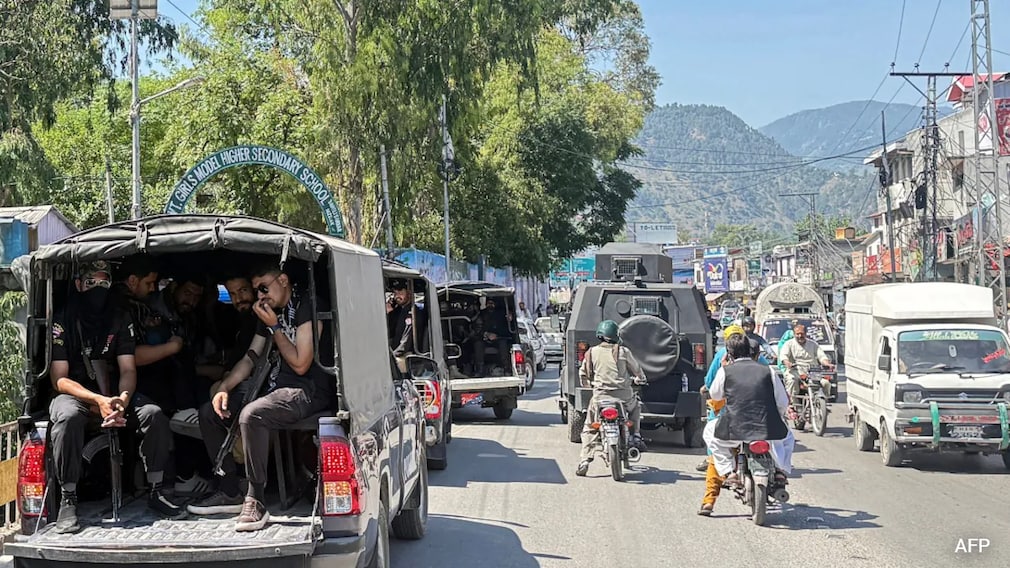
The level of anger in what Pakistan chooses to call "Azad Kashmir' is unprecedented. Unlike other regions of unrest, such as Balochistan and the tribal areas, this is truly a people's movement, apparent from the thousands who have thronged the streets demanding justice. The rage is palpable. Clearly, after years of protests and piecemeal concessions, matters have come to a head. Islamabad has, as always, resorted to the usual repressive measures, arresting leaders and starving the landlocked region of basics like food and medicine, leading to open demands from the movement's leaders that India intervene. That's dangerous talk on both sides.
Meanwhile, resistance fronts in other parts of Pakistan, including the Pashtuns and Baloch, are declaring support. In the latter case, that took the form of an unusually heavy strike against the Coast Guard post in Jiwani.
It is all at a boiling point.
Pakistan Has Misunderstood The JAAC
First, the protests themselves. It is now common knowledge that 'Azad Kashmir' is anything but free. The whole place is run by a Joint Secretary-level office from Islamabad, and the 'King' of the region is the Prime Minister of Pakistan. True, there is a 'President' and a 'Prime Minister' of sorts, with limited powers. From time to time, constitutional amendments have been made to the 'Interim Constitution' - since it is supposed to be 'reunited' with Kashmir - but in the final analysis, the local administration has little say in anything. This is clear through a list of 38 demands that lie at the core of the protests. None of these are new and have been in place for years, but they were codified after the Joint Awami Action Committee ( JAAC) was formed in 2023.
This is no political party, and its members are people who suffer daily problems - transporters, shopkeepers, and the like. Proof enough is the list of people who have been punished for supporting them, which includes low-level government employees, including 42 from the education department - among them one lecturer and 32 teachers - 12 from the health department, five each from the electricity and public works departments, three from the local government and rural development department, and two each from the agriculture and forests departments. Retired teachers have had their pensions revoked. The leadership is also from middle-class families, like Sardar Aman Khan, who has a bounty of some PKR 10 million on his head after he called for Indian intervention; Khwaja Mehran, an advocate from Punjab University who is unlikely to get off lightly since he accused the Pakistan army of providing guns to Kashmiris; and the now-arrested Shaukat Nawaz Mir, a former trade union leader.
Do The Math
Now consider the demands themselves. One is compensation for those killed in protests in the last two years. That includes those who were fired upon by the police for opposing the rising cost of flour and electricity. Things turned ugly by 2025, with security vehicles torched, and some police personnel briefly held hostage. The demands eventually broadened to include putting an end to the privileges given to the elite - that is, all Pakistanis who have been injected into top government positions, not to mention a horde of Punjabis who have settled here, bringing with them the 'Pajero culture'.
Another demand was politically sensitive - an end to the system of 12 reserved seats for refugees in the autonomous region's legislative assembly. These are people who migrated from India and settled elsewhere in Pakistan, mostly in Punjab. Most have never even been to PoK. This suits Islamabad and mainstream political parties, who look at that slice as theirs to use however they see fit. Constituencies are also deeply imbalanced, with roughly 4.3 lakh voters for the six Jammu refugee seats against only about 30,000 voters for the six refugee seats in the Kashmir Valley.
Now look at the math. A total of 53 seats in the house, with 45 elected seats, including these 12 outside of PoK entirely, while the eight 'nominated' seats are open to 'direction' and include an overseas Kashmiri. So, roughly 20 seats of a total of 53 are used to influence the outcome in the house. An interesting conclusion was reached by the AJK Supreme Court Chief Justice Raja Saeed Akram Khan and Justice Khalid Yousaf Chaudhary in an " advisory opinion", which noted that "the 12 refugee seats ... can be altered, reduced, or abolished only through a constitutional amendment enacted strictly in accordance with Article 33". That article states that no amendment can be made without the assent of the Government of Pakistan. So, it could be done. Islamabad just has to see the light and give that concession.
This Is Pakistan's Lifeline
Then there are other demands that simply require Islamabad to prod the bureaucracy in the state, which, unsurprisingly, is almost wholly Pakistani. This includes the entirely justified demand for land, affected by the Mangla dam raising project that was finished in 2009 and which displaced 40,000 people from their ancestral lands. Other demands include an international airport at Mirpur, better hospital facilities, lower taxes on property transfer (which, currently, are almost double what Punjab pays), and an allocation of Rs 10 billion for upgrading a decrepit electricity network. Remember that even when PoK quite literally holds the key to Pakistan's power, providing the mainland with abundant hydropower potential, it suffers from almost continuous blackouts. If PoK goes 'independent', that quite literally may be the end of Pakistan.
As major JACC leaders now ask openly for Indian help, the security scare is only going to grow. Few people realise, or openly acknowledge, that Kashmir is, in fact, Pakistan's 'jugular vein'. That is also why Pakistan's terrorism sponsorship policy in the region has been going on for decades now. Apparently, for Pakistan, India's over-generous allocation of 80% of the water through the Indus Water Treaty is simply not enough. It wants it all.
India Is In A Very Tough Spot
As the protests continue, so does the repression. All this has raised some interesting and uncomfortable points for India.
First, since Delhi sees PoK as its own territory, it has a right to intervene in at least a humanitarian context. Remember, that means a convoy carrying aid, facing up to the inevitable armed opposition at the border. The United Nations has made 'parties to the conflict' legally bound to deliver aid. The question is whether India is a 'party' here. If it is, then international humanitarian law obliges it to provide aid.
The trouble, however, is that none of these laws holds water in actual conflict hotspots. The UN itself has a poor record of enforcing these.
Second, there's the option of pressing other countries to weigh in. Protests in support of PoK have erupted across the UK and also in New Zealand. That could provide space for pressing Islamabad to at least talk to JACC leaders rather than imprison them.
But the final issue is this: If India does nothing at all, then it loses ground on its territorial claims and the moral authority of being the guardian for the people of the area. However, given that people in Kashmir on this side don't seem to be interested in the whole mess, Delhi has little incentive to act. This studied non-interference could also be seen as a signal by Pakistan that Delhi only desires peace and stability, and that adventurism is not on the cards. Let's see if a certain Field Marshal gets that message.
Meanwhile, India ought to be cautious. Rawalpindi might likely try to push people towards the border in a bid to embarrass India and paint it as being uncaring towards Kashmiris on the other side. Pakistan has played this game before - years ago. Might be time for India to think about that, and rather quickly.
(Tara Kartha is a former Director, National Security Council Secretariat)
Disclaimer: These are the personal opinions of the author
-
Opinion | Why The Saudi-Pak-Turkey Defence Pact May Actually Be An 'Intel' Network

Rather than a NATO-like construct, the Mecca pact may evolve to become something like the West's Five Eyes alliance.
-
The Real Story Of France's Unrest Is Getting Lost In A Storm Of Online Lies
A man cosplaying Napoleon on the streets, looting at luxury fashion stores like Dior, France is currently confronting one of its most serious episodes of civil unrest in years.
-
Opinion | The Last Bet? What Trump's 'Mother Of All Bombs' Could Actually Do To Iran
Can an MOAB deliver a decisive blow to Iran that may force it to surrender immediately, as Japan did after Hiroshima and Nagasaki in World War 2?
-
Hit Songs, Empty Pockets: The Hidden Math Behind India's Viral Music Boom
Over 80,000 brands and five lakh creators in India make branded content. The opportunity is worth around Rs 1,500 crore.
-
Opinion | Great 'Exceptions': How The Oil India Was Attacked For Is The Oil Trump Now Seeks
A law written to punish the buyers of Russian oil was suspended by the US to protect a purchase of Russian oil. India spent fourteen months being lectured for less.
-
Opinion | Louis Vuitton Loot, Torched Cars: France Protests Have An Unlikely Beneficiary
It's an unbelievable moment. Crowds looting the most exclusive stores in Paris, including the famed Luis Vuitton. But what's behind this meltdown?
-
Blog: Kolkata Didn't Learn From 2015. Eleven Years Later, It Proved To Be Fatal
The City of Joy isn't a stranger to crowd control. Be it during Pujo or Christmas at Park Street, Eden Gardens cricket matches, or Derbies between Mohun Bagan and East Bengal. But during Pujo, the entire city is on alert.
-
Opinion | Slurs, Threats, Now A Temple Attack Plot: When Did America Become So Hostile To Indians?
The rising tide of anti-India, anti-Hindu, and racist attacks serves as a stark reminder that economic prosperity does not automatically guarantee social immunity from bigotry.
-
A Step Behind Neha Bora: What Rahul Gandhi's Gesture Says About Congress' Gen-Z Pitch
At INDIA bloc's march to Supreme Court, Rahul Gandhi placed himself a step behind two women, hands resting on their shoulders. One was his sister Priyanka. The one on his right was Neha Bora. Here's what the image means for the protest wave now, and for Rahul's politics in general.