Opinion | No Peace With 'Peacebroker'? Why Iran Just Bombed A Pak-Based Terror Camp
Just last week, Iran carried out strikes on terror camps of the Jaish-al-Adl, an organisation that is allegedly backed by Pakistan.
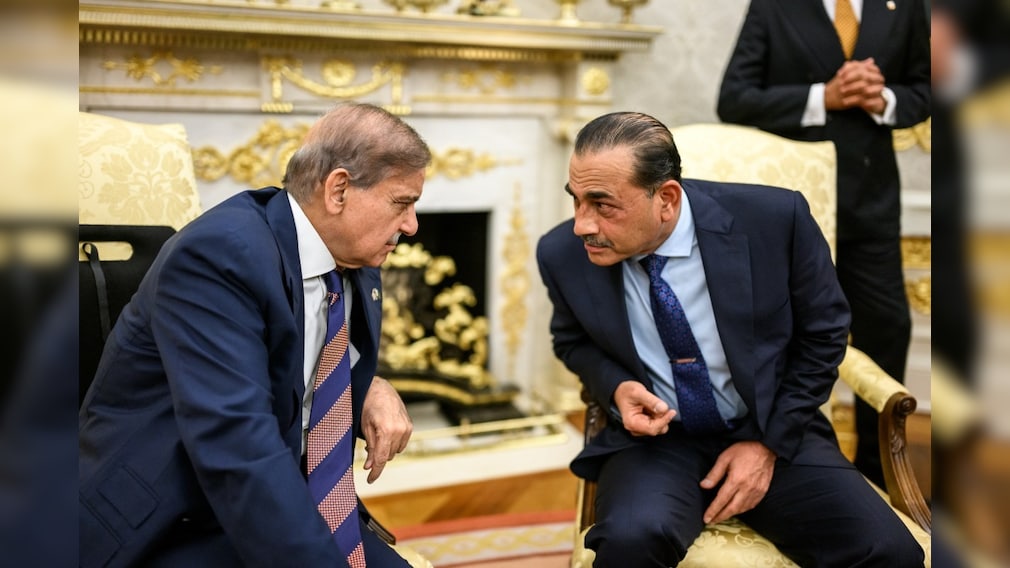
Despite repeated invocations of "Islamic brotherhood", Iran-Pakistan relations are shaped less by shared identity and more by strategic mistrust, security tensions, and competing geopolitical compulsions. The "Islamic brotherhood" narrative has long been invoked in describing relations among Muslim-majority states, and Pakistan frequently employs this language. However, a closer examination of these dynamics suggests that such portrayals are largely symbolic. Beneath the rhetoric of solidarity lies a complex and often strained relationship defined by border conflicts, proxy concerns, and external power alignments.
Recent Iranian strikes on targets along the porous Pakistani border highlight these underlying fault lines. Last week, Iran carried out strikes on terror camps allegedly supported by Pakistan, targeting Jaish-al-Adl, an organisation that has long been operating in the border regions and which Iran has repeatedly accused of having support networks within Pakistan's security architecture, including allegations related to the ISI. In a statement issued by Iran after the attack, it said that the operation targeted "an operational cell of the Jaish al-Adl terrorist group after its members infiltrated from across the Pakistani border into the Rask region of Sistan and Baluchestan Province" in southeastern Iran, while also emphasising that the action was intended to dismantle terrorist elements responsible for attacks inside Iran.
Awkward Timing
Iranian officials have consistently framed these strikes as counter-terrorism operations against groups operating from cross-border sanctuaries, while maintaining that the targets were not Pakistani state institutions but armed non-state actors. The timing of the strike and the framing of Iran's statement were widely perceived as a diplomatic embarrassment for Pakistan, especially since Islamabad is simultaneously engaged in facilitating a delicate peace and communication channel between Iran and the United States. Previously, too, in 2024, Iran had carried out strikes on terrorist camps inside Pakistan, targeting positions of Jaish al-Adl. Back then, Pakistan had responded by conducting retaliatory strikes inside Iranian territory targeting terror groups operating in its border region. This exchange marked a direct military confrontation between the two countries and led to a brief diplomatic rupture, including the recalling of ambassadors and suspension of high-level engagements, before both sides moved towards de-escalation and restoration of diplomatic relations within a short period.
Iran knows that Pakistan is a dyed-in-the-wool US ally and has always served American interests, right from Afghanistan. In the current mediation efforts as well, Iran is aware that it is acting as a US-aligned intermediary, but due to its own compulsions, Tehran is tolerating it and even praising its intermediary role.
Playing To Trump
However, this softening is not absolute. This can also be seen from the fact that IRGC-affiliated state TV experts recently criticised Pakistan, questioning whether it is reliably transmitting Iranian messages to the United States through its intermediary role. They raised concerns that there is uncertainty over whether such messages are being properly conveyed to Trump, who is perceived to be highly sensitive to tone and personal considerations in negotiations, and, therefore, they raised concerns that diplomatic communication may be filtered or adjusted in order not to offend his personality. These concerns assume all the more importance as Pakistan under Shahbaz Sharif and its field marshal Asim Munir has been seen as playing to Trump's gallery in its diplomatic engagement.
That's not all. Ebrahim Rezaei, who represents Dashtestan and serves as spokesperson for Iran's National Security and Foreign Policy Commission, stressed that Pakistan "is not a suitable intermediary", claiming it is partial and tends to favour America's interests. "Pakistan is a good friend and neighbour of ours, but it is not a suitable intermediary for negotiations and lacks the necessary credibility for mediation. They always take Trump's interests into account and do not say a word against the Americans' wishes," Rezaei said in a post on X.
The Lebanon Misunderstanding
This is also reflected in the misunderstanding that developed after the initial ceasefire was announced. Iran said it included Lebanon, while the US denied that. In this context, Razaei further added, "They are unwilling to tell the world that America first accepted Pakistan's proposal but then went back on its word. They do not say that the Americans had commitments regarding the issue of Lebanon or the blocked assets, but failed to fulfil them. A mediator must be impartial, not always leaning to one side."
Domestically, reports are that Asif Munir recently told Shia clerics in Pakistan that if they love Iran, they should go there. Such rhetoric just adds to the mistrust.
The Balochistan issue also remains a persistent source of tension in Iran-Pakistan relations. The region is divided between Pakistan's Balochistan province and Iran's Sistan and Baluchestan province, both of which are affected by long-standing insurgent and separatist activities. Various groups operate across this porous border, including the Balochistan Liberation Army (BLA) and Balochistan Liberation Front (BLF) on the Pakistani side, and Jaish al-Adl on the Iranian side. These groups have repeatedly carried out cross-border attacks and are accused by both Tehran and Islamabad of using each other's territory as safe havens. This mutual suspicion has contributed to recurring security tensions, occasional cross-border strikes, and broader mistrust in bilateral relations, despite periodic efforts at cooperation against militant networks in the region.
The Failed Pipeline
There's also an awkward fact. Even when Iran is a close neighbour of Pakistan, it cannot obtain cheap gas and oil from it because the US does not support this. This is sufficient to indicate how much diplomatic agency Pakistan actually has: it cannot secure the geographically closest and most economically viable source of energy it has, despite often projecting itself as an important regional actor and boasting about its strategic significance.
In the past, Iran has pursued legal and diplomatic pressure against Pakistan in the context of the Iran-Pakistan gas pipeline agreement. Under this arrangement, Iran has already completed its section of the pipeline and made substantial investments, while Pakistan has repeatedly delayed the completion of its portion due to concerns over US sanctions. As a result, Iran has warned Islamabad of invoking international arbitration mechanisms and seeking compensation for Pakistan's non-fulfilment of contractual obligations.
The so-called "brotherly" relationship portrayed in the media thus exists merely in language and words, not in practice. While religious and cultural affinities provide a rhetorical foundation for engagement, the substantive reality is shaped by strategic mistrust, geopolitical constraints, and competing regional ambitions. Iran's engagement with Pakistan is, therefore, not purely a reflection of affinity, but rather a calculated balancing act shaped by necessity, geography, and regional politics.
[The author is an Associate Research Fellow, International Centre for Peace Studies (ICPS), New Delhi]
Disclaimer: These are the personal opinions of the author
-
Gyanesh Kumar Has An Immunity Pin. Why A Petition Says He Can't Use It

The Opposition wants the Chief Election Commissioner prosecuted for alleged manipulation of voter rolls, but a 2023 law stands in the way. A petition in the Supreme Court now says the law has a gap.
-
Opinion | Is The World Staring At A Big Stock Market Crash - And Recession? 5 Uneasy Signs
On Wednesday, the US bond market recorded its worst day since Trump's "Liberation Day" tariffs rattled markets in April 2025. The 30-year US Treasury yield topped 5.43%, putting it on track for its highest close since 2004.
-
Form 6 For New Voters: When A Small Change Triggered A Big Row
In July 2026, the online version of Form 6 on the ECI's ECINet portal was modified to include a new declaration.
-
Opinion | Saudi Arabia's China Turn Has Begun - After Learning Much The Hard Way
Leaning on China just makes sense for the Saudis right now. The question is, can its other great 'ally' stomach it?
-
Opinion | Bihar Assault, Hisar Marriage Ban: Who'll Stop The Guardians Of Indian 'Culture'?
Why exactly does the sight of a young couple seeking a bit of alone time somewhere tend to particularly provoke a certain kind of Indian men?
-
Opinion | The Trump-Xi Summit, And India's Many Worries Of Its Own
Washington and Beijing may have chosen coexistence over confrontation. For India, that could be both a relief and a warning.
-
Opinion | China Claims It Has Cut Troops At The Indian Border. But The Math Doesn't Add Up
The reduction likely has more to do with the deployment along the LAC than the total strength active in the region
-
Opinion | China Is No Longer Waiting For Trump To Set The Rules. And He Knows It
America's old diplomatic tricks with China won't work any longer. Because China has changed, and so has its ambitions.
-
Opinion | As UN Interviews Its Next Chief, The Interviewers Have Some Explaining To Do
On the panel sit governments whose wars, vetoes, and unpaid dues have helped make the organisation ineffective.