Opinion | Why Do NRIs Hate Mamdani? Because He Threatens Their 'American' Dream
Mamdani's unapologetic leftism, his advocacy for tenants' rights, and his support for Palestine challenge the sanitised image of "model minority". Mamdani is more West Village than Wall Street, and this is what scares a section of NRIs in America.
One could get used to all kinds of sadness, stoics suggest. All except one: the kind that's caused by seeing a nemesis rise higher and higher. Especially when the nemesis has managed to thwart all possible efforts to rein in their ascent. This variety of sadness begins and ends with hate.
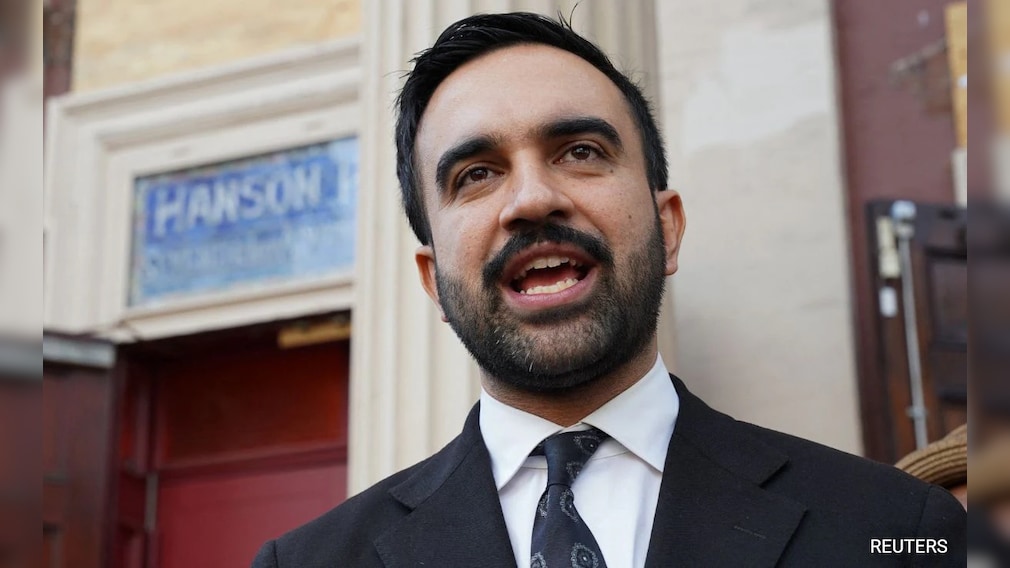
As New York City danced to the tune of Dhoom Machale, the haters of the 111th mayor-elect, Zohran Kwame Mamdani, got burdened by the same unbearable sadness in the US and in India.
The Irony With Us
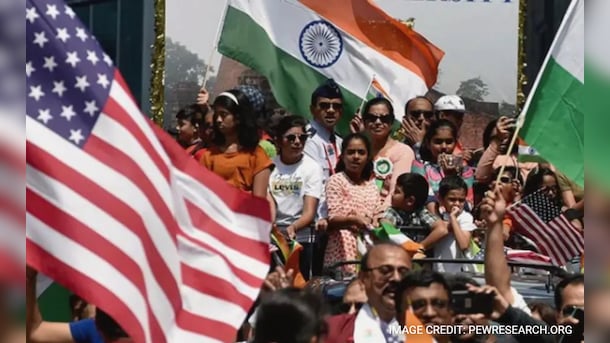
There's something to be said about Indians still dissing Mamdani when the Trump administration has been turning up the heat on visa policies that directly hurt NRIs living in the US and stymie the plans of many prospectives. There's something to be said about the immigration of traditional hatreds piggybacking on the H1B visa holders.
There is a particular brand of conservative Indians that is quick to label any compatriot who doesn't believe in their divisive ideas as "self-hating Indians". In a twist of fate, the label has now got affixed on their own foreheads. By constantly kicking the proverbial axe in a show of sterile rage, conservative Indians have been empowering the beast of racial hatred and discrimination. During Mamdani's mayoral campaign, a bunch of Indian-Americans echoed the sentiments shared by the White supremacists.
By refusing to be apologetic about his identity, Mamdani has irked a lot of Indians, offshore and onsite! Constantly attacked for his criticism of Israel's actions against Palestine by Americans, Mamdani became a garden-variety hate object for all majoritarian supremacists. His criticism of governments in his country and elsewhere in the world got blown out of proportion to signify support for Sharia.
Mamdani's 'Muslim' Identity
Full throttle efforts were afoot to create fear psychosis in a city that had faced one of the most astonishing bloody manifestations of Islamist extremism less than two decades ago. Mamdani's Muslim identity was held hostage to the memory of 9/11. As if every Muslim across the planet conspired to commit every act of violence by their coreligionists anytime, anywhere. As if a Muslim cannot lay claim to any other identity except that of a co-conspirator or enabler. As if a Muslim can never be anything other than an apologist.
The thumping victory coming Mamdani's way, therefore, is a hard NO to these 'as ifs'. Whether or not Mamdani delivers on his poll promises - many of them being decried as fanciful by politicians and economists alike - a vote for Mamdani has been a vote for a different vocabulary in politics. In one fell swoop, he's managed to bring earnestness back into the discourse. Nothing is easy at the moment of the expression of intent. It matters, however, that the intent exists.
The Raging WhatsApp Groups
It is amazing how, despite the intent to effect policies that make the costliest city in the world a little more affordable, Mamdani failed in winning a large bunch of Indians to his side. The same Indians who cheered for Vivek Ramaswamy's presidential bid. Much of the Indian resistance to Mamdani stems from a collision of identity and ideology. His willingness to critique Hindu nationalism and caste privilege unsettles not just the beneficiaries of such a divisive cultural climate but also those who view any scrutiny of Indian politics from abroad as betrayal. In online forums and WhatsApp groups, he is derided as "anti-India" or "anti-Hindu", labels that reveal more about the insecurities of the accusers than about his actual positions.
Mamdani's ascent mirrors a growing unease within global political discourse - one that stretches from city halls to social media feeds. Anyone talking about a more equitable society faces similar storms of digitally amplified rage, where disagreement quickly mutates into personal vilification. Mamdani's unapologetic leftism, his advocacy for tenants' rights, and his vocal support for Palestinian self-determination challenge the sanitised image of "model minority" success they wish to project in America. He's more West Village than Wall Street, and this threatens the NRI American dream.
Empathy Is Politics, Too
In the fractured landscape that US politics is today, the triumph of any candidate who refuses to disown complexity - be it religious, ethnic, or ideological - is an act of defiance. Mamdani's victory is less about the office he occupies than the cultural shift it represents: a willingness among voters to reject fearmongering and embrace moral nuance. The Republican politics of grievance, spearheaded by the POTUS, has been increasingly substituting for governance. In this scenario, a shift towards earnestness matters. And perhaps that is the quiet revolution underway - the reclamation of empathy as a political virtue.
By not getting behind this politics of empathy, Indians in the US have missed their "Yes, We Can" moment. It's still not too late to get behind "Mamdani Mubarak".
(Nishtha Gautam is a Delhi-based author and academic)
Disclaimer: These are the personal opinions of the author
-
Opinion | India Has Enough Coal. So Why Are Power Plants Running Short? A 76 Million 'Crunch'

As of October 5, as many as 82 of the 191 thermal plants monitored by the Central Electricity Authority were in the 'critical' category
-
A Step Behind Neha Bora: What Rahul Gandhi's Gesture Says About Congress' Gen-Z Pitch
At INDIA bloc's march to Supreme Court, Rahul Gandhi placed himself a step behind two women, hands resting on their shoulders. One was his sister Priyanka. The one on his right was Neha Bora. Here's what the image means for the protest wave now, and for Rahul's politics in general.
-
Opinion | Starlink, India, And Why Elon Musk Must Know His Billionaire Tantrums Won't Work
India should neither be intimidated by Musk's global influence nor distracted by his theatrics.
-
Blog | 'Baap Da Brat': Kerala Mini Cooper Crash, And Why 'Daddy' Can't Keep Saving You
There are three things you should never underestimate in India: the power of 'jugaad', the elasticity of the law, and the confidence of a 'Baap da Brat' who believes his Papa Posh can fix absolutely anything.
-
Opinion | 'Say Our Name': Why A Tiny Island Nation Wants The World To Get Its Name Right
Standing before the UN hall of nations, Naoero President David Adeang asked the world to unlearn its comfortable habits and speak a restored truth.
-
TVS Succession Row Explained: Why Venu Srinivasan's Family Is Divided Over Wealth
TVS Family Dispute: TVS Holdings is a key entity because it owns a controlling stake in TVS Motor Company. It owns 50.26% of TVS Motor.
-
Opinion | The US Is Showing India Just How Cheap Its 'Friendship' Is
Can local talent fully replace Indian contribution? Why is the US leading in setting up Global Capability Centres in India - over 60% - and pocketing the IP?
-
Jantar Mantar Tells Time. The Clock Just Stopped On Its Time As An Iconic Protest Site
On Monday, October 12, 2026, Delhi Police denotified Jantar Mantar Road as a designated site for demonstrations. The Supreme Court had given it a nudge. Here's how history met politics on that street for decades.
-
Opinion | Saudi Airport Attack, And Why Pakistan Keeps Biting Off More Than It Can Chew
For all those who were envious of Pakistan's 'new status' as "mediator extraordinaire", here is a reality check
-
Opinion | Visa Shocks To Racist Attacks, When Did America Come To Hate Indians So?
Sometimes it is about H-1B visas. Sometimes it is jobs. Sometimes it is "foreigners." Sometimes it is about temples. The language of the attack varies, but the message is consistent