Opinion | Why A US Report Mentioning 'Pak Success' Has India Bristling
Just one sentence in a report of a US Congressional Commission has got a lot of knickers in a twist in India. The sentence in the 675-page report reads: "Pakistan's military success over India in its four-day clash showcased Chinese weaponry."
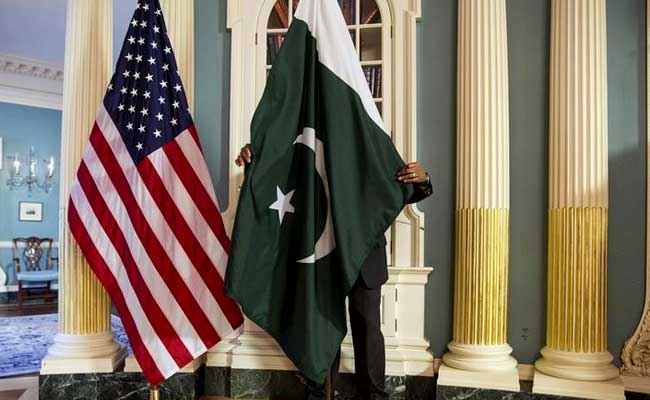
Just one sentence in the annual report of a US Congressional Commission seems to have got a lot of knickers in a twist in India. The sentence in the 675-page report reads: “Pakistan's military success over India in its four-day clash showcased Chinese weaponry.” The US Economic and Security Review Commission (USCC), which is set up by the US Congress comprises specialists on China and has been around for the last 25 years.
It is, therefore, not surprising to see that its take on the India-Pakistan war has been through the filter of China. Its actual focus is the Pakistan-China arms transfer relationship and it cites French intelligence to claim that China launched a disinformation campaign, using AI to show debris of Indian Rafale's allegedly shot down by Chinese-origin weaponry, so as to promote the sales of its J-35 fighters.
In any case, though the Commission conducts hearings, most of the sourcing of the report is from media reports. Given India's poor international media outreach over the 88-hour war, the comment is not surprising since the report is largely based on open media reportage.
The China 'Recommendations'
Of much greater significance than its throwaway comments on the India-Pakistan war are its recommendations relating to how the US needs to confront the China challenge. This task has been amplified by the US-China trade truce signalling China's arrival, even in the minds of people like President Trump, as a component of a G2.
In a recent article in the New York Times, China specialist Rush Doshi pointed out that the US dependence on China is profound and it is only now that the latter is coming to terms with it and taking the first steps to overcome the situation. Doshi noted that the Busan summit of October 30, where the US-China froze their trade war, is the defining moment when Washington accepted that China had become a geopolitical equal of the United States.
More Time, But For Whom?
In his view, this was entirely avoidable, and it was the rash over-reach of Donald Trump by hiking tariffs on China to 140% that led to the Chinese using their brahmastra of rare earths and bringing the US down to earth. As Doshi has written, “It is unwise to invade Russia in winter… [Likewise] It is unwise to start a trade war with the main supplier of your most critical imports until you have mitigated your vulnerabilities.” The trade truce now buys both sides time, but the big worry is that the erratic Trump administration will simply fritter it away.
This is where efforts like those of the USCC come in. As in the past, the 2025 report has focused on China's foreign policy challenge, which has grown to a point, as the section title, “Efforts to Remake the World Order”, suggests. This is followed by a look at how China confronts the West with its manufacturing and innovation engine and the overall Chinese policy of weaponising its economic policies.
Setting Up A "Statecraft Entity"
Perhaps the most important recommendation made by the 2025 report is that of proposing that the US Congress establish “a consolidated economic statecraft entity” to deal with the national security implications of China's systematic and continuing evasion of US export controls and sanctions. While the US has robust laws laying out export controls and sanctions, there is a gap in the enforcement of the laws, which is exploited by China, and, occasionally, Russia. This is the gap that the new body will close.
At present, Chinese companies are able to successfully wriggle through the raft of legislation seeking to restrict the export of technology and knowhow to Beijing. The new entity, reporting to a single Cabinet official, or the US President himself, would have not only the principal US agency dealing with export control - the Bureau of Industry and Security of the Department of Commerce, but also the Office of Foreign Assets Control of the US Treasury, the Bureau of International Security and Non-Proliferation's Office of Export Control and Cooperation, which is part of the Department of State, as well as the Defense Technology Security Administration, which is part of the Department of Defense.
This new body should be integrated into the US intelligence system with enhanced access to real-time intelligence on the evasion networks and real-time intelligence-sharing. The body should also be equipped by powers to aggressively pursue action against violators.
China-Russia, And 'Undersea Sabotage'
Another important angle that emerges from the report is the increasing focus on China-Russia collaboration. The report mentions that Russia is also a country that is able to access US technology by exploiting the loopholes in the American system. The report has called on the Congress to order the US intelligence community to provide an assessment of China's support for Russia's Ukraine war.
In another practical recommendation, the report calls on the Congress to pass legislation to create an Undersea Cable Security Initiative to counter Chinese and Russian sabotage of undersea cables. It wants a ban on Chinese ships laying and maintaining such cables and wants the US to collaborate with friends and allies to develop a multinational fleet of cable repair ships.
Besides calling on the US to help strengthen the Philippines and enhance cooperation with Pacific Island countries, the report has provided the US Congress with classified recommendations to deal with the issue of advanced technology competition. As part of this, it calls on the US to build a resilient biotechnology industrial base, a definite goal in Quantum technology, as well as acquire advanced industrial capacity for rapid manufacturing.
The report has also made recommendations in dealing with China's ambitions to dominate outer space, to break its weaponisation of supply chains by China, and compete effectively to prevent its push for global energy domination. China has long understood that it is the weaker entity as compared to the US, and it has steadily built up its strength and confronted the US only when it was ready.
As of now, the US still does not have a coherent China policy. The Trump administration has exposed the US weakness and the time has come for it to set things right. The US retains its many strengths, but it needs to gather them together. Primary among these are its network of friends and partners, but here again, Washington has dealt with them in a cavalier manner. India is a case in point, where the Trump administration has carelessly hurt a relationship that had been patiently built up through a quarter of a century.
(The writer is a Distinguished Fellow, Observer Research Foundation, New Delhi)
Disclaimer: These are the personal opinions of the author
-
Opinion | Starlink, India, And Why Elon Musk Must Know His Billionaire Tantrums Won't Work

India should neither be intimidated by Musk's global influence nor distracted by his theatrics.
-
Blog | 'Baap Da Brat': Kerala Mini Cooper Crash, And Why 'Daddy' Can't Keep Saving You
There are three things you should never underestimate in India: the power of 'jugaad', the elasticity of the law, and the confidence of a 'Baap da Brat' who believes his Papa Posh can fix absolutely anything.
-
Opinion | 'Say Our Name': Why A Tiny Island Nation Wants The World To Get Its Name Right
Standing before the UN hall of nations, Naoero President David Adeang asked the world to unlearn its comfortable habits and speak a restored truth.
-
TVS Succession Row Explained: Why Venu Srinivasan's Family Is Divided Over Wealth
TVS Family Dispute: TVS Holdings is a key entity because it owns a controlling stake in TVS Motor Company. It owns 50.26% of TVS Motor.
-
Opinion | The US Is Showing India Just How Cheap Its 'Friendship' Is
Can local talent fully replace Indian contribution? Why is the US leading in setting up Global Capability Centres in India - over 60% - and pocketing the IP?
-
Jantar Mantar Tells Time. The Clock Just Stopped On Its Time As An Iconic Protest Site
On Monday, October 12, 2026, Delhi Police denotified Jantar Mantar Road as a designated site for demonstrations. The Supreme Court had given it a nudge. Here's how history met politics on that street for decades.
-
Opinion | Saudi Airport Attack, And Why Pakistan Keeps Biting Off More Than It Can Chew
For all those who were envious of Pakistan's 'new status' as "mediator extraordinaire", here is a reality check
-
Opinion | Visa Shocks To Racist Attacks, When Did America Come To Hate Indians So?
Sometimes it is about H-1B visas. Sometimes it is jobs. Sometimes it is "foreigners." Sometimes it is about temples. The language of the attack varies, but the message is consistent
-
How El Nino And Warming Oceans Could Shape Earth's Climate In 2027
From changing ocean currents to extreme weather, scientists are watching a combination of climate signals that could influence temperatures, rainfall and ecosystems in the months ahead.