Opinion | Who Lit The Fire In Balochistan? Pak's Explanation Avoids The Obvious
It's time sensible Pakistanis did a rehash of just who their enemies are. They might get a surprising list.
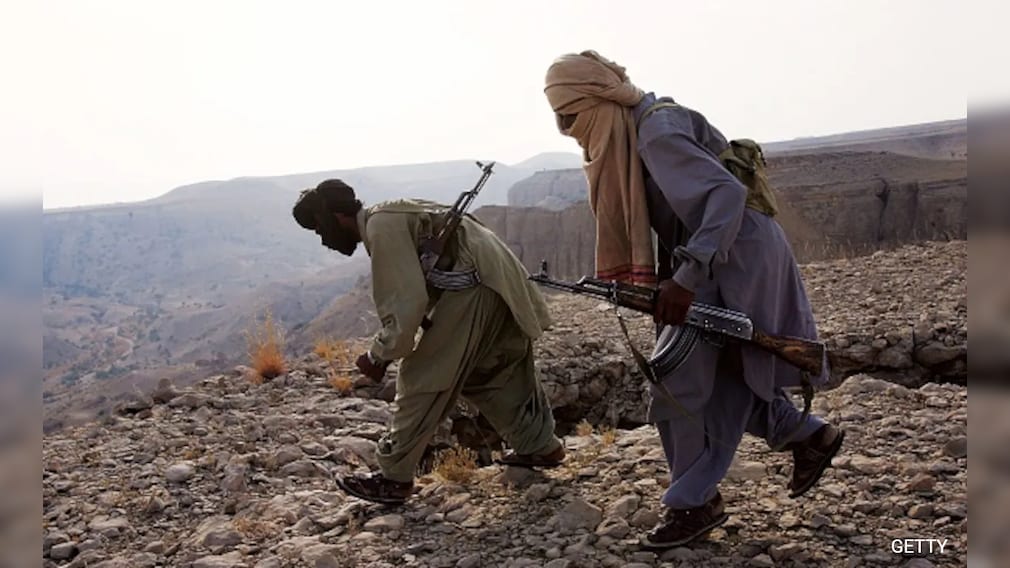
Balochistan is once again up in flames as the Balochistan Liberation Army (BLA) fights its way into 14 cities across the state, and seems to be holding territory in at least two. The scenes being played out on social media are intense, particularly posts of smiling young girls getting ready for a fidayeen attack. So ferocious are the attacks that, for once, they have caught the attention of the international media, who clearly understand little of their history, again linking the whole episode to an India vs Pakistan issue, which is really an insult to those literally fighting to their last breath.
Operation Herof, or 'Black Storm'
To the facts. This is Operation Herof-2. Its first iteration, in August 2024, was the fourth and largest military operation, according to Baloch media sources, citing three other major ones from 2019 onwards. That first one held territory for some 20 hours in an arc from Makran to Koh-e-Suleiman, and specific spots like army camps for at least 48 hours. Herof-2 seems to be at least twice in scope. The present operations have targeted some 14 cities and 48 locations, in an arc from Quetta to Pasni. Again, they took control of key highways, and unlike the earlier operation, seem to be holding on to Noshki, where the Deputy Commissioner was seized along with his family, but released later.
Also significant are the attacks in Pasni and Kalat. So far, authorities have confirmed the death of at least 17 personnel of the police, frontier corps and security forces, with the Baloch claiming that more than 200 have been killed. On the other side of the coin, Pakistani security forces claim that 177 Baloch have been killed in 48 hours.
Unfortunately, for Pakistan, that doesn't mean operational efficiency. It means indiscriminate killing in counter-terrorism (CT) ops. Soldiers are supposed to chase and pick out militants, without hurting civilians. That's tough and usually means more SF casualties. Clearly, the Pakistanis are not interested in counter-terrorism, just brutal force.
Bugti's Fury
But that's what created the problem in the first place. The sad lack of understanding is apparent in Chief Minister Akbar Bugti's statement that the crisis was not a "political issue" and could be solved only by military means. He should go buy a history book. The Baloch, cheated out of their own state in 1947, after tasting a brief 227-day independence, have been fighting ever since. Bugti's claim that "appeasement" and approach didn't work is deliberate double-dealing. The then Imran Khan government did offer talks with Baloch leaders and offered a PKR 600 billion package for the upliftment of the region. However, before all this could take effect, he was whisked away by the military for his 'independent' policies.
Bugti's statement that the Baloch should use the political route for their grievances is equally ridiculous. His election was blatantly rigged. He was elected unopposed since he was the only candidate. It's hardly likely that any self-respecting Baloch, militant or not, will trust him as a mediator.
The Baloch Leaders
On the other side of the fence is the Baloch Liberation Army (BLA), which has grown into a formidable force. Their leader, Bashir Zaib, was, like most BLA cadres, part of the Baloch Students Organisation-Azad, and chairman from 2008 to 2012. Coming from a middle-class background, he has a diploma in civil engineering, though he abandoned that to study Baloch literature. This is no bearded bandit. He is talked of as a calm, well-spoken and immensely courageous person. All in all, a far more trustworthy leader than the Chief Minister.
Zaib took over after the legendary Aslam Baloch was killed in Kandahar, reportedly at the insistence of the Chinese. Notably, neither Herof-1 nor 2 have targeted China, though the installations are fair game. Rumours indicated that Chinese management in Gwadar reached out to local Baloch people to assuage some of their grievances. But even this would ultimately need state action. The problem is that there is no state in Balochistan - only a brutal set of actors that includes the XII Corps in Quetta and its five divisions spread across the state, the Frontier Corps and its 10-plus units, not to mention other bodies such as the Balochistan Levies and police units. That may be formidable, but it doesn't assuage anyone's problems.
A Grim Future
The number of total Baloch fighters is unclear. What is apparent is their clear support, as people cheer their arrival, assist in hiding them, and provide as much sustenance as they can. Videos show formidable weaponry, as also discipline in using firepower. There is clear preparation and training here, unlike the earlier versions of fighters, who were determined but made for a rag-tag army. Clearly visible are US weapons left behind in Afghanistan. If anyone needs convincing of this, there is the Defence Minister's statement that the Baloch have far better weapons, including a rifle with a sniper scope, worth Rs 20 lakh.
Then there are the usual allegations of Indian "assistance", which has led to the Senate unanimously passing a resolution condemning "terrorism", though it also called for good governance and political inclusion for sustainable security. During the session, Rana Sanaullah, the Prime Minister's special representative (and earlier a dodgy Interior Minister) also declared, "No one is angry in Balochistan; there is no issue of rights. They are taking action against Pakistan on the instructions of the enemy." This, after thousands have been 'disappeared' by the SF and their bodies dumped on the road. Then there's the Pakistan government's incredible decision to detain the charismatic Mehrang Baloch - nominated for the 2025 Nobel Peace Prize - who remains incarcerated. It's a fantastic showcase of denial, poor counter-terrorism tactics, and a blatant disregard for human life.
The point to consider is, do Pakistanis really buy the official line repeated ad nauseam - that India supports the Balochistan insurgency? Surely not. Certainly, the Pashtuns won't. They are at the receiving end of the same brutal tactics as the Baloch. Interestingly, Herof-2 was launched even as the Pakistan army was getting ready for another 'operation' in the Tirah valley, against the Tehrik-e-Taliban Pakistan (TTP). Thousands have been driven away in freezing temperatures as the army walks in. One can only imagine how many more insurgent recruits will rise from this fresh operation.
The Real Drivers
It won't be surprising, therefore, if it turns out that despite wildly differing ideologies, the Baloch and the TTP are probably cooperating to an extent. In short, there is a whole ecosystem to the 'terrorism' inside Pakistan, borne out of its own ham-handed tactics rather than anything else. This has been reiterated again and again by the Taliban. Our own Ministry of External Affairs also regularly issues objections - to no avail.
Meanwhile, a large group of countries, including the US and the UK, have condemned the BLA, even while promising 'steadfast partnership'. History again has shown that neither of these two countries has ever done anything positive for Pakistan's stability. In fact, the reverse holds true. Time for sensible Pakistanis to do a rehash of just who their enemies are. They might get a surprising list.
(Dr Tara Kartha is a former Director, National Security Council Secretariat)
Disclaimer: These are the personal opinions of the author
-
Why Doesn't Congress Boycott If Polls Are "Fixed"? Answer Lies Beyond Rahul Gandhi's "Distraction" Quip

The starkest demand for a boycott has come from outside the political Opposition, from the Cockroach Janta Party. But does a boycott help? Here's what research, examples, and expert analysis tell us.
-
'Sully' To Gimli, Sioux To Patna: When Pilots Got It Unbelievably Right
Captain Smit Machchhar fought off his co-pilot after being stabbed and opened the cockpit door, saving 174 people.
-
Opinion | Are Saudi Arabia And UAE Reuniting Again After 10 Years?
On Tuesday, the UAE's Vice President, Deputy Prime Minister and Chairman of the Presidential Court, Mansour bin Zayed, met Saudi Crown Prince Mohammed bin Salman.
-
Opinion | 'Lies, Damned Lies, Statistics': On The Controversy Around India's GDP Growth Figures
The debate is less about a single figure than about a decade-long erosion of trust in official statistics.
-
Opinion | Why India Cannot Keep 'Overestimating' Its Value To Washington
Some of India's value to Washington came from the tension between the US and China. That is changing now.
-
Opinion | India Has A 'Lobbying' Problem In Washington, And It Has Come Back To Haunt It
While the EU, Japan, the UK and South Korea secured quick deals, India's efforts were getting drained in prolonged negotiations and the wrong kind of lobbying.
-
India Is Getting Old Before Getting Rich, Will Turn 'Aged' In 16 Years: Moody's
Countries with the steepest fertility declines today will age the fastest in the coming decades. India's drop has been steep.
-
Opinion | Why Does Trump Want To Sell Arms To A US 'Adversary'? Inside His Strange Bargain
Trump's aides maintain that no such offer had been made. But the story points to a larger strategy
-
Opinion | The AI Boom Has Run Into A Big 'Debt' Trap Problem. Inside The 5% Danger Line
For most of the AI buildout's first two years, hyperscalers funded it the easy way: out of operating cash flow. That era is over.
-
Opinion | Iran To Saudi, Pakistan Is Now Fast Running Out Of Sides To Play
Pakistan's long history of playing all parties to its own benefit may have reached the end of its road.