Opinion | What's Driving Pakistan-Afghanistan War? Islamabad's Never-Ending Cycle Of Insecurity
Islamabad has accused Kabul of drifting into an "India colony", a charge that was further sharpened following Afghan Foreign Minister Amir Khan Muttaqi's visit to New Delhi last year
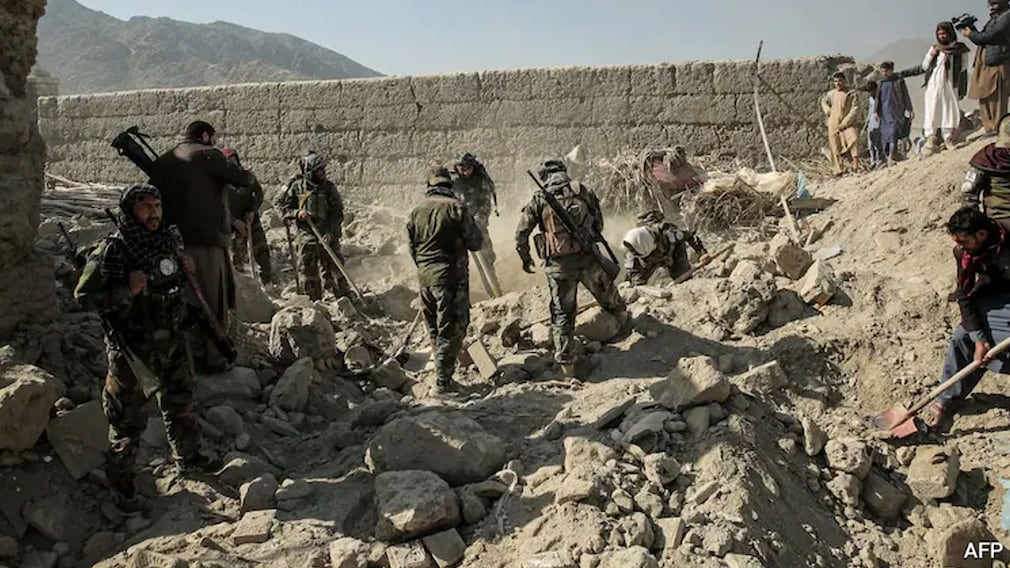
Long-simmering tensions between Afghanistan and Pakistan have now spilled into open confrontation along the contested Durand Line. What was once a theatre of proxy maneuvering is, at least momentarily, being shaped by direct state-to-state hostility. On February 21, Pakistan launched airstrikes on alleged militant sanctuaries in Nangarhar, Paktika and Khost, claiming to target Tehrik-i-Taliban Pakistan (TTP) and ISIS-K elements. Kabul responded on February 26 with ground offensives against Pakistani positions across six provinces. Islamabad escalated further with "Operation Ghazab Lil Haq", striking targets in Kabul and Kandahar, as Defence Minister Khawaja Asif declared that Pakistan's "cup of patience has overflowed".
Casualty figures remain contested and unverifiable - Islamabad claims 274 Taliban fighters have been killed and 12 soldiers lost, while Kabul asserts 55 Pakistani soldiers are dead and 13 of its own fighters have been killed. Yet, beyond the numbers lies a more consequential reality: a structurally unstable frontier has entered a new and potentially dangerous phase.
Durand And Its Discontente
The crisis cannot be reduced to episodic violence. Its roots lie in the unresolved question of the Durand Line - the 2,600-kilometre boundary drawn in 1893, never formally recognised by successive Afghan governments. The line bisects Pashtun tribal lands, embedding a historical grievance into the geography of the modern state system.
After the Taliban's return to power in 2021, Pakistan initially anticipated strategic dividends. It expected Kabul to curb the TTP, whose ideological affinities with the Afghan Taliban are well documented. Instead, TTP attacks intensified, with over 2,400 Pakistani security personnel reportedly killed in 2025 alone - the highest toll in a decade. Islamabad's frustration stems not merely from security losses but from the perception that its long-standing leverage over the Taliban has eroded.
Recent attacks in Islamabad, Bajaur and Bannu - attributed by Pakistan to Afghan-based militants- served as immediate triggers. Ceasefire efforts mediated by regional actors in October 2025 collapsed amid persistent skirmishes. The Taliban's reluctance to confront the TTP reflects both shared Pashtun solidarities and a pragmatic fear of internal fragmentation, including defections to ISIS-K.
Layered atop these tensions is a geopolitical recalibration. Islamabad has accused Kabul of drifting into an "India colony", a charge that was further sharpened following Afghan Foreign Minister Amir Khan Muttaqi's visit to New Delhi last year and a joint statement condemning regional terrorism. For Pakistan, this diplomatic thaw between Kabul and New Delhi represents not merely optics but a potential strategic encirclement. The recent escalation thus appears as much a coercive signal as a counterterrorism operation.
Nobody Wins This War
The immediate fallout is economic and humanitarian. Afghanistan remains heavily dependent on Pakistani ports for transit trade, while Pakistan derives revenue and strategic depth from its western corridor. Border closures risk paralysing economic activity in Khyber Pakhtunkhwa and Balochistan. Flagship connectivity projects - from the TAPI gas pipeline to broader Eurasian transport initiatives - face renewed uncertainty. China's investments in Pakistan, particularly under CPEC, could confront heightened security vulnerabilities if militancy spills over.
The humanitarian dimension is equally stark. Civilian casualties, displacement and potential refugee flows compound Afghanistan's already dire socio-economic crisis. Prolonged instability could embolden Baloch separatists, invigorate ISIS-K, and fragment militant ecosystems further. For external stakeholders - China, Iran, Russia and Turkey - the escalation threatens to upset a precarious regional equilibrium.
Yet, a full-scale conventional war remains unlikely. Afghanistan lacks airpower and conventional depth; Pakistan, for its part, cannot afford a protracted two-front contingency. The logic of escalation is, therefore, bounded by structural constraints, even if tactical brinkmanship persists.
Where India Stands
For India, the crisis is both opportunity and risk. New Delhi's public messaging has emphasised Afghanistan's sovereignty while criticising Pakistan for externalising its internal security failures. This aligns with India's calibrated outreach to the Taliban - focused on humanitarian assistance, trade facilitation and connectivity initiatives such as the Chabahar corridor.
A distracted Pakistan may ease immediate pressure along India's western frontier and dilute Islamabad's regional manoeuvrability. However, instability in Afghanistan carries spillover risks: extremist mobilisation, threats to Indian development projects, and disruptions to connectivity ambitions linking India to Central Asia. Pakistan's escalation can plausibly be read as an attempt to deter Kabul's deepening engagement with New Delhi. Over time, sustained India-Taliban ties could narrow Pakistan's diplomatic options.
No More Pretences
The current crisis marks a qualitative shift - from deniable proxies to overt confrontation. Tactical de-escalation, possibly under regional mediation, appears probable. However, absent movement on core issues - the Durand Line dispute, TTP sanctuaries, and the broader contest for regional influence - the frontier will remain combustible.
For Pakistan, the message from this latest flare-up is unmistakable: it can no longer afford the strategic ambivalence that has defined its Afghan policy for decades. Security dilemmas rooted in history and identity will not be resolved through episodic airstrikes, coercive signalling, or the habitual externalisation of internal failures. So long as Islamabad oscillates between tactical accommodation and punitive retaliation, it will remain trapped in a cycle of insecurity of its own making.
If Pakistan seeks stability on its western frontier, it must fundamentally recalibrate its approach - abandoning the logic of selective militancy, investing in sustained political engagement with Kabul, and addressing the structural drivers of radicalisation within its own borders. Durable security will not emerge from managing proxies or manufacturing deterrence narratives, but from credible commitments and regional cooperation. The imperative, therefore, is not merely de-escalation, but introspection in Islamabad - without which no meaningful regional equilibrium can take root.
(Harsh V Pant is Vice President for Studies at Observer Research Foundation, New Delhi.)
Disclaimer: These are the personal opinions of the author
-
Opinion | The Last Bet? What Trump's 'Mother Of All Bombs' Could Actually Do To Iran

Can an MOAB deliver a decisive blow to Iran that may force it to surrender immediately, as Japan did after Hiroshima and Nagasaki in World War 2?
-
Hit Songs, Empty Pockets: The Hidden Math Behind India's Viral Music Boom
Over 80,000 brands and five lakh creators in India make branded content. The opportunity is worth around Rs 1,500 crore.
-
Opinion | Great 'Exceptions': How The Oil India Was Attacked For Is The Oil Trump Now Seeks
A law written to punish the buyers of Russian oil was suspended by the US to protect a purchase of Russian oil. India spent fourteen months being lectured for less.
-
Opinion | Louis Vuitton Loot, Torched Cars: France Protests Have An Unlikely Beneficiary
It's an unbelievable moment. Crowds looting the most exclusive stores in Paris, including the famed Luis Vuitton. But what's behind this meltdown?
-
Blog: Kolkata Didn't Learn From 2015. Eleven Years Later, It Proved To Be Fatal
The City of Joy isn't a stranger to crowd control. Be it during Pujo or Christmas at Park Street, Eden Gardens cricket matches, or Derbies between Mohun Bagan and East Bengal. But during Pujo, the entire city is on alert.
-
Opinion | Slurs, Threats, Now A Temple Attack Plot: When Did America Become So Hostile To Indians?
The rising tide of anti-India, anti-Hindu, and racist attacks serves as a stark reminder that economic prosperity does not automatically guarantee social immunity from bigotry.
-
A Step Behind Neha Bora: What Rahul Gandhi's Gesture Says About Congress' Gen-Z Pitch
At INDIA bloc's march to Supreme Court, Rahul Gandhi placed himself a step behind two women, hands resting on their shoulders. One was his sister Priyanka. The one on his right was Neha Bora. Here's what the image means for the protest wave now, and for Rahul's politics in general.
-
Opinion | Imran Khan, And The Perils Of Having An 'Opinion' In Bollywood
The reality of the industry is quite grimy. More often than not, its inhabitants have been fairweather friends, happy to sing the praises of whoever is in a position of authority.
-
Exclusive: India's Food Safety Problem Goes Beyond Just Dirty Kitchens - By Tukaram Mundhe
On World Food Day, Maharashtra's Commissioner of Food Safety explains why instead of taking stopgap measures, the entire supply chain in India needs to be held accountable and made transparent.
-
Opinion | India Has Enough Coal. So Why Are Power Plants Running Short? A 76 Million 'Crunch'
As of October 5, as many as 82 of the 191 thermal plants monitored by the Central Electricity Authority were in the 'critical' category