Opinion | The Great Claude Shakeout: What You, A 'Techie', Must Do To Stay Relevant
As the AI genie arrives to do big tasks on the fly, the cyber coolie gets hurt.
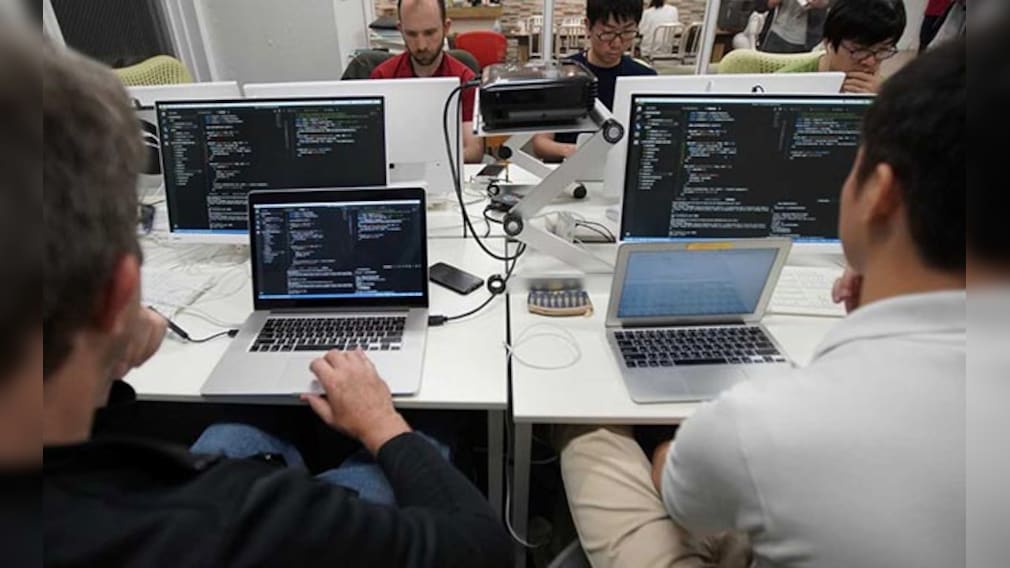
Are we shifting from Cloud Computing to Claude Computing? Pardon the pun, but it is time to look deeper at the future of the software industry, especially that of the people variously described as software engineers, programmers, cyber coolies, or, fashionably, code jocks.
To understand what might be in store after a week of pessimism that roiled stock markets worldwide, you may want to look at journalists on the one hand, fashion designers on the other, and then, at the history of the software industry itself. An ability to connect such distant dots would hopefully keep some human minds worthwhile even if an economic tsunami triggered by artificial intelligence (AI) sweeps humanity, mixing the delicious optimism of getting things done fast with a delirious pessimism of job losses ahead.
What Claude Brings To The Table
Software As A Service (SaaS) has, in recent years, been a key driver of cloud computing, in which applications are available on tap over the Internet. Your familiar Gmail account is actually a SaaS product, as are Salesforce or Microsoft 365. SaaS got rattled after Anthropic released its Claude Cowork, an "agentic AI" model that threatens the worldwide $300 billion per-hour billing industry that has for decades enriched coders in stock market darlings like Infosys, Wipro and Tata Consultancy Services (TCS).
Claude, in its latest corporate-use release, can read, edit, create, rename and organise files inside a folder and offers 11 plug-ins that allow it to automate legal, sales, marketing and data analytics. Cowork is said to transform AI into "outcome-based execution" rather than a dumber dialogue style.
A solid agentic AI like Claude can be likened to a cool mix of Jeeves, the efficient British butler created by humourist PG Wodehouse, and Alladin's Genie, which does every task obediently and quickly. Saas is essentially nothing but loads of organised code rented by groups like a shared hostel dormitory. While you may joke, "Kyunki Saas Bhi Kabhi Code Thi", the fact is that Claude potentially sends survival threats to coders as well as the humongous SaaS bundles that do everything from writing and presentations to complex mathematical, corporate and algorithmic work.
As the genie arrives to do big tasks on the fly, the cyber coolie gets hurt - or so thought the markets last week, when the benchmark Nifty IT index saw steep drops that wiped out Rs 200,000 crore worth of market value in two days.
Elsewhere, Amazon, which offers a lot of industry-specific SaaS, saw its share drop by nearly 6% on Friday, eroding co-founder and executive chairman Jeff Bezos' estimated $230 billion holdings in the company by well over $12 billion on a single day. That had officially nothing to do with the layoffs of about a third of journalists employed by the Washington Post that Bezos owns in his individual capacity, unless you think it was his bad karma.
Learn From The Layoffs
But the scribe layoffs may give us a clue on what coders need to do to stay afloat.
As a journalist, I have grown from the age of rickety typewriters, bland press releases and teleprinters to smartphones, the Internet and social media. I have experienced and adapted myself all along the way. SaaS applications like Grammarly or even Microsoft Word can now do 50% of what I got paid for as a young journalist editing news. Like myself, coders have to grow up and embrace new technologies and shift from hourly coding to innovative and adaptive techniques to grow. Admittedly, this is a challenging order when an industry is getting fragmented. Bright young YouTubers, podcast hosts and Instagram Reels and video "jocks" now do what old newspaper "hacks" did. They offer cool, consumable packages for Gen Z appetites.
Journalism is not dead, but its forms have changed, and challenges continue. This is likely to happen to software as well.
Smart journalists of the old school were not exactly sleeping, and neither would code companies. Infosys in front of my eyes has embraced business process outsourcing, products and various industry solutions over the decades, and currently has its own "AgenticAI Foundry" as part of its Topaz software suite. Wipro has its ai360 and TCS its WisdomNext. The IT giants are also retraining lakhs of employees between them to embrace AI. But profitability now involves business and social knowledge and innovation, probably more than ever before, not to speak of constant learning. That implies a need to cut back hiring and stop taking the jam on their bread for granted.
'Alternative Careers'
The future is not necessarily bleak, but is certainly cloudy - perhaps in a literal sense as cloud-based simplicity gives way to more customisable software apps.
This is what probably led Sridhar Vembu, founder of SaaS firm Zoho, to say: "At this point, it is best for those of us who depend on writing code for a living to start considering alternative livelihoods. I include myself in this. I don't say this in panic, but with calm acceptance..."
As Vembu spoke of how this might mean people focusing more on the little joys of life, like family and nature, I was reminded of Microsoft co-founder Bill Gates, who wrote as far back as 1995 that the future would see a content revolution that would lead people to express ideas and create artistic and scientific content. That is what we have been seeing on Substack and Instagram, representing differing shades of creativity and expression.
I expect software folks to look at what might be creative for them, on and off their coding screens - and not all of it may be unrelated to software.
That brings me to fashion design. Today, you can buy a flashy wedding saree for as cheap as Rs 750 online, but a designer saree by Sabyasachi can cost as much as Rs 500,000. Now, picture your local tailor as analogous to a basic programmer and a Sabyasachi equivalent as an "experience designer". As it is, user experience has been a big thing in SaaS. That is not going to go away because of Agentic AI's genies. But it would require more alertness and sensitivity to create "bespoke" convenience for various categories of users. Cheaper AI will also generate new kinds of uses, be it in content or software. Opportunities may lie there. Threats from deepfakes, generated by AI itself, will offer their own opportunities.
A New Era - Like Other New Eras
Come to think of it, fitting things around code is not new for the IT industry that has evolved over the years as devices, operating systems and business needs changed. Mainframe computers gave way to PCs and smartphones, and platforms changed from DOS to Windows and iOS.
Job and role titles give you an idea of how things work. A computer programmer writes, debugs, and tests code for specific tasks. A software engineer uses code to design, build and maintain entire software systems. A developer focuses on the entire lifecycle of a software system, while a solutions architect adds business knowledge, keeping in mind higher-level technical architecture.
Much like there is a Zara producing "fast fashion" products jostling with a Uniqlo that blends long-lasting elements, even as a Sabyasaachi does high-profit designs, software may go through a sophisticated shakeout as coders discover their unique abilities to work in a team or go solo.
The future is not exactly predictable, but let us say there won't be dull moments.
(Madhavan Narayanan is a senior editor, writer and columnist with more than 30 years of experience, having worked for Reuters, The Economic Times, Business Standard, and Hindustan Times after starting out in the Times of India Group.)
Disclaimer: These are the personal opinions of the author
-
Opinion | Why India Cannot Keep 'Overestimating' Its Value To Washington

Some of India's value to Washington came from the tension between the US and China. That is changing now.
-
Opinion | India Has A 'Lobbying' Problem In Washington, And It Has Come Back To Haunt It
While the EU, Japan, the UK and South Korea secured quick deals, India's efforts were getting drained in prolonged negotiations and the wrong kind of lobbying.
-
India Is Getting Old Before Getting Rich, Will Turn 'Aged' In 16 Years: Moody's
Countries with the steepest fertility declines today will age the fastest in the coming decades. India's drop has been steep.
-
Opinion | Why Does Trump Want To Sell Arms To A US 'Adversary'? Inside His Strange Bargain
Trump's aides maintain that no such offer had been made. But the story points to a larger strategy
-
Opinion | The AI Boom Has Run Into A Big 'Debt' Trap Problem. Inside The 5% Danger Line
For most of the AI buildout's first two years, hyperscalers funded it the easy way: out of operating cash flow. That era is over.
-
Opinion | Iran To Saudi, Pakistan Is Now Fast Running Out Of Sides To Play
Pakistan's long history of playing all parties to its own benefit may have reached the end of its road.
-
Gyanesh Kumar Has An Immunity Pin. Why A Petition Says He Can't Use It
The Opposition wants the Chief Election Commissioner prosecuted for alleged manipulation of voter rolls, but a 2023 law stands in the way. A petition in the Supreme Court now says the law has a gap.
-
Opinion | Is The World Staring At A Big Stock Market Crash - And Recession? 5 Uneasy Signs
On Wednesday, the US bond market recorded its worst day since Trump's "Liberation Day" tariffs rattled markets in April 2025. The 30-year US Treasury yield topped 5.43%, putting it on track for its highest close since 2004.
-
Form 6 For New Voters: When A Small Change Triggered A Big Row
In July 2026, the online version of Form 6 on the ECI's ECINet portal was modified to include a new declaration.
-
Opinion | Saudi Arabia's China Turn Has Begun - After Learning Much The Hard Way
Leaning on China just makes sense for the Saudis right now. The question is, can its other great 'ally' stomach it?