Opinion | What Our 'Liberals' Really Need To Understand About Bengal's Voters
When it comes to Bengal, 'liberal' standards tend to quickly bend. Principles are replaced by poetry. Accountability by abstraction. Cases that would provoke nationwide outrage elsewhere are treated with caution, sometimes even scepticism.
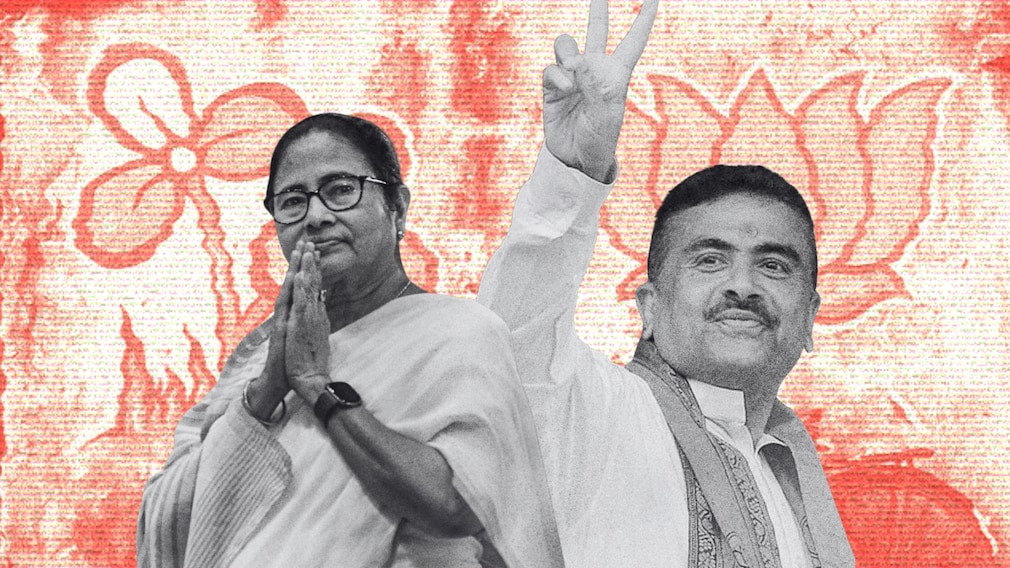
There's a major 'Liberal' meltdown over the Bengal election result playing out on social media. Normally, it's nothing more than internet popcorn. But this time it's particularly sumptuous.
The reaction, for starters, lays bare, with almost theatrical clarity, that the moral universe so loudly invoked by the supposed 'liberal' class in television studios, on the steps of Parliament, and in op-ed pages has a hard geographical boundary. At the borders of Bengal, liberal principles do not merely bend under pressure, but literally evaporate. The same voices that sermonise about constitutional morality, institutional integrity and social justice everywhere else suddenly discover an entirely different vocabulary when Bengal is the subject. Outrage suddenly transforms into hesitation, certainty becomes nuance. And accountability dissolves into a fog of cultural defensiveness.
That's why, from actors to comics to commentators sympathetic to Bengal's ousted ruling party, the hypocrisy has been so sudden and so stark.
Conditional Liberalism
Next comes the question of state power. When governments at the centre and other states are accused (rightly in many instances) of weaponising institutions, the language is immediate and severe. Words and phrases like 'authoritarianism' and 'democratic backsliding' are deployed with ease. But in Bengal, the same concerns are filtered through a different lens. The exercise of state power is recast as defensive, even necessary. Criticism is framed as exaggerated or politically motivated. The idea that power can be misused does not disappear, but it is cushioned, diluted, rendered somehow less urgent than outside Bengal.
The most jarring shift, however, emerges on the issue of sexual violence. This is where the claimed moral consistency of liberal politics is supposed to be at its strongest. Across the country, incidents of violence against women are rightly turned into calls for systemic reform and political accountability. Yet in Bengal, the tone gently changes. Cases that would provoke nationwide outrage elsewhere are treated with caution, sometimes even scepticism, if they threaten to disrupt a preferred political narrative. The universality of the issue is quietly compromised. The victims are no less real, but the response becomes conditional.
Poetic Injustice
Then there is political violence and thuggery. In most parts of India, reports of intimidation, coercion, or electoral violence are seized upon as evidence of democratic decay. They become rallying points for campaigns about restoring the rule of law. In Bengal, these same phenomena are explained away as legacy issues, part of a complex political culture, or worse, as exaggerated accounts pushed by partisan actors. The brutality does not disappear, but it is reframed as something uniquely Bengali, and, therefore, somehow less straightforward to judge.
Hovering over all of this is what I see as the ultimate escape hatch in the state: the invocation of culture. When confronted with uncomfortable facts, the argument retreats into the claim that those not from the soil simply do not get it. Bengal is presented as an exception, a place where external frameworks of judgment do not apply. It is a clever rhetorical move. It shields political actors from scrutiny while wrapping them in the language of identity and heritage. Principles are replaced by poetry. Accountability by abstraction.
See The Bengal Voter For Who She Is
This election result punctures this entire edifice. It is a reminder that Bengal's voters are not passive participants in someone else's narrative. They are agents with their own expectations, frustrations, and limits. The idea that the state can be permanently insulated from the standards applied elsewhere has been tested and found wanting. Bengal's soil, for all its history and pride, has finite patience. It responds to governance, to delivery, to credibility, just like any other electorate in India.
What makes the reaction to this result so revealing is not just the disappointment, but the nature of the arguments deployed to explain it away. Instead of introspection, there is deflection to the usual stuck-record claims of vote theft. Instead of acknowledging that voters may have rejected certain practices or performances, there is a rush to blame a hostile system. The possibility that the electorate has made a clear moral and political judgment is the one option that seems hardest to stomach.
"Ye Public Hai..."
Nowhere is this contradiction sharper than in the discourse around gender and representation. For years, Bengal's political leadership has cultivated an image of being at the forefront of women's empowerment. The rhetoric has been powerful, the symbolism relentless. Yet the gap between that image and the lived experience of many women in the state has been difficult to ignore. The election has forced that gap into the open. Look at the winners in Hingalganj and Panihati, for instance.
The Trinamool's much-celebrated band of self-styled feminist warrior MPs now finds itself facing a mirror. The selective outrage, the carefully curated interventions, the tendency to amplify certain issues while downplaying others, have not gone unnoticed. Voters, especially women, have demonstrated that they are not happy just being recipients of political messaging. They are also evaluators of it. They distinguish between performance and substance. They reward authenticity and punish inconsistency.
'Culture' Can't Make Up For Accountability
That, ultimately, is the most important takeaway from Bengal. Not the victory or defeat of any single party, but the exposure of a deeper intellectual inconsistency. If liberal principles are to mean anything, they cannot be contingent on geography or convenience. They cannot be invoked in one context and suspended in another. The borders of Bengal cannot be where those principles end.
The electorate has delivered a verdict that cuts through layers of rhetoric. It has asserted that culture is not a shield against accountability. It has shown that moral frameworks cannot be selectively applied without consequence. And it has reminded everyone watching that democracy, at its core, is about the people's ability to call out hypocrisy, even when it is dressed in the most eloquent language.
(The author is Managing Editor and Senior Anchor at NDTV)
Disclaimer: These are the personal opinions of the author
-
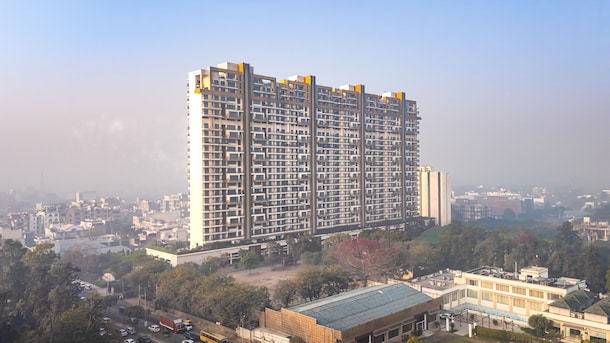
Delhi's New Policy Paves Way For High-Rises. Architects Flag One Big Risk

Without parallel investments in roads and urban design, higher density could simply place more pressure on already strained neighbourhoods.
-
Opinion | A Quiet Indo-Pacific Revolution Is Underway, And India Is At Its Centre
America's unpredictability has finally done what the China threat never could for the Indo-Pacific
-
Beyond Low Cost: Why Foreigners Choose India's Healthcare Over The West
India's medical tourism industry is estimated to be worth $12.32 billion in 2026. It is growing much faster than the country's overall tourism sector.
-
Opinion | Trump's Quiet Turkey 'U-Turn' Has Loud Consequences For India
In a stunning policy reversal, Trump has decided to sell America's F-35 jets to Turkey, a staunch Pakistan ally and its closest defence supplier
-
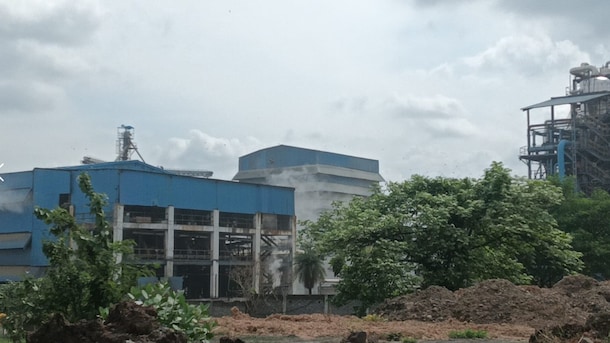
Rs 1,160 Crore Rice 'Scam' Widens: 56 Mills, 22 Ethanol Plants Under Scanner
Investigators are trying to establish how much of the nearly 5 lakh metric tonnes of government rice allocated for ethanol production was actually converted into ethanol, and how much may have been diverted through private mills before returning to government warehouses.
-
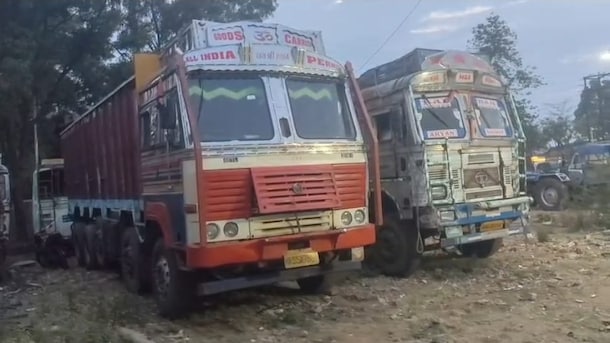
A Truck, A Rice Mill And A Rs 1,160 Crore Question In Madhya Pradesh
The suspicion is that the government rice was diverted to private rice mills and later found its way back into government warehouses as custom milled rice.
-
Opinion | Sharad Pawar Has An Old 'Two Plus Two' Bargain For Delhi
Sharad Pawar appears to be keeping two doors open, and the political cost could be huge for both opposition and the NDA.
-
Blog: Your SUV's Most-Used Feature Is Now The Brake Pedal
The growing menace of traffic begs a question: Is buying a car slowly becoming one of the worst financial decisions for people living in large cities?
-
Opinion | US-Iran MoU Collapse: Why The Strait Of Hormuz Is Back On The Brink
Why did the ceasefire fail? Could it have been prevented? The answer to many of these questions lies in the framing of the 14-Point MoU and the uneven playfield that it created.