Opinion | 'On Verge Of Stopping': Inside The Panic That Led To Indian Airlines' SOS Call
On April 26, 2026, three private airlines - Air India, IndiGo and SpiceJet - wrote to the Ministry of Civil Aviation, through the Federation of Indian Airlines (FIA), to say that they were on the verge of stopping operations.
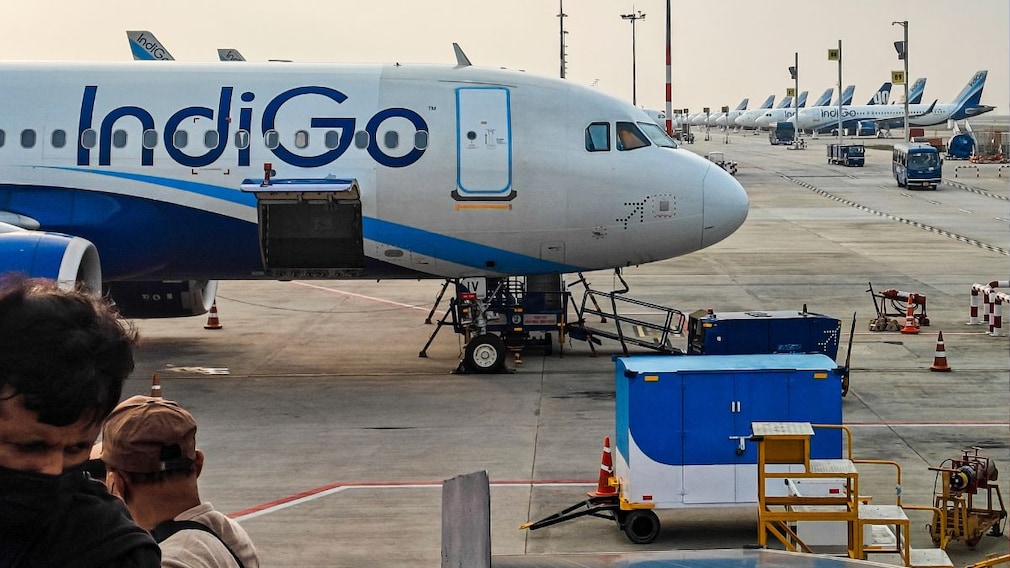
In 1953, the Air Corporations Act nationalised commercial aviation in India. JRD Tata's airline, which had begun in October 1932 with a single de Havilland Puss Moth, carrying mail from Karachi to Bombay, was taken into state hands. The argument made at the time was that the carriers were small, fragmented, and financially unviable, and that aviation was too strategic to be left to the market. India then had two state airlines and no domestic competition for the next four decades. On April 26, 2026, three private airlines (Air India, IndiGo and SpiceJet) wrote to the Ministry of Civil Aviation, through the Federation of Indian Airlines (FIA), to say that they were on the verge of stopping operations. The argument from 1953 was, in a quiet way, older than they were.
That, however, is not the interesting question.
Only 3 Groups Have Signalled For Help
The interesting question is comparative. The same shock has hit every airline in the world. Brent has gone from around $85 a barrel in late February, before the war and the Strait of Hormuz blockade, to around $150 a barrel. The crack spread - the refining margin between crude and Jet A-1 - has widened with it. The IATA monitor put jet fuel at $179 a barrel for the week ending April 24, against $80 in early March. Lufthansa has cancelled 20,000 flights for the summer and permanently retired 27 of its CityLine aircraft. Air France-KLM has raised long-haul fares by EUR 50 per round trip. Cathay Pacific has cut 2% of its scheduled passenger flights and raised its fuel surcharge by 34%. Qantas has delayed an A$150 million share buyback. United expects to recover 85 to 100% of its fuel-cost increase through fares by the fourth quarter. Of the world's serious carriers, only three groups have written to their governments to keep them flying: Spirit Airlines (asking the Trump administration for hundreds of millions to avoid liquidation), the Nigerian operators (who threatened a nationwide shutdown), and the Federation of Indian Aviation's three. India keeps an interesting kind of company.
Why can the others absorb a shock that we cannot? The answer is in four pieces, and the cleanest way to see them is on the cost line.
The Tax Layers
The first is the tax wedge. ATF sits outside the Goods and Services Tax. It bears central excise of 11% on the base price. State VAT is then charged on base-plus-excise (25% in Delhi, 29% in Tamil Nadu, 16 to 20% across most other major hubs). The cascade is multiplicative. At Tamil Nadu rates, every Re 1 of base-price increase lands on the airline as approximately Rs 1.43; at Delhi, Rs 1.39; at lower-VAT hubs, Rs 1.29. Six states still levy VAT of 18% or more, the Civil Aviation Ministry told the Lok Sabha in February. The taxes being ad valorem, the absolute pass-through grows with the underlying. No other major aviation market layers tax this way on its single largest input.
The second is the unhedged balance sheet. Michael O'Leary of Ryanair said this week that his airline had hedged 80% of its fuel through fixed-price swaps and called itself "the best insulated, most hedged airline in Europe". EasyJet has hedged 70% of summer fuel at $706 a tonne. Singapore Airlines runs a continuous rolling hedge combining swaps and collars two to three quarters out. Indian carriers, with brief and abandoned exceptions, do not. They also lease most of their fleet under sale-and-leaseback contracts (IndiGo's lessor share is among the highest in the global top ten) with monthly rentals denominated in dollars, alongside dollar-denominated maintenance reserves and a fuel input priced in dollars. Roughly 60 to 65% of operating cost is USD-linked; over 90% of revenue is in rupees, with the fare ceiling on competitive routes set by the marginal entrant. The exchange-rate exposure is unhedged in any scaled, board-approved sense. This is not, in a strict definition, an airline. It is a leveraged short position on the rupee, written against the price of crude.
Caught Unprepared
The third is the missing war chest. IndiGo posted its two most profitable years on record in FY24 and FY25, operating margins in the high teens. Air India, under Tata, narrowed losses sharply and was, by its own reporting, on its strongest financial footing since the acquisition. Where did the surplus go? Into fleet-expansion orders (IndiGo's 500-aircraft Airbus order in June 2023, Air India's 470-aircraft order across Airbus and Boeing the same year), not into balance-sheet buffers. The relevant liquidity ratio for a carrier is fuel-burn days. Cash and equivalents divided by daily fuel-and-lease outflow. Singapore Airlines and Ryanair have, in recent years, run buffers equivalent to several hundred days of operating outflow. Indian carriers, even after their best two years, run at well under a hundred. Decomposed on cost-per-available-seat-kilometre, Indian non-fuel-non-lease CASK is competitive with Ryanair's and below most European legacy carriers'. The fragility is not in operations. It rather sits one line above operations.
Out Of Habit?
The fourth is the learned response. Every shock since 2008 has ended in a government concession. After the 2008 crude spike, fuel relief. In 2012, foreign airline equity rules were eased to permit 49% FDI. In 2018, ATF tax discussions revived. In 2020, a debt moratorium, slot protections, and eventually, the sale of Air India. Earlier this month, with crude climbing, the government capped monthly domestic ATF price increases at 25%, a measure that shields passengers in the short run and entrenches the cross-subsidy in the medium run. The industry has been trained that the optimal response to a crisis is a letter, not a hedge. The SOS is, in that sense, evidence of the thesis.
Strip the April 2026 letter of its references to West Asia and the Strait of Hormuz, and it could have been written in 2008, in 2012, in 2018, or in 2020. The asks are almost identical. Defer excise duty, cut state VAT, bring ATF under GST, restore the crack-band pricing mechanism, provide financial support. Different war, same letter.
The fix, then, is not a temporary excise waiver. The fragility is structural, and so the cure must be. ATF should be brought under GST, where it has belonged since 2017. Scheduled carriers should be subject to operational adequacy norms, a minimum hedged share of fuel and a minimum forex hedge ratio, disclosed quarterly, on the analogy of capital adequacy for banks. Aircraft orders past a threshold should be conditional on a demonstrated liquidity buffer measured in fuel-burn days. None of this is exotic. Sectoral capital and disclosure regimes operate in shipping, in power, and in financial services, and the EU has been moving in a similar direction on the operational side. Each bailout in the past, by lowering the cost of fragility, has made the next one likelier and larger. The regulator who treats airlines as systemically important infrastructure and regulates the fragility out is doing them, and the travelling public, a favour. The one who keeps writing concession letters is teaching them to wait for the next war.
(The author was with the Economic Advisory Council to the Prime Minister)
Disclaimer: These are the personal opinions of the author
-
Opinion | China Claims It Has Cut Troops At The Indian Border. But The Math Doesn't Add Up

The reduction likely has more to do with the deployment along the LAC than the total strength active in the region
-
Opinion | China Is No Longer Waiting For Trump To Set The Rules. And He Knows It
America's old diplomatic tricks with China won't work any longer. Because China has changed, and so has its ambitions.
-
Opinion | As UN Interviews Its Next Chief, The Interviewers Have Some Explaining To Do
On the panel sit governments whose wars, vetoes, and unpaid dues have helped make the organisation ineffective.
-
Opinion | Trump-Xi Meet: What China Can Give America, And What India Could Lose
If Trump can secure some of what he wants directly from Beijing, India's immediate value to Washington could change in particular areas.
-
A New 'Axis'? 87 Years After Pact Of Steel, A New European Far-Right Tie-Up
Nearly nine decades after Nazi Germany and Fascist Italy formalised their alliance, senior figures from Germany and Italy's far-right appeared together at a political rally on Sunday.
-
Opinion | 'Blackmail' Diplomacy: Why India Can't Be A Pawn In US' War On Russia
The new sanctions bill is both blackmail and hypocritical: blackmail because it seeks to change India's principled stand, and hypocritical because the US has provided exemptions to others, and itself.
-
Blog | Katrina Kaif, And The Very Indian Problem Of Too Much 'Audacity'
The remarkable thing about many Indian trolls is not that they have opinions, but that they expect - get this, Katrina Kaif, no less - to care about them.
-
Mamata Banerjee Drew Her Party's Symbol By Hand. It's Now Tied To An Indira Gandhi Case
The Election Commission's method for settling such disputes became central in the seminal Congress split of 1969, when Indira Gandhi fought the old guard. The poll body weighed three tests then.
-
Bruised, Limping, Unbowed: Sia Says She Will Be Back On The Bike Soon
There was pain in Sia's steps, anger in her words, and something else - a quiet determination that the road would not be taken away from her.
-
Exclusive: 16 Months After Op Sindoor, Pak Still Fixing Runway India Broke At Sargodha
Sargodha's PAF Base Mushaf lies about 172 km northwest of Lahore and roughly 200 km west of the India-Pakistan border, near Amritsar.