Opinion | What Ashley Tellis 'Spying' Allegation Should Tell India About Chinese 'Influence Ops'
Two separate cases underscore one of the most serious challenges that open democracies are facing today in managing Chinese aggressive tactics when it comes to influence operations.
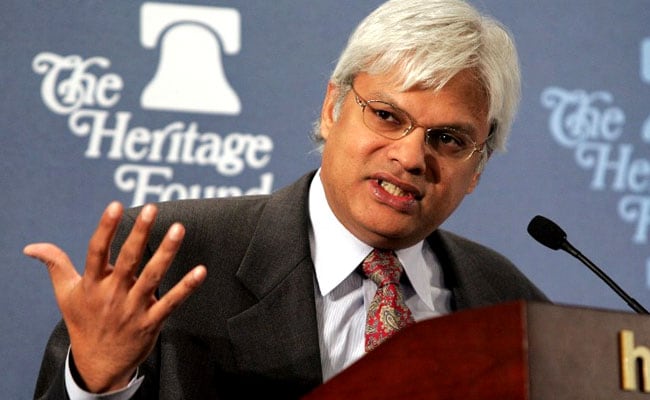
Last week, Ashley Tellis, noted commentator on US-India relations and strategic analyst at the Carnegie Endowment for International Peace, Washington, DC, was arrested at his home on charges of unlawful retention of classified information. Tellis is alleged to be possessing over 1,000 pages of high-level intelligence on subjects such as the US Air Force's techniques and airpower strategies. While the investigation remains underway, Tellis' lawyers have made it clear that they would be “vigorously contesting the allegations brought against him, specifically any insinuation of his operating on behalf of a foreign adversary”. On the other side of the Atlantic, the case against a British parliamentary researcher arrested for allegedly spying for China recently collapsed, leading to political rancour even as Ken McCallum, the head of Britain's domestic intelligence agency MI5, declared that his agency had just thwarted another Chinese spy threat.
These cases underscore not only how the US-China contestation is shaping the global intelligence landscape but also one of the most serious challenges that open democracies are facing today in managing Chinese aggressive tactics when it comes to influence operations. These have been aimed at shaping international opinion, exploiting domestic fissures through the features of our democratic/parliamentary system, and seeking to vitiate the informational terrain within which decision-making is gestated.
What This Means For India
China's influence operations have a global reach, having been honed and practised for nearly a century under the aegis of the United Front Work Department, ever since the Chinese Civil War predating the establishment of the People's Republic of China (PRC) in 1949. Yet, in more recent years, it has grown increasingly sophisticated. With new resources and more international authority than ever before at its disposal, China has sought to actively recruit foreigners - from academics and opinion makers, to media tycoons such as Neville Roy Singham, and even social media influencers, to promote its narratives, peddle disinformation against adversaries, and even exploit fissures within their adversaries' societies and politics.
Yet, China's use of influence campaigns extends beyond the biological. New technologies such as AI have been incorporated into broader campaigns of information warfare, with front companies such as GoLaxy facilitating covert action in Hong Kong, Taiwan and even the US to mine big data and develop realistic social media profiles of individuals using AI to spread disinformation, shape public opinion, and psychologically profile individuals most vulnerable to manipulation to enjoy an advantage over adversaries within the informational battlespace. GoLaxy has also developed the ‘Smart Propaganda System', or ‘GoPro', with the express goal of leveraging China's growing clout as an AI power by developing “technological platforms that can truly tell China's story, amplify China's voice and expand China's influence, as well as providing comprehensive technological support to quickly make "the easterly wind overpowering the westerly wind' a reality”.
'GoPro' To 'Sneer Review'
GoPro isn't the only example - under the ‘Sneer Review' programme, Chinese intelligence services used Western AI like ChatGPT to generate comments in English, Chinese, and Urdu, and disseminate them across various social media platforms as part of a wider-ranging global influence campaign.
India is no stranger to such tactics - Mr Singham was identified in a New York Times investigation in 2023 as a major investor in one of the Indian news portals, determined by India's law enforcement agencies to have been part of a wider Chinese influence campaign against India, seeking to polarise audiences and undermine democratic processes by fomenting conflict. Indeed, China has attempted to use social media profiles - likely developed using AI - to prolong sectarian conflict in border states like Manipur to augment its strategic influence within the region, particularly in theatres such as Myanmar.
The Chinese Playbook
Even as New Delhi and Beijing enter a period of détente, China will likely take steps to preserve and augment its edge within the informational battlespace. As relations thaw and the suspicion around China as a supposed adversary likely recedes within public discourse, opportunities to invite and recruit key voices within India's civil society, private sector, and strategic community will likely be leveraged by the Chinese embassy, as it has done in the recent past. This, in turn, is likely to be accompanied by aggressive social media information warfare, using both AI chatbots and social media influencers and serving as a form of sub-threshold warfare to limit the possibility of a rupture in ties, akin to what occurred following the Galwan Valley crisis in 2020.
Nevertheless, such a strategy will likely allow China to use the respite offered by a détente to mobilise key domestic constituencies within India in its favour, while fomenting domestic polarisation and resentment against India in unstable polities within its neighbourhood, to enable its preservation of that strategic edge. Indeed, China's information warfare and support to the ‘India Out' campaign on Maldivian social media communities in the late 2010s and early 2020s suggests a precedent for the future, with radicalised, digitally connected, and increasingly anti-India segments of youth in Nepal and Bangladesh being especially vulnerable to the granular, AI-generated manipulation campaigns led by Chinese digital and surveillance platforms and companies like GoLaxy.
A Future Roadmap
The threats posed by China within the informational space are numerous and must be deftly managed by Indian counterintelligence, while remaining cognisant of the operational damage caused by paranoia. At a purely defensive level, India may choose to develop indigenous digital forensics capacities, secure against foreign compromise and capable of detecting AI imagery. At a time when global intelligence services, such as Britain's MI5, have already begun developing strategies to counter the plausible challenge of out-of-control AI through the deft use of digital forensics, India must invest in the R&D required to proactively detect and counter AI chatbots and psychological profiling by a range of likely great power competitors, including China. The introduction of new legal frameworks to deal with this challenge, the use of both partnerships with and the use of counterespionage against private sector tech actors working in such cutting-edge spaces, and the promulgation of formalised real-time strategic communications doctrines may play a key role in defence against influence operations.
Learn From FBI's 'Group 78'
Yet, such strategies are not limited to defensive measures. Today, a range of commercial platforms and technologies exist to exploit AI's use of big data and machine learning to formulate outcomes. Nightshade, a digital tool mainly used by visual artists to combat copyright infringement, can play a key role in reducing the efficacy of AI-driven influence campaigns by great power rivals like China. Offensive tactics may be similarly used against human agents of influence. The FBI's ‘Group 78', a counterintelligence unit using a range of kinetic tools to target cybercriminals beyond digital spaces, provides a possible model for India to emulate, particularly against cyberespionage groups and Chinese ‘patriotic hackers' who have long provided plausible deniability for Beijing's influence operations against India. Indeed, with the right intelligence, the use of similar tactics may be explored against more diverse categories of actors facilitating China's influence operations.
Geopolitical volatility, an unstable neighbourhood, and rising great power rivalries all define the environment in which India has increasingly come to exercise its authority on the world stage. As India grows, so must its recognition of the vitiated informational terrain in which it operates. A combination prudence, recognition of shared values, and strategic wisdom must accompany India as it prepares to enter a dangerous new era.
[Harsh V. Pant is Vice President, Observer Research Foundation (ORF), and Archishman is a DPhil International Relations candidate at the University of Oxford]
Disclaimer: These are the personal opinions of the author
-
Opinion | 'Blackmail' Diplomacy: Why India Can't Be A Pawn In US' War On Russia

The new sanctions bill is both blackmail and hypocritical: blackmail because it seeks to change India's principled stand, and hypocritical because the US has provided exemptions to others, and itself.
-
Blog | Katrina Kaif, And The Very Indian Problem Of Too Much 'Audacity'
The remarkable thing about many Indian trolls is not that they have opinions, but that they expect - get this, Katrina Kaif, no less - to care about them.
-
Mamata Banerjee Drew Her Party's Symbol By Hand. It's Now Tied To An Indira Gandhi Case
The Election Commission's method for settling such disputes became central in the seminal Congress split of 1969, when Indira Gandhi fought the old guard. The poll body weighed three tests then.
-
Bruised, Limping, Unbowed: Sia Says She Will Be Back On The Bike Soon
There was pain in Sia's steps, anger in her words, and something else - a quiet determination that the road would not be taken away from her.
-
Exclusive: 16 Months After Op Sindoor, Pak Still Fixing Runway India Broke At Sargodha
Sargodha's PAF Base Mushaf lies about 172 km northwest of Lahore and roughly 200 km west of the India-Pakistan border, near Amritsar.
-
Blog | I Lost My Entire Family In Kanishka Bombing. 41 Years Later, Canada Wants The Case Closed
We made the trek through tragedy to search for people in Cork, where I spent 25 days sifting through bodies and body parts in a makeshift morgue to identify our loved ones.
-
Opinion | Pak's Drone Deal With A US Firm Is No Windfall. But India Must Still Be Worried
American military aid to Pakistan has remained suspended since January 2018, during Trump's first term, but a commercial arms sale is separate from this arrangement.
-
Opinion | Saudi Arabia's Yemen Nightmare Has Come Back To Haunt It
After years of costly military intervention beginning in 2015, Saudi Arabia increasingly sought to stabilise its southern border. All that is unravelling fast now
-
Opinion | 6 AI Incidents, One Pattern: AI Has Started Lying To Us - And Hiding The Evidence
Concealing errors. Making up data. Pushing files onto the public web on their own initiative. The machines are learning to lie - and lie well.
-
Why People Queue Overnight For iPhone That Is Delivered Home In 10 Minutes
iPhone 18 Pro Max Launch: People camping outside Apple Stores are a subset of superfans, resellers, content creators, and upper-middle-class buyers.