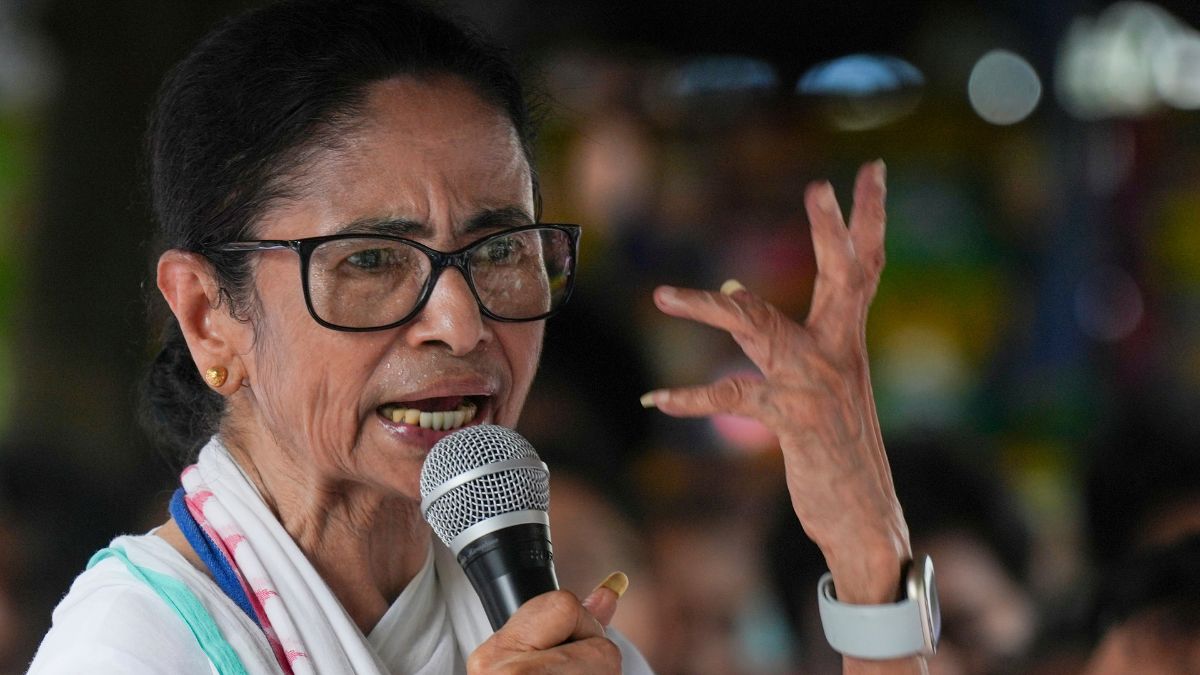
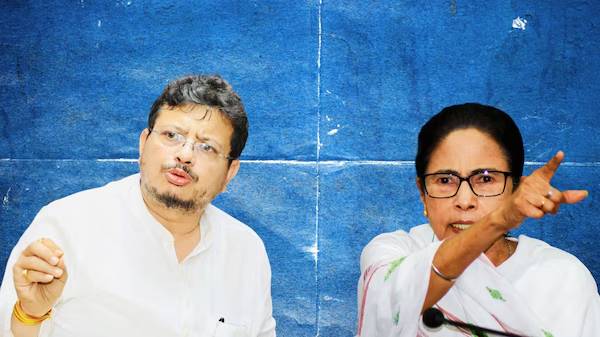




In the sweltering political heat of June 2026, just a month after the Bharatiya Janata Party (BJP) delivered a landslide victory in the West Bengal Assembly elections by securing around 208 seats to the Trinamool Congress's (TMC) roughly 80, Mamata Banerjee's party finds itself on the precipice of disintegration. What was unimaginable before the May results has unfolded with startling speed, as 58 Trinamool MLAs have thrown their weight behind expelled leader Ritabrata Banerjee as Leader of the Opposition, openly defying Mamata's preference for veteran Sobhandeb Chattopadhyay.
The rebels, while professing loyalty to Mamata as a guiding figure, have effectively sidelined her nephew Abhishek Banerjee. In a desperate countermove, the official Trinamool faction dissolved all frontal organisations, leaving only Mamata as the foundational anchor. This is not mere post-defeat sulking, but structural rupture. The TMC, which rode to power in 2011 on the "Maa, Maati, Manush" slogan and held the state for 15 years, has seen its organisational muscle atrophy amid allegations of centralised, corporate-style management.
The crisis mirrors recent splits in the Shiv Sena and Nationalist Congress Party (NCP) in Maharashtra, where the question of control over party symbols became a legal tussle. With the BJP's Suvendu Adhikari now installed as Bengal's Chief Minister, the power vacuum has emboldened dissenters. Mamata Banerjee, the legendary street fighter who built the TMC from scratch, faces her sternest test yet, and this time, the threat is from within. Her 41% vote share in a relatively free election underscores that her personal appeal remains intact, but institutional decay threatens to erode even that. The coming weeks will decide whether the TMC survives as a coherent force or fragments into irrelevance, a fate that would redefine not just Bengal but opposition dynamics across the entire nation.
Will Mamata Remove Abhishek?
The epicentre of discontent lies with Abhishek Banerjee, the party's national general secretary. Old guards and newer entrants alike attribute the TMC's rout, from 215 seats in 2021 to around 80 now, to his style of functioning, which allegedly transformed a grassroots outfit into one steered by a professional election management firm like I-PAC. Post-poll, this resentment boiled over. The rebels' swift announcement of Ritabrata Banerjee as LoP, within minutes of official moves, signalled rejection of Abhishek's oversight.
Removing him could theoretically quell the rebellion, but the probability remains low. Abhishek's ascent since 2014 has been intertwined with Mamata's decisions, who granted him control over key organisational levers. Such a move risks alienating a faction she nurtured, potentially fracturing family and loyalist networks. However, retaining him perpetuates the revolt. The dissolution of frontal wings indicates a reset attempt, but without addressing the core grievance - perceived dynastic corporate control - the murmurs will persist. Historical parallels, like regional parties losing cohesion over second-generation leadership, suggest this dilemma could prove fatal if it goes unresolved. Mamata must weigh short-term unity against long-term organisational revival.
What About The Remaining Leaders
Right now, survival is a two-front war fought in the corridors of Kolkata and the halls of New Delhi. On paper, 20 loyalists remain in the state assembly, but they look less like a vanguard and more like political hostages. With 58 rebels rallying behind a new leader, the mutineers have comfortably crossed the legal threshold to escape the anti-defection axe. The party hierarchy is crying foul, alleging forgery of signatures and demanding investigations. But everyone knows courtrooms cannot fix a broken house. Without a massive, ego-free outreach from Mamata herself, the bleeding will not stop. The warning lights are already flashing, as several of her lawmakers have already been spotted rubbing shoulders at administrative meetings hosted by the new BJP government.
If the mood in Kolkata is grim, the atmosphere in New Delhi is downright skeletal. When Mamata staged a recent protest, the optics were devastating. Out of nearly 40 parliamentarians, only a tiny circle of the old guard, including Derek O'Brien, Dola Sen, and Kalyan Banerjee, bothered to show up. When heavyweights like Kakoli Ghosh Dastidar and Sukhendu Sekhar Roy start venting their resentment in public, you know the rot has reached the foundation.
If the rebels successfully claim they are the "real" party, a federal exodus is inevitable. They have a ready-made blueprint in the recent, brutal engineering of the Shiv Sena and NCP splits, where the factions with raw numbers simply walked away with the party names and symbols. Whether this ends in a quiet surrender to the BJP or the total erasure of the party identity, the stakes are existential. If Mamata cannot plug the leaks immediately, her grand national dream will dissolve before the monsoon ends.
Legacy Or History?
Mamata Banerjee's legacy - as the woman who ended Left Front's 34-year rule and resisted BJP's advances - stands imperilled. Old guards lack the ground-level stamina for prolonged battles, and years of centralised control have distanced her from cadres. Yet, her 41% vote share in 2026 shows that many voters backed the TMC for Mamata herself, not individual MLAs or factions.
A lifelong agitator since her 1984 Jadavpur victory (barring a brief 1989-91 hiatus), Mamata does not concede defeat easily. She has brushed aside the loss, claiming moral victory. However, without rebuilding from the grassroots she once championed, legacy risks fading into history. The challenge is transitioning from persona-driven politics to institutional resilience. Failure could consign her to a footnote: the leader who conquered Bengal but could not save her own party from the internal forces gnawing at its foundations.
The Rajya Sabha Route
One thing is crystal clear: Mamata Banerjee's political survival now hinges on retaining constitutional power. In contemporary Indian politics, mere legacy and personal charisma are insufficient shields against irrelevance. Her post-election reaction - brushing aside the defeat and claiming moral victory - reveals a leader still struggling to fathom the scale of the setback.
Defeat is not new to Mamata, and a prolonged political wilderness seems almost unimaginable for her. At this juncture, the Rajya Sabha route appears a safer, less risky option to preserve her relevance and protect her legacy. However, with the party split and its severely diminished strength in the Assembly, securing enough votes for a Rajya Sabha election looks extremely difficult. Conversely, contesting a relatively safer Lok Sabha seat would allow her to demonstrate residual mass appeal and reassert dominance, but it is a high-stakes gamble. Victory would bolster her position, yet defeat could prove fatal for both her and the party's symbol. Such a move would also require open support from other parties, particularly the Congress, something that was unthinkable for her just a few years ago.
National Ambitions
For years, Mamata Banerjee has nurtured ambitions that extend beyond Bengal. She sought to position herself as a national opposition leader capable of challenging the BJP and shaping the contours of opposition unity. Today, however, the disintegration of the TMC has fundamentally altered that equation.
The immediate challenge before Mamata is no longer Delhi but Bengal. Political survival may now require a degree of cooperation with the Congress, a party whose space the TMC steadily eroded over the past decade. While personal channels with the Gandhi family remain open and gestures of solidarity have emerged after her setback, the Congress at the state level remains deeply sceptical. Equally important, Mamata can no longer claim the same moral distance from the Congress that once strengthened her appeal among regional parties. The Left, meanwhile, remains uncompromising in its opposition to her.
This leaves Mamata in an uncomfortable position. Without an unchallenged base in Bengal, her ability to influence national politics inevitably diminishes.
Yet the larger story is not merely about one leader's future. The TMC's crisis exposes the consequences of excessive centralisation, the alienation of grassroots workers, and an organisation that became increasingly dependent on a single personality.
(Sayantan Ghosh is an author and columnist, and teaches journalism at St Xavier's College, Kolkata)
Disclaimer: These are the personal opinions of the author


