Opinion | 5 Districts Made Mamata In 2011. Will They Unmake Her This Time?

In 2011, the TMC alliance swept 82 out of the 108 seats here, signalling the end of the Left regime. Analysts called it a fluke, saying the Left would come back. That was not to be.
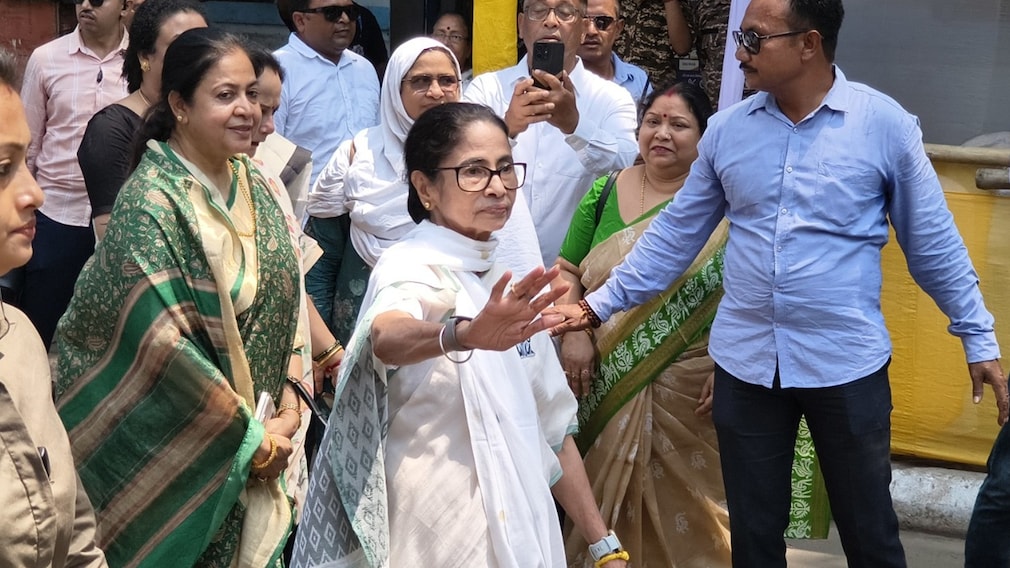
For decades, five districts have decided which party or Alliance rules West Bengal. Without a shadow of doubt, it will be the same this time. We are talking about the five districts in West Bengal surrounding the so-called Presidency region, which will be going for polls on April 29 in the second phase. 

These five districts have a peculiar tendency to overwhelmingly vote for one party and decimate the other one, and that has been their story since the Left stormed to power way back in 1977. These five districts are Kolkata, Howrah, 24 North Parganas, 24 South Parganas, and Nadia. 

Advertisement - Scroll to continue

Firstly, as we mentioned earlier, these five districts have a tendency to vote overwhelmingly for one particular party. Second, they account for 108 of the 294 seats in the West Bengal assembly. So, when voting starts on April 29, these 108 seats will be the most crucial ones of the 142 that go for polling the same day. Interestingly, not only is this region known for throwing up Chief Ministers for the last five decades, but it is also the cultural and intellectual hub of West Bengal. Ironically, it has also been the hub of cruelty, violence, and intimidation for many, many decades.

For the uninitiated, in 1984, a decorated and brave IPS officer, Deputy Commissioner of Police Sanjeev Mehta, was brutally lynched and murdered by a mob in the Garden Reach area adjacent to Howrah, along with his driver and bodyguard. Since then, the region has been known for cultural excellence existing alongside extreme levels of violence. 

Another tidbit: Jyoti Basu used to contest from a constituency called Satgachia, which falls in 24 South Parganas. Buddhadev Bhattacharya contested from Jadavpur, which is part of these five districts. And, of course, Mamata Banerjee has long held Bhawanipur in the Kolkata region as her bastion. This time, she is being challenged there by the former Trinamool leader-turned-adversary Suvendu Adhikari. 

The results and the data are telling. Back in 2006, when the Left Front won for the last time, it had won 72 out of the 108 seats in the region. So, despite massive outreach campaigns by Mamata Banerjee and the Trinamool Congress, she failed to breach this bastion of the Left Front, and that had ensured that Buddhadev Bhattacharya continued as Chief Minister. But the bastion crumbled, and it did so spectacularly in the 2011 assembly elections, when the Congress and the Trinamool contested as allies. The Trinamool Congress Alliance swept 82 out of the 108 seats, signalling the end of the Left regime in West Bengal. Back in those days, many analysts used to say that this was a fluke and that the organisational strength of the Left Front was so strong in these five districts that the Left was bound to make a comeback in the 2016 elections. That was not to be. 

In the 2016 elections, the Trinamool Congress, contesting alone, won 91 seats. In 2021, even when it was facing a serious challenge from the BJP, it won 97 seats in the area. 

The point is, if you manage to win 97 seats from just one region consisting of five districts, then reaching the majority mark of 148 becomes a relatively easy task. After all, you just have to win 51 of the remaining 186 seats.

And that is exactly what has been happening in West Bengal for the last five decades or so. Which is why both the BJP and the Trinamool Congress have put their everything into these five districts. Because, if the BJP manages to breach this Mamata citadel, then it is game over for the Trinamool Congress. The way the Left was decimated in 2011 leaves little to doubt that.

Of course, this is a tall order for the BJP because of the nature and the demography of the constituencies and the unshaken popularity of Mamata Banerjee both in the region as well as the state. Add muscle power, and everything says advantage Trinamool. That is why the BJP has sent Prime Minister Narendra Modi, Union Home Minister Amit Shah, and an array of star campaigners to this region. The party knows that the big edge it has in North Bengal will be of no use unless it breaches Presidency.

However, when it comes to these five districts, can controversy and intimidation be far away?  One election observer appointed for 24 South Parganas is Ajay Sharma, a decorated IPS officer from the Uttar Pradesh cadre who is also famous as an "encounter specialist". Just a day or so ago, he visited the village of Jahangir Khan, a Trinamool candidate from Falta, and, of course, a powerful strongman in the region. Sharma directly issued a warning to Khan, saying that he had been getting numerous complaints about voter intimidation and that this would not be tolerated. That statement became controversial. However, what was even more shocking was the response from Khan himself, who was not present when Ajay Sharma visited his village. Soon after, Khan addressed a rally in 24 South Parganas and issued a direct challenge to Ajay Sharma, saying that he would "finish the game" that Sharma had started. He also went on to add that if he visited Falta, then the CRPF would be "blown away". 

That, after all, has been the history of this region. 

On April 29, it will be worth watching what kind of voting the region sees, and whether it's beset by violence and intimidation that have usually sullied polling days here. At the end of the day, if Mamata Banerjee is able to keep her bastion in these five districts, the Trinamool Congress is home - and safe. If not, then all bets are off.

(Yashwant Deshmukh is the Founder & Editor-in-Chief of CVoter Foundation, and Sutanu Guru is Executive Director)

Disclaimer: These are the personal opinions of the author