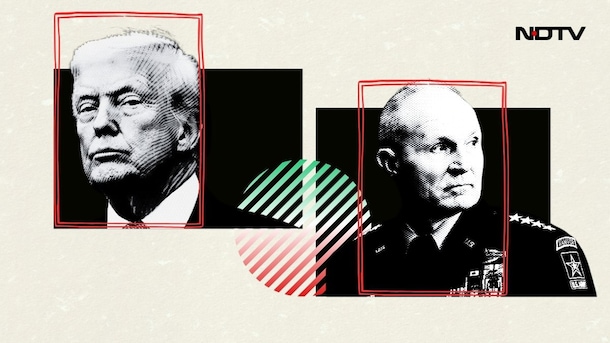
Opinion | "5 Jets Down", Or 7, Or 11? Trump And The Horror Of His 'India-Pak' Fantasies
The more dramatic the claim, the more fluid the facts behind it become for Trump.
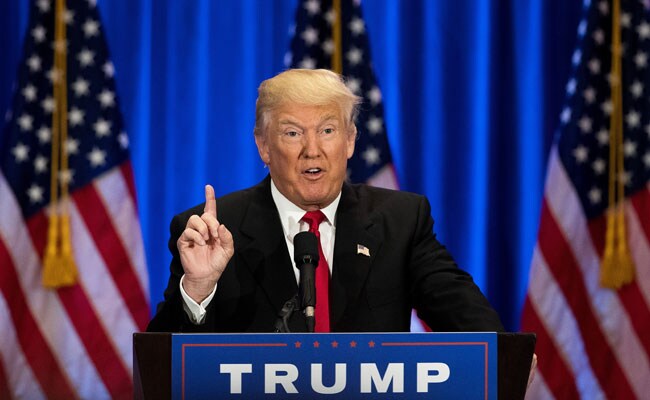
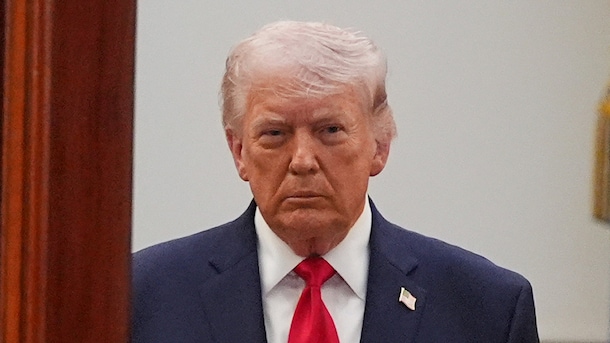
There is something almost surreal about the narrative that Donald Trump has constructed around the 2025 military escalation between India and Pakistan and how he claims personal credit for brokering peace. Over the course of nearly a year, Trump's recounting of the events has shifted repeatedly, not only in the details of what he supposedly achieved but even in the basic facts of what happened on the battlefield - the latest being his claim in his State of the Union (SOTU) address that Pakistan Prime Minister Shehbaz Sharif had told him that "around 35 million people would have died" in India's Operation Sindoor if it were not for US intervention.
At various public events, interviews, and speeches, Trump has been fashioning himself as the linchpin in ending one of the most dangerous escalations in South Asia in decades. His story of a brewing war between two nuclear-armed nations, which only stopped because he intervened, has all the makings of present-day gothic. A Faustian transactional bargaining rather than diplomatic finesse, and a shapeshifting narrator. Each time he narrates it, the elements of the story change.
Sacrificing Facts For Drama
At the Board of Peace event in Washington, Trump boasted about his most recently, framing the crisis in stark economic terms: "I said, if you're going to fight, then it's fine, but you are not doing business with the US, and you are going to pay a 200 per cent tariff... And they both wanted to fight. But when it came to losing a lot of money, they said, 'We don't want to fight...' 11 jets were shot down. Very expensive jets."
The language is striking. Dr Faustus being lured by Mephistophilis; a negotiation about war reduced to a tariff threat. For a heightened dramatic effect, the tally of aircraft losses is used as a prop. Yet, even this account has not been consistent.
In July 2025, Trump was quoted saying something closer to "five jets were shot down" during the conflict, though he didn't specify whose aircraft they were. Later in that year, he told a different audience that "seven planes were shot down... and I got it stopped". Just months later, he referred to "eight planes were shot down" and claimed credit for stopping that escalation as well. This fluid number of jets down, ranging from five, seven, eight, ten, to eleven, reveals a lot about Trump's narrative strategy.
A President Who Loves His Own Stories
These shifting figures should not be dismissed as anecdotal quibbles. Each variant is presented as if it were a definitive account of how close India and Pakistan came to a larger war and how crucial his intervention was. But on the ground, neither India nor Pakistan has released verified figures supporting any of these tallies. Indian officials have outright rejected Trump's premise that the United States mediated the ceasefire. Whether it was a good diplomatic move is another story.
Long after Trump began claiming to have brokered the ceasefire, India stated that at no point were issues like US trade deals or external mediation part of the direct communication between established India-Pakistan military channels.
This contradiction illuminates the broader issue with most of Trump's accounts of geopolitical events. They often seem crafted not to clarify what happened, but to aggrandise his own role in it. At one moment, the crisis is framed as a narrowly avoided nuclear nightmare that only his tariff threats could stop. In another, it's one in a series of "eight wars" he claims to have ended. "I settled eight wars... India and Pakistan were ready to go at it big," Trump said in an interview, asserting once again that aircraft losses were evidence of how serious the situation had been.
Jumpscare Diplomacy
There is a clear script here. The more dramatic the claim, the more fluid the facts behind it become. The jets shot down are the necessary jumpscares. A visceral image meant to evoke intense fighting. The tariff threat is elevated as the central mechanism of peace. Trump the Saviour, Trump the Punisher.
This is not how responsible diplomacy is done. Peace mediation, especially between rivals with a long history of mistrust and recent violence, is a delicate process involving back-channel discussions, verified communication, and a measured understanding of each party's interests. It is not typically described in terms of punitive economic ultimatums delivered from afar or narrative evolutions that depend on the audience's applause rather than factual accuracy.
Trump's ever-changing narrative serves as a reminder of how modern political storytelling can diverge wildly from the on-the-ground reality. When the principal narrator of an event keeps rewriting the account, it becomes nearly impossible for outside observers to disentangle fact from self-serving fiction. In this case, the stakes are far higher than a campaign rally or a media soundbite. There is a serious international crisis between two nuclear-armed neighbours. But the role (or non-role) of a 'superpower' is being written and performed by an unreliable, shapeshifting narrator.
(Nishtha Gautam is a Delhi-based author and academic. She's currently researching Nationalism at Jindal School of International Affairs)
Disclaimer: These are the personal opinions of the author
-
Blog | The Dantewada Massacre, And What India Needs To Do To Stay Maoist-Free

In 2010, I was Assistant Chief of the Air Staff controlling transport aircraft and helicopters, and on April 6 that year had to arrange An-32 aircraft to carry coffins of 75 CRPF jawans.
-
Opinion | How Iran Has Pierced The One 'Shield' That Protected America For 30 Years
In the past, US campaigns in Iraq, Afghanistan and Libya were conducted against relatively weak air defences. That has not turned out to be the case with Iran, puncturing the long-held myth of America's 'indomitable' air power.
-
Opinion | The Quiet 'Upheaval' Within US Military Over The Iran War
General Randy George's ouster carries echoes of a similar episode in 2003, in the run-up to the Iraq war. But much more is happening within the US military, courtesy Hegseth.
-
How Iran Sucker-Punched Trump Into 'Escalation Trap' 'Hellhole'
Trump is now under pressure, not just from allies but also within; the President's approval rating is the lowest it has ever been with mid-term elections in November.
-
Eagle Down: How US Carried Out Precision Search And Rescue Op In Hostile Iran
How the United States transformed a tactical failure into a narrative of national resolve.
-
Opinion | 450 Missile, 2,000 Drone Attacks Later, Why Is UAE Still Not Fighting Iran?
The UAE is Iran's second-largest trading partner and also home to roughly half a million Iranians. Why, then, has it absorbed more fire than any other Gulf state?
-
In Numbers: How Has India Kept Fuel Prices Low Even As Europe Sees 70% Spikes?
India imports 88% of its crude. Why then is it not seeing massive price hikes for fuel and LPG? Inside the unique strategy it's following...
-
Opinion | India Just Decided To Let Chinese Capital In Again. But There's A Catch
In March 2026, India eased regulations that had restricted Chinese capital in local companies, in a development that marks New Delhi's cautious approach towards capital flows from Beijing.
-
Trump's Iran 'Knocked Out' Claim Blown Up By US Intel On Missiles, Drones
Donald Trump claimed this week the war would end in two to three weeks as he threatened to send Iran back to the Dark Ages. But based on these reports the fighting is far from over, even if US President wants to push a contrary narrative.
-
Opinion | Rs 30 Petrol Hike To Currency Crisis, What Oil At $150 Can Really Do To The World
At $125 per barrel, petrol and diesel retail prices will need to rise by Rs 8-14 per litre. At $150 - which experts think is now likely - these figures could touch Rs 26-30 per litre.