Opinion | "5 Jets Down", Or 7, Or 11? Trump And The Horror Of His 'India-Pak' Fantasies
The more dramatic the claim, the more fluid the facts behind it become for Trump.
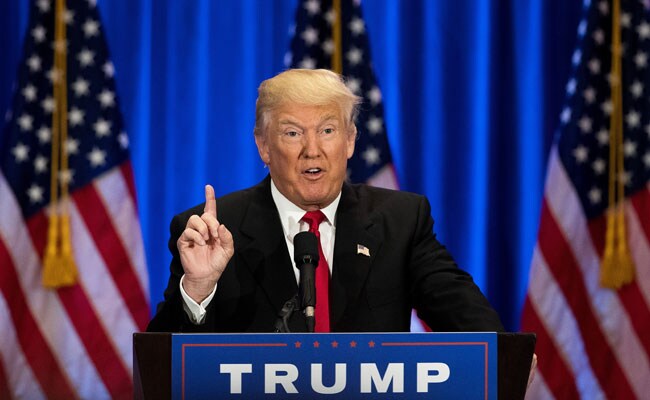
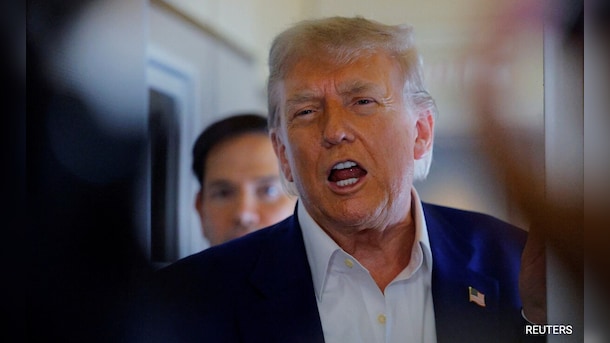
There is something almost surreal about the narrative that Donald Trump has constructed around the 2025 military escalation between India and Pakistan and how he claims personal credit for brokering peace. Over the course of nearly a year, Trump's recounting of the events has shifted repeatedly, not only in the details of what he supposedly achieved but even in the basic facts of what happened on the battlefield - the latest being his claim in his State of the Union (SOTU) address that Pakistan Prime Minister Shehbaz Sharif had told him that "around 35 million people would have died" in India's Operation Sindoor if it were not for US intervention.
At various public events, interviews, and speeches, Trump has been fashioning himself as the linchpin in ending one of the most dangerous escalations in South Asia in decades. His story of a brewing war between two nuclear-armed nations, which only stopped because he intervened, has all the makings of present-day gothic. A Faustian transactional bargaining rather than diplomatic finesse, and a shapeshifting narrator. Each time he narrates it, the elements of the story change.
Sacrificing Facts For Drama
At the Board of Peace event in Washington, Trump boasted about his most recently, framing the crisis in stark economic terms: "I said, if you're going to fight, then it's fine, but you are not doing business with the US, and you are going to pay a 200 per cent tariff... And they both wanted to fight. But when it came to losing a lot of money, they said, 'We don't want to fight...' 11 jets were shot down. Very expensive jets."
The language is striking. Dr Faustus being lured by Mephistophilis; a negotiation about war reduced to a tariff threat. For a heightened dramatic effect, the tally of aircraft losses is used as a prop. Yet, even this account has not been consistent.
In July 2025, Trump was quoted saying something closer to "five jets were shot down" during the conflict, though he didn't specify whose aircraft they were. Later in that year, he told a different audience that "seven planes were shot down... and I got it stopped". Just months later, he referred to "eight planes were shot down" and claimed credit for stopping that escalation as well. This fluid number of jets down, ranging from five, seven, eight, ten, to eleven, reveals a lot about Trump's narrative strategy.
A President Who Loves His Own Stories
These shifting figures should not be dismissed as anecdotal quibbles. Each variant is presented as if it were a definitive account of how close India and Pakistan came to a larger war and how crucial his intervention was. But on the ground, neither India nor Pakistan has released verified figures supporting any of these tallies. Indian officials have outright rejected Trump's premise that the United States mediated the ceasefire. Whether it was a good diplomatic move is another story.
Long after Trump began claiming to have brokered the ceasefire, India stated that at no point were issues like US trade deals or external mediation part of the direct communication between established India-Pakistan military channels.
This contradiction illuminates the broader issue with most of Trump's accounts of geopolitical events. They often seem crafted not to clarify what happened, but to aggrandise his own role in it. At one moment, the crisis is framed as a narrowly avoided nuclear nightmare that only his tariff threats could stop. In another, it's one in a series of "eight wars" he claims to have ended. "I settled eight wars... India and Pakistan were ready to go at it big," Trump said in an interview, asserting once again that aircraft losses were evidence of how serious the situation had been.
Jumpscare Diplomacy
There is a clear script here. The more dramatic the claim, the more fluid the facts behind it become. The jets shot down are the necessary jumpscares. A visceral image meant to evoke intense fighting. The tariff threat is elevated as the central mechanism of peace. Trump the Saviour, Trump the Punisher.
This is not how responsible diplomacy is done. Peace mediation, especially between rivals with a long history of mistrust and recent violence, is a delicate process involving back-channel discussions, verified communication, and a measured understanding of each party's interests. It is not typically described in terms of punitive economic ultimatums delivered from afar or narrative evolutions that depend on the audience's applause rather than factual accuracy.
Trump's ever-changing narrative serves as a reminder of how modern political storytelling can diverge wildly from the on-the-ground reality. When the principal narrator of an event keeps rewriting the account, it becomes nearly impossible for outside observers to disentangle fact from self-serving fiction. In this case, the stakes are far higher than a campaign rally or a media soundbite. There is a serious international crisis between two nuclear-armed neighbours. But the role (or non-role) of a 'superpower' is being written and performed by an unreliable, shapeshifting narrator.
(Nishtha Gautam is a Delhi-based author and academic. She's currently researching Nationalism at Jindal School of International Affairs)
Disclaimer: These are the personal opinions of the author
-
6,800 km From Epstein Island, His Paris Lair Surfaces With Disturbing Details

The photographs show an 18-room residence saturated in red, orange and pink tones. Walls are covered with framed images of naked or semi-naked young women.
-
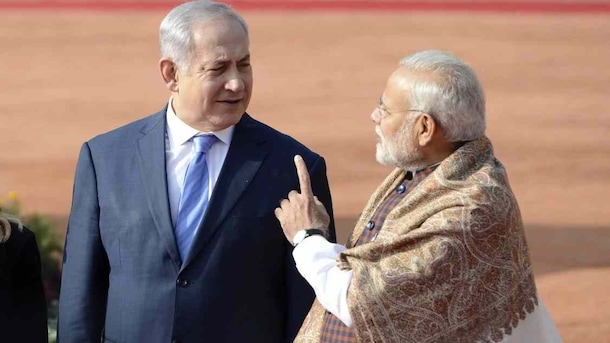
Opinion | How Israel Once Defied Its Biggest Ally To Secretly Help India Against Pakistan
During the 1971 India-Pakistan war, Israel secretly supplied India with critical military equipment despite the absence of formal diplomatic ties. Then came an 'offer' against Pakistan in the 1980s.
-
Inside Mumbai's Worsening Air Pollution Crisis
Mumbai Air Pollution: Mumbai 's overall Air Quality Index (AQI) on February 25 remained in the poor to unhealthy range.
-
Opinion | If You Don't Care About Taj Mahal's Architect, Why Cry Over Lutyens?
The parallel, if one has to be drawn, is not with Shah Jahan and the Taj. It is with the architect of the Taj, and most of us don't know his name either. Why, then, should we bother too much with a British architect?
-
Opinion | Inside Trump's Dirty Games With South Korea And Japan - And Why India Must Care
The US President's dealings with his two allies have become cautionary tales highlighting the difficulty of negotiating with Trump's America.
-
From "Jai Shree Ram" To "Jai Maa Kali": BJP's Cultural Rebranding In Bengal
The BJP's strategy seems to be to acknowledge that the intricate dance of politics, pre-Independence history and culture, when done with sincerity and respect, can unite rather than divide
-
Opinion | In Bangladesh, A Story Of Many Wins
The rain is over, and the clouds are clearing. Now, the hard work of rebuilding a nation begins, and India must be standing right there alongside as a friend.
-
How El Mencho, El Chapo's Sons Forged A Drug Empire That Shook 2 Continents
Mexican authorities confirmed that Nemesio Oseguera Cervantes or 'El Mencho', 59, was killed during an army operation in southern Jalisco intended to capture him.
-
Opinion | 3 Reasons India Shouldn't Sign A Deal With A Court-Defeated Trump
Post the US Supreme Court's order striking down Trump's tariffs, the legal and economic baseline for an India-US deal has shifted sharply.
-
Opinion | Wanted, Desperately: A 'Fixer' For Rahul Gandhi
With Congress getting blindsided state after state, Rahul needs an 'Ahmed Patel' of his own who can fix things before they blow up into embarrassing crises.