Opinion | Visa Shocks To Racist Attacks, When Did America Come To Hate Indians So?
Sometimes it is about H-1B visas. Sometimes it is jobs. Sometimes it is "foreigners." Sometimes it is about temples. The language of the attack varies, but the message is consistent
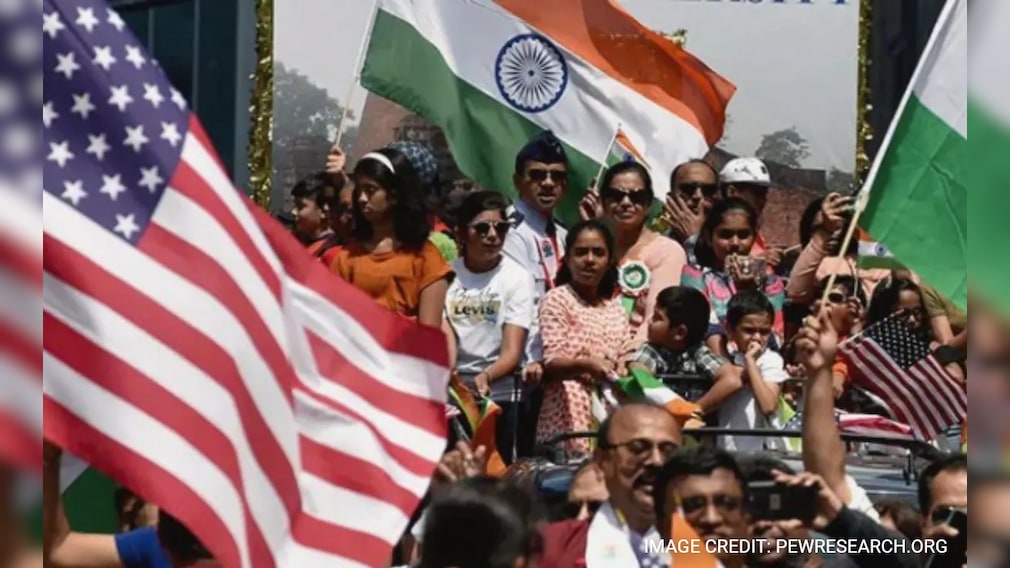
From India, America has always looked like a rather honest promise: a nation where merit rather than birth determines what you can achieve, how far you can go. A straightforward proposition. Come legally, study hard, work hard, pay your taxes, build a business, become a doctor or engineer. Send your children to good schools, watch American football. Cheer for the local team. Vote. Prosper.
In other words, become part of the place.
Millions of Indians took this proposition seriously. They came, studied, worked, taught, ran hotels, wrote software and made films. And yet there appears to be one final test which has no syllabus. No admission form, no visa fee. It is called the Brown Face Test. you can pass all the tests and yet fail this one.
The latest developments have made this anxiety clearer. Recently, the Trump administration proposed a staggering USD 70,000 fee for international students participating in Optional Practical Training (OPT), the programme that allows eligible foreign graduates to gain work experience in the United States. The proposal remains pending, but its implications for Indian students are enormous. Days later, Washington suspended eight major technology companies - including Indian IT giants TCS, Infosys, Wipro and HCLTech, alongside Microsoft, Adobe, Cognizant and Capgemini - from filing or processing applications under the Permanent Labour Certification (PERM) programme, a key route to employment-based green cards, citing alleged abuses of the system. The suspension does not automatically cancel existing H-1B visas, but it casts a cloud over the long-term prospects of skilled foreign workers. The message is unmistakable: even as America continues to depend on global talent, the path from an Indian classroom to an American career, and from professional success to permanent belonging, is becoming more expensive and precarious. For a country that built its global technological dominance partly by attracting the world's brightest minds, the question is: does America still want to make room for them?
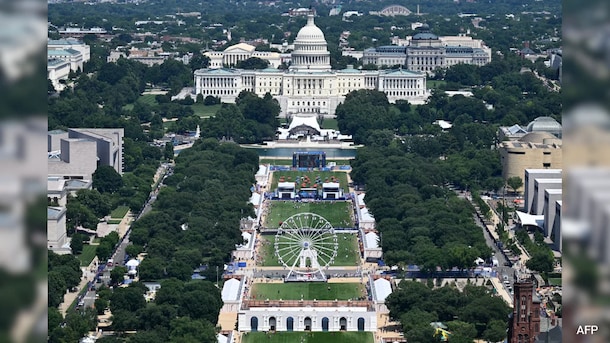
Consider the curious case of Bo French, the Republican nominee for the Texas Railroad Commission. French posted a photograph of South Asian students celebrating at a University of Texas football game and described the presence of such students as evidence that Americans were being "displaced by foreigners." He later defended his comments. What made the episode especially disturbing was that there was no evidence that the students were foreigners at all; their perceived foreignness appeared to be inferred from their appearance. Data reveals that the University of Texas has only 4% foreign students. The others may be brown, but they are all Texans.
Several Texas Republicans, including Senator John Cornyn, condemned French's remarks. The episode also highlights the growing schism within the Republican Party and raises the question of how far this “othering” can go. But the message was difficult to miss: brown faces could be treated as evidence of foreignness even inside an American university and at an American football game.
Anti-India sentiment has been bubbling up on social media, and the effervescence has been almost spilling over lately, with the midterms around the corner. In Texas itself, several recent episodes have brought the intersection of immigration, race and Indian identity into sharp focus. In April, a video by conservative influencer Savannah Hernandez about the Hanuman Temple in Frisco triggered a flood of anti-Indian and anti-Hindu comments online. Her presentation of the temple and its devotees was framed around Indian immigration and demographic change, and the resulting online reaction descended into racist rhetoric.
Months later, the controversy became even more explicit. A conservative activist, Jesse Hughes, posted a photograph of a 90-foot Hanuman statue in Texas with the declaration: “When we win, we are tearing this down.” The statement was condemned by Indian Americans, including a US Army veteran who described the threat as an attack on his religion.
Perhaps most disturbing was the involvement of the US Department of Homeland Security itself. In September 2026, DHS posted an AI-generated immigration-enforcement image featuring a brown-skinned, turbaned man identified as "Mr Singh" and carrying the message, "America for Americans. Get off our roads; you don't know how to drive, Mr Singh." Sikh and Indian-American organisations condemned the imagery as racial stereotyping and profiling, pointing out that Singh is one of the most common Sikh surnames and that appearance cannot be used as a proxy for immigration status.
Donald Trump's political movement has increasingly placed emphasis on national identity, cultural continuity and loyalty to his political agenda: the propaganda of MAGA and "America for Americans".
The larger question here is: who certifies who the real Americans are, or who the so-called "Heritage Americans" are? The fact is that America itself has been a nation of immigrants who displaced the original inhabitants.
Earlier, in 2025, when the then FBI Director Kash Patel posted a simple greeting marking Diwali, his post attracted a barrage of racist and religiously bigoted responses from supporters of the MAGA movement. Some told him to "go back"; others questioned why an American official was celebrating a festival they considered foreign. The abuse was striking precisely because Patel was not an immigrant outsider speaking from the margins of American life. He was the country's FBI Director.
The targeting of Usha Vance, the Indian-American wife of Vice President JD Vance, has been even more revealing. Far-right figures and online extremists have repeatedly made her Indian ancestry a subject of attack, despite her being an American-born citizen and the wife of one of the country's most prominent conservative politicians. The attacks became so explicit during the 2024 Republican convention that they drew national attention. More recently, a 2026 social-media controversy involving a reference to Usha and her husband's white grandparents again revived questions about whether her Indian heritage was being invoked to question her place within his family and, by extension, within America itself.
None of these episodes, taken individually, proves that America as a whole has turned against Indians. Millions of Indian Americans continue to live, work and prosper in the United States, and many Americans - including prominent Republicans - have publicly rejected racist attacks.
But taken together, these incidents reveal something that is harder to dismiss as isolated internet ugliness. They show how immigration anxiety, economic resentment, demographic change and religious identity are increasingly converging around the Indian-American community.
It could be because the old stereotype of Indians as quiet, successful professionals is consistently being replaced by an image of Indians as economic competitors and demographic intruders. They are doctors, engineers, entrepreneurs, students, elected officials, business owners, academics and technology professionals. They occupy positions across America's political spectrum and are increasingly prominent in public life.
Success itself can become the provocation.
The language of the attack varies. Sometimes it is about H-1B visas. Sometimes it is about jobs. Sometimes it is about "foreigners." Sometimes it is about temples. Sometimes it is disguised as a defence of "heritage." But the underlying message can be remarkably consistent. You may have succeeded in America. You may be an American citizen. You may even hold one of the country's most powerful jobs. But your brown skin, your name, your ancestry can still be used to tell you that you are not American enough.
(The author is a senior journalist)
Disclaimer: These are the personal opinions of the author
-
How El Nino And Warming Oceans Could Shape Earth's Climate In 2027

From changing ocean currents to extreme weather, scientists are watching a combination of climate signals that could influence temperatures, rainfall and ecosystems in the months ahead.
-
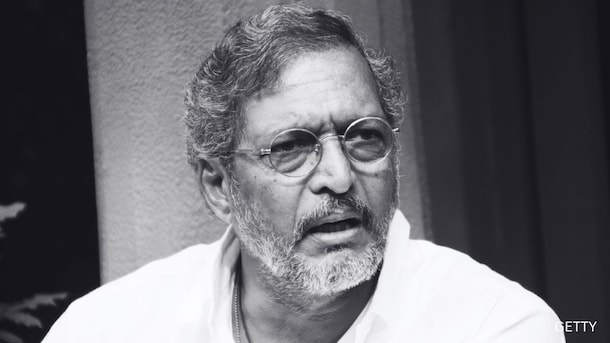
Blog | Nana Patekar, And The Sharp, Lasting Sting Of His 'Plain-Speak'
"Subah ghar se niklo, bheed ka hissa bano..." Nana Patekar's characters often spoke with the bluntness of men who had little patience for pretence. Just like Nana himself.
-
Opinion | Pakistan's Saudi Pact Is Now Entering Dangerous Territory - As Expected
On October 5, the ministers of the pact's member states met in Riyadh for an emergency session and agreed to move to a 'practical implementation' of the defence commitments.
-
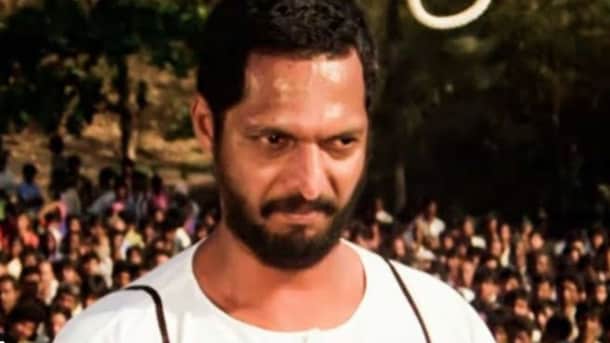
Hindu ka khoon-Musalman ka khoon? Nana Patekar's Krantiveer Questions Still Hang
Krantiveer was released in 1994, after the communal violence that had scarred Bombay and other parts of India. Nana's voice carried the pain of every riot, every broken home
-
'SIR' In America Too? India Cue In Trump's Mass Citizenship Check For Voters
Having got the nod from the US Supreme Court, Donald Trump's push for a voter roll "cleanup" puts citizenship at its centre. Arguments for India's Special Intensive Revision (SIR) have also centred on "illegal immigrants". Data remains scarce. Let's map the similarities and the nuance.
-
Opinion | Gyanesh Kumar Row May Be Doing Something Unthinkable For India's 'Lost' Opposition
There seems to be a greater willingness within the Opposition to accept Rahul Gandhi's leadership, at least on the SIR controversy. But the INDIA bloc itself seems to be undergoing a strange renewal.
-
Opinion | flydubai Hijack, And How Syria's Descent Into 'Jihadism' Has Now Become Everyone's Problem
Al Hammimi, the Omani pilot who tried to crash a plane with 175 passengers on September 30, is a symptom of Syria's long-raging sectarian and extremist fire that has now reached far beyond Syria's borders.
-
"Feel Deeply Abandoned By World": Tales Of Loss And Separation From Gaza
For Gazans, who have lived through the horrors of the last three years, life means a continuing encounter with impermanence and the repeated discovery that a home, a friendship, a livelihood, a familiar life and even one's former self can become things that exist only in memory.
-
Opinion | Gurugram Techie Suicide: Why Does A Woman Asking For Alimony Enrage Us So?
Social media, with its spectacular disregard for facts, turns one man's tragedy into an indictment of all women. The recent death of 28-year-old techie has become precisely that.