Blog | Nana Patekar, And The Sharp, Lasting Sting Of His 'Plain-Speak'
"Subah ghar se niklo, bheed ka hissa bano..." Nana Patekar's characters often spoke with the bluntness of men who had little patience for pretence. Just like Nana himself.
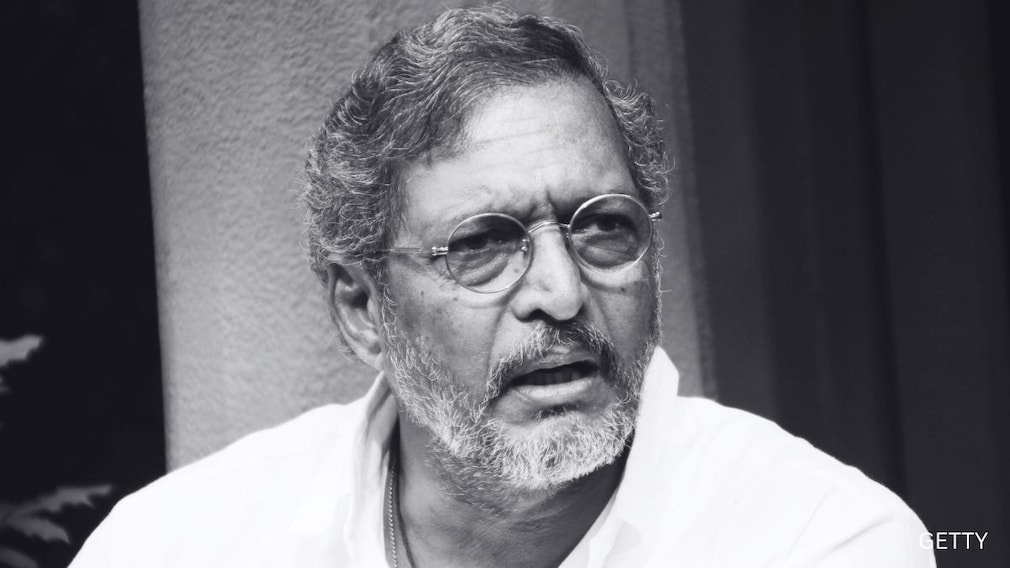
Before his 1991 directorial debut, Prahaar, about life as an army commando, Vishwanath 'Nana' Patekar trained for three years with the Maratha Light Infantry. The film, in which he played Major Chavan, would go on to have a seminal effect on a young Vikram Batra, who did an intensive 35-day course at the Commando Training School at Belgaum, now Belagavi, Karnataka. The course enabled soldiers to join the Ghatak Platoon, becoming the elite first responders of their unit in any combat situation.
It was here that Patekar shot parts of the movie, retaining a lifelong connection to soldiers who saw him join the Territorial Army. It was this movie that was a prime motivator in young Vikram's life, which made him join the army before being martyred in Kargil on July 7, 1999. It was this movie that the Belagavi railway station paid tribute to on X today, with a shot of the opening scene, which was filmed there.
Prahaar was only one of Patekar's several performances that made him stand out from other actors in the film industry in a career that repeatedly underlined his capacity for simmering silence and seething speeches. Prahaar saw him doing both.
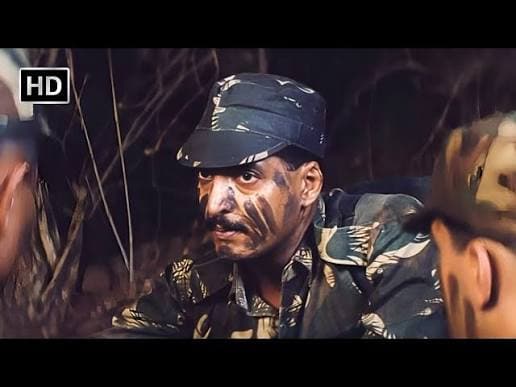
Nana Patekar in Prahaar (1991)
It was the kind of thing Patekar lived for, usually far away from the industry's entourage culture and celebrity doublespeak. Raised in relative poverty, he lived, for most of his life, even after becoming a successful actor, in a one-bedroom house. Later, he split his time between a farmhouse in Pune and a home in Goa, choosing to live and work among farmers, for whom he had worked since 2015.
He did not suffer fools gladly, but when he loved, he did so fiercely and fearlessly. His plain-speak had the ability to make people uncomfortable, as did his art. He was the diabolical Anna Seth in Vidhu Vinod Chopra's Parinda (1991), the grisly climax of which left Patekar with burns that took six months to heal. He was the raging Pratap Tilak in Mehul Kumar's Krantiveer (1994), delivering a fiery monologue about "maut ka tamasha" just as he is to be hanged. And he was the abusive Vishwanath in Partho Ghosh's thriller Agni Sakshi (1996), terrorising poor Manisha Koirala's Madhu/Shubhangi.
All three roles earned him National Awards, but Patekar, who rose from painting posters to studying at the JJ School of Art in Mumbai, thanks to a generous benefactor, was not impressed by the glamour of the industry, often finding himself to be a misfit among glib talkers and smooth dressers. In later years, Patekar became a social media sensation, without meaning to, with his one-liners as 'Uday Shetty' in Welcome (2007) and Welcome Back (2015) becoming meme material.
The Appeal Of Stardom, And Why It Didn't Matter To Nana
Success in movies is usually a combination of luck, timing, talent, and an encouraging ecosystem. Celebrity status needs an additional quality: the ability to feed the star machine continuously with publicists, agents, and visible symbols of prestige. Patekar did not have any interest in the latter, much like another great actor, Om Puri. Unlike Puri, though, Patekar did not emerge from arthouse cinema, cutting his teeth instead on potboilers such as N Chandra's Ankush (1986), in which he is part of a group of vigilantes who take revenge for the rape of a neighbour, and Dayal Nihalani's Andha Yudh (1987), where he is an idealistic young police officer. Men like Patekar are born leading men, clad in character actor skins. These skins allow them to be malleable, flexible, and often invisible, flowing from one role to another, with the willingness to step out of the spotlight.
Patekar did it often enough, in roles big and small. In Sanjay Leela Bhansali's Khamoshi: The Musical (1996), he acts with his eyes, denied his voice, as the hearing-impaired father, Joseph Braganza. In Shimit Amin's Ab Tak Chhapan (2004), he channels Daya Nayak's naivete and bullheadedness as encounter specialist Sadhu Agashe. And in Prakash Jha's Raajneeti (2010), for instance, he is calm and composed, bereft of the bluster he was usually given, as he advises his young nephews, Prithviraj and Samar.
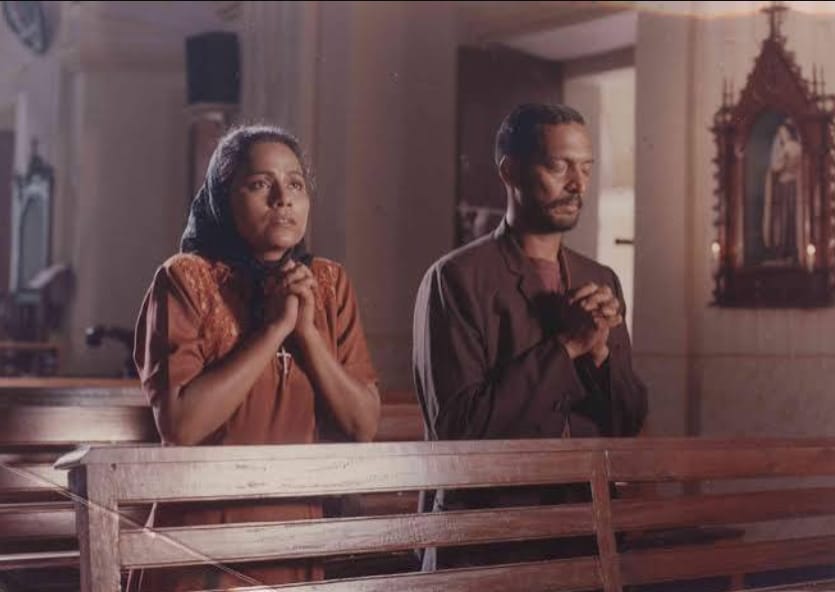
Nana Patekar in Khamoshi: The Musical (1996)
Few films captured his late-stage sadness as Natsamrat (2016), a film adaptation of the Marathi play by Mahesh Manjrekar. It shows him as stage actor Ganpat Belwalkar, who divides his property between his two children, whose ingratitude leaves him and his wife homeless and broken.
As the Prince said in Hamlet: "What a piece of work is a man, How noble in reason, how infinite in faculty, In form and moving how express and admirable." And "yet to me, what is this quintessence of dust?" Patekar seemed to have been preparing himself for death by living every moment but also reflecting on it, through his life and through his work. Consider his monologue in Anil Mattoo's Yeshwant (1997) about the common man's life. "Subah ghar se niklo, bheed ka ek hissa bano. Shaam ko ghar jao, daru piyo aur bacchee paida karo, aur subah talak phir ek baar mar jao (Leave home in the morning, become part of the crowd. Go home in the evening, drink, make babies, and then wake up in the morning to die another day),” says his character Inspector Yeshwant Lohar.
His own comments about death a few days ago only deepen the sense of an ending. A life lived in full, full of achievements, replete with mistakes, but in every way complete.
(The author is a senior journalist)
Disclaimer: These are the personal opinions of the author
-
Is Buying Home In A Small Town Smarter Than In A Metro? Here's The Math

According to Knight Frank's H1 2026 Affordability Index, the EMI-to-income ratio stood at 69% in Mumbai and 67% in the National Capital Region.
-
Samajwadi Seat Talks: The UP-Size Gap Between Congress' Rhetoric and Reality
UP Election 2027: Seat-sharing negotiations are rarely easy. More so when they involve a regional force determined to guard its turf and a national party desperate to regain lost ground.
-
Cyber Outages: The Attack That Has No Name
Banks, flights and the world's office mail failed four times in five days, each time without an attacker. The world spends $247 billion a year on locks
-
Buy A Plot Or Flat? What Homebuyers In Tier-2 Cities Should Consider
Plots may offer greater flexibility, but apartments remain a more straightforward route to homeownership for many buyers.
-
Opinion | Sonia Gandhi, And The Weight Of The Things Left Unsaid
"You must know, Sonia beti, that in this country it is not what you are that counts, it is what people think you to be," someone said to Sonia Gandhi when she first arrived in India. Decades later, she tries to bridge the gap between what she is and what people have always thought her to be.
-
Indian Parents Are Spending More On Their Children's Hobbies. Is It Worth It?
Parents are increasingly recognising that academic knowledge alone may not prepare children for everything life throws at them.
-
The Joy Of 'Just Because': Why Indians Are Buying Gifts Beyond Weddings, Birthdays And Festivals
Saying thank you, expressing pride or apologising can sometimes feel difficult. A thoughtful gift can make these moments easier.
-
In Sonia Gandhi's 'Belonging', The Delhi Of 'Chashme Buddoor': How A Lost City Is A Character In Both
Sonia Gandhi's book describes a cityscape through which Siddharth (Farooq Sheikh) rides a motorbike in Paranjpye's cult movie. A city of quiet roads, ice cream at India Gate, and a life that lost a race it couldn't opt out of.
-
Opinion | History Is Repeating Itself In Rawalkot, And India Should Be Worried
This very area had twice been the setting for rebellions in the past, including in 1947. Another one is playing out violently now