Opinion | Donald Trump Has A New Project: 'Make Venezuela Great Again'
Trump's presidency, much like of those before him, reveals the structural constraints that limit any US leader's ability to disengage from global conflicts.
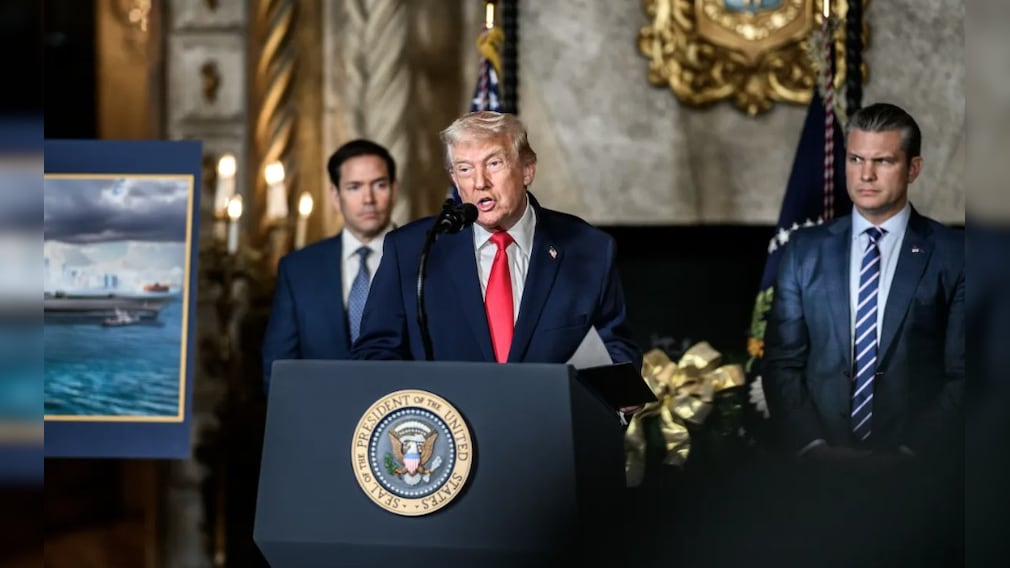
The Trump administration has made a remarkable bet early in the new year by capturing Venezuelan President Nicolas Maduro and his wife in a military raid in Caracas last week. For a President who had come to office pledging to end “forever wars”, this is a serious turnaround as he is now suggesting that the US is “going to run the country [Venezuela] until such time as we can do a safe, proper and judicious transition”. Trump's “America First” agenda now includes rebuilding a South American nation whose economy is in shambles and whose political institutions have been eroded by the vagaries of dictatorship over decades.
After being charged with drug and weapons offences, Maduro and his wife are reportedly being held at Brooklyn's Metropolitan Detention Center. Venezuela's Vice-President Delcy Rodríguez vowed the government is ready "to defend" the country, and condemned "armed aggression”. US oil companies would also fix Venezuela's "broken infrastructure" and "start making money for the country.” Trump also seems to be not ruling out deployment of American soldiers to Venezuela at this point, saying, “We're not afraid of boots on the ground…we had boots on the ground last night.” This is a significant policy shift from “Make America Great Again” to “make Venezuela great again”.
Operation Absolute Resolve
Tensions between the United States under President Donald Trump and Venezuela intensified significantly between 2017 and 2021, when Washington took a hardline stance against Maduro, whom it accused of authoritarianism, human rights abuses, and corruption. After the disputed 2018 presidential election, the United States refused to recognise Maduro's legitimacy, and in 2019, the Trump administration formally recognised opposition leader Juan Guaidó as Venezuela's interim president, dramatically escalating diplomatic tensions. The US imposed sweeping economic sanctions targeting Venezuela's oil industry, state assets, and key government officials, aiming to pressure Maduro to step down. While Washington argued that sanctions were intended to restore democracy, its actions merely worsened Venezuela's already severe economic crisis, marked by hyperinflation, shortages of food and medicine, and mass migration.
Washington's recent military intervention, ‘Operation Absolute Resolve', culminating in the dramatic capture of Maduro, signals a definitive shift in American strategic posture in the Western Hemisphere. By asserting that the US will "run" Venezuela until a transition occurs, Trump has effectively operationalised his recently released National Security Strategy, underlining his penchant for transactionalism and strategic primacy in America's periphery.
It's The Oil, Silly
This shift is not merely about regime change; it is a calculated geopolitical move to secure Venezuela's vast energy reserves and purge extra-regional influences, namely China, Russia, and Iran, from America's “near abroad”. Trump's insistence that American companies will lead the reconstruction of Venezuela's oil infrastructure underscores a foreign policy where economic interests and national security are inextricably linked.
However, the “day after” problem remains acute. While the Chavista leadership is decapitated, the underlying institutional decay and humanitarian crisis persist, risking a protracted period of instability that could haunt Washington's regional ambitions. For the global order, Trump's decisive, yet disruptive, unilateralism in Caracas serves as a stark reminder: in the current age of great power competition, the US is increasingly willing to trade global legitimacy for hemispheric dominance.
Trump entered office nearly a year ago, projecting himself as a dealmaker-in-chief who is committed to ending wars rather than starting new ones. Yet the record of the past year tells a more familiar story of American power being exercised through force. Despite the rhetoric of restraint, the use of military instruments has remained central to his foreign policy toolkit.
Same Old, Same Old
In just the past week, Trump authorised air strikes in Syria and Nigeria, underscoring how quickly crisis management has translated into kinetic action. This pattern has been evident throughout 2025. US forces struck Iranian nuclear facilities, intercepted suspected drug-trafficking vessels in the Caribbean, and carried out operations against rebel groups in Yemen. American military power has also been deployed against armed factions in Somalia and Islamic militants in Iraq.
Yet this is nothing new but a continuation of Washington's long-standing reliance on coercive tools to manage instability and signal resolve. Trump's presidency, much like of those before him, reveals the structural constraints that limit any US leader's ability to disengage from global conflicts. The promise of peace has collided with the realities of power, interests, and credibility, leaving military force as an option that Trump, like his predecessors, has shown little hesitation in using. Other powers will be watching and learning.
(Harsh V Pant is Vice President, Observer Research Foundation, New Delhi.)
Disclaimer: These are the personal opinions of the author
-
Opinion | Rs 30 Petrol Hike To Currency Crisis, What Oil At $150 Can Really Do To The World

At $125 per barrel, petrol and diesel retail prices will need to rise by Rs 8-14 per litre. At $150 - which experts think is now likely - these figures could touch Rs 26-30 per litre.
-
Opinion | The Problem With Trump's Fantasy Of A 'Crippled' Iran
Even a relatively insulated US economy cannot entirely escape the ripple effects of sustained disruptions in one of the world's most critical energy corridors.
-
Opinion | Trump's Iran War Is About To Become Someone Else's Problem Soon
Start alone, end alone - that may be the harshest lesson for Trump as he now tries to dash for the door in Iran.
-
What Happens If Iran War Actually Ends In 2 Weeks: The Challenges Ahead
Trump said the war could end in two weeks sans a deal to re-open the Hormuz. Analysts say it could take six to weight weeks more for oil flows to normalise, with each extra week of fighting adding seven to 14 days of recovery.
-
Opinion | Why 2 Gulf States Want Iran War To Continue - Even As They're Battered By It
If Trump withdraws from this war, the UAE, Saudi Arabia and other Gulf countries would be left to face the music alone, with an angrier, fiercer, and possibly more vengeful Iran.
-
Opinion | Why A 'Defeat' Is Now Essential For The Disoriented Left In Kerala
Power and arrogance have turned the Left in Kerala into what it once fought against. It now needs to lose its last bastion to cleanse itself of its maladies.
-
Opinion | On April Fools' Day, A Reality Check For US, Iran And The World
The paradox is this: Iran wins simply by surviving, while the US must achieve a far more overwhelmingly convincing result to claim success.
-
Opinion | Pakistan, And The One Big Difference Between 'Broker' And 'Mediator'
Neither Washington nor Tehran appears willing to invest Pakistan with the political capital required for mediation.
-
Houthis Threaten Strait No 2 As Iran War Expands. What It Means For India
Yemen's Houthi rebels have opened a second front in the Iran war, threatening Bab al-Mandab just as the Strait of Hormuz comes under pressure, and squeezing one of the world's most important oil corridors from both ends.