Opinion | Donald Trump Has A New Project: 'Make Venezuela Great Again'
Trump's presidency, much like of those before him, reveals the structural constraints that limit any US leader's ability to disengage from global conflicts.
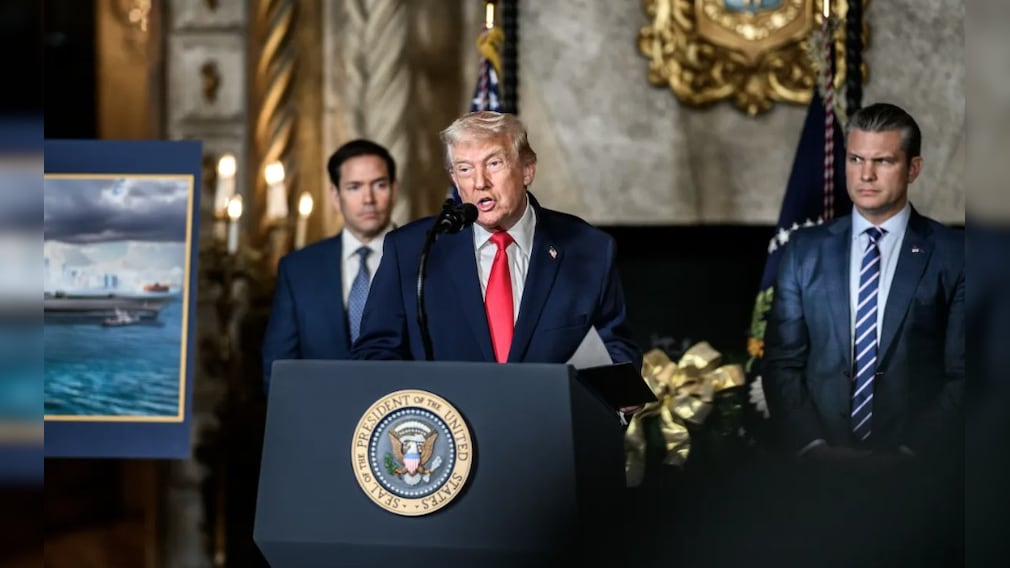
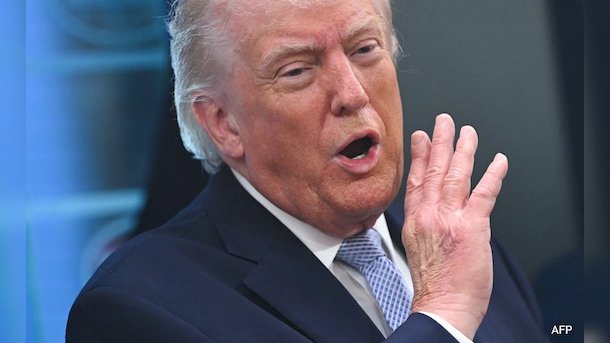
The Trump administration has made a remarkable bet early in the new year by capturing Venezuelan President Nicolas Maduro and his wife in a military raid in Caracas last week. For a President who had come to office pledging to end “forever wars”, this is a serious turnaround as he is now suggesting that the US is “going to run the country [Venezuela] until such time as we can do a safe, proper and judicious transition”. Trump's “America First” agenda now includes rebuilding a South American nation whose economy is in shambles and whose political institutions have been eroded by the vagaries of dictatorship over decades.
After being charged with drug and weapons offences, Maduro and his wife are reportedly being held at Brooklyn's Metropolitan Detention Center. Venezuela's Vice-President Delcy Rodríguez vowed the government is ready "to defend" the country, and condemned "armed aggression”. US oil companies would also fix Venezuela's "broken infrastructure" and "start making money for the country.” Trump also seems to be not ruling out deployment of American soldiers to Venezuela at this point, saying, “We're not afraid of boots on the ground…we had boots on the ground last night.” This is a significant policy shift from “Make America Great Again” to “make Venezuela great again”.
Operation Absolute Resolve
Tensions between the United States under President Donald Trump and Venezuela intensified significantly between 2017 and 2021, when Washington took a hardline stance against Maduro, whom it accused of authoritarianism, human rights abuses, and corruption. After the disputed 2018 presidential election, the United States refused to recognise Maduro's legitimacy, and in 2019, the Trump administration formally recognised opposition leader Juan Guaidó as Venezuela's interim president, dramatically escalating diplomatic tensions. The US imposed sweeping economic sanctions targeting Venezuela's oil industry, state assets, and key government officials, aiming to pressure Maduro to step down. While Washington argued that sanctions were intended to restore democracy, its actions merely worsened Venezuela's already severe economic crisis, marked by hyperinflation, shortages of food and medicine, and mass migration.
Washington's recent military intervention, ‘Operation Absolute Resolve', culminating in the dramatic capture of Maduro, signals a definitive shift in American strategic posture in the Western Hemisphere. By asserting that the US will "run" Venezuela until a transition occurs, Trump has effectively operationalised his recently released National Security Strategy, underlining his penchant for transactionalism and strategic primacy in America's periphery.
It's The Oil, Silly
This shift is not merely about regime change; it is a calculated geopolitical move to secure Venezuela's vast energy reserves and purge extra-regional influences, namely China, Russia, and Iran, from America's “near abroad”. Trump's insistence that American companies will lead the reconstruction of Venezuela's oil infrastructure underscores a foreign policy where economic interests and national security are inextricably linked.
However, the “day after” problem remains acute. While the Chavista leadership is decapitated, the underlying institutional decay and humanitarian crisis persist, risking a protracted period of instability that could haunt Washington's regional ambitions. For the global order, Trump's decisive, yet disruptive, unilateralism in Caracas serves as a stark reminder: in the current age of great power competition, the US is increasingly willing to trade global legitimacy for hemispheric dominance.
Trump entered office nearly a year ago, projecting himself as a dealmaker-in-chief who is committed to ending wars rather than starting new ones. Yet the record of the past year tells a more familiar story of American power being exercised through force. Despite the rhetoric of restraint, the use of military instruments has remained central to his foreign policy toolkit.
Same Old, Same Old
In just the past week, Trump authorised air strikes in Syria and Nigeria, underscoring how quickly crisis management has translated into kinetic action. This pattern has been evident throughout 2025. US forces struck Iranian nuclear facilities, intercepted suspected drug-trafficking vessels in the Caribbean, and carried out operations against rebel groups in Yemen. American military power has also been deployed against armed factions in Somalia and Islamic militants in Iraq.
Yet this is nothing new but a continuation of Washington's long-standing reliance on coercive tools to manage instability and signal resolve. Trump's presidency, much like of those before him, reveals the structural constraints that limit any US leader's ability to disengage from global conflicts. The promise of peace has collided with the realities of power, interests, and credibility, leaving military force as an option that Trump, like his predecessors, has shown little hesitation in using. Other powers will be watching and learning.
(Harsh V Pant is Vice President, Observer Research Foundation, New Delhi.)
Disclaimer: These are the personal opinions of the author
-
Opinion | Why The Saudi-Pak-Turkey Defence Pact May Actually Be An 'Intel' Network

Rather than a NATO-like construct, the Mecca pact may evolve to become something like the West's Five Eyes alliance.
-
The Real Story Of France's Unrest Is Getting Lost In A Storm Of Online Lies
A man cosplaying Napoleon on the streets, looting at luxury fashion stores like Dior, France is currently confronting one of its most serious episodes of civil unrest in years.
-
Opinion | The Last Bet? What Trump's 'Mother Of All Bombs' Could Actually Do To Iran
Can an MOAB deliver a decisive blow to Iran that may force it to surrender immediately, as Japan did after Hiroshima and Nagasaki in World War 2?
-
Hit Songs, Empty Pockets: The Hidden Math Behind India's Viral Music Boom
Over 80,000 brands and five lakh creators in India make branded content. The opportunity is worth around Rs 1,500 crore.
-
Opinion | Great 'Exceptions': How The Oil India Was Attacked For Is The Oil Trump Now Seeks
A law written to punish the buyers of Russian oil was suspended by the US to protect a purchase of Russian oil. India spent fourteen months being lectured for less.
-
Opinion | Louis Vuitton Loot, Torched Cars: France Protests Have An Unlikely Beneficiary
It's an unbelievable moment. Crowds looting the most exclusive stores in Paris, including the famed Luis Vuitton. But what's behind this meltdown?
-
Blog: Kolkata Didn't Learn From 2015. Eleven Years Later, It Proved To Be Fatal
The City of Joy isn't a stranger to crowd control. Be it during Pujo or Christmas at Park Street, Eden Gardens cricket matches, or Derbies between Mohun Bagan and East Bengal. But during Pujo, the entire city is on alert.
-
Opinion | Slurs, Threats, Now A Temple Attack Plot: When Did America Become So Hostile To Indians?
The rising tide of anti-India, anti-Hindu, and racist attacks serves as a stark reminder that economic prosperity does not automatically guarantee social immunity from bigotry.
-
A Step Behind Neha Bora: What Rahul Gandhi's Gesture Says About Congress' Gen-Z Pitch
At INDIA bloc's march to Supreme Court, Rahul Gandhi placed himself a step behind two women, hands resting on their shoulders. One was his sister Priyanka. The one on his right was Neha Bora. Here's what the image means for the protest wave now, and for Rahul's politics in general.