Opinion | Two Peculiar Reasons Behind The Timing Of India-US Trade Deal
India should be clear-eyed about risks. What proclamations give, proclamations can take away. If compliance is judged by mere political mood, sanctions and penalty tariffs can return with little warning.
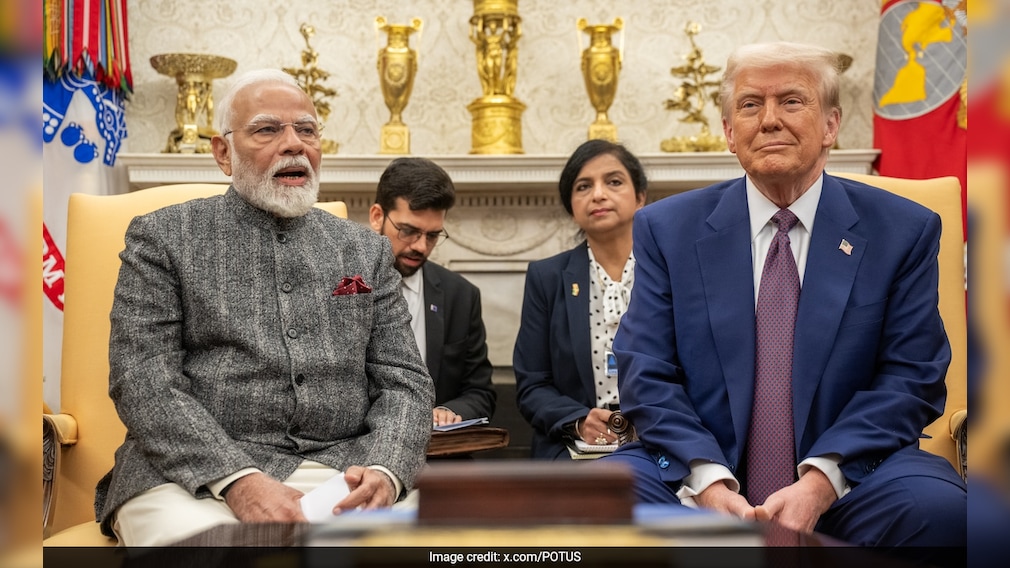
In trade diplomacy, words matter because they shape expectations. When President Trump announces an India-US "trade deal" on social media, markets instinctively hear settlement. That fits the grammar of the Trump era. Agreements no longer arrive as thick documents. They arrive as tariff declarations meant to move public sentiment first. The legal terms follow later, negotiated in private. The India-US announcement of February 2 fits this pattern precisely.
The headline is straightforward. Washington says US tariffs on Indian goods will fall to 18%, and a separate 25% penalty tariff linked to India's purchases of Russian oil will be removed. India has welcomed the tariff reduction. Everything else is where the real work begins: what is written down, what is enforceable, and what is left deliberately vague.
What India Has Avoided
Yet, it is worth recognising what India has avoided. The tariff stack had climbed to punitive levels. For labour-intensive exports from Tiruppur, Jalandhar and Surat's gems and jewellery hub, operating on thin margins and unforgiving timelines, this was not an academic concern. It was existential. Sudden tariff spikes do not merely raise costs. They reorder supply chains, deciding who remains inside a buyer's sourcing plan and who is quietly replaced elsewhere in Asia.
Bringing tariffs down is, therefore, not cosmetic. It is the difference between holding orders and losing them.
It would also be a mistake to judge 18% against the low-tariff world of the previous decade. That world no longer exists. Trump shifted the baseline for everyone. Tariffs have risen across the board, not just for India. The relevant question now is comparative: where does India sit relative to competitors chasing the same American buyers and the same shelf space? By that measure, 18% pulls India back from being priced out and restores room to compete at the margin.
That is why markets reacted as they did. Equity optimism, a firmer rupee, and easing risk aversion all point to the same conclusion. Reduced uncertainty improves sentiment. Markets are not celebrating a completed agreement. They are reacting to the interruption of a worst-case path.
Two Aspects Of The India-US 'Understanding'
Why did this understanding surface now? Two explanations stand out. One is competitive diplomacy. The India-EU agreement altered the geometry of trade politics. No major economy wants to explain to its exporters why competitors enjoy preferential access to a fast-growing market while they do not. In that sense, the EU deal acted less as a template and more as a catalyst.
The second explanation lies in Washington's legal calendar. The current US tariff regime rests heavily on executive authority. That makes it powerful, but also exposed. Locking in de-escalation before the Supreme Court potentially narrows those powers looks like risk management rather than generosity.
The deeper issue is what kind of trade politics this truce represents. The Russia-linked penalty tariff was never a conventional trade remedy. It was coercion by another name. If tariffs can be imposed for third-country behaviour, they can be threatened again. India's challenge is to manage immediate exposure without accepting that strategic autonomy itself is tariff-taxable.
This is where energy calculations were widely misunderstood. India's purchases of Russian oil were never ideological. They were spreadsheet decisions taken under inflationary stress. What changed was not affinity but arithmetic. Once penalties spilled beyond crude into exports, investment sentiment, and currency stability, the discount on a barrel stopped compensating for losses elsewhere. A rational cost-benefit calculation then pointed towards recalibration.
Patience As Leverage
This also explains New Delhi's restraint. Washington spoke loudly. India responded quietly. Under Prime Minister Modi's leadership, India absorbed provocations without polemics, prioritising sequencing and substance over performance. In a global environment addicted to escalation, patience has become a strategic asset for Modi's India.
Beyond tariffs, India should now be clear about what it expects from a calmer India-US lane. The real dividends lie in technology access, investment, and supply-chain repositioning. Reduced stress can unlock faster US investment decisions, deeper manufacturing partnerships, and cooperation in semiconductors, critical minerals, aerospace, and clean energy. None of this is automatic, but tariff relief creates the political space to pursue it.
Zooming out, the deal's significance is geopolitical. It cools one major front so that India can address its real endurance test to the north, where pressure is applied at the border, through technology denial and through influence campaigns below open conflict. Strategic bandwidth matters.
Don't Get Too Comfortable
But India should be clear-eyed about risks. The first is precedent. If tariffs and penalties can be switched on and off as instruments of alignment, the global trading system drifts further from rules toward episodic bargains. Truces begin to substitute for durable agreements.
The second is snapback politics. What proclamations give, proclamations can take away. If compliance is judged by political mood rather than agreed metrics, sanctions and penalty tariffs can return with little warning. Firms will price that volatility into contracts, investment, and hiring.
All of which is precisely why the next steps matter as much as the announcement. As Piyush Goyal has said, India needs a joint, publishable summary of what has actually been agreed. Concessions must strengthen productivity without surrendering policy space. Exporters should use this window to diversify and build resilience.
For now, this deal has bought time and space: to sell, to invest, and to negotiate from a steadier footing. India must use it well, because trade relief is rarely permanent and reversals arrive faster than explanations. Turning this into a durable economic partnership will take the boring work: rules on paper, delivery on the ground, and investments that bind interests beyond political cycles.
India and the United States also have a wider agenda to attend to, from defence and technology security to Indo-Pacific stability and trusted cooperation in emerging domains. Two decades of strategic congruence should give the relationship the resilience to absorb shocks and prevent a replay of last year's uncertainty.
(The writer was a Permanent Representative of India to the UN and now serves as Dean, Kautilya School of Public Policy)
Disclaimer: These are the personal opinions of the author
-
Opinion | 450 Missile, 2,000 Drone Attacks Later, Why Is UAE Still Not Fighting Iran?

The UAE is Iran's second-largest trading partner and also home to roughly half a million Iranians. Why, then, has it absorbed more fire than any other Gulf state?
-
In Numbers: How Has India Kept Fuel Prices Low Even As Europe Sees 70% Spikes?
India imports 88% of its crude. Why then is it not seeing massive price hikes for fuel and LPG? Inside the unique strategy it's following...
-
Opinion | India Just Decided To Let Chinese Capital In Again. But There's A Catch
In March 2026, India eased regulations that had restricted Chinese capital in local companies, in a development that marks New Delhi's cautious approach towards capital flows from Beijing.
-
Trump's Iran 'Knocked Out' Claim Blown Up By US Intel On Missiles, Drones
Donald Trump claimed this week the war would end in two to three weeks as he threatened to send Iran back to the Dark Ages. But based on these reports the fighting is far from over, even if US President wants to push a contrary narrative.
-
Opinion | Rs 30 Petrol Hike To Currency Crisis, What Oil At $150 Can Really Do To The World
At $125 per barrel, petrol and diesel retail prices will need to rise by Rs 8-14 per litre. At $150 - which experts think is now likely - these figures could touch Rs 26-30 per litre.
-
Opinion | The Problem With Trump's Fantasy Of A 'Crippled' Iran
Even a relatively insulated US economy cannot entirely escape the ripple effects of sustained disruptions in one of the world's most critical energy corridors.
-
Opinion | Trump's Iran War Is About To Become Someone Else's Problem Soon
Start alone, end alone - that may be the harshest lesson for Trump as he now tries to dash for the door in Iran.
-
What Happens If Iran War Actually Ends In 2 Weeks: The Challenges Ahead
Trump said the war could end in two weeks sans a deal to re-open the Hormuz. Analysts say it could take six to weight weeks more for oil flows to normalise, with each extra week of fighting adding seven to 14 days of recovery.
-
Opinion | Why 2 Gulf States Want Iran War To Continue - Even As They're Battered By It
If Trump withdraws from this war, the UAE, Saudi Arabia and other Gulf countries would be left to face the music alone, with an angrier, fiercer, and possibly more vengeful Iran.