Opinion | Who Gets The 'Peace Prize' Now, Mr Trump - The Drones Or The Bombers?
A president who returned to the White House on the promise of ending 'Forever Wars' - and wanted a Nobel Peace Prize, no less - now presides over the largest American military build-up in the region since the infamous Iraq war.
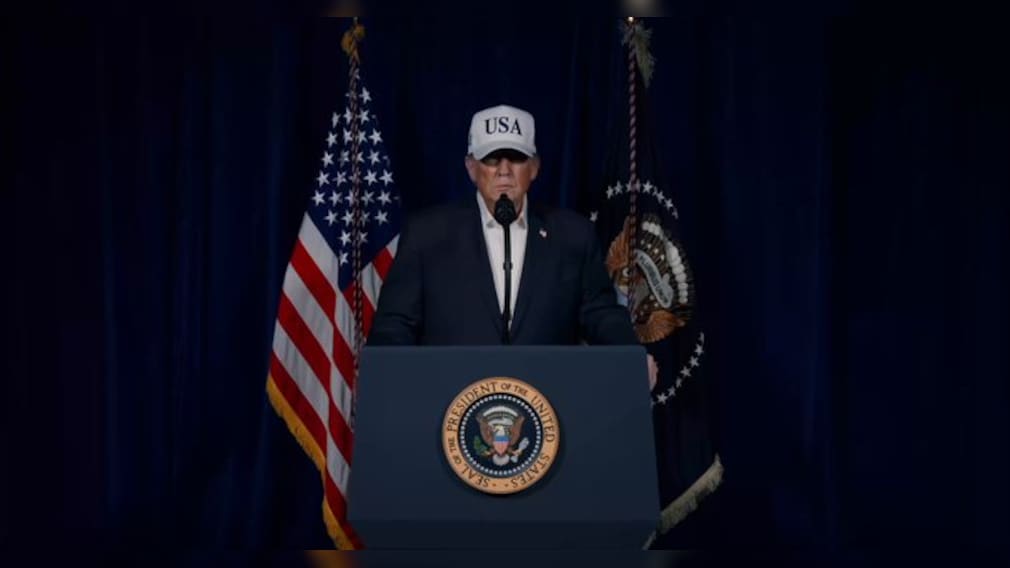
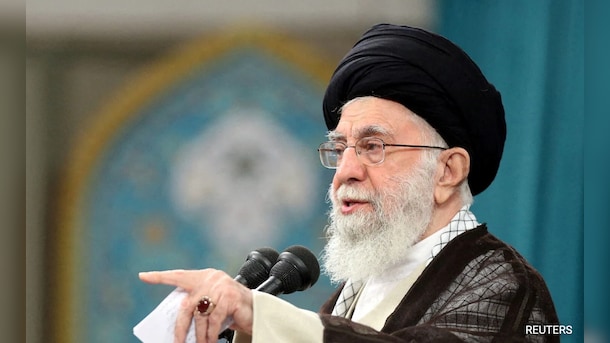
First it was Maduro. In complete disregard of international law, the US forces attacked the presidential palace in Caracas and kidnapped the president. And now, Iran's Supreme Leader, Khamenei. They bombed his house and killed him. This is the modern reality, and this is how America has become what it is under Trump. It's dadagiri of the highest order, with no accountability.
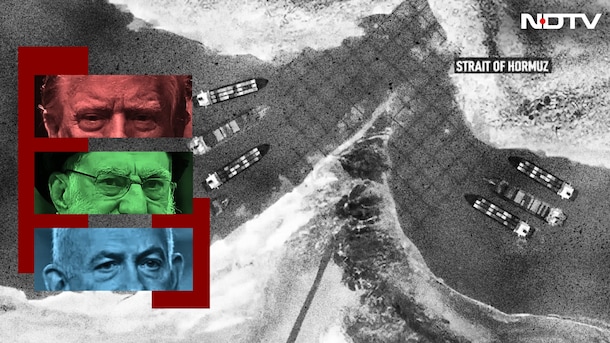
The entire West Asian region has been pushed into a level of chaos it has not seen in decades. Airports are scenes of panic, port cities are on edge, American bases are on high alert and vulnerable to Iranian retaliation. And hundreds of thousands of Indian workers, who send billions of dollars in remittances back home, are stranded in a war that is not theirs.
To add to the chaos, insurance premiums are rising, shipping lanes are under threat, oil markets are nervous and every government is drawing up evacuation plans.
It's Iraq 2003 All Over Again
The Trump administration has made clear that a nuclear deal was never the endgame; removing the Islamic Republic was. It is safe to assume that the strikes are designed not to bring Iran to the negotiating table but to create the conditions for internal collapse, economic devastation, political fracturing and popular revolt. It is Iraq 2003 all over again, except this time, the target is far larger, more capable and busily engaged in retaliation.
The assumption in Washington seems to be that sufficient military pressure will either trigger a coup or embolden opposition movements to finish what sanctions and isolation could not. It is quite possible, especially if the supreme leader's death is confirmed. History suggests otherwise. But then, history has rarely constrained American ambitions in the region.
What makes this especially reckless is that Washington appears to have no coherent plan for what comes after. Regime change is the goal, but the options beyond that are dangerously thin. Will the United States occupy Iran? Partition it? Install a client government and hope it holds? Support exiled opposition groups with no domestic legitimacy? Every one of these paths has failed elsewhere, particularly in Afghanistan, Iraq, Libya. And yet, the same playbook is being deployed again. The real objective may not be stability at all, but prolonged chaos that ensures no regional power can challenge Israeli or American dominance. If that is the strategy, then the human cost is not a failure of planning; it is the plan.
What Does Trump Want, Anyway?
The most disturbing question is no longer why President Trump chose to fight. It is why the United States and Israel chose to strike at the precise moment Omani mediators said the Geneva talks were making real progress.
Wars are launched for a reason. Any military general will testify that wars have to have an objective. They cannot be fought on the basis of the whims and fancies of a Maverik leader. If negotiations were moving forward, then stopping a nuclear programme overnight was not the real objective.
Washington has for weeks, if not months, spoken openly about regime change in Tehran. Israel sees a once-in-a-generation chance to eliminate its last serious regional rival while it is strategically and economically weakened. Strip away the language of security and the convergence is straightforward. The US is reasserting its global hegemony, with the message that it still decides which governments survive, while Israel is seeking undisputed military supremacy in West Asia.
This is unipolarity by force. The world was not consulted. The UN was not convened. Allies were reportedly informed, not asked. The script is familiar. First the threat is constructed in the Western media. Then war is framed as a moral necessity. Dialogue is discarded just when it begins to show results. From Iraq's imaginary weapons of mass destruction (WMD) to Libya's "humanitarian intervention" and now to Iran's collapsing negotiations, the narrative remains unchanged.
The Trump Pattern
What makes this moment more dangerous is that it fits into a pattern. The attempted suffocation of Venezuela through sanctions and political delegitimisation, followed by an attack and arrest of its president. The extraordinary treatment of its elected leadership as if sovereignty were negotiable. The open talk of taking over Cuba. The repeated insistence that Greenland could be acquired like a commercial asset. These are not stray incidents. They reflect a worldview in which power, not international law, defines legitimacy and where geography itself is seen as negotiable if it serves strategic interests.
The contradiction in Washington is, therefore, stark. A president who returned to the White House on the promise of ending 'Forever Wars' now presides over the largest American military build-up in the region since the infamous Iraq war. The US foreign policy once again risks becoming a tool of domestic electoral calculation. If this escalation is linked to midterm positioning, then the lesson of the last three decades is being repeated: that war abroad is necessary to manage politics at home.
Trump's West Asia war is a declaration that American power - unilateral, coercive and willing to bypass institutions - remains the organising principle of the global order. All the talk of BRICS (of which Iran is a full member), of alternative financial systems, of Global South solidarity collapses when one man in Washington decides that a government must fall or a region must be reshaped.
There is also a harder material reality behind this return of force: energy and currency. The Gulf remains the heart of the global oil system. The dollar remains the currency in which that oil is traded. Any geopolitical shift that threatens to move energy trade outside the dollar system is, by definition, a challenge to American power. Seen through that lens, this war is not only about Iran. It is about control over the economic architecture that underpins American primacy.
For the Gulf states, the crisis is existential. They host American bases as their security umbrella, yet those very bases now make them targets for Iranian retaliation. Their sovereignty seems to be dependent on decisions taken elsewhere. Their prosperity, built on stability and trade, is now hostage to a conflict they did not choose.
India Isn't Immune
For India and the wider Asian economies, the consequences of the ongoing war are immediate and tangible. Energy security, remittances, trade routes and diaspora safety are all tied to the stability of this region. Every escalation in the Gulf is felt in inflation, in currency pressure, in the lives of migrant workers trying to get home.
For the Global South, this moment is not new. But what makes Trump's approach particularly stark is that it dispenses even with the old diplomatic theatre. Previous administrations built coalitions and spoke the language of consensus. This one does not bother. We were told Iran had ceded more concessions than it did when it signed a treaty with the US under President Obama. But that did not satisfy Trump, it seems.
Goodbye To That Dream
For years, the language of global politics had shifted. We spoke of multipolarity, of rising powers, of a world no longer dictated by Washington alone. BRICS expanded. China mediated between Iran and Saudi Arabia. Russia survived sanctions that were meant to cripple it. The Global South found its voice in climate negotiations, in trade forums, in debates on reforming international institutions. We started to dream that the era in which one nation decided which governments survived and which wars were necessary was coming to an end. The assumption was that unipolarity was fading and that a more balanced order was emerging.
That promise now lies in tatters.
This is why the war in West Asia is not just a regional conflict. It is the death of an idea: the idea that the post-American world had already arrived. Call me a pessimist but the much-touted new world order, it turns out, looks very much like the old one. And once again it is being written in blood - not in Geneva, not in New York, but in the skies over Tehran and the waters of the Gulf.
The only difference this time is that the pretence is gone.
(Syed Zubair Ahmed is a London-based senior Indian journalist with three decades of experience with the Western media)
Disclaimer: These are the personal opinions of the author
-
Opinion | 'Insider' Info? Why US-Israel Couldn't Have Struck Khamenei Without Help

The only way actionable intelligence would reach Israel and the US on Khamenei's whereabouts, movements, and schedules, is if the calls were coming from inside the house itself.
-
Exclusive: How War In A Narrow Sea Could Reshape Global Economy Overnight
NDTV speaks to industry experts to gauge the impact of a major international conflict on the global shipping industry.
-
Opinion | What's Driving Pakistan-Afghanistan War? Islamabad's Never-Ending Cycle Of Insecurity
Islamabad has accused Kabul of drifting into an "India colony", a charge that was further sharpened following Afghan Foreign Minister Amir Khan Muttaqi's visit to New Delhi last year
-
Behind Arvind Kejriwal's Freedom: The 'South Group' Tag, A US Drugs Case
Special Judge Jitendra Singh also asked searching questions of the Central Bureau of Investigation, the federal agency tasked with building the corruption case against Kejriwal.
-
Opinion | The Hypocrisy Of Pakistan And Turkey's Frustration With India-Israel Ties
Even before the conclusion of PM Modi's visit, editorials and op-eds appeared in Pakistani and Turkish media, indulging in fear-mongering about India and Israel's deepening ties.
-
Soviet Union, US Coalition, And Now Pakistan: Afghan Military's New Test
Pakistan would have the upperhand in a short, conventional war. But if history is any indicator, Afghanistan can bleed Pakistan in a prolonged guerrilla warfare condition
-
Arvind Kejriwal Won The Case That Cost Him His Job
Months of drama followed Kejriwal's arrest, including allegations of medical negligence and the AAP claiming the BJP was trying to 'kill' him in prison by denying him insulin.
-
Opinion | Why Social Media Platforms Must Share The Wealth Others Create For Them
There are an estimated 2-2.5 million active digital creators in India. Yet only 8-10% effectively monetise their work.
-
Opinion | Congress's 'Jamaat' Experiment In Kerala Can Backfire Badly. But Does It Care?
The Jamaat has always been sort of a political pariah in the state. Why, then, is the Congress warming up to it?
-
Opinion | A BAFTA Award, Straight From The Ashes Of Manipur's Moreh
The shooting for 'Boong' in Moreh wrapped up barely a week before violence engulfed the township. Many who stood behind and before the camera are today internally displaced.