Opinion | 'Holy' Orders? Why US Fighters Are Now Being Told Iran Is 'God's War'
Mahdi to Armageddon to Amalek to Jesus, how religion has hijacked the US-Iran war.
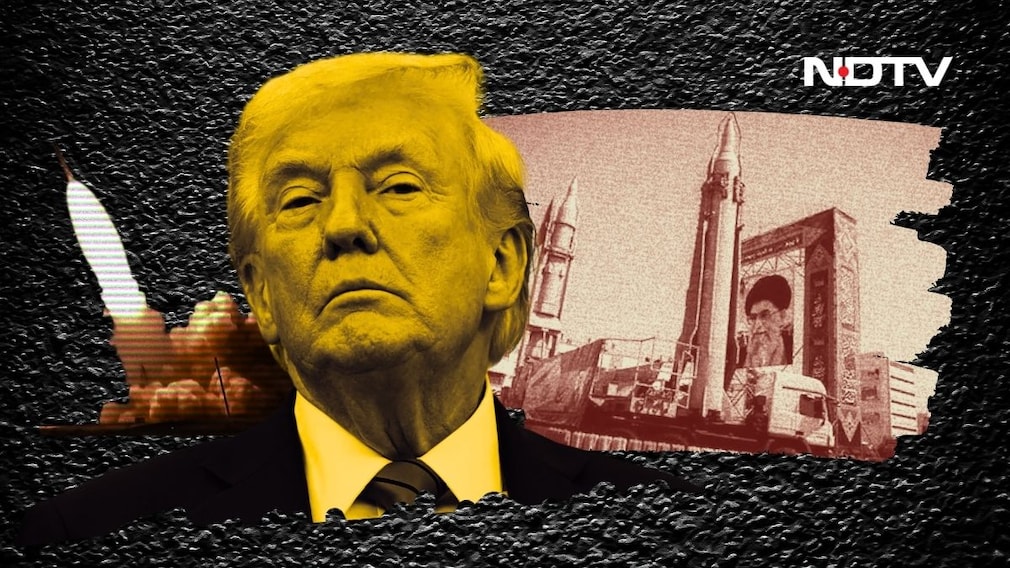
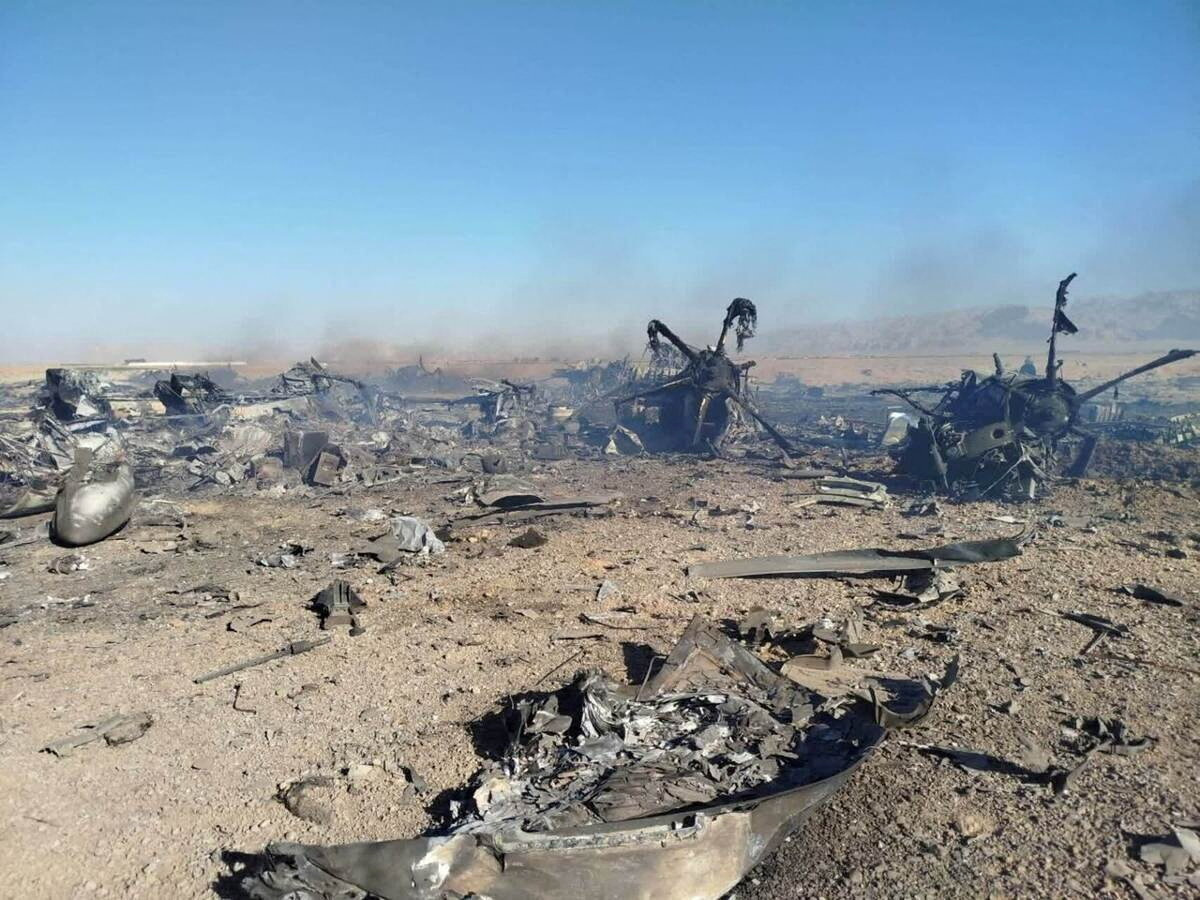
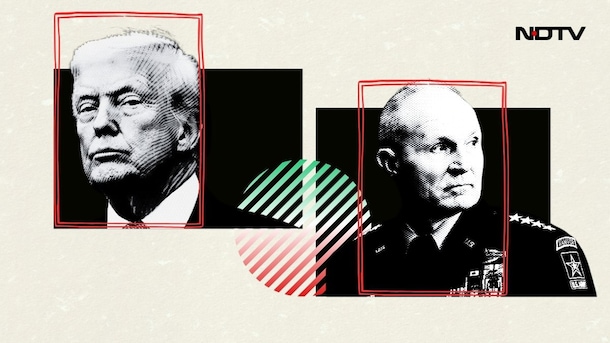
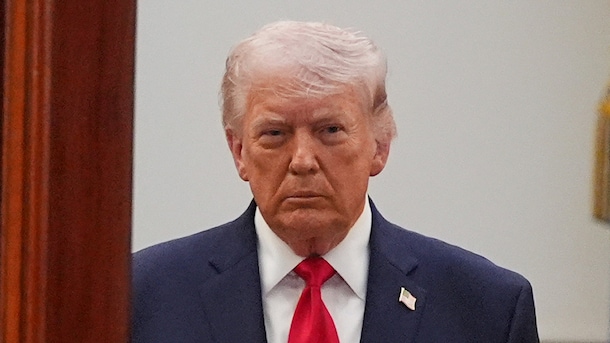
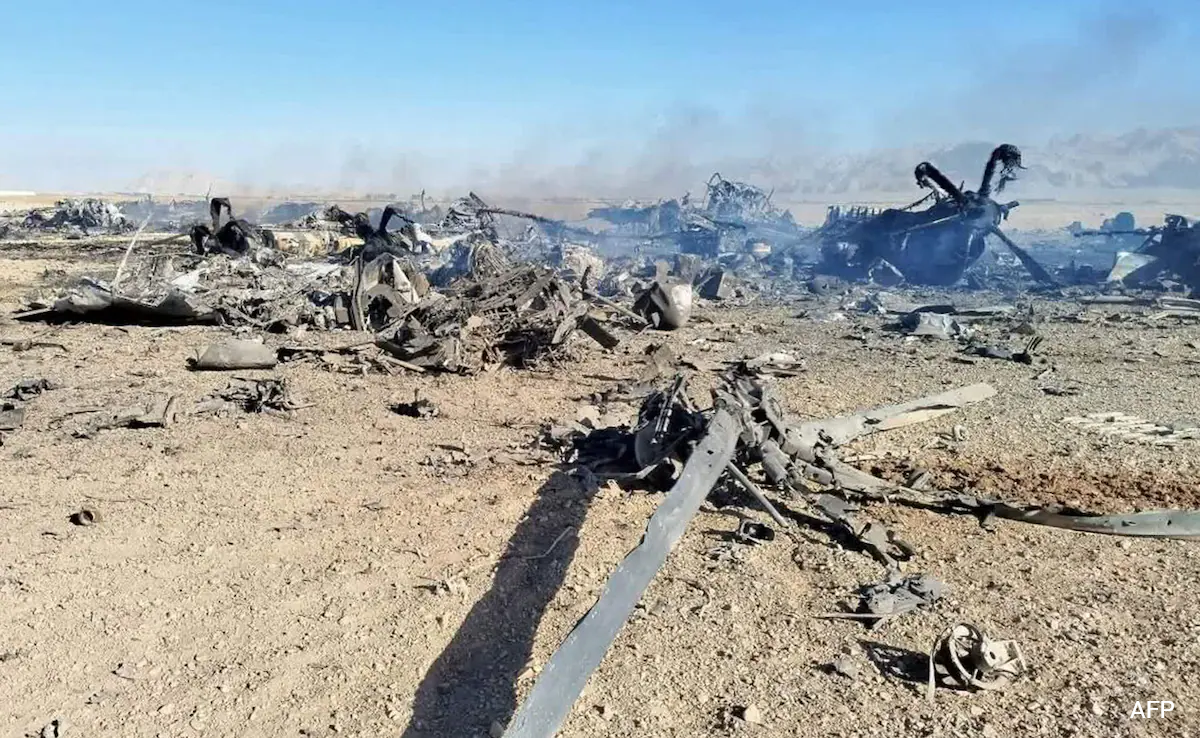
The daring rescue of a downed American airman deep inside Iran over the weekend was cast by the US President and his team in strikingly biblical terms. Donald Trump described it as an "Easter miracle", while officials noted the pilot transmitted the message "God is good" after activating his beacon. Defence Secretary Pete Hegseth highlighted that the airman spent hours concealed in a cave before being rescued over Easter weekend - a comparison that invited an unmistakable parallel to resurrection imagery. Hegseth went further, urging Americans to pray for victory "in the name of Jesus Christ", while reports from within the ranks suggested that some personnel were told the conflict formed part of "God's plan". Religious references, once peripheral, are now moving closer to the centre of the rhetoric surrounding the war on Iran.
Against that backdrop, Trump's threat that he would "send Iran back to the Stone Age" reads less like conventional deterrence and more like civilisational language. Is it the language of modern diplomacy? It is the one that echoes eras when wars were framed as moral struggles between faiths. That mix of threat, moral superiority and religious symbolism is increasingly shaping the tone of the ongoing conflict.
Look beneath the missiles and bombs, and a familiar, older script begins to emerge. For the US, it carries echoes of 'evangelical' conviction and apocalyptic imagination. For Israel, it draws on Jewish history, scripture and destiny. For Iran, it has long been framed in the language of Islamic resistance, even 'jihad'. The common thread is their shared Abrahamic lineage and a history where theology and geopolitics have often intertwined.
Trump's War Secretary, Pete Hegseth, told Americans to take a knee and pray for victory "in the name of Jesus Christ"; a non-commissioned officer described being told the conflict is part of "God's plan" and that the President was "anointed by Jesus to light the signal fire in Iran". Already, the Military Religious Freedom Foundation has received over 200 complaints from active-duty personnel.
A Holy Mission?
I am often asked by my Hindu Indian friends why the followers of Middle Eastern religions seem perpetually locked in cycles of conflict. By Middle Eastern, they mean Judaism, Christianity and Islam. Together, they belong to the Abrahamic family. Why, they ask, do these societies slip so easily into the language of 'destiny', 'prophecy', 'jihad' and 'final battles'? Why do war cries sound like scripture?
Perhaps the answer lies not in any single moment but in the way history, belief and power overlap in this region, shaping how conflicts are both fought and explained.
A month into the US-Israel war against Iran, there appears to be no immediate end in sight. What is becoming increasingly visible, however, is not just the scale of military engagement but the language accompanying it. American and Israeli officials have repeatedly used rhetoric that frames the campaign in moral, even theological terms. The Council on American-Islamic Relations has warned that such language is "dangerous" and "anti-Muslim".
Reports from a US watchdog group suggest that some American troops were told the war could be linked to biblical end times. Senior officials have not shied away from such stark language. Secretary of State Marco Rubio described Iran as being run by "religious fanatic lunatics". At a Pentagon briefing, Hegseth went further, saying, "Crazy regimes like Iran, hell-bent on prophetic Islamic delusions, cannot have nuclear weapons," before invoking scripture: "Blessed be the Lord, my rock, who trains my hands for war."
Individually, such remarks may appear rhetorical excess. Taken together, they form a pattern. A narrative architecture where war is not simply justified but moralised, even sanctified. The tone shifts subtly from strategy to destiny.
The Biblical Amalek
Israeli leadership, too, has drawn on religious imagery. Benjamin Netanyahu recently invoked the biblical story of Amalek, an ancient enemy in Jewish tradition associated with absolute evil. "We remember what Amalek did to you," he said, adding, "We remember and we act." Within Jewish texts, Amalek is not just an adversary but a symbol of existential threat. Referencing it in the context of the ongoing war transforms the opponent into something beyond politics, something closer to a moral archetype.
American ambassador to Israel Mike Huckabee suggested in an interview that it would be acceptable if Israel took control of large parts of the Middle East, referencing biblical claims to land, even as he clarified that such expansion was not Israel's current policy.
Scholars observing this trend note that such framing serves a purpose. They argue that invoking religion helps leaders justify action, mobilise public opinion and simplify complex wars into moral narratives. Other academics point out that references to Armageddon, biblical prophecy or end times are not incidental. They activate an existing cultural script, particularly among evangelical Christian audiences in the United States.
Echoes Of The Crusades
This language, however, is not one-sided. From Tehran, too, the rhetoric carries a distinctly religious charge. One Iranian spokesperson warned, "Trump and the commanders of the US Army must have fully understood that the region will turn into a graveyard for American soldiers, and they will have no choice but to surrender to the divine will of the heroic people and the brave warriors of Islam."
The present conflict carries echoes of the Crusades, the medieval wars between Christian Europe and the Muslim world. As the historian Karen Armstrong reminds us, those wars were "disgraceful but formative" for the West and devastating for the Muslim world. They were not just battles for land but wars sanctified by faith.
In 1099, when Crusaders captured Jerusalem, they massacred tens of thousands of inhabitants, Muslims and Jews alike. Contemporary accounts suggest that nearly 40,000 people were killed. It was violence justified in the name of Jesus. For much of the Muslim world, this became a defining memory, passed down through generations as a story of invasion and betrayal. We as children are told how Salahuddin Ayyubi, known in the Western world as Saladin, came and recaptured Jerusalem from the infidel crusaders. He remains a central heroic figure in the Muslim imagination. The story is often told with an immediacy that collapses centuries into something that feels almost recent.
Yesterday's Allies, Today's Sworn Enemies
It is also worth noting a historical detail that is often overlooked. Jews were not aligned with the Crusaders. In many cases, they stood alongside Muslim rulers, united by a shared vulnerability. In Jerusalem, communities lived in close proximity, sharing space and survival. The alliances of that time bear little resemblance to those of today. Yet, the memory of those conflicts continues to shape perception.
If Christians once fought Muslims while Jews stood alongside the latter, how did the alignment reverse? Today, the United States, shaped in part by Evangelical belief, stands firmly with Israel against Iran. Many Christian Zionists in the US see the current Middle East conflict through a biblical lens. They interpret it as a necessary precursor to the Great Israel and the return of Jesus Christ.
After the Second World War, the US saw Israel as a strategic ally in a volatile region. Security cooperation, intelligence sharing and shared interests cemented the relationship. There was also the moral weight of history, the memory of the Holocaust, which reinforced Western support for a Jewish state. There is also a religious current. Among many evangelical Christians in the US, there exists a belief that Israel plays a central role in a divine plan. In this worldview, events are unfolding according to prophecy. Supporting Israel, therefore, becomes not just political but sacred.
Arrival of Mahdi, Return of Christ
On the other side, Iran's worldview is shaped by Shia Islam. Central to this is the belief in the Mahdi, a messianic figure who will establish justice. While interpretations vary, the idea of history moving towards a moral and religious climax is deeply embedded in cultural consciousness. This does not dictate policy in a simplistic way, but it shapes the language of resistance and endurance.
So, when American officials speak of Armageddon or religious fanaticism, it interacts with an existing framework. Each side draws, consciously or otherwise, from a deep reservoir of belief. Author and historian Karen Armstrong has observed that when religion enters warfare, it transforms conflict into a sacred duty. Once that happens, compromise becomes harder. Over time, perception hardens. The West often views Islam through a lens shaped partly by historical conflict, while the Muslim world interprets Western actions through its own memory. Beneath it all lies a simple instinct. People defend what they believe and distrust what they do not.
This is why the current rhetoric matters. Religious framing simplifies war. It turns complex geopolitical struggles into moral binaries. But it also makes wars harder to contain.
Once a conflict is framed in civilisational terms, the enemy becomes more than a state. It becomes an idea, an identity, something to be defeated rather than negotiated with. Each side's rhetoric reinforces the other's fears, creating a cycle that feeds on itself.
At present, neither Israel nor Iran appears willing to step back or agree to a ceasefire. The US and Israel are concerned about Iran's nuclear ambitions, its regional proxies and its influence in the region. Iran sees itself as resisting external dominance and protecting its sovereignty. These are strategic realities that religion can't replace; it only amplifies them.
Meanwhile, the consequences are being felt far from the corridors of power. In Iran, strikes have hit civilian infrastructure and historical sites. In Lebanon, over a million people have been displaced. In Israel, civilian infrastructure has been severely damaged, and citizens live under constant threat. This is not a war confined to battlefields. It is a war that has entered daily life. Children in bombed neighbourhoods are not thinking about Armageddon or the Mahdi. Families fleeing their homes are not debating scripture. They are somehow trying to survive.
(Syed Zubair Ahmed is a London-based senior Indian journalist with three decades of experience with the Western media)
Disclaimer: These are the personal opinions of the author
-
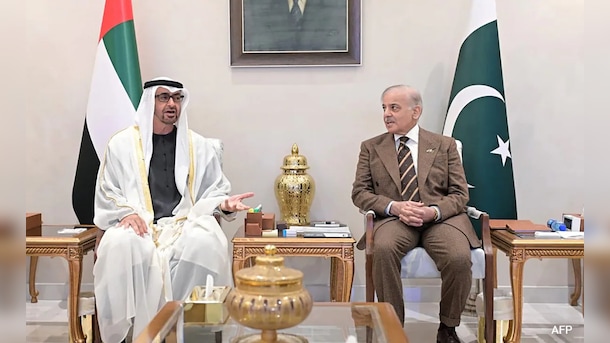
Pak's 'Global Power' Act Is Fooling No One - Least Of All Its Gulf 'Creditors'

Dubious oil claims to failed 'mediation' attempts and the UAE and Saudi now apparently asking for repayment of their loans, Pakistan's repeated attempts to project itself as a 'global player' must be taken with a grain of salt.
-
Opinion | 155 Aircraft For One Man - And Other Mysteries About US' Iran Rescue Op
When has it ever been the case that you need to deploy 155 aircraft on a Combat Search and Rescue (CSAR) Mission? Why were the two C-130s deployed when each has the capacity to carry up to 90 troops?
-
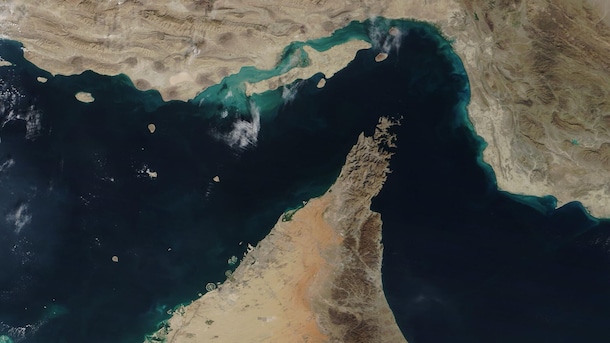
$4.5 Billion A Month Jackpot: Why Iran Wants World To Accept Hormuz 'Authority'
Reports from Iran indicate the country plans to use potential toll payment money to rebuild infrastructure destroyed by US-Israel strikes, and re-stock missile and drone arsenals.
-
Blog | The Dantewada Massacre, And What India Needs To Do To Stay Maoist-Free
In 2010, I was Assistant Chief of the Air Staff controlling transport aircraft and helicopters, and on April 6 that year had to arrange An-32 aircraft to carry coffins of 75 CRPF jawans.
-
Opinion | How Iran Has Pierced The One 'Shield' That Protected America For 30 Years
In the past, US campaigns in Iraq, Afghanistan and Libya were conducted against relatively weak air defences. That has not turned out to be the case with Iran, puncturing the long-held myth of America's 'indomitable' air power.
-
Opinion | The Quiet 'Upheaval' Within US Military Over The Iran War
General Randy George's ouster carries echoes of a similar episode in 2003, in the run-up to the Iraq war. But much more is happening within the US military, courtesy Hegseth.
-
How Iran Sucker-Punched Trump Into 'Escalation Trap' 'Hellhole'
Trump is now under pressure, not just from allies but also within; the President's approval rating is the lowest it has ever been with mid-term elections in November.
-
Eagle Down: How US Carried Out Precision Search And Rescue Op In Hostile Iran
How the United States transformed a tactical failure into a narrative of national resolve.
-
Opinion | 450 Missile, 2,000 Drone Attacks Later, Why Is UAE Still Not Fighting Iran?
The UAE is Iran's second-largest trading partner and also home to roughly half a million Iranians. Why, then, has it absorbed more fire than any other Gulf state?
-
In Numbers: How Has India Kept Fuel Prices Low Even As Europe Sees 70% Spikes?
India imports 88% of its crude. Why then is it not seeing massive price hikes for fuel and LPG? Inside the unique strategy it's following...