



If one were to locate the Trump-Vance equation within the broader grammar of contemporary American politics, it would appear less as a partnership and more as a hierarchy sustained by performative loyalty and strategic expendability. Donald Trump continues to rely on JD Vance as both amplifier and absorber: a political instrument who articulates Trumpism with youthful aggression while simultaneously insulating the principal from the consequences of his own risk-taking.
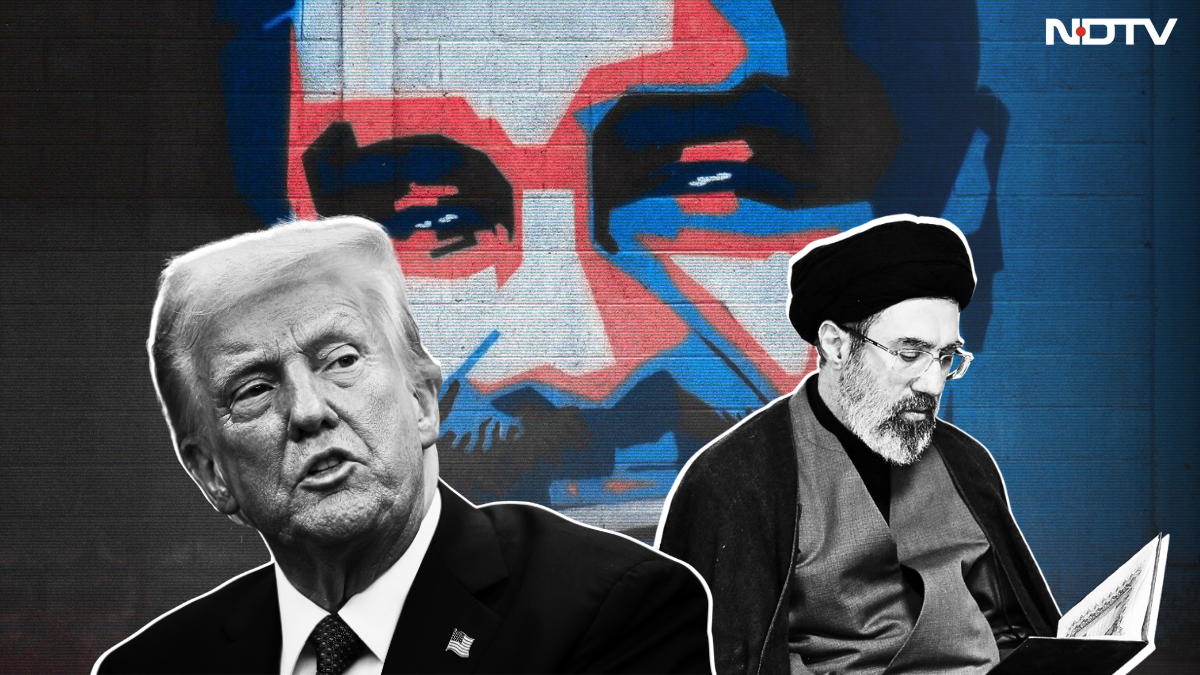
In public, Vance performs the role with near-textbook precision. He is combative, ideologically aligned, and unflinchingly deferential - whether defending escalation in the Iran theatre or engaging in cultural skirmishes, including those involving figures like Pope Leo XIV. Trump, in turn, signals approval by projecting Vance as a future standard-bearer for 2028. Yet, beneath this carefully curated symmetry lies an unmistakable asymmetry of power. Trump's occasional barbs about Vance's earlier hesitation on Iran are not incidental; they are reminders of hierarchy, deployed to keep ambition tethered to obedience.
Ambition vs Obedience
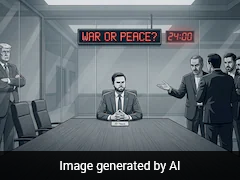
The recent Iran episode underscores this dynamic with unusual clarity. Vance's assignment for high-stakes negotiations in Islamabad was less an opportunity than a calibrated risk. The outcome, predictably inconclusive, allowed Trump to externalise failure while reserving success for himself. His remark about "blaming JD Vance" if talks faltered was not merely flippant; it was emblematic of a governing style that thrives on plausible deniability. Vance, meanwhile, is left to internalise the political costs: declining approval, economic anxieties tied to the conflict, and the broader perception of drift within the administration.
This pattern is not without precedent. Mike Pence occupied a very different ideological space - rooted in evangelical conservatism and institutional restraint - but ultimately encountered a similar constraint. Pence's break with Trump during the certification of the 2020 election was driven by constitutional obligation, and it effectively ended his relevance within Trump's political universe. Vance, by contrast, has pre-empted such a rupture by collapsing any visible distance between himself and Trump. If Pence's trajectory was defined by a late assertion of principle, Vance's is marked by an early and total submission to political necessity.
Yet, this strategy carries its own risks. By over-identifying with 'Trumpism', Vance has limited his manoeuvrability. His earlier scepticism of foreign entanglements now sits uneasily alongside his defence of the Iran campaign, reinforcing perceptions of opportunism rather than conviction. The more he is deployed as a political shield, whether in foreign policy misadventures or symbolic culture wars, the more his own political capital is eroded.
Has JD Vance Walked Into A Trap?
The critical question, therefore, is not whether Vance can endure this role in the immediate term - he almost certainly can - but whether such endurance is strategically sustainable. In the short run, loyalty remains his only viable currency within the MAGA ecosystem. In the longer run, however, the very attributes that make him valuable to Trump may render him dispensable. Trump's political method has consistently prioritised utility over continuity; allies are rarely permanent, and succession is never guaranteed.
For JD Vance, time is both a strategic resource and a structural limitation. At 41, he enjoys the rare advantage of generational elasticity in American politics - a capacity to absorb setbacks, recalibrate his image, and potentially re-emerge stronger. Unlike many of his contemporaries, Vance is not bound by the immediacy of a single electoral cycle; his ambitions can stretch across a longer horizon. Yet, this very advantage is weakened by the intensity of his current political exposure, which risks hardening perceptions before he has the opportunity to reshape them.
Recalibration, however, is not a neutral act within the ecosystem he inhabits. Any attempt by Vance to subtly distance himself from Donald Trump would not be interpreted as routine political repositioning but as a breach of loyalty. Trump's political style leaves little room for ambiguity: allegiance must be total, visible, and continuous. In such a framework, even minor deviations are amplified and often punished, making strategic adjustment a perilous undertaking rather than a prudent necessity.
Iran As A Test Case
The Iran episode, in this context, assumes the character of a potential inflexion point. It is not merely a foreign policy challenge but a test case for how far Vance can stretch the boundaries of subordination without eroding his own political identity. Being tasked with high-risk negotiations - and then implicitly burdened with the consequences of their failure - places him in a structurally vulnerable position. The episode crystallises a deeper tension: whether a political actor can simultaneously embody ambition and function as an expendable instrument.
This is a delicate balancing act. Vance must continue to perform loyalty to retain credibility within the MAGA base, while also preserving enough independent political capital to remain viable beyond the immediate orbit of Trump. This dual imperative is inherently unstable. The more effectively he serves as a defender and proxy, the more he risks being defined entirely by that role, reducing his ability to later claim autonomy or leadership in his own right.
For now, the equilibrium holds, sustained by mutual utility rather than genuine trust. Donald Trump benefits from Vance's willingness to absorb political shock, while Vance gains proximity to power and the promise, however uncertain, of future succession. Yet, this is an equilibrium characteristic of Trumpian politics: transactional, asymmetric, and ultimately fragile. In the longer arc, such arrangements have rarely endured, often collapsing under the weight of competing ambitions and the absence of durable institutional bonds.
(Harsh V Pant is Vice President for Studies at Observer Research Foundation, New Delhi.)
Disclaimer: These are the personal opinions of the author


