Opinion | Can Saudi Arabia, Now Alone At The Top, Manage To Keep Oil Stable?
With the UAE's exit, Saudi Arabia will remain the only swing producer in the cartel to deal with market shocks. Can it fulfil that role alone?
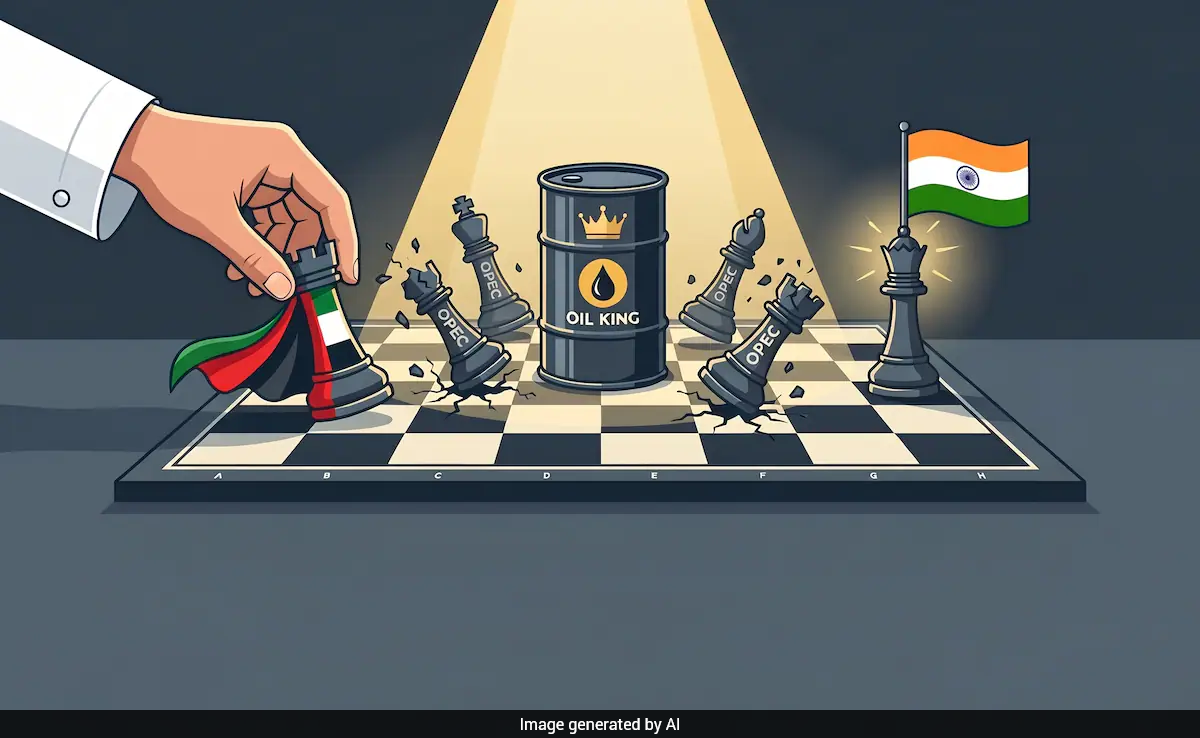
The decision of the United Arab Emirates (UAE) to withdraw from the Organization of the Petroleum Exporting Countries (OPEC) and the broader OPEC+ alliance from May 1, 2026, is not just another policy adjustment to the Hormuz crisis. It reflects a deeper cleavage in the global energy governance architecture that for so long relied on geopolitical stability, shared incentives, and equitable risk-sharing among producer countries. These conditions no longer hold true. Evolving geopolitical and geoeconomics realities have exposed the vulnerability of a decades-old energy system.
The move comes amid a volatile regional conflict and supply disruptions following the Israel-USA-Iran war and the closure of the Strait of Hormuz. Even as the precarious ceasefire holds, supply losses of roughly 10-12 million barrels per day continue to strain the global energy system.
Why The UAE Walked Away
OPEC was established to coordinate oil production among the Middle Eastern energy producers and, by extension, stabilize global crude prices. The model is now under visible strain. While the group still controls a significant portion of global energy output, its share has declined to almost one-third over the years, while the OPEC+ accounts for a little over 40%.
The UAE contributes almost 12% of total OPEC output, or 3% of global supply, amounting to approximately 3.4 million barrels per day (mbpd). It operates nearly 30% below its installed capacity of 4.85 mbpd - absorbing substantial opportunity costs in line with allotted production quotas. The frustration of underutilised capacity is not new and has been compounded by uneven compliance within the group, with countries like Russia, Iraq and Kazakhstan at times exceeding their allocated targets.
The timing of the UAE's exit is therefore both opportune and noteworthy. It comes at a time when Abu Dhabi sees a clear economic incentive to boost production and lock in market share amid global supply shortages, and more importantly, step away from a system whose structural rigidities no longer serve its economic priorities.
1. Energy Security Is No Longer Equal
Since the disruptions, OPEC production has collapsed 27% (to 20.8 mbpd) in March with almost 8 mbpd loss of Gulf output, while the UAE's output alone slumped 44% to approximately 1.9 million bpd. The Hormuz crisis has laid bare a harsh truth - that spare capacity is no longer a sufficient pre-condition for supply management. Export routes, redundancies, insurance, and infrastructure security are equally important considerations while determining a country's resilience during crises, and these factors are highly uneven across the producer nations. This alters the logic of coordination. The quota discipline no longer offers shared optimization but instead imposes asymmetric constraints.
The UAE seeks to break loose from an alliance that was designed for stable market conditions, and distributes costs disproportionately under increasing geopolitical stress. The opportunity cost for production varies dramatically among member countries depending on the exposure to geopolitical risk and logistical bottlenecks. UAE withdrawal is, therefore, an acknowledgement that the OPEC framework no longer reflects these differences.
2. Investment And Capacity Expansion
Abu Dhabi National Oil Company (ADNOC), the UAE's state energy producer, has already committed investments of approximately $150 billion to reach a 5 mbpd capacity target by 2027. Aligned with its national priorities, this independence reflects the UAE's long-standing ambition to expand oil output unencumbered. The exit thus represents a strategic shift towards ensuring that future capacity can be deployed when conditions allow. It also signals the UAE's intent to establish itself as a reliable supplier in the post-crisis period, particularly as the world looks to replenish depleted reserves.
3. Economic Strategy Favours Flexibility
The UAE is the Gulf's most diversified economy, with only 25% of its revenues coming from oil and gas and 75% from non-oil sectors such as trade and logistics, tourism, hospitality and aviation, regional financial centres (DIFC, ADGM), real estate and construction, manufacturing and industry, and technology and innovation. This diversification fosters a greater tolerance for price volatility. By contrast, Saudi Arabia has a fiscal breakeven oil price of around $90 per barrel, which is nearly double that of the UAE, reinforcing divergent strategic priorities. At the same time, the conflict has exposed the vulnerabilities in the country's non-oil model, which relies heavily on stability and openness. This has, in the immediate future, elevated the importance of hydrocarbon revenues for fiscal stability.
4. Monetising Oil Before Demand Peaks
According to the International Energy Agency, global oil demand is expected to peak around 2030, with electric vehicles (EVs) displacing over 5 mb/d by that point and over 10 mb/d by 2035. For instance, China's investments in electrification have helped cushion the blow of rising oil prices, reducing oil demand by as much as 1 mbpd. This creates a clear incentive for producers to maximise output while demand remains robust. The UAE's strategy is to pump more oil in the near term while continuing to build out a diversified, post-oil economy.
Impact on Global Oil Markets
In the short term, the impact of the UAE's exit will be muted. The energy markets have not responded dramatically to the announcement so far, as the institutional departure will not translate into an immediate increase in exports.
The Abu Dhabi Crude Oil Pipeline (ADCOP), running from Habshan to the Fujairah port and bypassing the Strait of Hormuz, offers limited relief as it can handle only about half of its recent production and is already operating near capacity. Therefore, in the short run, this move will act more as a market signal than a source of additional supply.
However, the signal itself is important. It reflects the UAE's openness to trade and its intention to contribute to future supply recovery once logistical constraints ease. While it may hold the potential to exert downward pressure on prices over time, it may also introduce volatility in global oil markets as competition for market share intensifies. The Hormuz crisis is also likely to embed a persistent geopolitical risk premium in oil markets, particularly for Middle Eastern exports, accounting for the geopolitical exposure, infrastructure constraints, and producer-level fundamentals.
A Test For Saudi Leadership
For Saudi Arabia, the implications are significant. With the UAE's exit, Saudi Arabia will remain the only swing producer with sufficient spare capacity to exert market influence and respond to supply shocks. This will constrain the grouping's leveraging power, which lies in collective coordinated supply management. Stabilising prices will become more expensive and difficult to sustain for the Kingdom.
A weaker coalition raises the risk of competitive production strategies, particularly if other countries follow suit. While an outright price war looks unlikely, it may trigger competition over market share, pushing the global equilibrium to lower price environments - something the UAE's diversified economy may withstand but could place considerable pressure on other OPEC members.
What Lies Ahead
According to the UAE's Energy Minister H.E. Suhail Mohamed Al Mazrouei, the country is positioning itself to become an agile, nimble and independent energy actor - balancing its investments across oil, gas, and renewables.
The country now must prioritise strengthening its resilience through infrastructure investment, building redundancies, diversifying trade routes, and expanding storage capacity both domestically and internationally.
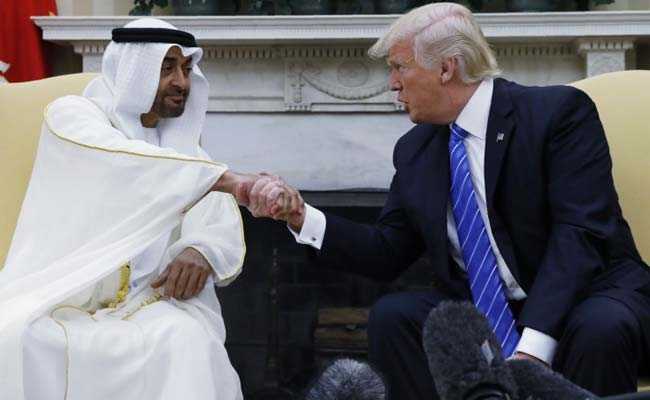
The decision also carries a strong geopolitical signalling, particularly in Washington and key Asian markets, underscoring the UAE's willingness and commitment to align its policies and investments with its evolving global energy security priorities and its long-term strategic vision.
(Mannat Jaspal, Director and Fellow, Climate and Energy, Observer Research Foundation Middle East)
Disclaimer: These are the personal opinions of the author
-
UAE Quits OPEC: What It Means For India's Oil Prices, Fuel Bills

Being able to deal with the UAE as a separate seller should give India the chance to re-adjust risk levels and pricing, particularly if some volume of crude is routed via overland pipelines to bypass the Hormuz blockade.
-
Opinion | If Mamata Banerjee Wins Again, It Might Be Only Because Of One Particular Group
Anyone familiar with the recent political and electoral history of West Bengal knows that while the BJP has done extremely well in north Bengal, it has so far failed to breach the Mamata citadel of south Bengal.
-
Opinion | Pak Is Finally Back In Middle East's 'Good Books'. But Can It Stay There?
This is both an enviable and challenging space to be in for the only Islamic nation in the world that has nuclear weapons.
-
Opinion | UAE Can Now Easily Meet An Old American 'Demand'. But There's A Casualty: Saudi
For years, the US had been pressing the Gulf states over low oil prices. One country can make that possible now.
-
Opinion | To Understand UAE's OPEC Exit, Go Back In Time - To A Leaked 'Cable'
The Arab world's rules and its political Islam never really sat right with the UAE. Everything it has done politically has been shaped by that.
-
Opinion | 'On Verge Of Stopping': Inside The Panic That Led To Indian Airlines' SOS Call
On April 26, 2026, three private airlines - Air India, IndiGo and SpiceJet - wrote to the Ministry of Civil Aviation, through the Federation of Indian Airlines (FIA), to say that they were on the verge of stopping operations.
-
Opinion | No Peace With 'Peacebroker'? Why Iran Just Bombed A Pak-Based Terror Camp
Just last week, Iran carried out strikes on terror camps of the Jaish-al-Adl, an organisation that is allegedly backed by Pakistan.
-
Opinion | 5 Districts Made Mamata In 2011. Will They Unmake Her This Time?
In 2011, the TMC alliance swept 82 out of the 108 seats here, signalling the end of the Left regime. Analysts called it a fluke, saying the Left would come back. That was not to be.
-
3 Scenarios, 2 Deadlines, 1 Iran War: Donald Trump Faces Point Of No Return
President Trump faces a May 1 deadline to end US military action in Iran without Congressional approval under the War Powers Act. His options are - agree a peace deal, get approval, or ignore the deadline and face legal risks.