






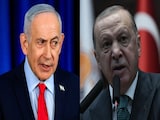



Iran on Tuesday shot down a US Apache helicopter near the Strait of Hormuz, prompting Trump to say that America must, out of necessity, respond to the attack. His statement on Truth Social suggests caution rather than a boast about America's power and dominance, which he is more accustomed to. He had shown similar caution last weekend after Iran fired missiles at Israel, threatening both the precarious ceasefire and the deal Washington and Tehran have been negotiating to end the war. Trump pleaded with the Israeli Prime Minister, Benjamin Netanyahu, not to strike back at Iran. But the latter simply ignored him. This is the new reality 100 days after Trump joined Netanyahu's war against Iran. The leader of the so-called free world looks weak and humbled, and the power of the United States appears to have reached its limits, at least in West Asia.
Before the war, it was inconceivable that Iran would threaten Israel over its actions in Lebanon and then carry out that threat without fear of a US response. Iran's policy had been what it called "strategic patience". But its new leadership seems to believe that restraint is a sign of weakness. The cautious Ayatollah Khamenei, under whose leadership the policy of restraint was last seen during the 12-day war in 2025, is no longer alive. His son, Mojtaba, the new leader, has given full backing to the Iranian Revolutionary Guards Corps (IRGC) for an uncompromising, tough approach.
A week ago, Tehran warned Israel of missile strikes if it continued bombing Lebanon, particularly if the southern outskirts of the capital, Beirut, were attacked. These areas are the stronghold of Iran's proxy group, Hezbollah. That came after Netanyahu ordered these areas to be bombed. An angry Trump called Netanyahu, shouting, "What the f--- are you doing?" "You're f---ing crazy." Netanyahu paused the attacks, but only for a week. On Sunday, when Israel bombed the Beirut suburbs, Iran responded as it had promised. Defying Trump's pleas, Israel not only struck Iran in retaliation but also targeted one of its petrochemical complexes, threatening further escalation. Later, both called off further strikes at each other.
Sabotaged By A 'Friend'
Trump is desperate to end the war, which has become deeply unpopular in the United States. But he is worried that Netanyahu's actions could jeopardise ongoing negotiations with Iran. The Israeli leader, on the other hand, wants to resume the war. Netanyahu fears that Trump might be conceding too much to Tehran. Iran's use of the Strait of Hormuz as a chokepoint has shifted the focus from the nuclear programme to the reopening of the narrow waterways, alarming Israelis.
There is supposed to be a ceasefire in Lebanon, but Israel has not halted strikes on Hezbollah targets. The militant group has also been launching missiles at Israel. The Israeli military has killed more than 3,600 people, mostly Shia Muslims, since the war began in March and has displaced one-fifth of the population. Israel has advanced much deeper into Lebanon, occupying large parts of its territory. This has enraged Iran, hardening its stance in negotiations with the United States. As Tehran's latest military action in Lebanon shows, it is committed to backing its ally Hezbollah. Israel is well aware of that. Its military operations in Lebanon appear to be trying to sabotage a deal with Iran, despite Trump's repeated calls to Netanyahu for restraint.
Why Can't Trump Rein in Netanyahu?
Iran views Israel's behaviour in Lebanon as a test of Trump's power and his willingness to use it. Apart from angry telephone calls, Trump has not really used the leverage the US has over Israel to contain Netanyahu. Israel receives the largest amount of aid from the United States; no country is even close. In addition to $3.8 billion annually, Israel has received billions more from the US in recent years. After the Hamas attack on Israel in 2023, the US Congress passed a law to provide $10.6 billion in direct military aid to the Jewish state.
Soon after he started his second term, Trump proposed an $8 billion aid package for Israel, and this January, his government announced $6.5 billion in weapons aid. Without this help, Israel can't carry out its military operations. Thus, Trump has options - if he is willing to use them. The aid has continued despite declining support for Israel among the US population. In April, the Pew Research Center reported that 60% of Americans now hold a negative view of Israel, an increase of nearly 20 percentage points from two years ago.
However, the Israeli lobby remains highly influential in the US. The American Israel Public Affairs Committee (AIPAC) directly contributes to US politicians' election funds. Netanyahu personally lobbies the American media and US lawmakers, especially those from Trump's Republican Party. Therefore, it's not easy for any American politician to rein in the Israeli leader. Even Trump finds it difficult to curb Netanyahu's actions.
All The Wrong Choices
Trump may feel betrayed by Netanyahu, but he is also responsible for the situation. His actions in favour of Israel and Netanyahu over the years have made him and the US deeply unpopular in West Asia and have damaged America's credibility. During his first term, he moved the US embassy from Tel Aviv to Jerusalem, a city claimed by both Israelis and Palestinians. He allowed Netanyahu to expand Israeli settlements in the occupied West Bank, an illegal and unpopular move internationally. Trump has worked hard to make Israel acceptable to Arab governments through the Abraham Accords, though people in these countries remain opposed to the decision. In February, US Ambassador to Israel, Mike Huckabee, a Trump appointee, angered the Arab world by suggesting that Israel has a right to much of the Middle East.
Trump was the first and only US president in four decades whom the Israelis, under Netanyahu, have managed to persuade to join the war against Iran. He is also the one at whose behest Trump pulled America out of the 2015 Iran nuclear deal and started the 12-day war with Iran last year, while the US was negotiating a new agreement with the country, and again this year. It was Netanyahu who ordered the targeted killing of Ayatollah Khamenei and most of Iran's other leaders early in the war, many of whom would have shown more flexibility on a deal, perhaps on US terms. These actions explain why Iranians don't trust the US with a new agreement.
It was also Netanyahu who prolonged the Gaza war, which has killed more than 72,000 people. Trump backed Netanyahu even after the World Court issued arrest warrants for him over war crimes in Gaza. Last year, Israel attacked a meeting of Hamas negotiators in Qatar, a close US ally, during Gaza negotiations, embarrassing the president. With Qatar's help, Trump negotiated a deal to end the Gaza war, but Israel has not stopped its military action against Palestinians there, creating mistrust not only of Israel but also of America. Since the Gaza accord was signed, nearly 900 people have been killed in the Palestinian territory.
Trump's decision to join Israel in the war against Iran has weakened the US the most. While Iran is now more powerful than ever, support for America in West Asia is now at a level not seen since the Arab-Israeli war in 1973. Trump is widely seen as a leader who cares only about Israel. A survey by the Arab Barometer, a research group in West Asia, conducted after the 12-day war in 2025, found that people in the region had lost nearly all confidence in a US-led regional order. Instead, they now regard China, Iran, and Russia more favourably than the United States.
Making America Weak Again
America's position was not this weak until recently; in fact, it was riding high. The fall of the Bashar al-Assad regime in December 2024 was a major setback for Russia and Iran. Moscow was struggling in Ukraine, and China was concerned about the US's motives in the Indo-Pacific. In January, the removal of Venezuela's president, Nicholas Maduro, an ally of Beijing and Moscow, was a strong display of American power.
But the Iran war has exposed the US military's limits and strengthened America's main rivals, Russia and China. The Russian economy has benefited from high oil and gas prices, enabling it to spend more on weapons and military equipment for the war in Ukraine. Although China's economy has suffered from the Iran conflict, it is better prepared than other countries to withstand its adverse effects. China is pleased because the war in Iran has forced the US to shift its weapons and other assets from the Indo-Pacific. Russia is equally pleased because the US has taken its eyes off the conflict in Ukraine.
China and Russia have indirectly helped the Iranian regime fight the war against the US and Israel more effectively. Beijing is also strengthening economic ties with other Gulf countries. It is eyeing security partnerships in the region as US bases are increasingly being seen as a liability. The investment commitments worth trillions of dollars that Gulf leaders made to Trump last year are now unlikely to materialise, thanks to the damage their economies sustained after the war. But more than all of this, the erosion of US credibility must be the biggest concern for Trump. By his actions, Trump is now more likely to be remembered as the US president who made America weak again in West Asia and beyond.
(Naresh Kaushik is a former editor at the BBC and Associated Press. He is based in London)
Disclaimer: These are the personal opinions of the author


