




Pakistan is basking in the glory of its diplomatic exploits. No matter how the 14-day truce between Iran and the US, put in place through Islamabad's midwifery, pans out, it is a major highlight in the country's chequered diplomatic trajectory - the first perhaps since 1971, when it helped then US Secretary of State Henry Kissinger reach out to China.
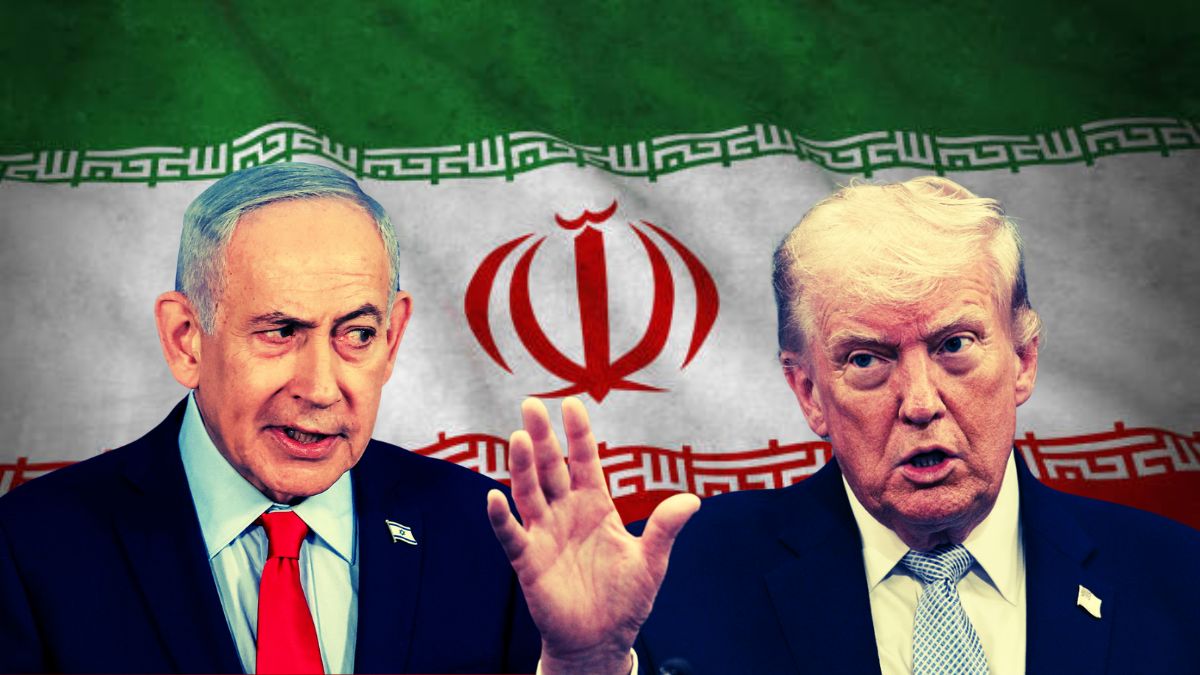
Early on Wednesday, as the world held its breath, Prime Minister Shehbaz Sharif announced the two-week ceasefire between the warring parties. He also invited delegations from the US and Iran to Islamabad on Friday "to further negotiate for a conclusive agreement to settle all disputes". The ceasefire itself establishes Pakistan as a key mediator on an extremely tricky terrain, coming as it did just hours after President Trump threatened that "an entire civilization will die tonight".
Pakistan Redeems Itself?
Glowing praise poured in for Pakistan from both Tehran and Washington. Trump credited Sharif and Pakistan's Army Chief Field Marshal Asim Munir for his decision to accept a ceasefire, while Iran's Foreign Minister, Abbas Araghchi, thanked "my dear brothers HE Prime Minister of Pakistan Sharif and HE Field Marshal Munir for their tireless efforts to end the war in the region". Besides, China, Turkey and Egypt are all hailing Pakistan's efforts to diffuse an extraordinarily tense situation, which could be catastrophic.
The war may yet continue. But in more ways than one, Pakistan has redeemed itself from a fallout it had with its Gulf patrons exactly a decade ago.
The Yemen War
Yemen's Civil War of 2015 drew the Gulf states in, forcing their direct military intervention on the side of the internationally recognised government of President Abdur Hadi Mansour against the Iran-backed Houthis. Pakistan, which had by then provided numerous military and policing services to Gulf monarchies in exchange for hefty grants and investments, dithered. Intense domestic opposition, coupled with fears of Sunni-Shia fault lines opening up inside the country, constrained the then government of Nawaz Sharif. He had been beholden to the House of Saud, both through marriage and because they had provided him asylum when President Pervez Mussharaf had ousted him from power. The Saudis and their partner, the Emiratis, who had jointly intervened in Yemen, saw red. This triggered a fallout between the long-term partners.
Though India's relations with the Gulf states, especially the UAE and Saudi Arabia, have their own inherent strengths, this has also played a role in the two sides forging closer bonds. This was evident when Prime Minister Narendra Modi made his first visit to the UAE in August 2015, and the two sides, for the first time, included a clause on "cross-border" threats in their joint statement. It also opened up counter-terrorism and intelligence cooperation between the two sides. Pakistani citizens on India's wanted list began to be extradited to India, and India, not Pakistan, became the destination for Gulf investments.
Munir, Trump's 'Favourite Field Marshal'
This is why India will have to tread carefully and recalibrate its approach towards the region, where it has in recent years seen some of its best foreign policy successes. Pakistan is on the ascendancy there - about that there is no doubt - a path that began with Donald Trump's embrace of Munir, whom he called his "favourite field Marshall" and whom he feted at the White House soon after Operation Sindoor.
An article in Foreign Policy explains this approach: "Trump boasts of his ability to secure the best deals in history, and he has found in Pakistani Army chief Asim Munir exactly the sort of interlocutor that he likes - a hard-power operator with direct access to the White House and a willingness to sell himself as useful." Be that as it may, Pakistan, with all its drawbacks and shortcomings, is now in the news not for yet another act of terrorism or negotiations over a fresh loan, but for playing a constructive role at a particularly trying time for the region and the global economy.
That Saudi Deal
Geopolitical realignments, including Pakistan's ties with the Gulf region, have been underway for a while. The starkest manifestation was in the Saudi-Pakistan Strategic Mutual Defence Agreement signed last September. It has a clause that stipulates that if one party is attacked, then the other will come to its defence. That clause was not invoked during Pakistan's recent conflict with Afghanistan, and neither have the Saudis called it into use till now despite being the target of Iran's missiles and drones. However, after initially trying to exercise some strategic ambiguity, Pakistan has had to state unequivocally whose side its loyalty would lie on if push came to shove.
On April 6-7, an attack by Israel on Iran on Monday provoked a strike on Saudi energy facilities in Jubail by Iran. The Pakistani Foreign Office promptly issued a stern condemnation of the attack, terming it a "dangerous escalation", and reaffirmed its support for the Kingdom, invoking the 2025 pact. Munir, too, said that the attack on Saudi Arabia "spoils sincere efforts to resolve the conflict through peaceful means". Earlier as well, Pakistan's Foreign Minister, Ishaq Dar, had informed the Iranian side about the defence agreement in order to dissuade attacks on Saudi Arabia. Pakistan has some 2.5 million of its citizens living in Saudi Arabia, and only about 33,000 in Iran, though Shiites form a sizable minority. Saudi Arabia and the UAE have provided billions in financial deposits to stabilise Pakistan's reserves, as well as in energy loans. That Pakistan is on the brink of bankruptcy and is surviving on loans and grants - and has been hit hard by the current energy crisis emanating from the Hormuz crisis - is no secret.
The 'STEP' Alliance
This partnership in the Gulf now may indeed be laying the foundation for a new Sunni bloc comprising Saudi Arabia, Turkey, Egypt and Pakistan: 'STEP'. Following the Saudi-Pakistan pact, reports emerged earlier this year of a Sunni NATO in the making, with Turkey, too, joining the alliance. However, such speculation was soon put to rest, given the deep-rooted suspicions between Saudi Arabia and Turkey. That arrangement, however, may now be reconsidered, given that the current ceasefire was a result of intense negotiations between these four Sunni countries.
The four first met in Riyadh in a bid to de-escalate the tensions. More recently, they met in Islamabad to hammer out an end to the war. Pakistan has also consulted with China, which has been the main behind-the-scenes conduit to Iran. All four are members of Donald Trump's Board of Peace for Gaza, established earlier this year. All four bring major strengths to the table - Saudi Arabia has the world's second-largest proven oil reserves, Egypt is the region's military strongman with the most powerful army, Turkey is a NATO member, a bridge between Europe and the Middle East and a major defence exporter with cutting-edge defence technology, and Pakistan is a nuclear-armed state with an equally professional Army.
Pakistan and Egypt have an intelligence-sharing and counterterrorism agreement in place, while Turkey and Egypt signed a $350 million defence cooperation deal in February this year. According to Pakistan's Minister for Defence Production, Raza Hayat Haraj, a draft for a trilateral defence agreement between Pakistan, Saudi Arabia, and Turkey also exists.
A New Middle East
Both Israel and Iran have emerged as major disruptors in the region. If, till now, there had been a tacit understanding that Israel could take on Iran on behalf of the Gulf states - with at least two of which Israel has forged close ties - then that perception has been busted by the current war. It has also shown the limits of military force alone, even for the US. Iran remains defiant, with its regime well-ensconced. At the same time, the US has demonstrated that it will always prioritise Israel's security over its Gulf allies. In spite of spending billions on arming themselves with US weaponry, the war has underscored the fragility of Gulf security. Most of all, these states lack the necessary wherewithal to put boots on the ground. Here, Pakistan, Turkey and Egypt are well-poised to fill that gap. While there are fissures and trust deficits between the Saudis and the Turks, and the Egyptians and the Turks, the bigger threat of Israel for Turkey and Iran for the Saudis may facilitate a rapprochement. Moreover, they also have good ties with China. And Pakistan, in any case, is now in the very good books of Trump.
The debate around Pakistan's 'mediation' efforts continues. For sure, if the ceasefire falls apart, it will be held responsible. But the fact remains that the country is in the geopolitical limelight for appropriate reasons after a long, long time.
Meanwhile, the possibility of STEP materialising into a formidable bloc is very real. India will have to recalibrate its policy accordingly, for as the war has shown, it is not in our interest to tilt on either side.
(The author is a senior journalist)
Disclaimer: These are the personal opinions of the author


