Opinion | Hormuz And The Case For Shared Responsibility
If the world depends on Hormuz, why does Iran bear the primary burden of maintaining it?
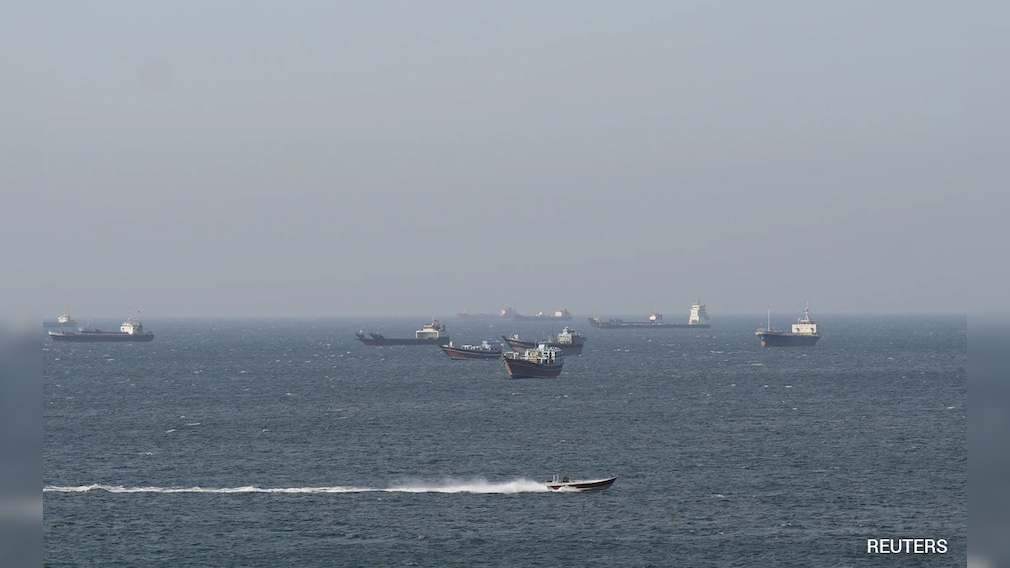
The Strait of Hormuz has evolved from a regional maritime chokepoint into the central geopolitical fault line of the global economy. During the past several weeks, tensions between the United States, Israel, and Iran escalated sharply following military exchanges near the Strait, US naval operations connected to "Project Freedom", attacks on commercial shipping, and reciprocal accusations of ceasefire violations. Commercial traffic through the Strait has been severely disrupted, oil prices have surged, and global shipping insurers have warned of systemic economic risks extending far beyond the Middle East.
Today, the issue of the Strait of Hormuz has become more consequential than the Iranian nuclear dispute itself. The nuclear issue had already been addressed diplomatically through United Nations Security Council Resolution 2231, which endorsed the Joint Comprehensive Plan of Action (JCPOA) as a binding international framework. The unilateral US withdrawal from the JCPOA in 2018, followed by unlawful and unnecessary military attacks by the United States and Israel against Iran in violation of Article 2(4) of the United Nations Charter, fundamentally undermined the agreement and transformed the Iranian nuclear issue from a multilateral diplomatic matter into a broader geopolitical confrontation between Iran and a coalition composed of the United States, Israel, and several US-aligned Arab governments in the Persian Gulf.
Iran Has Suffered Massive Damage
Unlike the nuclear issue, however, instability in the Strait of Hormuz directly affects the entire global economy, including energy markets, supply chains, inflation, food security, and maritime commerce. Iran frames the Strait of Hormuz within the doctrine of self-defence under Article 51 of the United Nations Charter. From Tehran's perspective, repeated military attacks by Iraq under Saddam Hussein during the 1980s, the extensive economic sanctions regime imposed by the United States, cyber operations, targeted assassinations, and the more recent Israeli and American military strikes in 2025 and 2026, have cumulatively imposed trillions of dollars in damage on Iran's infrastructure, economy, and national security. Iranian government spokeswoman Fatemeh Mohajerani said an early estimate indicates that Iran has suffered about $270 billion in damages since the start of the US-Israel war on February 28, 2026.
The United States and several European governments have argued that Iran cannot lawfully impose transit tolls or fees on vessels crossing the Strait of Hormuz because such a precedent could encourage other littoral states to impose similar charges in international straits. "Not only is this illegal, it's unacceptable. It's dangerous for the world, and it's important that the world have a plan to confront it," said the US Secretary of State, Marco Rubio. Legally, the concern reflects the transit passage regime under Articles 37-44 of the 1982 United Nations Convention on the Law of the Sea (UNCLOS), which protects freedom of navigation through international straits.
An Inaccurate Argument
However, the comparison between Iran and other coastal states is fundamentally flawed. No other littoral state governing a strategic strait has experienced three major illegal military confrontations - Saddam Hussein's invasion, prolonged US coercive policies, and direct Israeli-American military operations against its territory - while also bearing the primary burden of maintaining regional maritime security and environmental protection.
While Iran has never ratified the convention, however, under international law, Iran may not be legally entitled to impose unilateral tolls merely for innocent or transit passage. Nevertheless, several alternative legal and institutional mechanisms could provide a lawful framework for cost-sharing and compensation.
First, UNCLOS permits coastal states to recover costs for specific services rendered, including pilotage support, environmental protection, emergency rescue operations, anti-pollution measures, maritime traffic management, demining, and navigational safety systems. Iran could, therefore, lawfully establish specialised maritime service regimes tied to concrete operational services rather than simple passage itself.
Second, Article 43 of UNCLOS explicitly encourages burden-sharing agreements between user states and coastal states in international straits. This provision has remained largely underdeveloped globally. Iran could, therefore, advocate the establishment of a multilateral "Hormuz Maritime Security and Environmental Protection Fund" under United Nations or International Maritime Organization supervision. Such a mechanism would allow energy-importing states, shipping companies, insurers, and Persian Gulf energy exporters to contribute financially toward maintaining safe navigation, environmental protection, anti-piracy operations, and post-conflict reconstruction in the region. This approach would transform the debate from "illegal tolls" into lawful cooperative burden-sharing.
Third, Iran could invoke emerging principles within international environmental law and the law of state responsibility. The recent military confrontations in the Persian Gulf have significantly increased risks of environmental catastrophe, including oil spills, destruction of marine ecosystems, and contamination of fisheries and coastal infrastructure. Under the "polluter pays" principle and broader doctrines of state responsibility, states contributing to militarisation and conflict in the Strait may bear obligations toward remediation and reconstruction. Iran may, therefore, argue that states participating in military escalation should contribute financially to environmental protection and maritime stabilisation efforts in the Strait of Hormuz.
The Question Of Compensation
Fourth, there is a historical imbalance in international compensation mechanisms that remains unresolved. Following Iraq's invasion of Kuwait in 1990, the United Nations Compensation Commission established an international mechanism to process claims and compensation. Iran, despite suffering enormous destruction during Iraq's invasion of Iran initiated by Saddam Hussein in 1980, never received a comparable compensation framework. The absence of such mechanisms has contributed to long-term regional instability and mistrust between Iran and the Arab neighbouring countries, which supported Saddam's invasion of Iran.
An Imbalanced Framework
A future Hormuz framework could, therefore, integrate both maritime security financing and broader reconstruction arrangements connected to decades of regional conflict. The strategic reality is that the Strait of Hormuz can no longer be treated merely as a narrow legal issue of navigational rights. It has become a test case for whether international law can adapt to asymmetrical burdens imposed on regional states in periods of prolonged geopolitical confrontation. The existing framework places the overwhelming responsibility for securing one of the world's most vital energy corridors on the coastal states of Iran and Oman in the Hormuz Strait, while the economic benefits are distributed globally. Such an imbalance is politically unsustainable under conditions of war, sanctions, and repeated military escalation.
Ultimately, the future of the Strait of Hormuz depends not on military coercion but on diplomatic innovation. A durable solution requires de-escalation between Iran, the United States, and the international community, restoration of lawful diplomacy, and creation of a multilateral framework balancing freedom of navigation with equitable burden-sharing, environmental protection, and regional reconstruction. Without such a framework, the Strait risks becoming a permanent epicentre of global economic instability. With it, however, Hormuz could evolve from a symbol of confrontation into a platform for cooperative security and international legal innovation.
(Ambassador (ret.) Seyed Hossein Mousavian is a Visiting Research Collaborator with Princeton University and a former Chief of Iran's National Security and Foreign Relations Committee. He is the author of books: "Iran and the United States: An Insider's View on the Failed Past and the Road to Peace", "A Middle East Free of Weapons of Mass Destruction", and "A New Structure for Security, Peace, and Cooperation in the Persian Gulf".)
Disclaimer: These are the personal opinions of the author
-
Opinion | The Beijing Spectacle And The Recalibration Of Global Power

Rather than fighting to the death for absolute global hegemony, Washington and Beijing are learning to partition the global commons - with the rest of the world forced to watch from the periphery.
-
As Customers Seek New Experiences, Do Brand Loyalty Discounts Still Work?
Across hospitality, retail, fintech and travel, the message is the same: customer loyalty is shifting from transactions to relationships.
-
'Delhi Ab Door Nahi': How The 90-Minute Radius Is Rewriting NCR Growth
Thanks to a wave of new expressways, rapid transit projects and metro expansions, Delhi is no longer distant in mind or movement from its satellite towns.
-
Blog | Yahya Khan To Munir, The Curious Pak Factor In Every US-China Thaw
History suggests that whenever Washington looks toward Beijing during moments of global upheaval, Islamabad finds a way back into the game.
-
Opinion | PM Modi Lands In UAE Amidst A Saudi 'Complication'
The UAE is getting disenchanted with Pakistan. And its rivalry with Saudi Arabia has only brought these fissures to India's doorstep.
-
Oil Companies Losing Rs 1,600 Crore Daily. Will Rs 3 Petrol Hike Be Enough?
OMCs' production costs have "gone through the roof in the past month", Petroleum Minister Hardeep Singh Puri said last month after the governemnt cut central excise taxes to ease burdens.
-
NDTV Exclusive: A Catastrophe Captured By Satellites, Ignored By The World
In Darfur, the violence that once mobilised international outrage in the early years of the civil war, has returned in a form many here insist never truly disappeared.
-
Opinion | One Person In Gandhi Family Is Smiling Over Satheesan's Kerala Win - Despite Rahul
Rahul Gandhi was seen as leaning towards Venugopal. Priyanka Gandhi favoured Satheesan, while Sonia Gandhi was more sympathetic to Chennithala. In that triangular power play, Priyanka's reading prevailed.