Opinion | The Real Reason China Stayed 'Quiet' About Its US-Iran Ceasefire Role
Beijing may have opted for a very quiet entry into the mediation, with Pakistan apparently fronting the whole exercise.
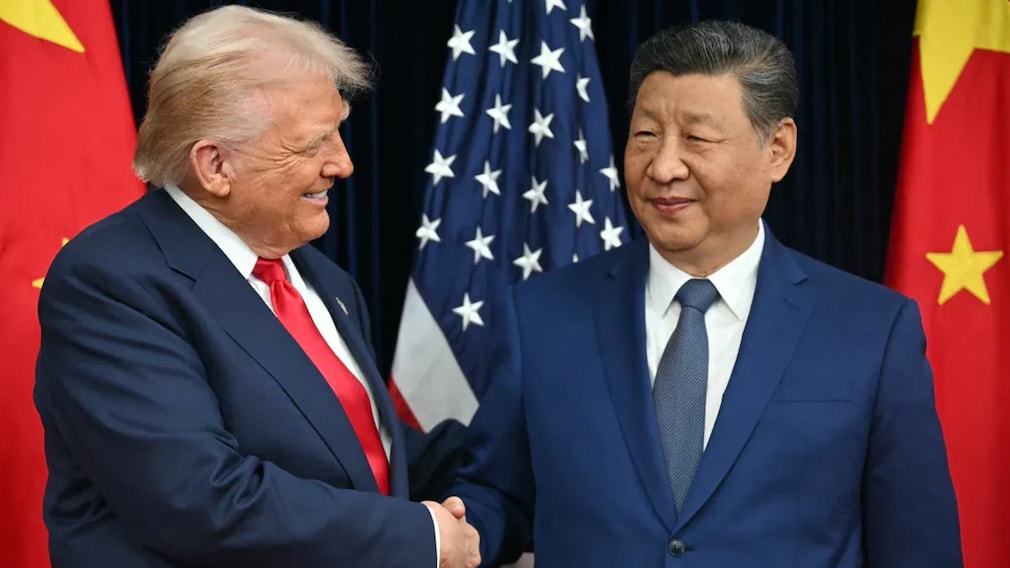
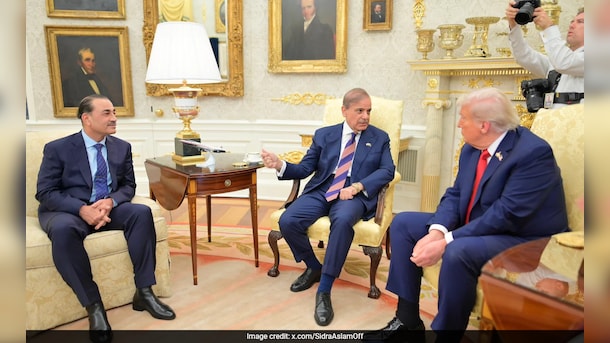
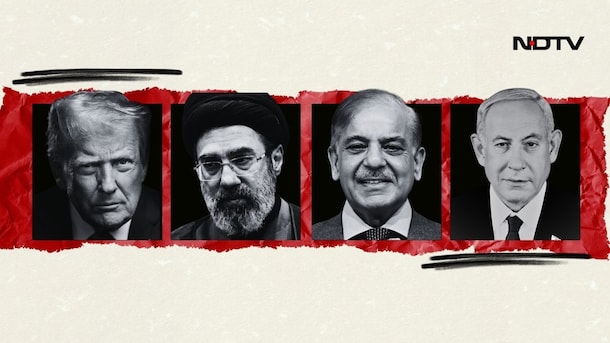
Pakistan's media is ecstatic. After all, it was the country's apparent mediation that paused a disastrous war, and it is probably going to host the first delegation as early as next week. This is Pakistan's moment in the sun, or so it seems. But a tweet posted by the Prime Minister exposed embarrassingly enough that there might have literally been a US handle working the mediation machine. Standing quietly in the shadows is China. Its Foreign Minister has been busy, having made some 26 calls recently. It is also to host the US President soon. Meanwhile, Trump acknowledged Beijing's intervention in a single line. That counts for something. From this mess, some will emerge as winners. Others will scramble to clean up the dust.
The Key Motivation To Mediate
At first sight, Pakistan's diplomatic cup seems to be overflowing. Iran's Foreign Minister, Abbas Araghchi, has expressed gratitude and appreciation on X for the ‘brotherly country' of Pakistan, though not just praising Prime Minister Shahbaz Sharif but also Field Marshal Asim Munir. That should cloud the former's already knitted brow a bit. But Munir has apparently been working the lines the whole night, talking to the US and Iranian negotiators, all of which adds considerably to his stature. That's a big plus for his longevity in a country where former political heads or even army chiefs have had a sticky end. Consider that former Chief of Army Staff Javed Bajwa died un-mourned and mysteriously recently.
The biggest win for Munir, and for his country, however, cannot be publicised. And that is, keeping Pakistan out of the Iran-Saudi war, and thereby sliding out of implementing last year's ‘Strategic Mutual Defence Agreement'. That was a black-and-white commitment that required Islamabad to aid the Saudis if they were attacked. When the first drone attack hit, the Saudis summoned the Field Marshal, with Defence Minister Prince Khalid posting pointedly that the two had discussed the attacks “and the measures needed to halt them within the framework of our Joint Strategic Defence Agreement”. Any support to the Saudis would have had Iran venting its wrath on Pakistan, with a couple of missiles landing in its capital. An already enraged Shia population, which was told by an arrogant Munir to “go to Iran” if it so wished, would have risen up against the army.
A catastrophe was averted with the mediation exercises. Danger again came perilously close when Iran recently hit the Jubail Petrochemical complex days ago, which led to Sharif yet again thanking Riyadh for its “restraint”.
It's not over, though. Even after the declaration of the ceasefire, a vital pipeline that bypasses the Hormuz has been hit. That could upset the apple cart.
Fronting For The US
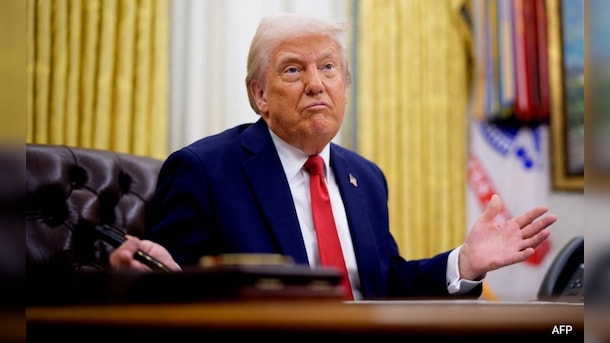
Into all this desperation came the US. The New York Times story confirms that a tweet, posted ostensibly by the Pakistan PM, was in fact drafted in the White House. Trump couldn't be seen as asking for a ceasefire, so he got Pakistan to ‘front' the exercise, while pulling the levers behind. Recall that the tweet was mistakenly posted as ‘Draft: Pakistan PM's message on X' calling for an extension to the deadline to the US, and cooperation from “Iranian brothers”. It was a dead giveaway.
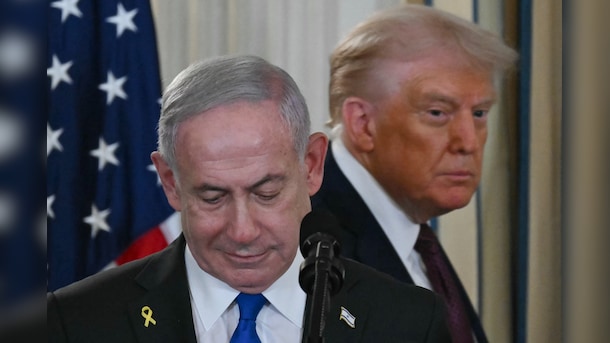
Then came another kerfuffle. Sharif again posted that Iran and the US, "along with their allies", would also implement the ceasefire in Lebanon. That was denied almost immediately by Vice President JD Vance, who said the ceasefire was Iran-focused. Yet another post earlier by Sharif, appealing for an end to attacks by all parties, was marked to everyone by Israel. Clearly, the perils of a mediation exercise are immense when the mediator doesn't recognise one of the central parties to the war. Pakistan's passport explicitly states that travel to Israel is barred. It seems then that a Prime Minister cannot acknowledge its existence in a post on X.
There's more to this. Islamabad apparently sent one version in Farsi to Iran and another version to the US. The main negotiator, Pakistan, grandly announced that all parties had agreed to a ceasefire in Lebanon as well. Soon enough, the US Vice-President, JD Vance, denied it, and Iran's Md Begher Ghalibaf directly accused Washington of violating the agreement when Israel launched a fierce attack on Lebanon, killing 200 and wounding a thousand-plus people. Rather an expensive mistake, for Lebanese lives, and a near-collapse of the ceasefire.
The Chinese Heft
Meanwhile, China is moving quietly to get Iran to the negotiating table and end a war that has damaged its regional standing and potentially could harm its economy. Not only is China the largest import market for Iranian oil, but it has also promised Tehran a $400 billion investment package, besides including the country in its multilateral groupings, including the Shanghai Cooperation Organization (SCO) and the BRICS. All six Gulf Cooperation Council (GCC) members are part of the Belt and Road Initiative (BRI). Typically cautious, China did not quite invest the aforementioned sum but ensured that all energy trade was conducted in yuan, eroding the basis of the dollar, which is hinged on petroleum sales.
Then there is the masterclass that Beijing conducted in 2023 by restoring Saudi-Iran ties, ending seven years of hostility between the two. All that patient diplomacy went for a toss when the US struck Iran in June, and then even more with Operation Epic Fury.
China did not step up to protect its ally publicly. Whether it provided it with additional armaments via the 10,000 km freight corridor that goes entirely through land is unclear, but for years, reports have noted quiet support for its missile programme, and in the last month, specific charges of satellite intelligence for precise targeting.
But here's the key: while China had no intention of supporting Iran publicly, it would have baulked at Tehran's widening of the war to include its other friends in the region. So, while Chinese assistance eroded the facade of US ‘invincibility' - and that too against a weak power - Beijing would have calculated that going further down that road would be diplomatically disastrous. Given Trump's infamous ego and the need to declare ‘victory', Beijing opted for a very quiet entry into the mediation, with Pakistan ‘fronting' the whole exercise. If it failed, China's image would not be dented. So ironically, Beijing was as involved in setting the stage for an end to the war as was the White House.
This X-Based Mediation
For India, all this underlines the perils of ‘X-based' mediation, particularly in a highly complicated war where Shias, Sunnis, Jews and hardcore Christians are vying for advantage. Besides, heading a ceasefire inevitably means that the official mediator will also have to weigh in to police it eventually. Iran will demand a security guarantee, and the only way to do that is to send in troops, either under the banner of the Ummah or the unreliable United Nations. China will not step in, and neither will Russia. Both are, anyway, unacceptable to the US. At some point, Pakistan will have to put that together. So, while Sharif has been hailing the ‘arrival' of Pakistan on the world stage, with thunderous applause from cabinet colleagues, the reality is quite different.
Nonetheless, given Pakistan's long capability to spin a narrative, it will still probably take a bow as the one country desiring “peace”. It's ironic for the Indians. Equally ironically, many are also hoping it can swing the end to a highly damaging war. The truth then is that no matter how devious and self-serving Pakistan's exercise, much of the world is cheering it on. But here is the final reality: when the dust settles, the real winner will be China. Delhi needs to watch the upcoming summit with Trump, where a humiliated superpower will sit and talk to a quiet power that acts quietly to protect its interests. However, much water is yet to flow under the bridge. Watch this space.
Disclaimer: These are the personal opinions of the author
-
Opinion | India Sits Atop 500 Million Tons Of Gold Ore. Why Isn't It Being Mined? - By Shashi Tharoor

We mine a pittance - barely one and a half tons a year - while draining our foreign exchange reserves to import hundreds of tons annually from mines in Australia, Ghana, and Peru.
-
Opinion | How Iran Ceasefire Helps Pakistan Fix A 10-Year-Old 'Mess' With Saudi
In more ways than one, Pakistan has redeemed itself from a fallout it had with its Gulf patrons exactly a decade ago.
-
Why Lebanon Was Excluded From Ceasefire Plan
Created by the IRGC during the Lebanese Civil War, the Hezbollah, a Shiite Muslim movement, gained its moniker - 'the Resistance' - by fighting Israeli troops occupying southern Lebanon till 2000.
-
Opinion | The 'Munir Doctrine' That Drove Pak's US-Iran Brokering Project
The spate of calls, social media messaging, and diplomatic efforts from Pakistan in recent weeks, especially involving PM Shehbaz Sharif and Field Marshal Asim Munir, raises many questions.
-
Opinion | War Ally To Mere Bystander: Is This The Loneliest Day For Netanyahu?
Israel, the US's closest partner in the region and which lured Trump to take on Iran, was ultimately a mere spectator to the ceasefire agreement.
-
Opinion | Iran Scorecard: A List Of Winners, Losers, And Those Who Rigged The Game
Iran is the clearest winner. America absorbed a lasting blow. Trump got what he wanted. Netanyahu is exposed. The Gulf is vulnerable. All these realities are true, and that is the paradox of this war 'of choice'.
-
Opinion | America Will Still Recover From The Iran Humiliation. And That's The Tragedy
While Trump goes on making social media threats to annihilate the entire civilisation of Iran, former Democratic presidents, Bill Clinton and Barack Obama, cannot muster anything other than sports tweets. The only thing the country is united in is tone-deafness.
-
Opinion | Has Pinarayi Vijayan Been Left All Alone?
The carefully constructed image of Vijayan as a leader in full control now lies shattered - in no small measure due to his own actions.
-
Ceasefire Announced, But It's Not A Full Stop To War: What Happens Next
The immediate test for this ceasefire is the next 24 hours; if Iran, the US, and Israel can control their trigger fingers, the Islamabad talks (or whenever the first round takes place) will begin on a positive note.