Opinion | How Pakistan Became World's Only Muslim Nuclear-Powered Nation - Secretly
Trump is bombing Iran now for allegedly building nuclear weapons. But America had once let Pakistan illegally develop an N-bomb right under its nose. This is the scandalous story of 'Project 706'...
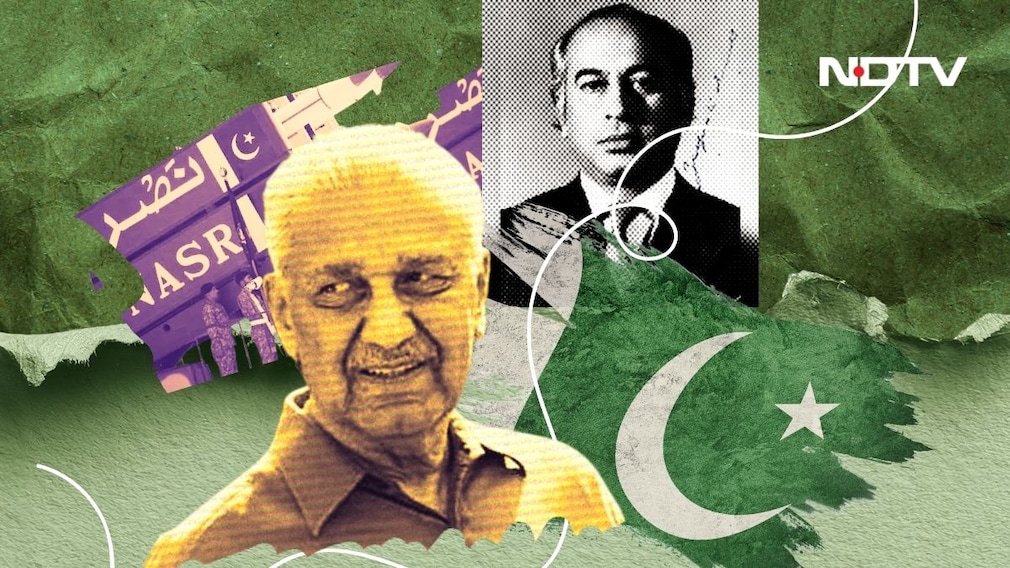
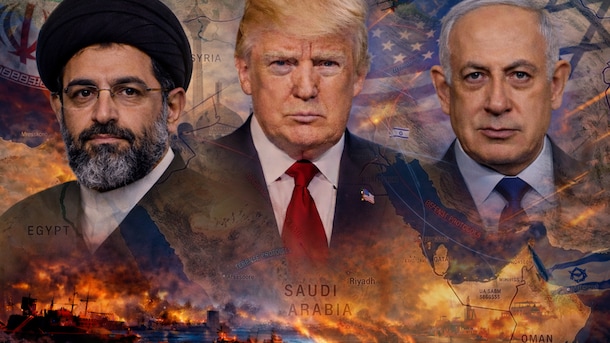
Months before the war against Iran began, US President Donald Trump had made one thing very clear: that Iran must never acquire a nuclear weapon. He said it repeatedly. He insisted that Tehran's nuclear programme, which Iran always said was purely for civilian energy, was a dangerous path towards weapons. Israel agreed. Both governments argued that Iran was quietly trying to enrich uranium to weapons-grade levels.
We know that negotiations went on for months. Diplomats met in European capitals. Omani mediators tried to bridge the gap. Then suddenly, the talks collapsed, and bombs and missiles began to fall over Tehran. The US insistence that Iran roll back its nuclear programme raises an uncomfortable question. If the US is so fiercely opposed to Iran's nuclear ambitions today, why did it not stop Pakistan when it was secretly building the N-bomb?
Pakistan carried out its nuclear tests in 1998 and became the only Muslim-majority nuclear power in the world. Yet, Washington had known for years that Pakistan was pursuing the bomb. However, it looked the other way. Why?
The answer lies in the tangled geopolitics of the Cold War, a shadowy world of espionage and a scientist whose name would become legendary in Pakistan but notorious outside it.
Abdul Qadeer Khan.
'We'll Eat Grass Or Leaves'
The journey of the secret pursuit of Pakistan's nuclear bomb had actually started with the explosion in the Rajasthan desert that announced India's arrival as a nuclear-capable state. In May 1974, India conducted its first nuclear test at Pokhran, describing it as a peaceful nuclear explosion. But across the border in Pakistan, it was a second body blow. It was already traumatised by its defeat in the 1971 war with India and the loss of East Pakistan (now Bangladesh).
The test triggered panic at the highest levels of government. Pakistan's Prime Minister, Zulfikar Ali Bhutto, reacted with a mix of extreme anger and determination. "We will eat grass or leaves," Bhutto famously declared, "even go hungry, but we will get one of our own".
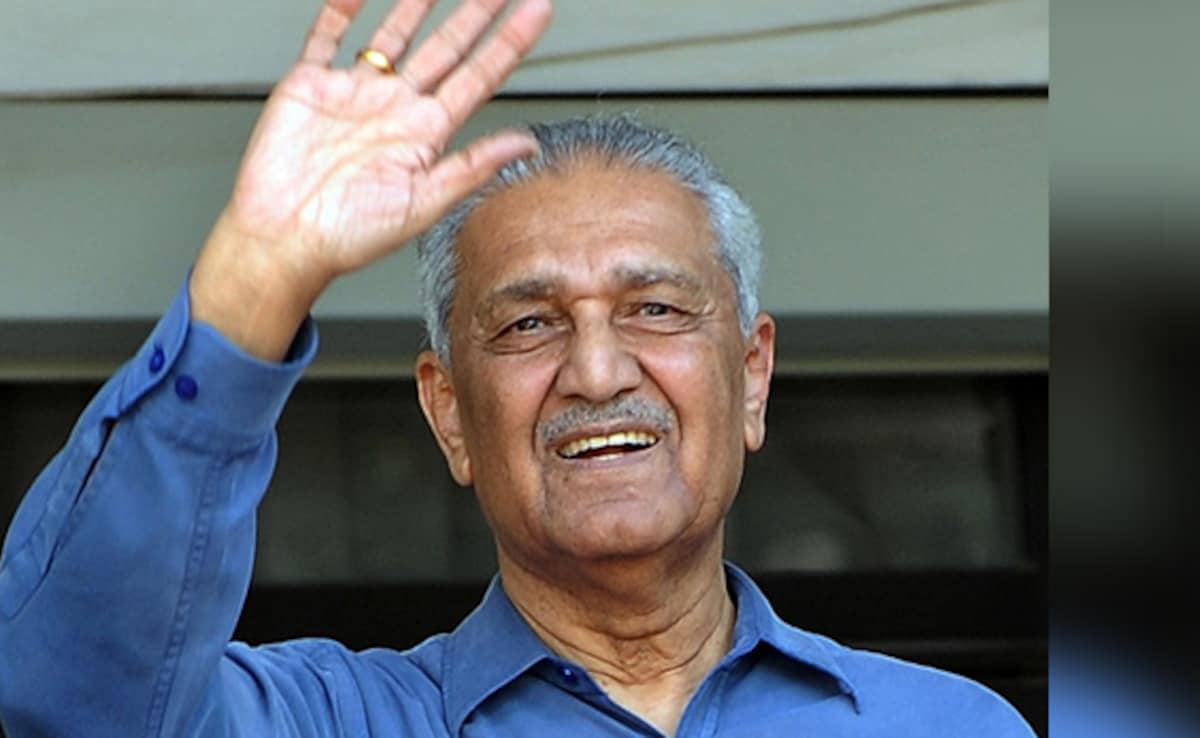
(In photo: Abdul Qadeer Khan)
These were not empty words. It was a question of survival for his country. Soon after India's test, Bhutto quietly launched Pakistan's nuclear weapons programme under the secret code name, 'Project-706', according to US classified information.
The declaration was audacious: build the bomb.
A Rogue Scientist
A drama has to have a hero and a villain. The central character, in Pakistan's case, was Abdul Qadeer Khan, a hero in his own country but a villain abroad.
Khan was a skilful metallurgist working in the Netherlands in the early 1970s. According to records in the US archives, Khan had a job with a contractor linked to URENCO, a European consortium developing uranium enrichment technology. Enrichment is the key step in making nuclear fuel. Done to a certain level, it powers nuclear reactors. Taken further, it produces material for nuclear bombs.
While working in the Netherlands, the documents revealed, Khan gained access to highly sensitive centrifuge designs, machines used to spin uranium at extreme speeds to separate the isotope needed for weapons. According to Dutch investigations, Khan secretly copied classified blueprints and supplier lists.
Then in 1975, Khan quietly left Europe and returned to Pakistan. Of course, he did not return empty-handed. Armed with stolen designs and detailed knowledge of how centrifuge technology worked, Khan helped his country establish a uranium enrichment facility at Kahuta, near Islamabad. The laboratory would later be renamed after him, thus immortalising him in his country. This laboratory became the beating heart of Pakistan's nuclear programme.
A Global Black Market
Nuclear scientists say building a nuclear bomb is not simply about ideas; it requires thousands of specialised components. They say that gas centrifuges, for instance, need precision engineering - vacuum pumps, high-strength alloys, specialised bearings and electronics. Pakistan did not have many of these technologies. So, it went on a shopping spree.
Soon, a worldwide procurement network was formed. It used middlemen, front companies and suppliers across Europe, the Middle East and Asia. According to investigators, many items were "dual-use" technologies. These are equipment that can be used in a normal industry but also in nuclear enrichment.
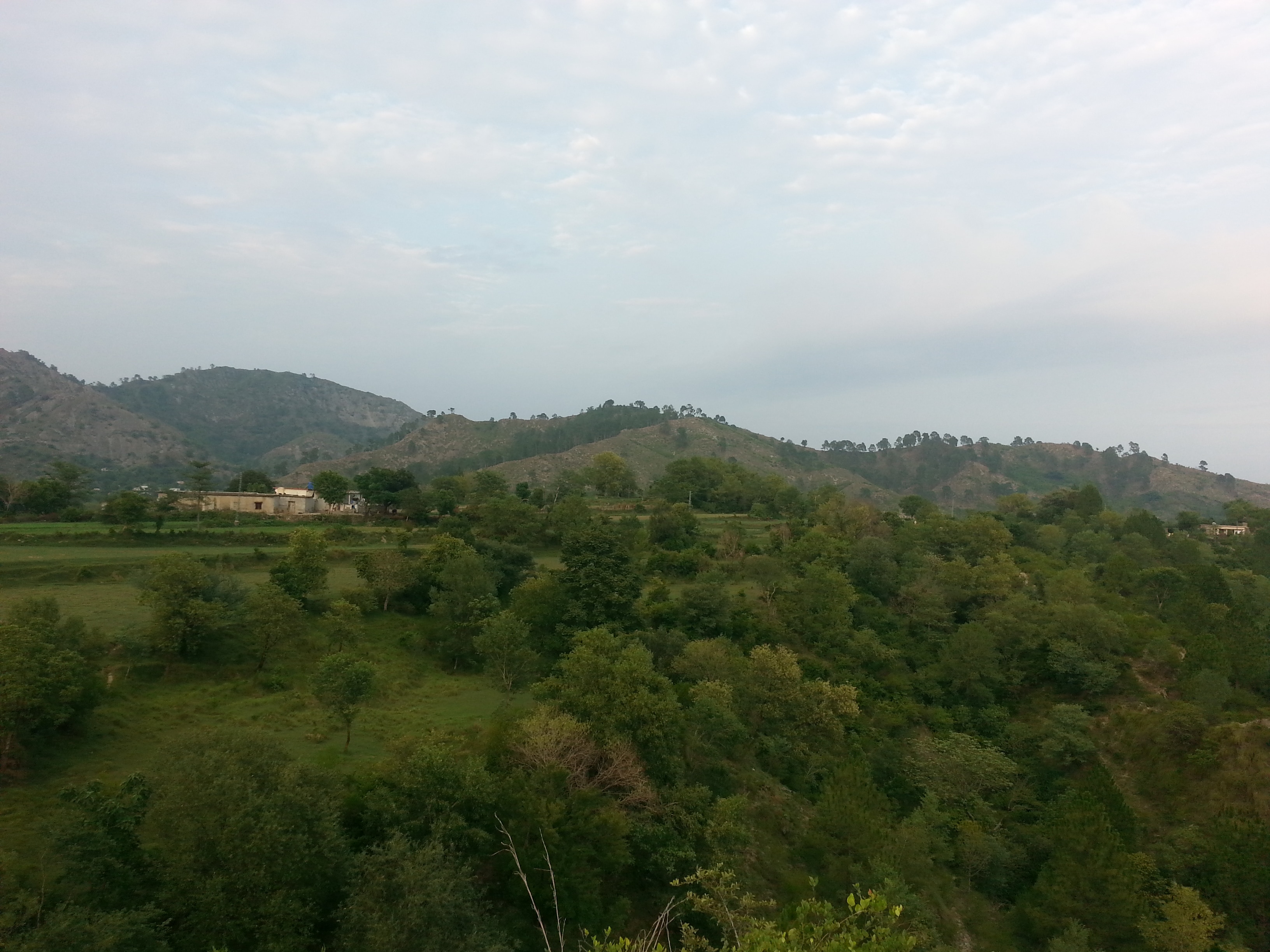
The scenery in Kahuta, Pakistan
Western intelligence agencies soon realised what was happening. According to declassified documents published by the National Security Archive at George Washington University, American officials had already detected signs of Pakistan's secret enrichment programme by the late 1970s. One internal US State Department document from January 1979 warned that Pakistan was "moving more rapidly toward acquisition of nuclear capability than we had earlier estimated".
It's unclear whether Pakistan knew it was being watched. Regardless, the enrichment plant at Kahuta was growing fast. And yet, surprisingly, Washington did not stop it.
Enter: The Cold War
The reason came up in December 1979. The Soviet Union invaded Afghanistan. Suddenly, Pakistan became one of the most important countries in the world for American foreign policymakers. The hatred against communism and its spread in the US was (still is) so deep that it overlooked Pakistan's secret efforts at developing the bomb. They needed Pakistan as the frontline state to support Afghan resistance fighters - the Mujahideen - battling Soviet troops. Billions of dollars in economic assistance began flowing into Islamabad.
The US was perhaps not inclined to stop Pakistan's nuclear programme because it did not want to risk alienating a crucial ally. US officials openly admitted the dilemma at the time. A State Department telegram from the period described the situation as an "acute dilemma": Washington wanted to stop nuclear proliferation, but it also needed Pakistan to fight the Soviets in Afghanistan.
Geopolitics Won. Pakistan Won
Through the 1980s, American intelligence monitored Pakistan's nuclear programme closely but by and large tolerated it or looked the other way. Even US laws, such as the Symington Amendment, which required cutting off aid to countries pursuing unsafeguarded nuclear enrichment, were often waived, or ignored, or both. Under President Ronald Reagan, US aid to Pakistan surged. It was clear that America's priority was defeating the Soviet Union. Pakistan's bomb became a secondary concern.
China's Quiet Hand?
Another important player was watching events closely: India's next-door neighbour, China. India's 1974 nuclear test had alarmed Beijing as well. It had already fought a war with India in 1962 and saw New Delhi as a strategic rival. A nuclear-armed India raised the stakes in the region. Many analysts believe China quietly helped Pakistan's programme as a counterbalance to India. Over the following years, Beijing is widely believed to have provided technical assistance, key materials and possibly even a nuclear weapon design. This support helped accelerate Pakistan's nuclear progress.
The Bomb Takes Shape
By the early 1980s, Pakistan was moving steadily towards nuclear capability. The centrifuges at Kahuta were producing highly enriched uranium, the essential ingredient for nuclear weapons. Pakistan also conducted what nuclear scientists call 'cold tests'. These are, they say, experiments that simulate nuclear explosions without actually detonating a bomb. According to later claims by Pakistan's President Arif Alvi, the country had effectively achieved a nuclear deterrent capability by 1981. Historians debate the exact timeline, but there is little doubt that the foundations of Pakistan's nuclear arsenal were firmly in place by the early 1980s.
And yet, Washington avoided a direct confrontation.
Sanctions Come, But Too Late
When the US actually decided to act, it was too late. As we know, it eventually imposed sanctions on Pakistan's nuclear programme, but only in 1990. By then, the Soviet Union had already withdrawn from Afghanistan. Pakistan was no longer indispensable to American strategy. The American action was ineffective as it came quite late. Pakistan had already mastered uranium enrichment and possessed the capability to build nuclear weapons. Eight years later, the world would see the result. In May 1998, Pakistan conducted a series of nuclear tests in the Chagai mountains, days after India carried out its own tests.
Yes, South Asia had officially become a nuclearised region.
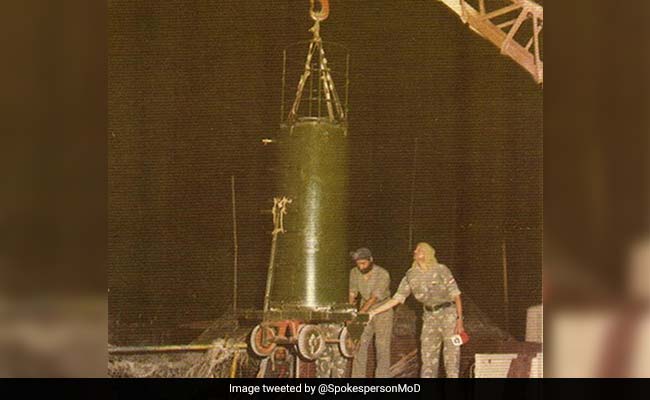
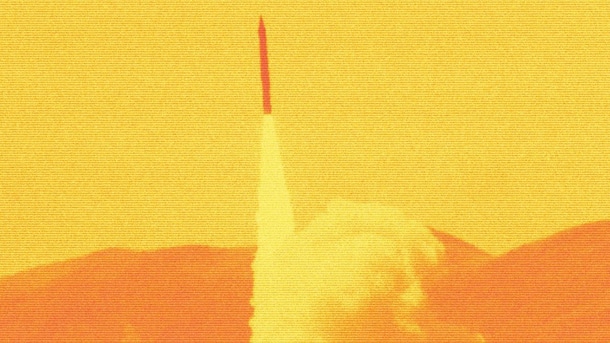
(In photo: A snap from India's Pokhran nuclear tests conducted in May 1998. Pakistan carried out its own tests in the Chagai mountains days later.)
The Scientist Who Sold The Bomb
Just when the story seemed complete, the drama had another twist. Years after Pakistan's nuclear tests, investigators uncovered a vast, global black-market network run by none other than AQ Khan. According to investigations painstakingly conducted by the International Atomic Energy Agency (IAEA) and reporting by The New York Times, Khan's network had secretly sold nuclear technology and centrifuge designs to countries including Iran, North Korea and Libya.
The network operated across continents. Factories in Malaysia produced components. Shipments passed through Dubai. Middlemen moved money and equipment around the world. In 2003, the network was finally exposed when a ship, funnily called BBC China, carrying centrifuge parts to Libya was intercepted. Later, Khan publicly confessed to running the proliferation network. But in Pakistan, he remained a national hero. The government quickly pardoned him.
America's Double Standards
Today, Pakistan is one of the world's nine nuclear-armed states. Washington now insists that Tehran must never acquire nuclear weapons. Yet, when Pakistan was building its bomb, the US knew what was happening and chose not to stop it.
The lesson is that nuclear policy is rarely just about weapons. We already know that, but this American duplicity only reinforces the point. More often, it is about self-interest, America's use-and-discard approach to alliances, and the shifting priorities of geopolitics.
There is another interesting dimension. Investigators of Pakistan's nuclear programme believe countries such as Libya and Saudi Arabia contributed millions of dollars to help finance it. Saudi Arabia and Pakistan have recently signed a NATO-like agreement that allows each to come to the other's defence if attacked by a third country. Today, Saudi Arabia itself is under attack from Iran. Will Pakistan come to Saudi Arabia's rescue? So far, there are no signs of that.
(Syed Zubair Ahmed is a London-based senior Indian journalist with three decades of experience with the Western media)
Disclaimer: These are the personal opinions of the author
-
Hitting A Bullet With A Bullet: No Such Thing As Ballistic Missile Shield

The most effective ballistic missile defence remains what it has always been: not letting the missile launch in the first place
-
When Death Strikes 900 Times In 12 Hours: Palantir's AI Play In Iran
The Maven Smart System - Palantir's ML/AI real-time battlefield analysis beast - crunched through satellite imagery, drone footage, intercepted enemy comms, and 150+ other feeds to spit 1,000+ strike options for the US military on Day 1.
-
For Ayatollah Khamenei, Death Came In Form Of A Blue Sparrow From Space
The 86-year-old supreme leader, who had spent much of the previous weeks sheltering deep underground amid fears of Israeli strikes, had surfaced to attend a high-level meeting. Within hours, he would be dead.
-
Opinion | Will The Iran War Force Pakistan To Pick 'Sides'?
Given its economic dependence on Gulf countries and strategic leanings toward the US, Pakistan will aim to contain any overt anti-American positioning in public protest or state rhetoric.
-
'Did It My Way': Nitish Kumar Quits As Chief Minister After 20 Years Reshaping Bihar Politics
Nitish Kumar this week brought the curtains down on a two-decade journey as Chief Minister of Bihar ahead of a shift to the Rajya Sabha.
-
Why US Sinking Iran Warship Is A Major Wake-Up Call For India's Submarine Arm
Project 75-India, the programme meant to field six next-generation submarines with submerged endurance-boosting air independent propulsion (AIP) tech and land-attack missile capability, was conceived in the late 1990s.
-
Opinion | A Dark Truth: Why Iran, Ukraine Get Bombed, But Pak, Israel, N Korea Don't
With the Iran blitz, the message to smaller and military states is shaping up to be this: 'build the damn bomb - if not legally, then the way Pakistan did in the 1970s'.
-
Opinion | How 12 'Insurers' Sitting In London Paralysed Hormuz - All With A Phone Call
By March 3, there were zero active tanker transits inside the Hormuz Strait. Not because of Iran, or Trump. But simply because an 'underwriter' in London picked up the telephone.
-
Khamenei Falls, World Reels: Iran's War Sucks In NATO, Arabs In 72 Hours
Iran's Supreme Leader Ayatollah Ali Khamenei tracked for months in an elaborate espionage operation died Saturday afternoon after a missile struck his compound in the city centre.
-
Opinion | Iranian Ship Sinks: How A 2016 Deal With US Could Spell Trouble For India
Touted as the first major naval casualty in the Indian Ocean since the Second World War, the attack by the US on IRIS Dena brings the Iran crisis eerily close to home. And a 2016 deal with the US isn't helping.
-
News Updates
-
Featured
-
More Links
-
Follow Us On
