Opinion | A Dark Truth: Why Iran, Ukraine Get Bombed, But Pak, Israel, N Korea Don't
With the Iran blitz, the message to smaller and military states is shaping up to be this: 'build the damn bomb - if not legally, then the way Pakistan did in the 1970s'.
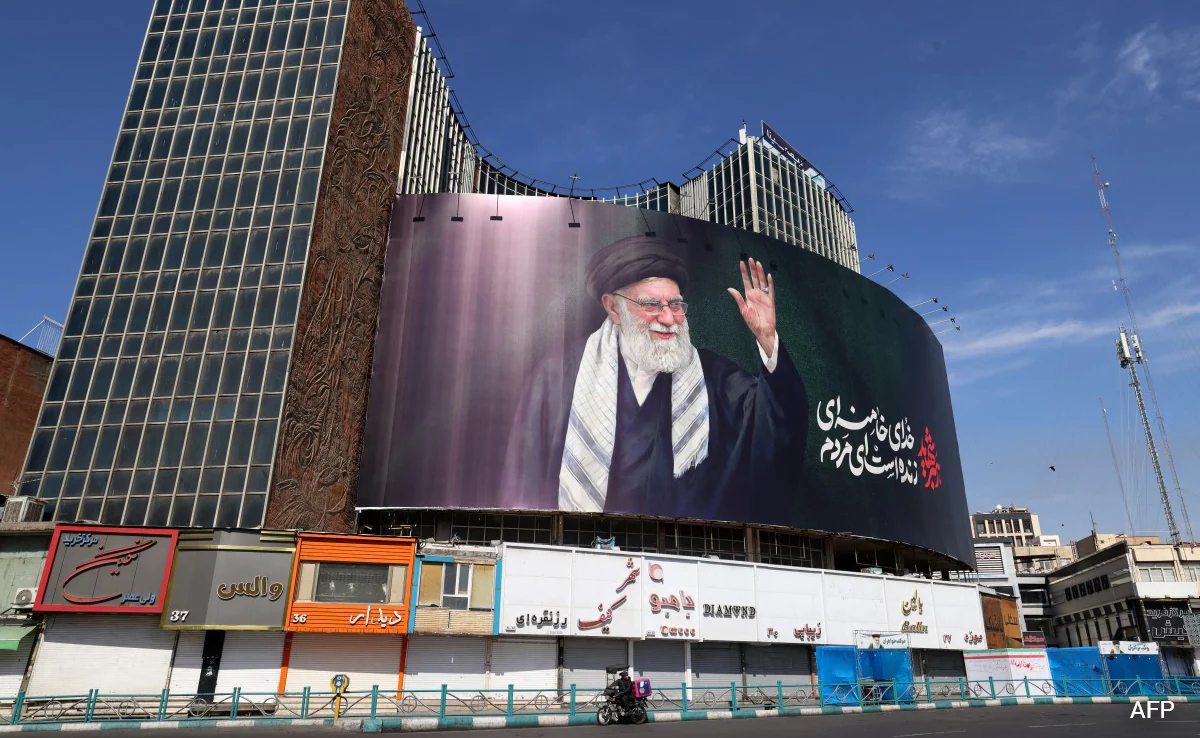
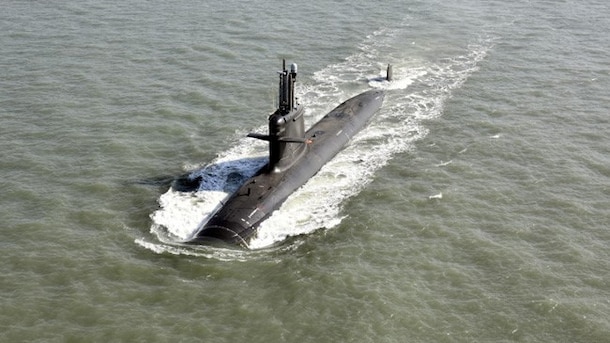
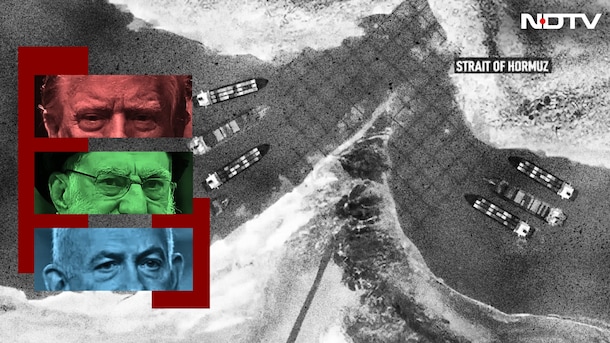
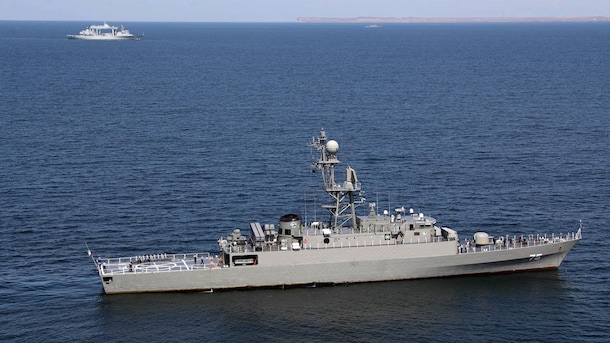
Events have moved very fast since Israel and the US launched joint strikes on Iran on February 28. Iran's Supreme Leader, Ayatollah Khamenei, has been killed in an American strike on his compound. Scores of other high-ranking Iranian officials, including the head of the Islamic Revolutionary Guard Corps, have also been killed. An Iranian warship returning from a naval exercise in India has been sunk by an American submarine right off the coast of Sri Lanka - the first such attack in the Indian Ocean region after the Second World War. The Hormuz Strait lies paralysed. Iran is retaliating by launching missiles and drones not only at Israel but also at US military bases across the region, as well as at Azerbaijan. In the process, it has created divisions between itself and the Arab states, too. The UAE announced it was withdrawing its ambassador from Tehran and closing down its embassy there. The Saudis have warned that they would make available all their resources to help their "Arab brothers". Iran seems to be pretty isolated, with its allies, Russia and China, issuing statements condemning the joint attacks and the assassination of Ayatollah Khamenei but not expressing any proclivity to intervene militarily.
So, where do things go from here?
The Darkest Nuclear Age
Twenty-three years ago, around this same time, George Bush, together with the UK, launched its assault on Iraq to topple the government of Saddam Hussein, on the false premise that Hussein was stockpiling weapons of mass destruction.
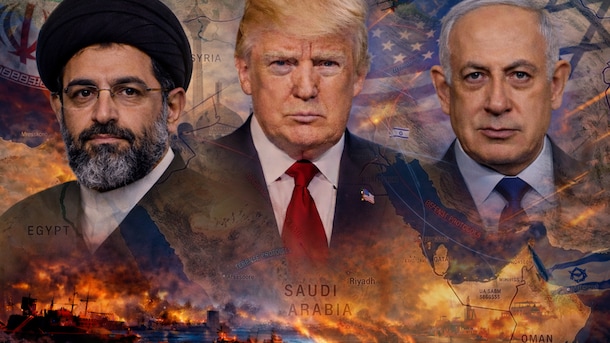
There is an eerie similarity this time around. Trump justified the war on Iran by saying that he was not going to allow Tehran to acquire nuclear weapons. But less than a year ago - last June - when America had bombed Iran, he had declared that he had annihilated Iran's nuclear facilities. In fact, it must be remembered that the latest attacks came when negotiations between the US and Iran were ongoing in Oman and were close to a breakthrough.
This is a great violation of the international rules-based order. Iran is infinitely weaker militarily than both the US and Israel. Its air force is non-existent, and it has no nuclear weapons, unlike the US and Israel. The message to militarily smaller, non-nuclear states is unmistakable. An unintended consequence of Operation "Epic Fury" may well be unchecked nuclear proliferation.
'Get That Bomb'
For, after all, this has become an oft- repeated pattern - militarily strong states attacking weaker ones. Take Iraq, for instance. Half the size of Iran, the Anglo-US coalition could attack it only because it knew Iraq did not have weapons of mass destruction. It has been the same in the case of Ukraine. At the time of the dissolution of the Soviet Union, Ukraine had been a nuclear state. It voluntarily gave up nuclear weapons in exchange for security guarantees. Yet, Russia invaded it. It is doubtful whether Russia would have taken this step had Ukraine retained its nuclear arsenal.
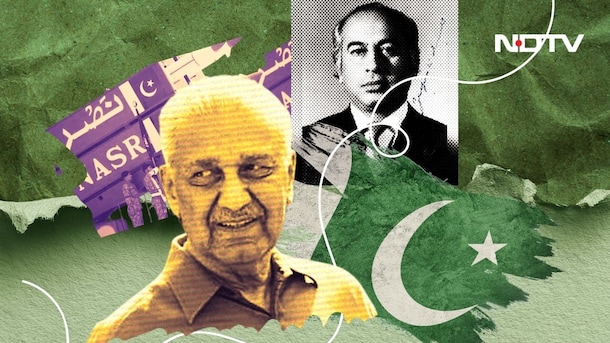
Coming back to Iran, everything it has been accused of doing by Israel and the US, which makes up the casus belli for the war, is true of Pakistan, too. Iran is accused of instrumentalising terrorism as policy, but so does Pakistan. If Iran is guilty of creating proxies that target Israel, all the different jihadi groups that Pakistan has created remain India-centric. If Iran is said to be guilty of exporting terrorism to the world, so is Pakistan, whose name has cropped up in most terror attacks across the world. Yet, the difference in the policy pursued towards Iran and Pakistan by successive US administrations could not be starker. And the reason is only one - Pakistan is a nuclear state, while Iran is not. It is extremely doubtful whether Iran could have been attacked in this manner had it possessed nuclear arms.
What Iran Really Possessed - And What It Didn't
It was years ago that Iran eschewed the pursuit of nuclear weapons. It is a signatory to the Nuclear Non-proliferation Treaty (NPT). The Ayatollah had even issued a fatwa against the pursuit of weapons of mass destruction. What Iran did insist on was its right to use nuclear power for peaceful means and the right to enrich uranium at a lower threshold than weapons-grade levels. And even in the latest round of negotiations, Iran had already agreed to unprecedented compromises. Yet, it was attacked.
The only known nuclear state in the Middle East is Israel. Now imagine a scenario where, to obtain parity, countries like Saudi Arabia and Qatar suddenly go nuclear. In fact, the cover of a nuclear umbrella is what is widely believed to be behind the Saudi defence pact with Pakistan, or behind Turkey's courting of Pakistan.
It is the same with North Korea. Despite all the acrimony between it and the US - including the personal friction between Kim Jong Un and Trump - there are red lines that no one crosses.
Illegal Recourses
Over and over, the message to smaller and military states is this: create a nuclear deterrent, and you are safe. But the example of Iran will also mean this: 'illegal nuclear proliferation is the only way'. The same way that Pakistan perhaps went nuclear, buying the raw material on the black market so it cannot be traced. Or more states may seek the security of a nuclear umbrella from states like Pakistan and North Korea.
Even officially, nuclear-powered states such as France are mooting the increase of their arsenal of nuclear warheads after the beginning of this war.
And such nuclear proliferation may be the biggest, most chilling fallout of Operation Epic Fury.
(The author is a senior journalist)
Disclaimer: These are the personal opinions of the author
-
Hitting A Bullet With A Bullet: No Such Thing As Ballistic Missile Shield

The most effective ballistic missile defence remains what it has always been: not letting the missile launch in the first place
-
When Death Strikes 900 Times In 12 Hours: Palantir's AI Play In Iran
The Maven Smart System - Palantir's ML/AI real-time battlefield analysis beast - crunched through satellite imagery, drone footage, intercepted enemy comms, and 150+ other feeds to spit 1,000+ strike options for the US military on Day 1.
-
For Ayatollah Khamenei, Death Came In Form Of A Blue Sparrow From Space
The 86-year-old supreme leader, who had spent much of the previous weeks sheltering deep underground amid fears of Israeli strikes, had surfaced to attend a high-level meeting. Within hours, he would be dead.
-
Opinion | How Pakistan Became World's Only Muslim Nuclear-Powered Nation - Secretly
Trump is bombing Iran now for allegedly building nuclear weapons. But America had once let Pakistan illegally develop an N-bomb right under its nose. This is the scandalous story of 'Project 706'...
-
Opinion | Will The Iran War Force Pakistan To Pick 'Sides'?
Given its economic dependence on Gulf countries and strategic leanings toward the US, Pakistan will aim to contain any overt anti-American positioning in public protest or state rhetoric.
-
'Did It My Way': Nitish Kumar Quits As Chief Minister After 20 Years Reshaping Bihar Politics
Nitish Kumar this week brought the curtains down on a two-decade journey as Chief Minister of Bihar ahead of a shift to the Rajya Sabha.
-
Why US Sinking Iran Warship Is A Major Wake-Up Call For India's Submarine Arm
Project 75-India, the programme meant to field six next-generation submarines with submerged endurance-boosting air independent propulsion (AIP) tech and land-attack missile capability, was conceived in the late 1990s.
-
Opinion | How 12 'Insurers' Sitting In London Paralysed Hormuz - All With A Phone Call
By March 3, there were zero active tanker transits inside the Hormuz Strait. Not because of Iran, or Trump. But simply because an 'underwriter' in London picked up the telephone.
-
Khamenei Falls, World Reels: Iran's War Sucks In NATO, Arabs In 72 Hours
Iran's Supreme Leader Ayatollah Ali Khamenei tracked for months in an elaborate espionage operation died Saturday afternoon after a missile struck his compound in the city centre.
-
Opinion | Iranian Ship Sinks: How A 2016 Deal With US Could Spell Trouble For India
Touted as the first major naval casualty in the Indian Ocean since the Second World War, the attack by the US on IRIS Dena brings the Iran crisis eerily close to home. And a 2016 deal with the US isn't helping.