Opinion | Deal Or 'Setup'? Why Both US And Iran Think This Ceasefire Is A Trap
A list of suspicions each side has about the other.
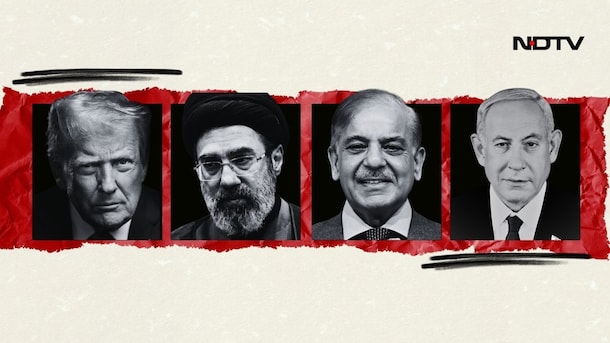
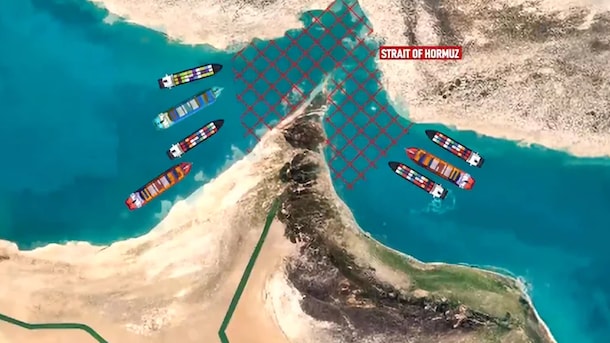
The two-week US-Iran ceasefire represents less a resolution of the ongoing crisis and more a carefully calibrated pause in a rapidly escalating conflict. What began in February 2026 with American and Israeli strikes on Iran has now entered a tenuous phase of de-escalation, driven as much by strategic necessity as by diplomatic opportunity. At its core, the arrangement hinges on a transactional exchange: the suspension of direct US (and Israeli) attacks in return for Iran's immediate reopening of the Strait of Hormuz, a vital artery for global energy flows that Tehran had effectively choked, sending oil markets into turmoil.
The contours of the agreement underscore its provisional nature. A two-week window has been carved out not as an end in itself, but as a diplomatic holding pattern to explore the feasibility of a more durable settlement. Iran's commitment to ensuring safe and uninterrupted passage through Hormuz - reportedly in coordination with its armed forces and with potential revenue-sharing mechanisms involving Oman - sits alongside a US decision to pause offensive operations while retaining the right to defend its interests. This is, in essence, crisis management rather than conflict resolution.
But the substantive gaps between the two sides remain formidable. Iran's 10-point proposal, embracing demands ranging from sanctions relief and compensation to recognition of its nuclear rights and a US military drawdown - stands in sharp contrast to Washington's insistence on stringent nuclear constraints, the surrender of highly enriched uranium, curbs on proxy networks, and tacit acceptance of Israel's legitimacy. These are not marginal differences; they go to the heart of the regional order each side seeks to shape. Israel's position further complicates matters as it supports the pause on Iran while explicitly excluding its ongoing operations against Hezbollah from the ambit of the ceasefire.
Both Washington and Tehran have, rather predictively, sought to frame the outcome as a victory, even as early reports of minor violations hint at the fragility of the arrangement. This is a ceasefire built on mutual suspicion, not mutual trust.
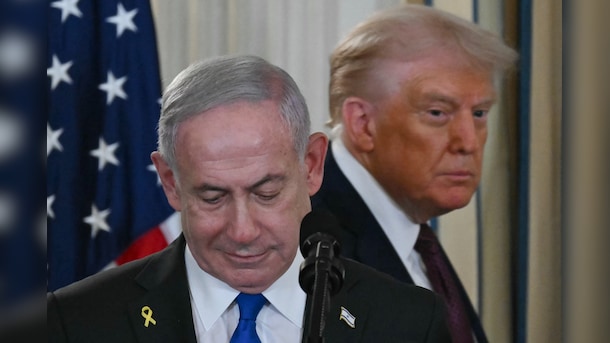
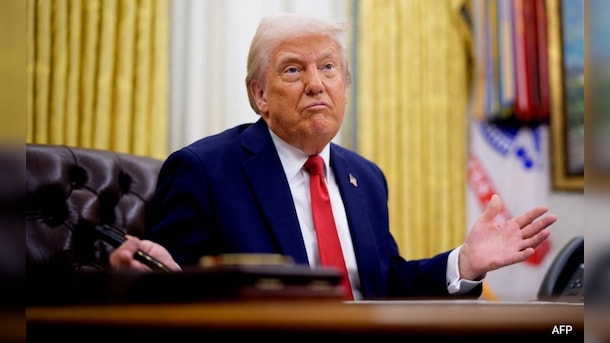
For Donald Trump, this episode is emblematic of a broader strategic instinct that has come to define his approach to international crises, an instinct rooted in calibrated brinkmanship, where escalation is not an end in itself but a means to compel adversaries into negotiation. By imposing a stark and highly public deadline, backed by the threat of overwhelming military force, Trump sought to seize control of the escalation ladder. In doing so, he has, at least for the moment, managed to arrest a potentially catastrophic spiral without having to execute the most extreme military options at his disposal. This ability to step back from the brink, after having gone conspicuously close to it, forms the crux of his "peace through strength" narrative.
The reopening of the Strait of Hormuz, a critical chokepoint in global energy supply chains, and Iran's return to the negotiating table provide tangible outcomes that Trump can point to as evidence of success. In strategic terms, these developments allow him to argue that coercive diplomacy, when backed by credible force and political will, can deliver results where conventional diplomacy may falter. The swift and positive response of global markets has further reinforced this perception, lending economic validation to his approach.
Yet, this apparent success must be weighed against its deeper and more enduring costs. Domestically, Trump's rhetoric, often unusually stark, even by his own standards, has drawn criticism from across the political spectrum. Concerns about the proportionality of threats and the risks of inadvertent escalation have exposed fault lines not only between Republicans and Democrats but also within his own party. This episode has unfolded against the backdrop of a broader American weariness with prolonged military engagements, raising questions about the sustainability of such high-stakes tactics.
Internationally, the implications are even more complex. The language of ultimatum and brinkmanship, while effective in the short term, risks undermining the credibility of the United States as a predictable and stabilising actor. Allies may find reassurance in Washington's willingness to act decisively, but they may also grow wary of the volatility that such an approach introduces into crisis management. Adversaries, meanwhile, may become more inclined to test these limits, calculating that escalation can be negotiated down under pressure.
In this sense, Trump's strategy delivers immediate gains but at the risk of longer-term strategic erosion, highlighting the enduring tension between tactical success and systemic stability in an evolving geopolitical environment.
More fundamentally, the ceasefire does little to resolve the structural drivers of the conflict. The nuclear question, the role of regional proxies, and the sanctions regime remain deeply contested. Iran, for its part, has signalled that it views the outcome as evidence of US overreach rather than concession. In such a context, the two-week pause is best understood as a strategic intermission - one that creates space for diplomacy but does not guarantee its success.
Trump is projecting it as his personal victory, but it is also a reminder of the limits of coercion in addressing deeply embedded geopolitical rivalries. Whether this moment evolves into a more enduring settlement or dissolves into yet another cycle of confrontation will depend on what transpires in Islamabad. For now, the ceasefire is not an endgame - it is merely the next move in a much longer strategic contest.
(Harsh V Pant is Vice President, ORF, New Delhi)
Disclaimer: These are the personal opinions of the author
-
Opinion | India Sits Atop 500 Million Tons Of Gold Ore. Why Isn't It Being Mined? - By Shashi Tharoor

We mine a pittance - barely one and a half tons a year - while draining our foreign exchange reserves to import hundreds of tons annually from mines in Australia, Ghana, and Peru.
-
Opinion | How Iran Ceasefire Helps Pakistan Fix A 10-Year-Old 'Mess' With Saudi
In more ways than one, Pakistan has redeemed itself from a fallout it had with its Gulf patrons exactly a decade ago.
-
Why Lebanon Was Excluded From Ceasefire Plan
Created by the IRGC during the Lebanese Civil War, the Hezbollah, a Shiite Muslim movement, gained its moniker - 'the Resistance' - by fighting Israeli troops occupying southern Lebanon till 2000.
-
Opinion | The 'Munir Doctrine' That Drove Pak's US-Iran Brokering Project
The spate of calls, social media messaging, and diplomatic efforts from Pakistan in recent weeks, especially involving PM Shehbaz Sharif and Field Marshal Asim Munir, raises many questions.
-
Opinion | War Ally To Mere Bystander: Is This The Loneliest Day For Netanyahu?
Israel, the US's closest partner in the region and which lured Trump to take on Iran, was ultimately a mere spectator to the ceasefire agreement.
-
Opinion | Iran Scorecard: A List Of Winners, Losers, And Those Who Rigged The Game
Iran is the clearest winner. America absorbed a lasting blow. Trump got what he wanted. Netanyahu is exposed. The Gulf is vulnerable. All these realities are true, and that is the paradox of this war 'of choice'.
-
Opinion | America Will Still Recover From The Iran Humiliation. And That's The Tragedy
While Trump goes on making social media threats to annihilate the entire civilisation of Iran, former Democratic presidents, Bill Clinton and Barack Obama, cannot muster anything other than sports tweets. The only thing the country is united in is tone-deafness.
-
Opinion | Has Pinarayi Vijayan Been Left All Alone?
The carefully constructed image of Vijayan as a leader in full control now lies shattered - in no small measure due to his own actions.
-
Ceasefire Announced, But It's Not A Full Stop To War: What Happens Next
The immediate test for this ceasefire is the next 24 hours; if Iran, the US, and Israel can control their trigger fingers, the Islamabad talks (or whenever the first round takes place) will begin on a positive note.
-
Opinion | Ceasefire Aside, Iran Won't Give Up On A Hormuz 'Toll'
Since February 28, when the United States and Israel struck Iran, the IRGC has been constructing its 'tollbooth' with methodical precision. This is what may happen to it now...