Opinion | Amid Growing LPG Crisis, Why Your Piped Gas May Be The Real Winner
While LPG distribution falters amid the Hormuz crisis, PNG supplies to households in major cities continue largely uninterrupted. Will it last?
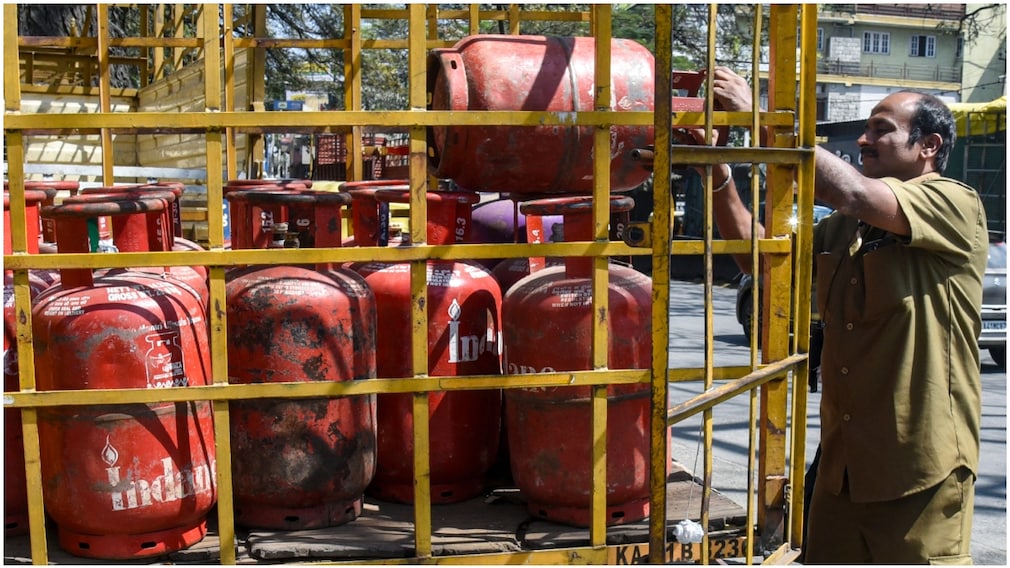
The contrast between LPG and PNG is a contrast between two energy delivery architectures: one, based on physical distribution cycles, and another on continuous infrastructure flow. India's latest cooking-fuel disruption has revealed a structural asymmetry in how energy reaches Indian households. As geopolitical tensions around the Strait of Hormuz disrupted LPG cargo movements in March 2026, the contrast between India's cylinder-based LPG ecosystem and the piped natural gas (PNG) network became stark.
The queues outside LPG agencies were not merely a temporary logistics problem. They exposed a deeper vulnerability in India's cooking fuel architecture, one rooted in import dependence, thin storage buffers and a complex distribution chain. By contrast, households connected to city gas distribution (CGD) pipelines experienced little disruption.
However, the current crisis does not mean PNG has replaced LPG. But it does explain why, under stress, PNG has demonstrated an infrastructure resilience that LPG struggles to match.
India's LPG Dependence
India is one of the world's largest LPG consumers. According to data from the Ministry of Petroleum and Natural Gas (MoPNG), India consumed about 31.3 million tonnes of LPG in FY2024-25, while domestic production stood at roughly 12.8 million tonnes. Imports, therefore, met close to 60% of total demand. The scale of LPG dependence is equally visible at the household level. Data from the Petroleum Planning and Analysis Cell (PPAC) indicates that India has over 33.2 crore active LPG connections, including more than 10 crore beneficiaries under the Pradhan Mantri Ujjwala Yojana (PMUY). This rapid expansion of LPG access since 2016 has been a major clean-cooking achievement. But it has also deepened the country's exposure to external supply shocks.
The geographical concentration of LPG imports amplifies this risk. Government briefings in March 2026 indicated that around 90% of India's LPG imports normally transit through the Strait of Hormuz, one of the world's most critical energy chokepoints. Estimates from S&P Global suggest that the strait directly affects over half of India's LPG consumption when transit routes are accounted for. The physical storage capacity of the system offers limited cushioning.
In a supply system designed for rapid cargo-to-distribution turnover, even short shipping disruptions can create local shortages before national reserves are mobilised. This is exactly what unfolded during the March disruption.
Why Piped Gas Was Unharmed
However, while LPG distribution faltered, PNG supplies to households in major cities continued largely uninterrupted. The difference lies in the structure of the two delivery systems.
LPG is a logistics-heavy fuel. After production or import, LPG must pass through multiple stages: storage at terminals, transport to bottling plants, cylinder filling, trucking to distributors and final delivery to households. India operates around 210 LPG bottling plants with a rated capacity of about 22.6 million tonnes annually, with more than 25,000 LPG distributors.
Each stage in this chain introduces potential disruption points during supply shocks.
PNG, by contrast, relies on a continuous pipeline network. Natural gas flows from production fields or import terminals through the national gas grid to city gas distribution systems and then directly to household meters. Once connected, the household receives gas through an underground pipeline without booking refills or managing cylinder deliveries.
During the current crisis, this structural difference mattered. The government's emergency response reinforced the advantage. Under a Natural Gas Control Order issued on March 9, 2026, under the Essential Commodities Act, domestic PNG and CNG were placed in the highest priority category for gas allocation.
A major reason is that PNG supplies for households rely heavily on domestically produced administered-price gas, primarily from ONGC and Oil India nomination fields. This supply pool is already ring-fenced from global LNG price volatility and import disruptions.
In effect, the government insulated pipeline-based household consumption first, while other sectors absorbed the supply shock. The result was visible on the ground. Households connected to PNG networks in cities such as Delhi-NCR, Mumbai, Bengaluru and Ahmedabad continued receiving uninterrupted cooking gas even as LPG refill intervals were extended and commercial cylinder supplies tightened.
But PNG Has Its Limits, Too
Despite its resilience, PNG currently serves only a small share of India's households. As of late 2024, India had around 1.36 crore domestic PNG connections, compared with 33.2 crore LPG connections. In other words, PNG currently reaches just about 4% of the household base served by LPG.
The government and the Petroleum and Natural Gas Regulatory Board (PNGRB) have ambitious expansion plans. The national gas pipeline network had about 25,400 km operational by mid-2025, with another 10,400 km under construction as part of the "One Nation, One Grid" gas infrastructure plan. PNGRB projections target 12.63 crore PNG connections by 2034. However, even if this is achieved, it would still leave a majority of households dependent on LPG for cooking.
Implementation challenges remain significant. PNGRB performance reports indicate that around 30% of authorised city gas distribution geographical areas currently have no domestic PNG connections. Earlier, CGD bidding rounds have also missed rollout targets, with some zones achieving only a fraction of planned household connections.
Cost is another barrier. Installing a PNG connection typically requires household infrastructure costs estimated between Rs 6,000 and Rs 9,000, particularly for retrofitting existing buildings. For lower-income households, including many PMUY beneficiaries, such upfront investment is difficult without subsidy support.
By contrast, LPG subsidies directly reduce consumption costs. PMUY households currently receive around ₹300 per cylinder in subsidy support, making LPG financially accessible even if supply disruptions occur.
This creates a policy dilemma. PNG offers infrastructure resilience, but LPG remains the only viable cooking fuel for much of rural and small-town India.
What The Current Crisis Reveals
The March 2026 disruption highlights two parallel policy imperatives. First, pipeline expansion remains central to long-term energy resilience. Every additional PNG connection effectively removes a household from a logistics-intensive cylinder supply chain that is exposed to geopolitical shipping risks.
Second, LPG will remain indispensable for years. Strengthening LPG storage capacity and distribution resilience, therefore, remains equally important.
The crisis ultimately reveals not a simple transition from LPG to PNG, but a dual-fuel reality. Pipeline networks can provide stability in dense urban regions, while LPG will continue to dominate dispersed rural markets where pipeline economics remain challenging.
For now, PNG's advantage lies not in scale but in infrastructure design. In a moment of global energy turbulence, the pipeline network quietly demonstrated what energy planners have long argued: systems built on continuous supply infrastructure tend to absorb shocks more effectively than those dependent on complex physical distribution chains.
Whether that resilience can be extended beyond a limited urban footprint will determine how far PNG's current advantage translates into a broader transformation of India's cooking-fuel landscape. The question for policymakers is not whether PNG will replace LPG, but whether India's cooking-fuel system can evolve into a hybrid architecture where pipeline networks absorb urban demand while LPG systems are strengthened for rural resilience.
[Deepanshu Mohan is Professor of Economics and Dean, O.P. Jindal Global University, and a Visiting Professor at the London School of Economics. Saksham Raj is a research analyst for CNES, O.P Jindal Global University.]
Disclaimer: These are the personal opinions of the author
-
On Disagreement, Democracy: An Open Letter To Mani Shankar Aiyar - By Shashi Tharoor

Congress's Lok Sabha MP Shashi Tharoor responds to a recent "assessment" by Mani Shankar Aiyar of his positions - and 'character'.
-
Harish Rana Can Die Because Aruna Shanbaug Lived: India's Euthanasia Journey
A brutal sexual assault caused severe brain damage and left Aruna Shanbaug in a vegetative state for four decades
-
After Oil, Gas, Iran's Hormuz Chokehold Raises Fertiliser Red Flag For India
The data suggests India faces a 20-25 per cent exposure to fertiliser supply chain disruptions due to the war and informal blockade on the Hormuz.
-
Opinion | 'We Protect America, Not Vice Versa': Inside Gulf's Growing Frustration With Trump
Arab states are increasingly waking up to the bitter truth that the US compromised the region's safety for Israel's war goals, despite millions of dollars spent on security arrangements.
-
'Moderate' Father vs 'Hardline' Son: The Differences Between Ali And Mojtaba Khamenei
Mojtaba Khamenei, the second son of Ayatollah Ali Khamenei, has been chosen as the country's new supreme leader after his father was killed in US-Israeli strikes.
-
China's Eyes In Space Exposed US War Machine Before 1st Bomb Fell In Iran War
The pictures showed aircraft parked on runways, transport planes arriving at desert airfields and carrier decks crowded with fighters somewhere in the Mediterranean. Yet each image carried an unusual level of detail -- not in English, but in Mandarin.
-
Opinion | Is The Gulf Now Questioning Its US Ties - And The American 'Guarantee'?
Doubts are bound to follow if even the US, the mightiest of the militaries and with 13 major military bases in the region, could not protect it against only one opposing nation - Iran.
-
Opinion | The Country That Buys 90% Of Iran's Oil Is Still Not Panicking. Here's Why
Beijing has spent two decades preparing to answer: what happens when the Strait of Hormuz closes?
-
With Missiles Carrying 1,000 kg Explosives, A New Tactical Phase For Iran
Iran dropped a bombshell on Sunday after a senior Revolutionary Guard commander vowed to only launch missiles with explosives of 1,000kg or more
-
The Beast Of Kandahar: How One Captured Drone Changed Modern Warfare
One December day in 2011, a Sentinel mission ended in a moment that would reshape the global drone arms race. Instead of returning to its base in Afghanistan, the Sentinel landed inside Iran.