Opinion | US-China Trade War Has Turned Into A Full-Blown Siege, And India Is Stuck
Beijing's export controls, timed before diplomacy, reveal insecurity more than strength. By weaponising minerals, China has reminded the world why diversification is destiny.
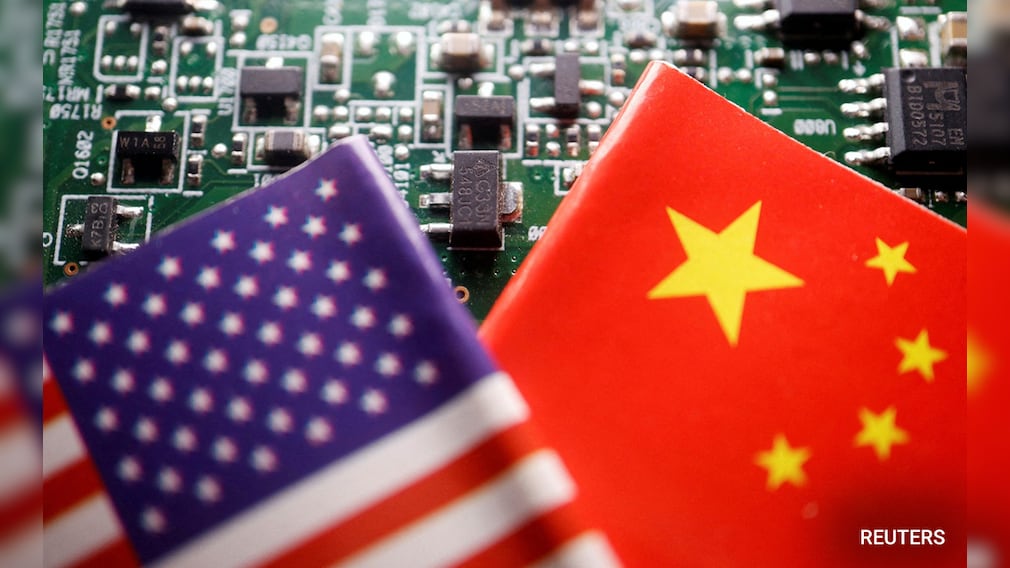
Ahead of a planned Trump-Xi meeting in South Korea in late October, Beijing announced sweeping export controls on rare-earth elements, magnets, and high-energy battery materials. It also imposed tighter licensing on dozens of processing, refining, and mining technologies and materials. It was not policy but power politics in chemical form.
President Trump retaliated with threats of 100% tariffs and new curbs on software exports, casting doubt on whether the summit would proceed. Beijing insisted the impact would be "extremely limited", claiming its measures served "national security", meaning supplies for defence industries would be rejected. Analysts in China admitted, however, that they were also a response to Washington's expanded export controls on Chinese chipmakers and higher port fees on China-built vessels.
This is no longer a trade war. It is a supply-chain siege, waged one element at a time. The United States weaponises semiconductors, Beijing weaponises minerals. And in the crossfire, the rest of the world is caught.
Where India Hurts Most
India's exposure is uncomfortably high. Nearly 90% of our rare-earth and magnet imports come from China, about 53,700 tonnes in 2024-2025 alone. This is a core vulnerability.
From electric vehicles (EVs) and auto electronics to wind power turbines and aerospace, every magnet we import is a reminder that supply chains have become the new borders of power. Domestic production remains nascent. When Beijing slows approvals, production lines from Pune to Coimbatore will feel the tremors.
Just as the 1970s oil embargo revealed global energy vulnerabilities, the mineral chokehold of the mid-2020s is exposing material dependencies.
What Changed Last Week
China expanded its control list and extended its licensing regime beyond its borders. Even goods made abroad with Chinese inputs can now be held up, mirroring the U.S. practice of regulating foreign items built with American technology.
Beijing calls these licences, not bans, but each one is a permission slip for the modern economy. Approvals for civilian use are promised, yet queues are long and denials selective. In effect, the licence has become the new weapon, and compliance the new coercion.
The ripple effects came almost immediately. In Europe, the Dutch government moved on Sunday to seize control of the Chinese-owned chipmaker Nexperia, citing threats to technological sovereignty and the safeguarding of crucial knowledge. The timing, just days after Beijing's export curbs, shows how minerals and microchips now share the same fault line in the global contest for economic security.
India's Early Responses
New Delhi has begun to move. The government is advancing a National Critical Minerals Stockpile to secure a year's worth of strategic reserves, including neodymium, praseodymium, dysprosium, and terbium, metals essential for EV motors and wind turbines.
A production-linked incentive scheme to boost domestic manufacturing is being drafted to seed India's first commercial magnet plants. Pilot lines may appear by early 2026, though real volumes will take longer. The Indian Rare Earths Limited has been asked to curb exports and prioritise domestic users.
To reduce exposure, some auto suppliers are testing magnet-free motors such as switched-reluctance and induction designs, which are alternative motor designs that use no rare-earth materials.
These are sensible beginnings, but the clock is ticking. India's challenge is not discovering minerals, it is developing the discipline to turn dust into design.
The Dependency Trap
India holds the world's fifth-largest rare earth reserves, about 6.9 million tonnes. But we are almost entirely import-dependent for refined magnets and alloys. Even where countries hold ore, refining often happens in China. The bottleneck is not geology but technology.
Even if India mines ore tomorrow, it could not plug into the chain without mastering downstream complexity. Beijing has over decades gained high-purity separation and magnet-making expertise.
Foreign subsidiaries in China must now seek export permission, and Chinese engineers aiding overseas partners can be penalised. China no longer sells minerals. It sells access, and access comes with allegiance.
A Playbook for India
India cannot contest these measures legally, as they fall under national-security exemptions. It can, however, outgrow them strategically. Minerals may be finite. Ingenuity is not.
India's path forward has three clear stages: stability, strength, and solidarity.
First, stability. Build 12 to 18 months of buffer stock for critical elements. Use bonded warehouses and staggered purchase orders across multiple Chinese suppliers while parallel-sourcing from Japan, Korea, and the European Union.
Second, strength. Mining is geology. Refining is technology. India must invest in separation plants, sintered and bonded magnet lines, and recycling systems. Public-private partnerships anchored by EV and defence demand can create 8,000 tonnes of capacity by 2028, including mandating end-of-life recycling to meet 15% of needs.
Third, solidarity. Activate the 14-nation Minerals Security Partnership that includes India, Japan, the US, and the EU, to pool investment, share standards, and create emergency swap lines, the mineral equivalent of strategic oil reserves.
From Scarcity to Sovereignty
If the oil crisis of 1991 forced India to reform its economy, the mineral shock of 2025 must drive us to rebuild our industrial foundations. A national mission on rare-earth processing, backed by the same ambition that built our nuclear and space programmes, can turn vulnerability into strength. Just as India defied odds to launch its space efforts, it must now mine the future beneath its feet, turning ore into opportunity. The goal is not autarky but autonomy to ensure Indian factories run on Indian confidence, not Chinese approvals.
A Future Written in Elements
Beijing's export controls, timed before diplomacy, reveal insecurity more than strength. By weaponising minerals, China has reminded the world why diversification is destiny. What Beijing sees as leverage, others see as a warning that control over elements cannot translate into control over economies.
For India, the message is unmistakable. Build capacity before crisis. The same elements that today expose our dependence can tomorrow anchor our independence. Nations that master materials master modernity. The rest wait for licences. China has weaponised the elements, yet India can shape them into the substance of its sovereignty. Where others see leverage, India must see possibility. From elemental dust, a sovereign future, too, can be cast.
(The writer is Dean, Kautilya School of Public Policy, and former Permanent Representative of India to the UN)
Disclaimer: These are the personal opinions of the author
-
Opinion | If Political Parties Fear POSH, The Problem Really Is Something Else

If women in India cannot be safe within the organisations that send them to Parliament and assemblies, the promise of democracy becomes hollow.
-
Opinion | Trump's Gaza Plan: Ushering "Peace for Our Time" In West Asia?
The long-elusive ceasefire is only the opening overture of a fiendishly complicated serial act. Seasoned observers of the region advise taking it with a ladleful of salt.
-
Opinion | The Northeasterner: Indian, Until Someone Needs A Punchline - By Vir Sanghvi
The racism we casually throw at those from the North East is not so different - or any less offensive - from the racism that Indians face in the West. Yet, we remain blind to it.
-
Opinion | The 'Real' Message To Trump And Pak In Taliban Minister's India Visit
To Trump, Taliban has made it clear that it is in no mood to rekindle American presence in Afghanistan. And to Pakistan, it seems to be signalling a newfound independence in its policies and activities.
-
Tata Trusts Infighting Over Board Seats. NDTV Explains What Happened And Why
Tata Trusts owns around 66 per cent of Tata Sons, which is the Tata Group's investments holding company.
-
Opinion | To Just Welcome The 'Immigrant' Is Not The Point - By Shashi Tharoor
Nations have the right to regulate entry, to balance openness with cohesion. But the tone of the current moment suggests something more corrosive - a retreat not just from policy generosity, but from moral imagination.
-
Opinion | 'Pasni' Offer Proves Pak Can Betray Anyone - Even China - For A Deal
China has consistently supported Pakistan - diplomatically, economically, and militarily - even during Islamabad's periods of isolation. Yet, despite this "iron brotherhood", Pakistan's recent moves show that loyalty in Islamabad is negotiable.
-
How 2 Ms - Mandir And Mandal - Helped Lalu Yadav Find 'MY' Formula In Bihar
Much has been written and said about the MY formula and its role in shaping the montage that Bihar politics is. But how did Lalu Yadav crack this formula that has endured for over three decades?
-
Opinion | Why China's 'Assured Retaliation' Nuclear Doctrine Has Sent Others Into A Spiral
China's investment in long-range delivery systems is understandably directed towards the US. But its continuous development of intermediate delivery systems has sent its neighbours into a tizzy.
-
NDTV Exclusive: Beats Beneath Rubble - Gaza Rapper Turns Survival Into Song
The line between politics and art in Gaza has always been thin but since October 2023, it has been all but erased.