Opinion | Union Budget 2026-27: Don't Look For Fireworks Here. Continuity Is The Goal
The latest Budget needs to be read as a statement of macroeconomic restraint under external stress. Its defining feature is calibration.

Union Budgets are often assessed by headline announcements. Budget 2026-27 should instead be read as a statement of macroeconomic restraint under external stress. Its defining feature is calibration. It has anchored fiscal policy, preserved financial stability, and extended an existing reform and investment trajectory rather than altering it.
While presenting the Budget, Finance Minister Nirmala Sitharman stated, "India's economic trajectory has been marked by stability, fiscal discipline, sustained growth and moderate inflation", adding that the government has chosen "reform over rhetoric". The numbers that follow are consistent with that claim.
The Budget pegs the fiscal deficit at 4.3% of GDP for FY2026-27, following 4.4% in FY2025-26 (RE). This meets the commitment made earlier to bring the deficit below 4.5% by FY2025-26 and signals a steady, rather than accelerated, consolidation path.
Public debt is projected to decline from 56.1% of GDP (RE FY2025-26) to 55.6% in FY2026-27, consistent with the medium-term target of 50±1% by FY2030-31.
The Budget Estimates imply non-debt receipts of Rs 36.5 lakh crore and total expenditure of Rs 53.5 lakh crore, with net tax receipts of Rs 28.7 lakh crore. Net market borrowing is budgeted at Rs 11.7 lakh crore, with gross borrowing at Rs 17.2 lakh crore, indicating no attempt to compress borrowing artificially.
A Credibility-Preserving Step
A declining debt ratio is intended to reduce interest outgo over time, thereby creating fiscal space without raising taxes or cutting expenditure. In an environment of volatile capital flows and weak global nominal growth, this is a credibility-preserving stance.
Reform measures in this Budget are largely microeconomic and administrative, but cumulatively significant. The Finance Minister cited that over 350 reforms since 2025 have been implemented, with emphasis on compliance reduction, dispute resolution, and process simplification.
On taxation, the new Income Tax Act coming into effect from April 2026 consolidates assessment and penalty proceedings, reduces pre-deposit requirements from 20% to 10%, converts several penalties into fees, and decriminalises minor offences. These changes target litigation volume and compliance cost.
Sustain The Momentum
In financial markets, the introduction of market-making frameworks and derivatives on corporate bond indices addresses a long-standing gap in secondary market liquidity. Combined with proposals for municipal bonds, the Budget attempts to deepen non-bank financing channels without direct fiscal support.
For MSMEs, the emphasis is on liquidity architecture rather than subsidies. TReDS transactions have already facilitated over Rs 7 lakh crore in financing. Mandating its use for CPSE purchases, adding credit guarantees for invoice discounting, and enabling securitisation of receivables aim to reduce working-capital stress structurally.
Export promotion measures are important. The Budget increases the duty-free input limit for seafood exports from 1% to 3% of FOB (free on board) value and extends export timelines for leather and textile products from six months to twelve months. The removal of the ₹10 lakh per consignment cap on courier exports directly targets small exporters and e-commerce channels.
More consequential are customs reforms. Duty deferral for authorised operators is extended from 15 to 30 days, advance rulings are made valid for five years, and risk-based clearances are expanded. A single digital window is expected to cover approvals for agencies accounting for roughly 70% of interdicted cargo by April 2026.
The implicit assumption is that reductions in dwell time, uncertainty, and discretionary intervention yield competitiveness gains comparable to explicit fiscal incentives, particularly when global trade is increasingly shaped by non-tariff barriers.
Capex Still The Most Important Growth Instrument
Public capital expenditure is budgeted at Rs 12.2 lakh crore in FY2026-27, up from Rs 11.2 lakh crore in BE FY2025-26 and Rs 2 lakh crore in FY2014-15. At roughly 3.3-3.4% of GDP, capex remains the principal growth-supporting instrument within a tight fiscal envelope.
The proposed Infrastructure Risk Guarantee Fund marks a shift from direct spending to risk-sharing. Partial credit guarantees during the construction phase are intended to lower financing costs and crowd in private investment. Asset recycling through REITs, freight corridor expansion, 20 new national waterways, and a target to raise the share of inland and coastal shipping from 6% to 12% by 2047 reinforce the productivity orientation of the capex programme.
If one came looking for fireworks, this Budget will disappoint. But if one came looking for a macro strategy under external pressure, it is coherent, i.e.,
- Consolidate to preserve credibility and policy room.
- Reform by increasing administrative throughput and lowering contracting frictions.
- Export by making trade processes faster, more predictable, and less officer-dependent.
- Invest via capex continuity and smarter risk-sharing instruments.
Budget 2026-27 is designed to improve the quality of growth rather than its immediate headline rate. It seeks to raise private investment efficiency and export durability by (1) tightening the state's balance sheet, (2) lowering uncertainty in rules and processes, and (3) reallocating public risk toward infrastructure and finance rather than consumption. The growth impulse here operates through lower risk premia, faster capital turnover, and more reliable integration with global markets over time.
(Aditya Sinha writes on macroeconomics and geopolitics and was in the Economic Advisory Council to PM)
Disclaimer: These are the personal opinions of the author
-
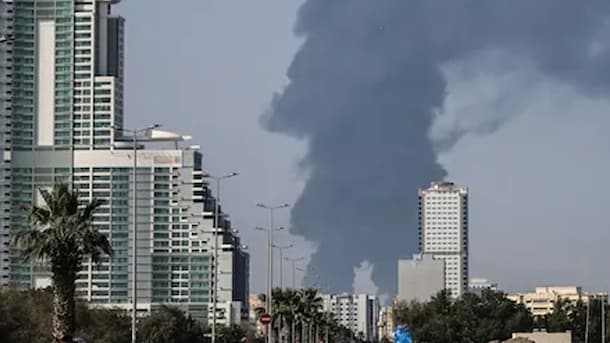
Opinion | 450 Missile, 2,000 Drone Attacks Later, Why Is UAE Still Not Fighting Iran?

The UAE is Iran's second-largest trading partner and also home to roughly half a million Iranians. Why, then, has it absorbed more fire than any other Gulf state?
-
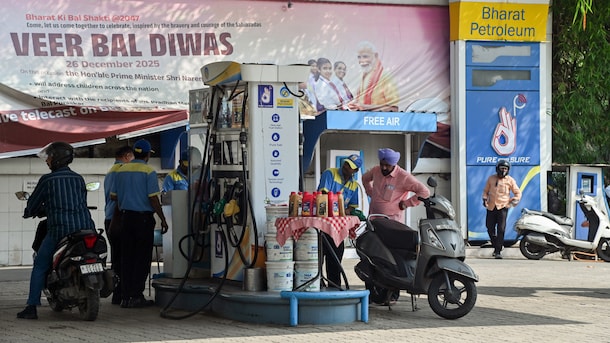
In Numbers: How Has India Kept Fuel Prices Low Even As Europe Sees 70% Spikes?
India imports 88% of its crude. Why then is it not seeing massive price hikes for fuel and LPG? Inside the unique strategy it's following...
-
Opinion | India Just Decided To Let Chinese Capital In Again. But There's A Catch
In March 2026, India eased regulations that had restricted Chinese capital in local companies, in a development that marks New Delhi's cautious approach towards capital flows from Beijing.
-
Trump's Iran 'Knocked Out' Claim Blown Up By US Intel On Missiles, Drones
Donald Trump claimed this week the war would end in two to three weeks as he threatened to send Iran back to the Dark Ages. But based on these reports the fighting is far from over, even if US President wants to push a contrary narrative.
-
Opinion | Rs 30 Petrol Hike To Currency Crisis, What Oil At $150 Can Really Do To The World
At $125 per barrel, petrol and diesel retail prices will need to rise by Rs 8-14 per litre. At $150 - which experts think is now likely - these figures could touch Rs 26-30 per litre.
-
Opinion | The Problem With Trump's Fantasy Of A 'Crippled' Iran
Even a relatively insulated US economy cannot entirely escape the ripple effects of sustained disruptions in one of the world's most critical energy corridors.
-
Opinion | Trump's Iran War Is About To Become Someone Else's Problem Soon
Start alone, end alone - that may be the harshest lesson for Trump as he now tries to dash for the door in Iran.
-
What Happens If Iran War Actually Ends In 2 Weeks: The Challenges Ahead
Trump said the war could end in two weeks sans a deal to re-open the Hormuz. Analysts say it could take six to weight weeks more for oil flows to normalise, with each extra week of fighting adding seven to 14 days of recovery.
-
Opinion | Why 2 Gulf States Want Iran War To Continue - Even As They're Battered By It
If Trump withdraws from this war, the UAE, Saudi Arabia and other Gulf countries would be left to face the music alone, with an angrier, fiercer, and possibly more vengeful Iran.